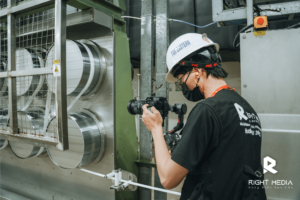
Motion graphics are animated graphics – a type of video created entirely from drawings, text, and charts, without the need for filming. Businesses use motion graphics when they need to explain a process, a service, or a set of data that cannot be shown on video: cash flow in financial products, data flow in software, or steps in a closed-loop production process.
When should you choose motion graphics over film?
| Situation | Which one should I choose? | Reason |
|---|---|---|
| Explain abstract processes and services. | Motion graphic | There's nothing to film, I need illustrations and diagrams. |
| Presenting data and reports. | Motion graphic | Dynamic charts are easier to understand than static tables. |
| Introducing the factory and its people. | Film | Real images are needed to build trust. |
| The product has a beautiful appearance. | Film | The actual materials and colors are more convincing than the drawings. |
| Internal structure of machinery | 3D Simulation | We need three-dimensional objects; two-dimensional motion graphics are not enough. |
Four types of motion graphics that businesses often order.
- Video explanation (explainer): 60-120 seconds to answer the question: What is this product and what problem does it solve? Usually placed on the homepage or product page.
- Animated infographic: Transform reports, market data, or business results into short, easily shareable videos.
- Process simulation: Redraw the operational flow, service process, or supply chain step by step.
- Graphics inserted into live footage: Add data, job titles, and diagrams to corporate videos so viewers can grasp information more quickly.
Three practical advantages of motion graphics.
Not dependent on the filming schedule. No need to mobilize a crew, obtain site permits, or wait for the weather. All work is done in the studio, so the schedule is easier to control.
Repairs can be made after handover. When data or names change, simply adjust the corresponding graphic layer instead of reorganizing. This is why financial products and software often choose motion graphics.
It's easy to do in multiple languages. For English or Chinese versions, you only need to replace the text and commentary, keeping the video the same, which is much less expensive than going back to a narrator speaking another language.
Motion graphic creation process
- Receiving the brief: Clarify the message, target audience, and where the video will be played.
- Write a script for the commentary: Review the text beforehand, as the commentary will determine the length and number of scenes to draw.
- Create a storyboard: Each frame should be sketched out for both parties to agree upon before drawing the details.
- Graphic design: Create a set of still images based on brand identity, and approve the colors and style.
- Create motion: Create animations for each layer, synchronized with the narration.
- Sound and handover: Record commentary, add copyrighted music, and export at different rates for each channel.
Cost of creating motion graphics
Costs are calculated based on duration and graphic complexity. A 60-second explanation video using simple flat graphics is the lowest-priced option; videos with individual characters, complex transitions, or incorporating 3D elements will cost more. Because there are no crew or set costs, motion graphics are generally cheaper than filming for the same length. Right Media's service price list to estimate.
Related articles and services
- Video animation software – if the business wants to create a simplified version themselves.
- What is a 3D movie? – when a three-dimensional simulation is needed instead of flat graphics.
- Corporate video production services
Source: Ministry of Culture, Sports and Tourism – Regulations governing advertising activities.
Frequently Asked Questions about Motion Graphics
Animation is a broad concept encompassing all forms of moving images, including animated films with characters and storylines. Motion graphics, on the other hand, is a narrower branch, focusing on moving graphics, text, and diagrams to convey information, often without characters or a storyline.
A 60-90 second explanatory video typically takes 2-3 weeks to produce, with script and graphic style review taking up most of the time. Animation only begins after the still images are approved, as revising the style after animation has been completed would require starting almost from scratch.
Yes, and it should be considered from the start. If you build a motion identity kit beforehand, including colors, fonts, transitions, and an icon library, subsequent videos only need to have their content changed, significantly reducing costs. This is a common approach used by businesses that produce recurring videos.
The client has worked with Right Media.











Latest motion graphic project
 Testimonial video of the cotton towel export industry: Phong PhuProfile video of Quoc Thinh Logistics: a company introducing its container transportation business.Testimonial MIS implant: Still looks like a real tooth after 20 years | 3D Dental Clinic
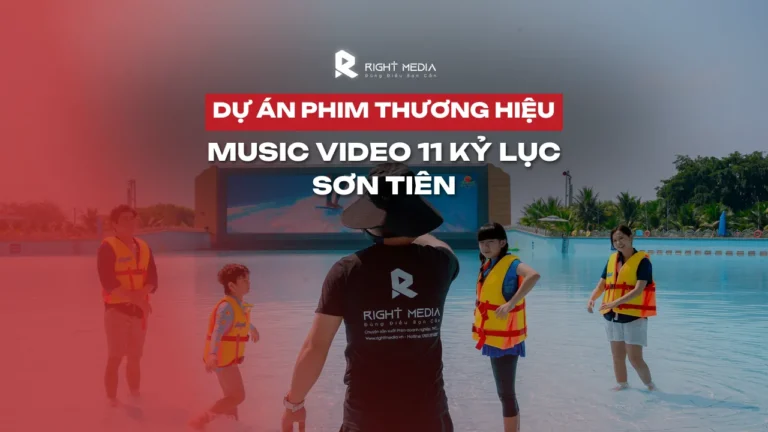 The brand's music video project showcases more than 11 Son Tien records.
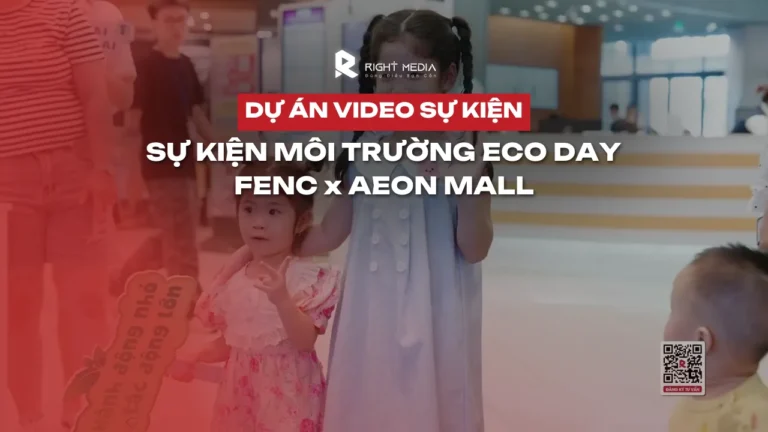 Eco Day event recap video project: FENC x AEON Mall
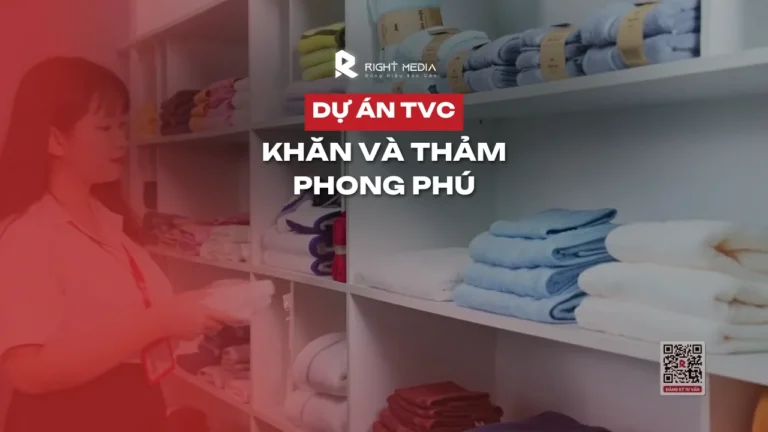 Textile product video project: Phong Phu towels and rugs
What do customers say about Right Media?
Testimonial video of the cotton towel export industry: Phong PhuTestimonial MIS implant: Still looks like a real tooth after 20 years | 3D Dental ClinicGet advice and a quote for motion graphics.
Submit your project information, and Right Media will respond with a detailed quote within 24 business hours. Hotline 0901 391 002.
Updated: September 24, 2026