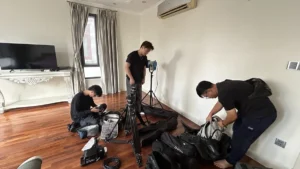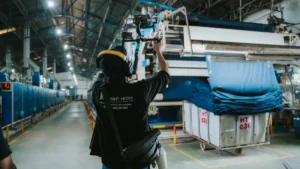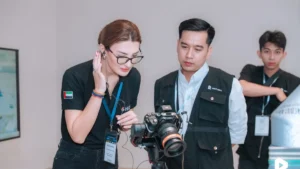

A factory movie (or factory film) is a video filmed inside a factory, typically 3–5 minutes long, focusing on the production line, machinery, quality control, and warehouse. It answers a question for potential partners: "How does this factory produce?" Corporate films answer "Who is this company?", product videos answer "What can this product do?", and TV commercials are only 15–60 seconds long. This article explains each type, when to make each type, and includes examples from projects Right Media has filmed.
What is factory film?
Factory films are a virtual tour of a factory for those who cannot visit in person: overseas importers, B2B clients comparing suppliers, and job applicants considering submitting applications. The films follow the same path a visiting audit team would take: from the gate and grounds, into the production area, through the QC department, and ending at the shipping warehouse.
CJ Foods factory video: the production process of Bibigo kimchi from sourcing raw materials to the packaging line. View project details.
Three common types of film used in factories:
- Factory promotional video (3–5 minutes): Overview of infrastructure, production lines, QC, and warehouse. For use in partner profiles and company portfolios. Example: Far Eastern Polytex, KSF.
- Video of the production process (2–4 minutes): Track a product from raw materials to packaging. Example: CJ Foods' Bibigo kimchi production process.
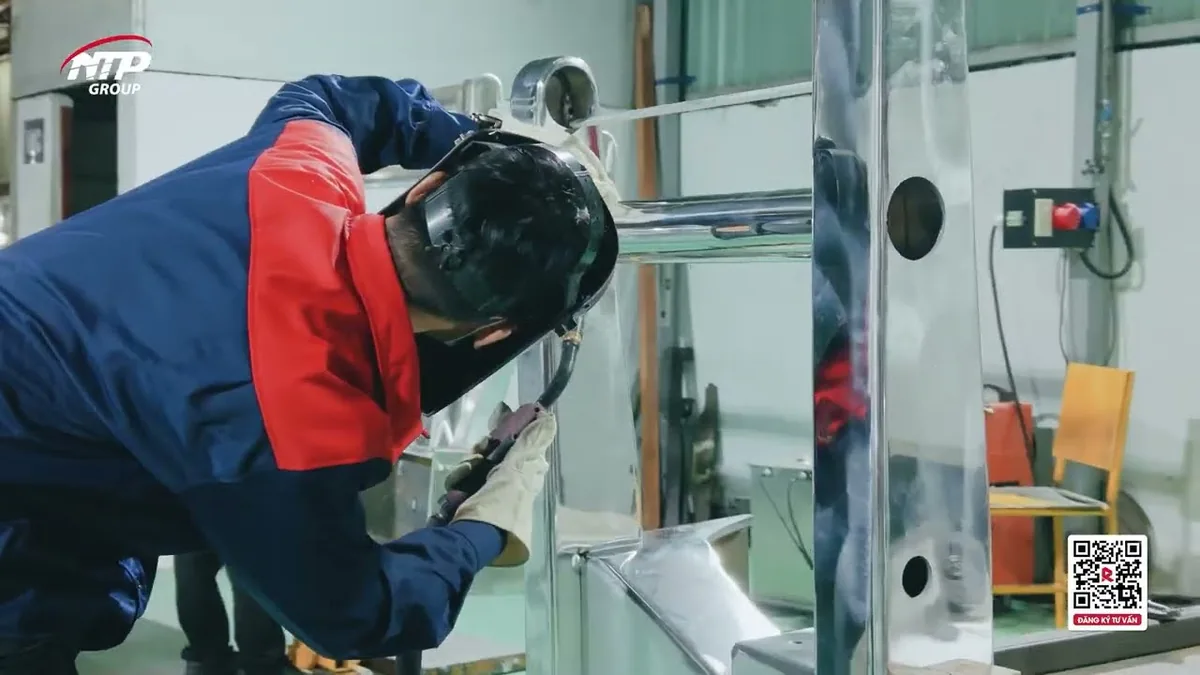
- Flycam video of the factory. (1–2 minutes): An aerial view, suitable for large factories or industrial areas. Example: NTP Group.
How does factory footage differ from corporate videos, product videos, and TV commercials?
| Factory film | Corporate films | Product video | TV commercial | |
|---|---|---|---|---|
| Answer to the question | How is it manufactured? | Who is the company? | What can this product do? | Why buy now? |
| Duration | 3–5 minutes | 3–8 minutes | 30 seconds – 2 minutes | 15–60 seconds |
| Background | Inside the factory, drones | Office, factory, customers, management | Studio or place of use | Studio, set design |
| Viewers | Partners, importers, candidates | Partners, investors, employees | Buyers, dealers | Consumers |
| Place of use | Trade fair, emails to partners, tender documents | Website, events, celebrations | E-commerce platforms, catalogs, social media | Paid advertising |
A manufacturing business typically needs both: LCB Battery They made a film about the factory to demonstrate their capabilities, then took on more projects. product video In the studio to show the battery powering the electric wheelchair. Factory footage is shot in the workshop; product videos are shot in the studio to control lighting and effects.
What should a film factory include?
- Location and size: The drone footage shows the premises, location near a port or highway, area, and capacity. KSF clearly states 250,000 tons per year and over 150 dealers right at the beginning of the video.
- The production line is running: Real machines, real processes; in the food industry, this means a clean production area, and in the mechanical engineering industry, it means CNC machines and quality control.
- Quality control: The QC room, laboratory, and certification are shown through footage instead of just logos. The KSF video mentions the production facility's certification from 2018 and its traceability.
- Human: Foreign engineers, workers, and managers are common if it's FDI. Nissin Electric and Far Eastern Polytex both have Japanese and Taiwanese management teams working alongside Vietnamese people.
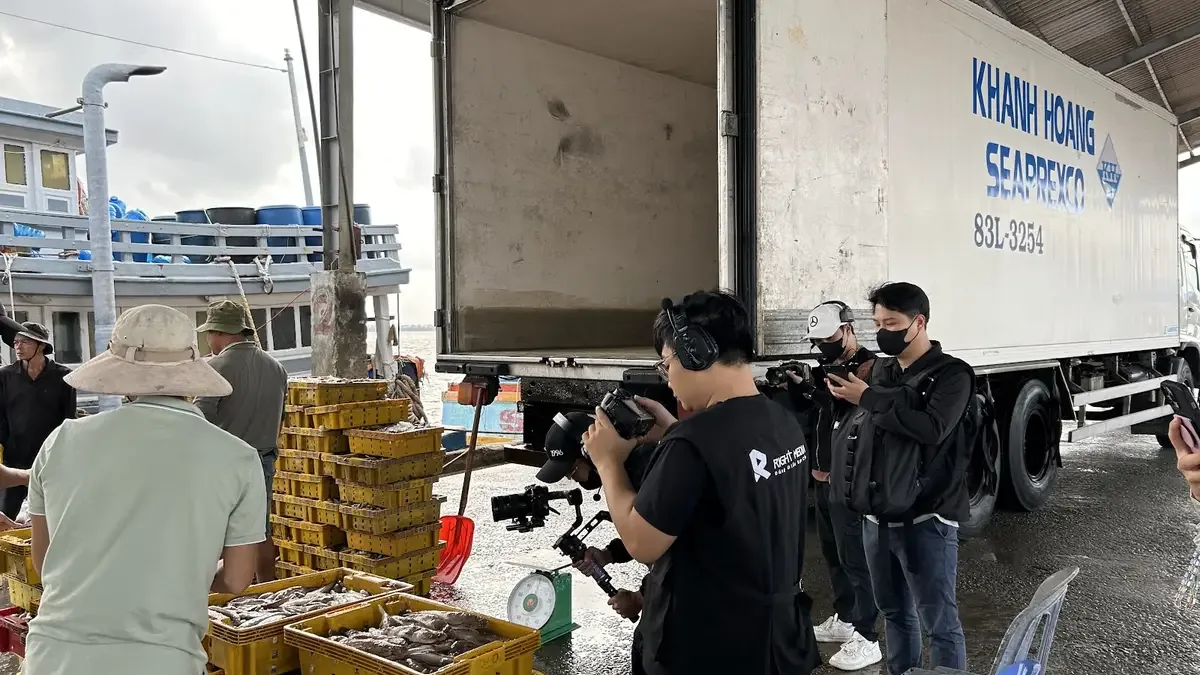
- Warehousing and Supply Chain: Finished goods warehouse, shipments, and current markets. Khanh Hoang Seaprex provides both its fleet and a list of export markets.
One run, multiple versions
The biggest cost of a factory film lies in the filming days. Therefore, it's important to decide from the outset how many versions will be produced. Far Eastern Polytex is an example: a single filming session at the largest factory in Binh Duong resulted in three films: a full version for partners, a recruitment version, and a company introduction. ABC Bakery and Khanh Hoang Seaprex also made an English version; Viet Nhat made a bilingual Vietnamese-Japanese version for Japanese clients.
The full version of the Far Eastern Polytex factory film was also released during the same period; recruitment and company introduction videos were also produced. View project details.
What should you keep in mind when filming inside a factory?
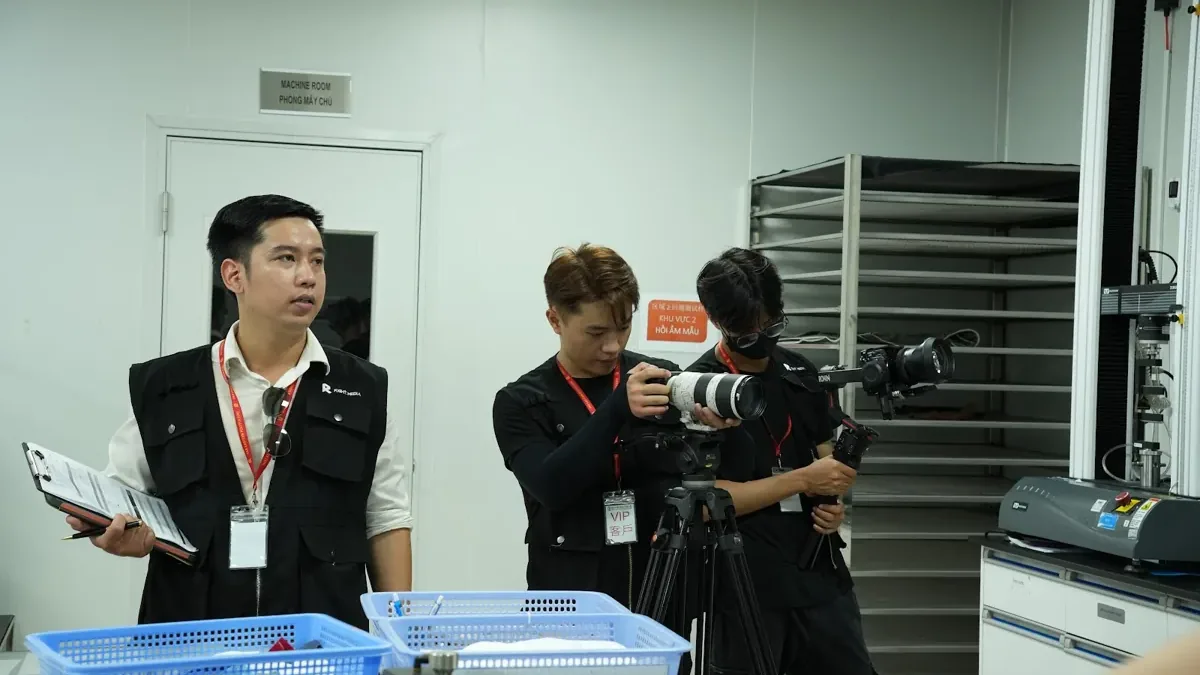
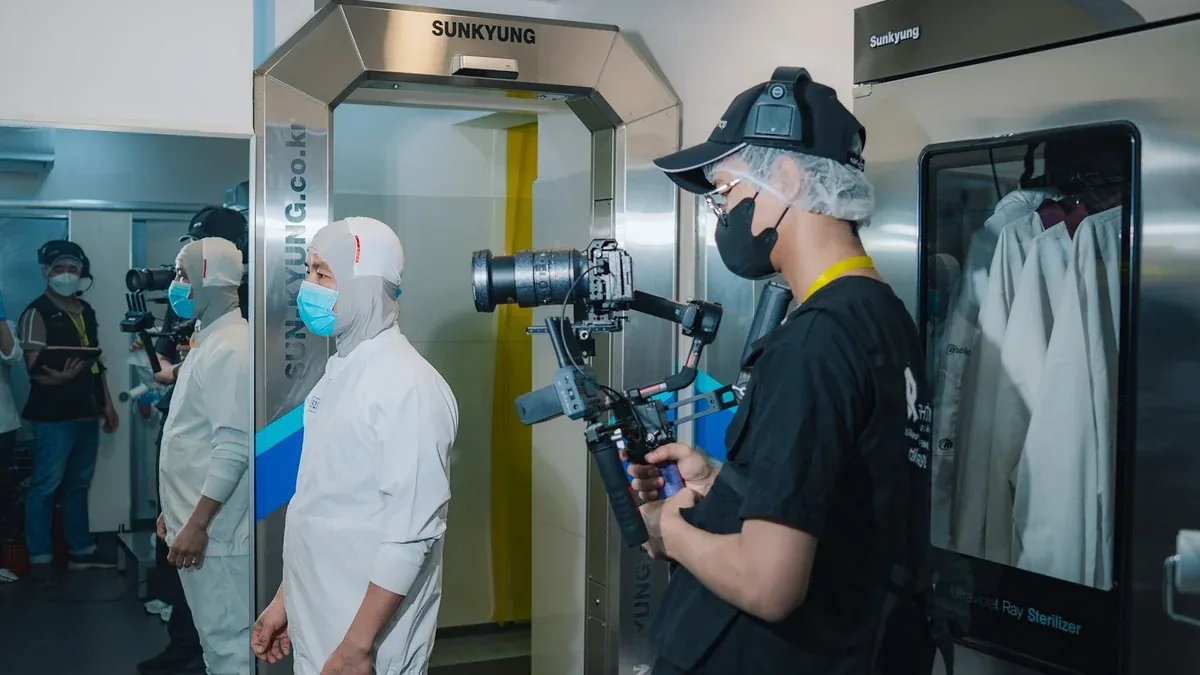
- The production line doesn't stop: During production, the film crew would survey the area beforehand to determine which sections were accessible and at what times the cameras would operate.
- Hygiene and safety regulations: Protective gear, customer ID cards, safety helmets; at ABC Bakery, the team works in accordance with the factory's food safety and hygiene regulations.
- Drone footage in the industrial zone: Register the list of people, equipment, and flight schedule in advance, usually one to two days beforehand.
- Someone from the factory accompanied them: Directing them to the right area, at the right time, reviewing the footage on location, as the Far Eastern Polytex representative did.
Where are film mills used and what are their benefits?
A 3–5 minute film roll from the factory is typically used in six locations, and each location requires a slightly different cut:
- Send it to the importer before they come for the audit.Partners get a preview of the production line, clean production area, and warehouse, so the actual audit trip is shorter and has fewer questions. Khanh Hoang Seaprex and KSF made this film for this purpose.
- Screening at the trade fair booth.: A 30-60 second silent video, played repeatedly on the LED screen, takes visitors from the booth back to the website.
- Company profile and tender documents: A single link replaces multiple pages describing production capacity; the bidding committee sees the actual factory instead of a graphic illustration.
- Homepage, website, and YouTube channelCustomers who find the business through Google watch videos before calling.
- Large-scale recruitmentThe recruitment footage shows the work environment, cafeteria, and dormitories; Far Eastern Polytex extracted this footage separately from the same filming session.
- Anniversary celebrations, shareholder meetings, welcoming guests.This film opens the ceremony; Nissin Electric made this film to celebrate its 20th anniversary.
How is a 4-minute factory film divided into minutes?
The following structure is the Right Media framework used for most projects; the order can be changed depending on the purpose:
| Minute | Content | Scene |
|---|---|---|
| 0:00–0:20 | Introduction: company name, flagship product, a capability figure. | Drone footage of the gate and grounds, the most impressive shots. |
| 0:20–1:00 | Location and infrastructure: area, location relative to the port, highway, industrial zone. | Aerial view from drone: signboards, factory entrance. |
| 1:00–2:30 | The production line follows the correct sequence of steps. | The machine is running, the worker is operating it, close-up of the product details. |
| 2:30–3:10 | Quality control and certification | QC room, laboratory, measuring equipment, certificate |
| 3:10–3:40 | People and management | Engineers, managers, meetings, or training sessions; leaders speak 1–2 sentences. |
| 3:40–4:00 | Warehouse, shipping, market, and invitation to contact. | Finished goods warehouse, containers, market map, contact information |
The chain of command takes up almost half the film because that's what the partners want to see most. The leaders' speeches are kept under 30 seconds; anything longer and foreign viewers will skip it.
What aspects should be emphasized in factory films for each industry?
- Food, beverages, animal feed: clean production area, hygiene process, traceability, raw material source. The CJ Foods film starts in the cabbage growing area in Bao Loc; the ABC Bakery film is shot in the bakery with the crew wearing protective gear as required.
- Mechanical engineering, CNC, machineryThe film showcases cutting machines, precision, measurement and inspection processes, and the level of automation. Tanaka and Hoang Kim Precision dedicate significant screen time to CNC machines and measurement rooms; NTP Group uses a drone to visualize the scale of the workshop.
- Textiles and garmentsSewing lines, dyeing areas, quality control rooms, and working conditions for workers are all part of the brand's commitment to social responsibility. Both Far Eastern Polytex and Top Royal Flash feature QC rooms and meal breaks.
- Electrical, electronics, building materialsCleanroom, SMT or assembly line, electrical testing, component warehouse. Nissin Electric filmed three factories in Bac Ninh to show the closed-loop production chain; VIETPOWER focused on the electrical cabinet testing stage.
Reference costs and time
Film production costs are calculated based on the number of shooting days, locations, and versions delivered. Reference rates at Right Media for productions around Ho Chi Minh City (excluding VAT): Standard package from 15 million VND for a 1-2 minute film, one flycam shoot, 1 crew; Professional package from 59 million VND for a 2-3 minute film, one day of shooting, 4 or more crews; Premium package from 199 million VND for a 3-5 minute film, two days of shooting, 5 or more crews, with Vietnamese-English dubbing and VFX. Each additional day of shooting costs 12 million VND, and each additional language costs 4 million VND. The time from contract signing to film delivery is 3-5 weeks, including 1 day of scouting, 1-3 days of shooting, and 2-3 weeks of post-production. A detailed price list and additional charges can be found on the page. Complete factory video recording service.
Checklist to prepare before booking a factory filming session.
- Define the film's main purpose and target audience (foreign partners, bidding committee, candidates).
- List 3–5 publicly available capability figures: capacity, area, personnel, certifications, market share.
- Identify the languages to be delivered: Vietnamese, English, Japanese, Chinese, Korean.
- Create a list of areas and details where filming is prohibited, along with the client's factory's confidentiality requirements.
- Choose a filming week that coincides with full production shifts, avoiding maintenance periods and holidays.
- Appoint a point of contact who has the authority to review footage on location.
- Prepare uniforms, protective gear, and clean up the filming area one day before the shoot.
- Decide on the number of cuts needed right from the start so the crew can film enough scenes in one go.
Frequently Asked Questions
Is it possible to film the factory using only a phone?
It's suitable for internal use or quick social media posting. Sending it to import partners or including it in tender documents is difficult: the factory lacks light, the machinery vibrates, the sound is noisy, and a drone is needed for panoramic shots. Films sent to foreign clients also require subtitles, digital graphics, and consistent color grading, making post-production more than half the effort.
Do factory films need commentary?
A short commentary, in Vietnamese or English, should be included for the version sent to partners and posted on the website; the commentary should explain the process that the images cannot articulate. For the versions shown at trade fairs and on social media, omit the commentary and provide information in text format, as most viewers will have their sound muted.
What is a reasonable length for a film about a factory?
3–5 minutes for the version sent to partners; 1–2 minutes for the version shown at the trade show booth or posted on social media.
How many days did it take to film the factory?
1–3 days depending on the number of areas and factories. Nissin Electric rotates three factories in two days.
Is a script necessary?
Yes. The script dictates the camera's path through the factory and the message for each segment; revising the script before filming is much cheaper than reshooting.
Can factory videos be used for recruitment?
Yes, if you request from the beginning that the film crew shoot additional scenes of the working environment, the cafeteria, the dormitories, and hear the workers' accounts.
How much does it cost to film a factory?
Starting from 15 million VND for the Standard package (1-2 minute film, one flycam shoot); detailed pricing based on number of days, versions, and languages can be found at [link/website]. factory video recording services.
Businesses needing factory filming can view this. process and quotation or others factory film project Right Media has done it.
Right Media – A specialized media partner for B2B businesses, factories, and industrial parks.