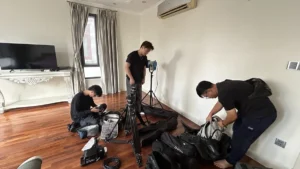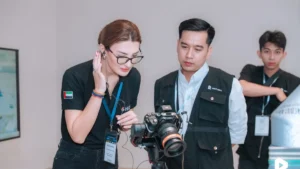
The setting in a product video determines what viewers believe. A white studio background demonstrates color and shape; a real-life setting shows the usage; 3D and CGI showcase what the camera can't capture. This article compares four options commonly recommended by the Right Media team: a plain studio background, a real-life setting, 3D and CGI, and a combination. Examples are drawn from projects completed for Life360, Bật Bếp, Geyser, CKD, Cường Window, FORTADECK, Phong Phú, SONY, Levalens, and DEF Phú Mỹ Xanh.
How many options are there for product video filming locations?
There are four main options: white or plain studio background, real-life setting, 3D or CGI graphics, and a combination. Each method demonstrates something different to the buyer, so choosing the setting is about choosing what the video needs to demonstrate.
Three questions to help close the deal quickly:
- What buyers need to see most: Color and details, usage, or internal mechanism?
- Does the main feature allow for recording? Electric current, coatings, and chemical reactions are different.
- Where and for how long will the video be used? Product pages are used for many years, but promotional offers only last a few weeks.
This article only discusses the context. If your business is choosing video formats for machinery and materials (operation demos, installation instructions, comparisons), please refer to the article. 5 types of industrial product videos.
Comparison table of 4 product video shooting settings
The table below lists the criteria that businesses often consider. The project column shows the videos that Right Media has created, with information taken from the posted project pages.
| Criteria | Studio with a white background, a plain background. | Real-world usage context | 3D, CGI | Combine |
|---|---|---|---|---|
| Prove what? | Shape, color, details, what's inside the box. | How is the product used, and what space is it suitable for? | Structure, mechanism, things invisible to the naked eye. | Both the usage and the technology. |
| Control light and color. | Highest | Lower, dependent on sunlight, space | He has absolute power, but the color is a painted color. | Divided by scene |
| Viewer trust | Good with product details | The highest rating is because you see the actual product in real life. | Good at explaining, weak when it comes to showing the true color. | High if the real footage and the 3D footage match. |
| Where does all the effort go? | Set up lights according to materials and props. | Survey, obtain permits, filming schedule, bring-along lights | Post-production, modeling | The storyboard must be finalized beforehand. |
| Reference project | Life360, HUMASIS, Turn on the Stove, LCB Battery | Geyser, CKD, Cuong Window, FORTADECK, Phong Phu | TV commercials for Tet (Lunar New Year) by SONY, DOTACO, and VNRA. | Levalens, DEF Phu My Xanh, Geyser |
No column is a clear winner. The section below goes into each option.
When is it appropriate to shoot product videos on a white or plain background?
A studio with a white or plain background is ideal when buyers need to clearly see the product itself: color, shape, packaging, and contents. A studio allows the crew to control the lighting on each surface, resulting in consistent color across scenes. Plain background footage is also easier to edit into shorter versions for e-commerce platforms.
The background doesn't have to be white. Right Media's projects show three variations:
- White background for the "What's in the package" section: CP Group's "Turn On the Kitchen" video is 33 seconds long, opening with packages of meat, vegetables, and spices displayed on a white background, before transitioning to a cooking scene.
- Background color matches the product: The Life360 electric toothbrush video is 1 minute long, with each toothbrush body color paired with a different pastel background. The HUMASIS 58-second video places the multi-colored test strip against a pastel background, keeping the tones light for a specific theme.
- Dark backgrounds have the following effects: This product video for LCB Battery was filmed over one day in a studio, with the battery placed on a dark wooden background and surrounded by electrical discharge effects.
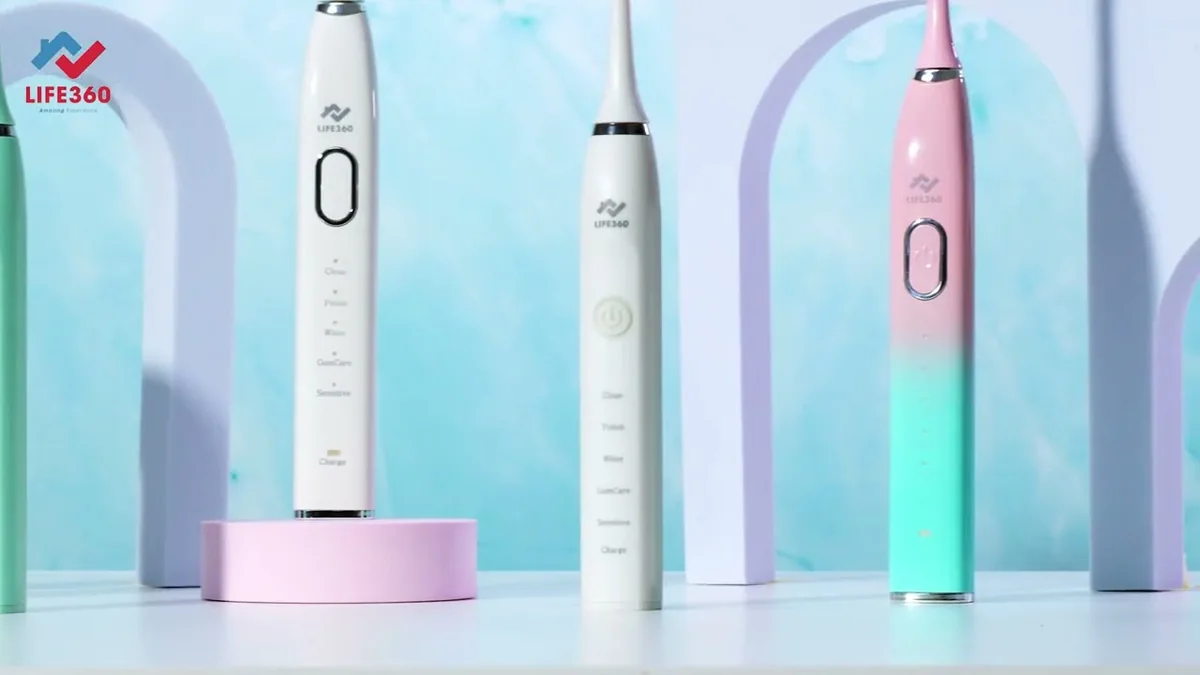
The drawback of a plain background is that viewers don't know where the product is used or who it's suitable for. Plain backgrounds are suitable for small products, familiar usage scenarios, or for a longer segment in a video.
When should we film in a real-life location?
Filming should take place in real-life settings where the product's value is only revealed when it's used: in a kitchen, apartment, construction site, or in the sunlight. Viewers see the product in everyday life, similar to their own, and are more likely to believe it. However, this requires the crew to handle changing lighting, limited space, and a filming schedule dependent on the homeowner.
Home, kitchen: let consumers see themselves in video.
The 5-minute 50-second video of the Geyser Ecotar 9 Slim water purifier shows a couple in a brightly lit kitchen. Each water mode is associated with a specific task: cooking rice, making tea, preparing baby formula, and washing fruits and vegetables. See details at Geyser water purifier product video project.
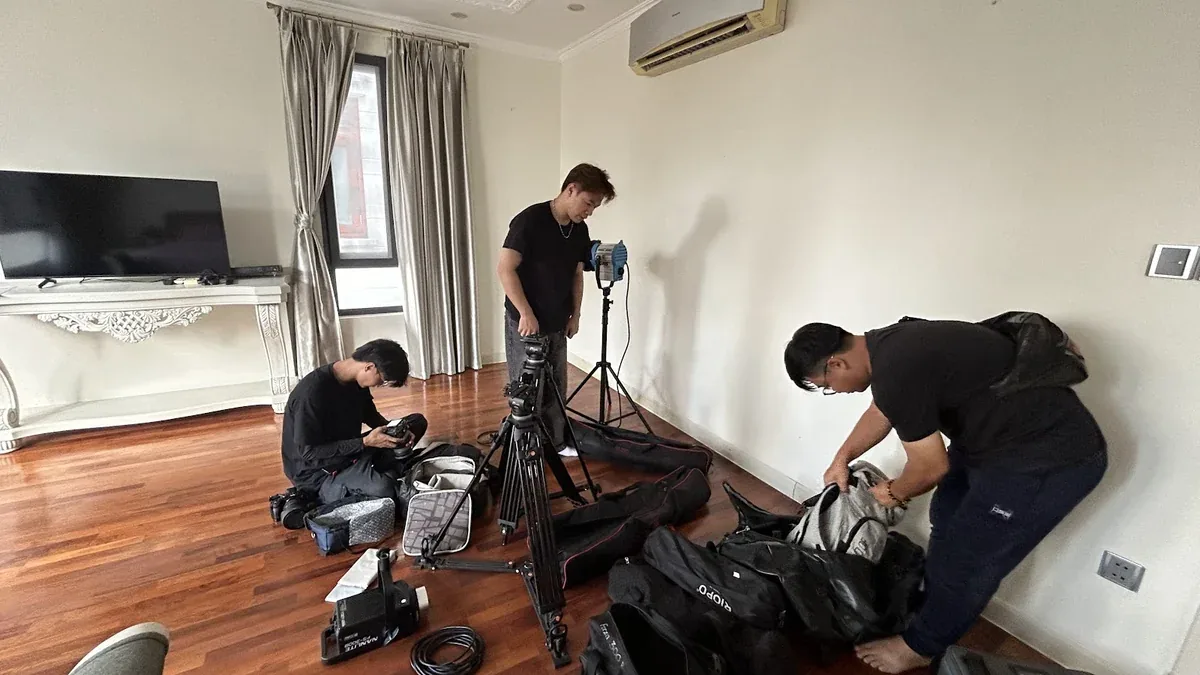
Series CKD cosmetics video review Filmed in an apartment, the living room and bedroom were redesigned to serve as a set. Cosmetics used were at home, so the everyday setting was more relatable to the viewer than a white background. The price was that the crew had to bring their own lighting equipment and control sunlight through the windows throughout the day of filming.
The project is complete: truly a masterpiece in terms of perspective.
With aluminum, glass, and interior design, every contractor's 3D rendering looks beautiful, so the renderings no longer prove anything. Cuong Window chose to film a completed house belonging to a real family. Viewers can see the light shining through the windows, the wood grain of the cabinet doors, and the gaps between the panels. The most challenging aspect is the reflection on the glass and the narrow hallway.
Outdoors, factories, showrooms: when the product needs its own environment.
FORTADECK filmed two videos of MPC flooring panels in one day at the factory. The sun-resistant, UV-resistant, and wet-slip sections were shown outdoors in direct sunlight, as these properties are typically associated with outdoor use. Phong Phu filmed towels and carpets at the factory and showroom: close-up shots of the fibers, water absorption tests, the production line, and finally, users in their living spaces.
When is 3D or CGI needed instead of cameras?
3D or CGI is needed when the main feature cannot be filmed, when multiple products need to be displayed on the same stage, or when the content will change rapidly throughout the show. Conversely, if buyers choose products based on color and texture, filming is safer.
Three Right Media cases used 3D:
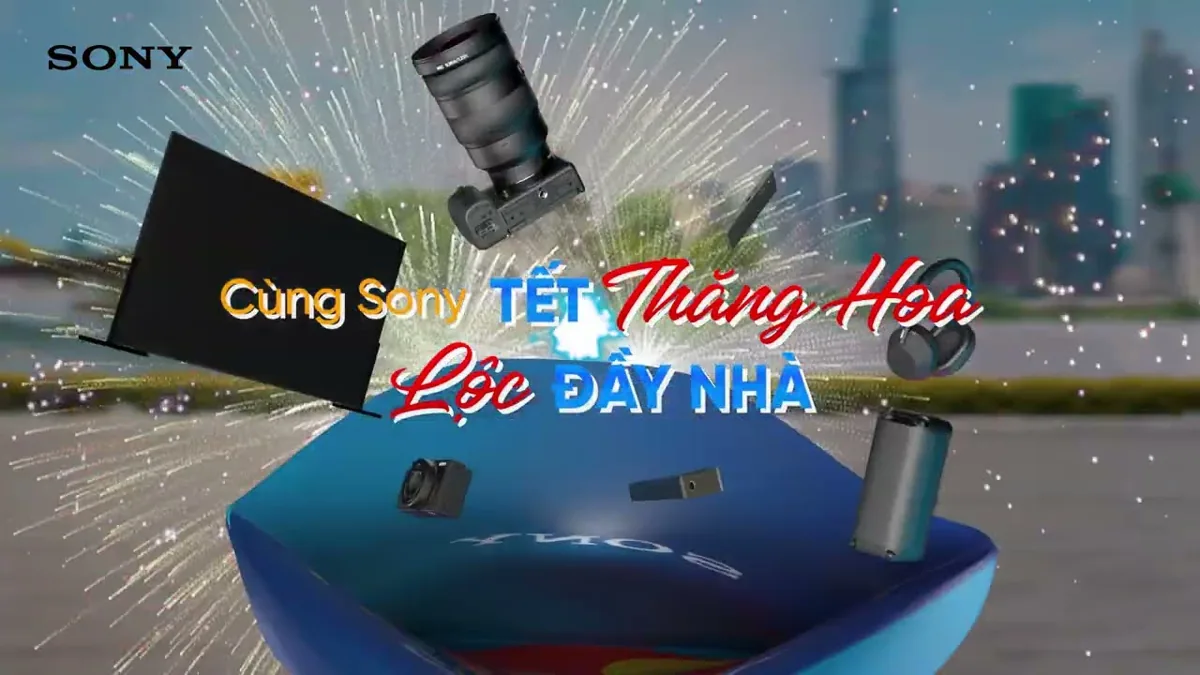
- Many products, many numbers: Sony's 3D animation TV commercial for Tet (Vietnamese Lunar New Year). The 52-second clip introduces six product categories along with their respective discounts. Filming all six categories in person would require a lot of background footage and would be difficult to synchronize. When the discount program changes, only the text needs to be adjusted.
- Invisible mechanism: The branded film DEF Phu My Xanh is approximately 3 minutes long and includes a 3D simulation of the SCR process that converts NOx into nitrogen and water vapor.
- The setting was difficult to recreate realistically: DOTACO's 30-second TV commercial uses 3D animation and motion graphics to recreate a house under construction. The VNRA wave TV commercial was filmed in a studio over one day, then CGI and 3D compositing were used to piece together the house across three generations.
For example, in the opposite direction: DOTACO's Roman tile TV commercial was filmed in a single shot at the factory, without using 3D, so that the tile colors on the screen match the real-life colors.
Combine multiple settings in a single product video.
Many B2B product videos utilize two or more different settings. This involves filming people and demonstrating the product, using 3D animation for the technology, and using studio close-ups of the product. The key is to finalize which scenes will be filmed where during the storyboard.
Video showcasing Levalens lenses. This is the clearest example. The crew filmed on the pedestrian street for outdoor lighting scenes, and in the studio for indoor scenes and scenes working with screens. VFX and 3D handled the lens coatings and color shifting capabilities. Because the roles were defined in the Director's Treatment, both scenes were filmed in one day.
Geyser and DEF Phu My Xanh also operate in a similar way: parts that the cameras couldn't record, such as electrolysis and chemical reactions, are converted into graphics, interspersed with real footage.
5 questions to consider when choosing a location for a product video.
Before the brief meeting, businesses can answer the following five questions to choose the setting for their product video.
| Question | If the answer is "yes" |
|---|---|
| Do customers choose products mainly based on color, pattern, and surface finish? | Shoot live footage, preferably in a studio or showroom; limit 3D shots for product shots. |
| Is the value of a product only apparent when you're using it? | Real-world usage contexts: homes, buildings, outdoors |
| Is the main feature internal or invisible? | Add 3D or graphic sequences interspersed with real footage. |
| The product is bulky and cannot be brought into the studio? | Filmed in a factory, with sets built right inside the factory, just like in DOTACO. |
| Will the content change depending on the promotional period? | Consider 3D or text layering for quick edits, like the Sony Lunar New Year TV commercial. |
How does the cost of shooting product videos vary depending on the context?
Right Media provides product video production quotes on a project-by-project basis; businesses should contact us for a quote along with a list of products and distribution channels. The setting is one of six key cost elements, along with product codes, actors, graphics, commentary, and the number of cuts.
How context affects cost changes:
- Studio: Allow more time for lighting setup and close-up shots for each code and color.
- Factories, buildings, houses: Drones may be needed; outdoor scenes are weather-dependent, so filming schedules need to be flexible.
- 3D or custom-built environments: The effort put into post-production is measured in terms of the volume of graphics.
- Location: Outside of Ho Chi Minh City and within a 100km radius, including travel and accommodation costs.
View the process, deliverables, and sample projects on the page. product video production service.
Frequently Asked Questions
Do you need a professional studio to shoot product videos against a white background?
It's recommended if the product has a glossy, metallic, or multi-colored surface. A white background is prone to glare and color inconsistencies between scenes if the lighting isn't even. The crew usually tests the lighting on a real sample before filming, as each material requires a different lighting setup. Smaller products with rough surfaces require less light.
Is 3D filming cheaper than real filming?
Not exactly. 3D eliminates the cost of sets and travel, but it shifts the effort into post-production, measured in seconds and model detail. 3D is advantageous when multiple products need to be shown in the same frame or when content needs to be edited for each promotional campaign. A short 3D clip inserted into a live video is often a balanced solution.
Is it possible to create both a white background and a real-life set in one filming session?
Yes, if the two locations are close together and the scene breakdown is clearly defined. Levalens filmed the pedestrian street and studio in one day. Phong Phu filmed the factory and showroom in the same project. The company should inform the crew in advance of the required number of shots so they can schedule and arrange the framing.
Choose a context based on what the video needs to demonstrate.
Please send Right Media a list of products, key viewers, and broadcast channels. The team will suggest settings for each scene: which parts will be filmed in a studio, which parts will be filmed on location, and which parts will require 3D. See more. Right Media's product video production service Or call the hotline at 0901 391 002.