Videos of mechanical machinery only convince OEM clients when they show four things: the scale of the workshop, the actual running machine, the precision of the parts, and how the quality control (QC) process is carried out. A beautiful panoramic video is not enough, because the viewers are factory managers or technical sales representatives from the partner company; they look at the cutting tool, the machined surface, and the measurement room. This article summarizes how Right Media filmed CNC machines and the QC process in projects by Tanaka Precision, Hoang Kim Precision, and NTP Group, so that mechanical engineering businesses know what to prepare before filming day.
What should videos about mechanical machinery show viewers?
A client of a machining workshop places an order based on drawings. Before signing, they want to know the workshop's dimensions, the number of machines running, the tolerances that can be maintained, and how the shipment will be inspected. The video must answer these four questions correctly, in order from widest to narrowest:
- Scale: A panoramic view of the factory, the number of machines, and the material flow. A drone can do this fastest, like the opening scene of the NTP Group movie.
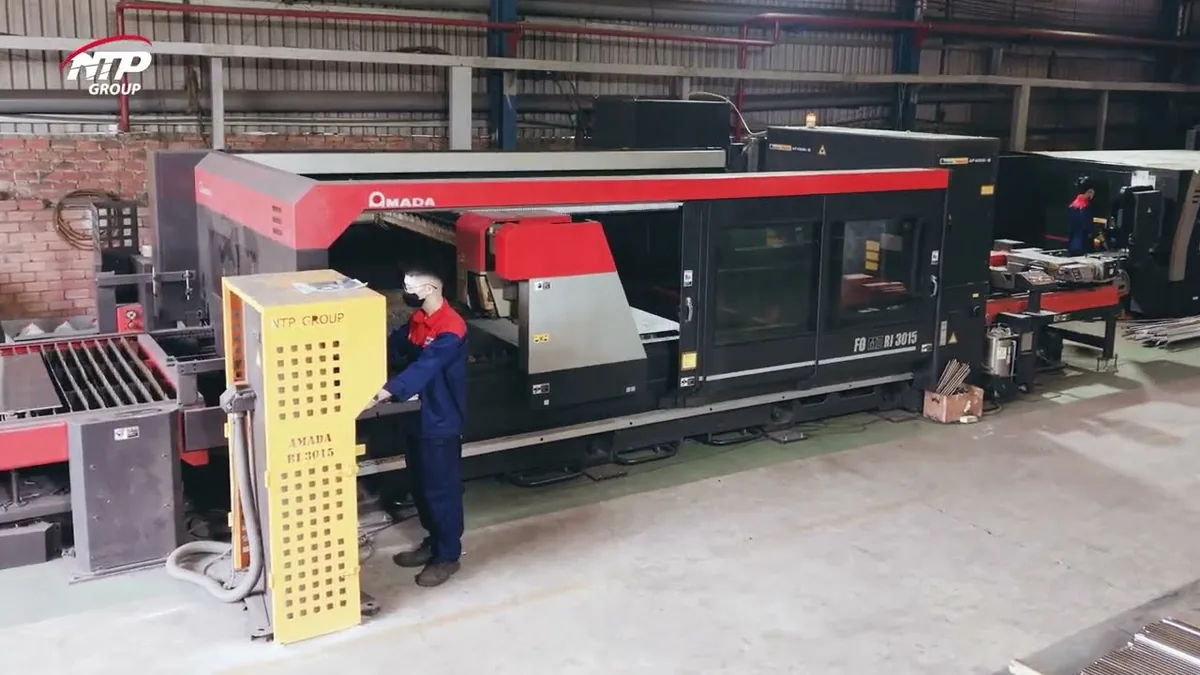
- The machine is running: Close-up view of milling machines, lathes, and wire cutting machines in operation, with chips, coolant, and operators.
- Accuracy: The surface of the workpiece after machining, measuring tools, coordinate measuring machine (CMM).
- Quality control and delivery capacity: QC department, inspection process, finished goods warehouse, production data.
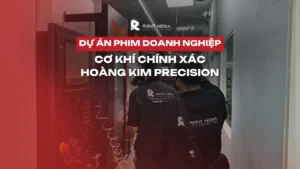
Hoang Kim Precision set very clear requirements when making the film: to showcase its fleet of 67 CNC machines (47 milling machines, 13 lathes, and 7 wire cutting machines) and Hexagon CMM measuring machines imported from Italy, because its Japanese and American partners needed to see that the company could meet stringent technical requirements. The film therefore had to do more than just introduce the machinery: it was a visual representation of its capabilities.
Rotating a running CNC machine: which angle indicates the highest accuracy?
Precision isn't captured in wide shots. It lies in close-ups: the cutting edge eating the chips, the sparks from the wire cutting, the movement of the measuring head on the CMM. In the Hoang Kim Precision project, Right Media dedicated significant time to these specific shots, allowing viewers to see the product's precision.
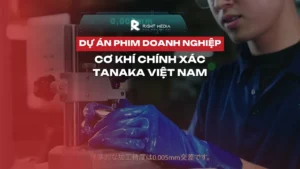
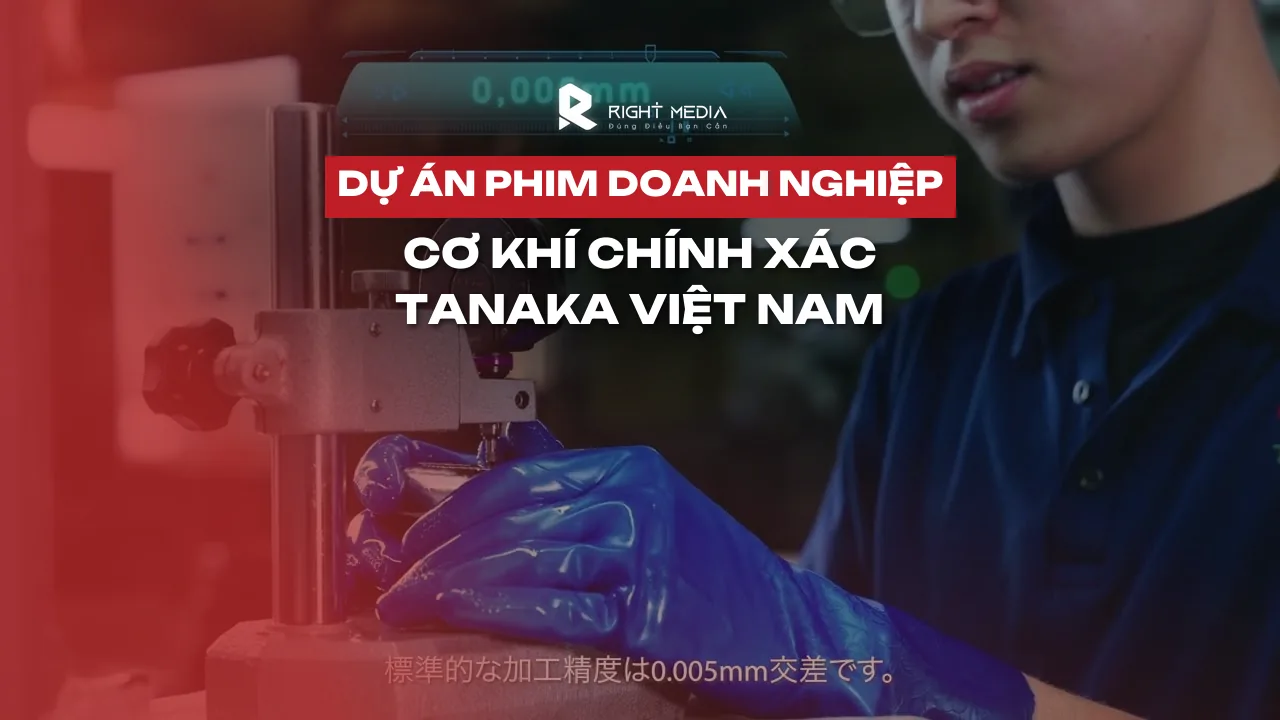
Profile video Tanaka Precision Vietnam: CNC machine in operation and inspection process at Thang Long II Industrial Park. View project details.
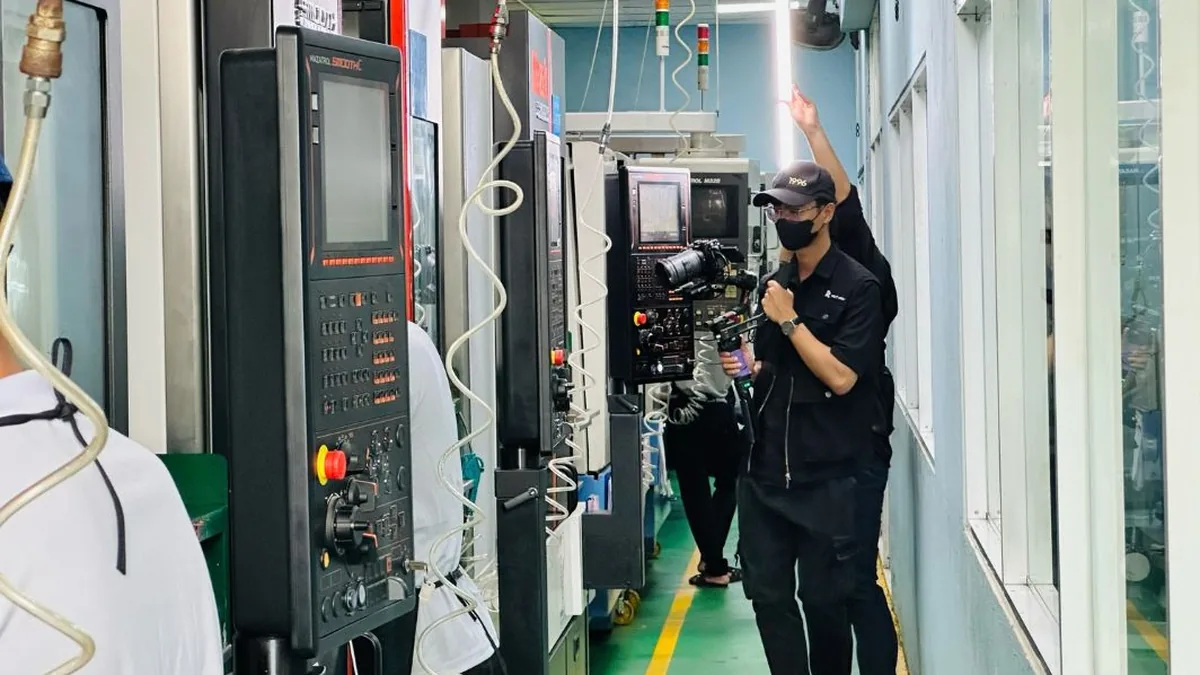
Five crew groups typically shoot scenes on a single CNC machine:
| Scene | Device | Show the viewers |
|---|---|---|
| The cutting tool, chips, and coolant are visible through the machine's glass window. | Telephoto or macro lens, additional lighting | The machine is actually performing the machining, the cutting speed, and the cleanliness of the process. |
| Slow movement of the spindle, wire cutter head | High-speed rotation (slow motion) | Stable, no vibration, no jerking. |
| The operator's hands hold the workpiece, and they read the control screen. | Gimbal | There are real engineers operating it, it's not just a machine running on its own. |
| Topshot from above the camera setup. | Small drone with protective cage, flying low in the workshop. | The layout of the production line and the coordination of positions. |
| Surface of the workpiece after machining under light. | Macro, oblique lighting | Glossy, smooth, and burr-free. |
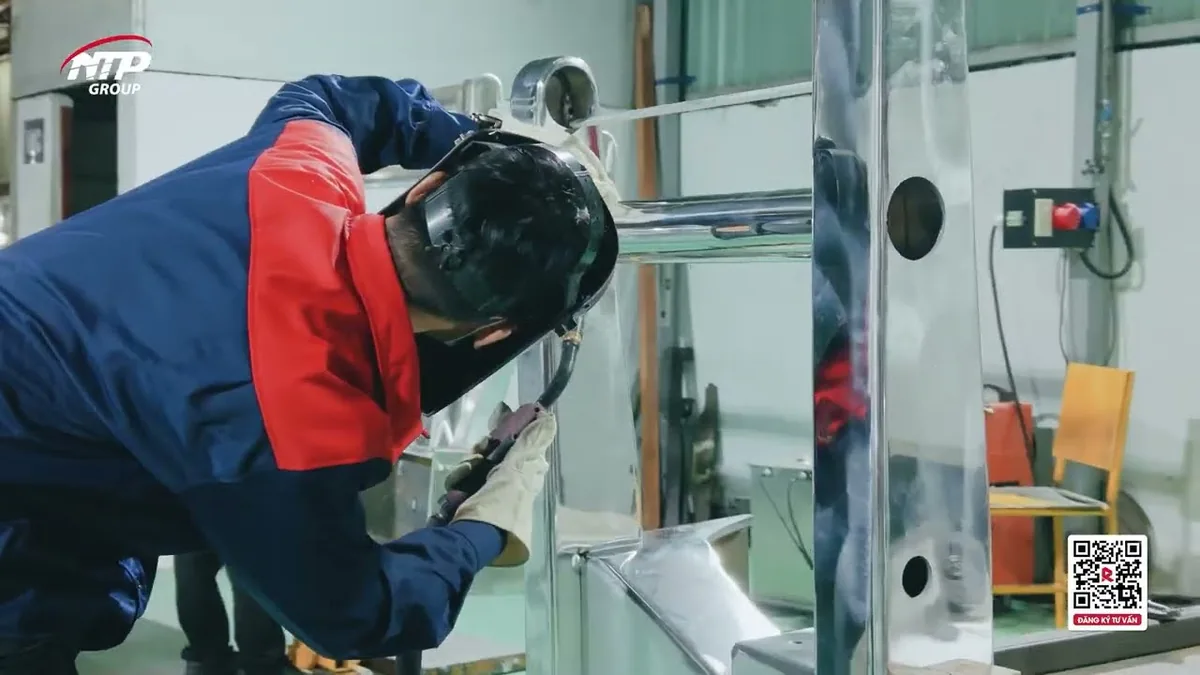
Two technical considerations: metal is highly reflective, so the lights must be angled to avoid glare and prevent the crew's shadows from being cast on the surface; the film's color tone should be slightly cool to highlight the steel material and the cleanliness of the factory, similar to how Hoang Kim Precision adjusts film color. For NTP Group, the top-shot shot looking straight down at the running machinery shows the production line and how the various positions are coordinated, something difficult to achieve with other camera angles.
How can the quality control process be presented visually to gain the trust of our partners?
A credible QC (Quality Control) process is one where viewers see the process in action, not just a certificate hanging on the wall. Right Media films QC in three layers: measuring equipment, the person measuring, and the measurement results.
- Measuring device: CMM coordinate measuring machine, calipers, micrometer, roughness measuring machine. For Hoang Kim, the movement of the 3D measuring machine is one of the main close-ups in the film.
- Measurer: The QC engineer is mounting the part on the measuring table, reading the measurements, and filling out the form. This scene demonstrates that the process has a responsible person in charge.
- Result: The display shows the measuring instrument screen, inspection slip, acceptable goods area, and pending goods area. Graphics can display the applicable tolerance or standard directly on the scene.
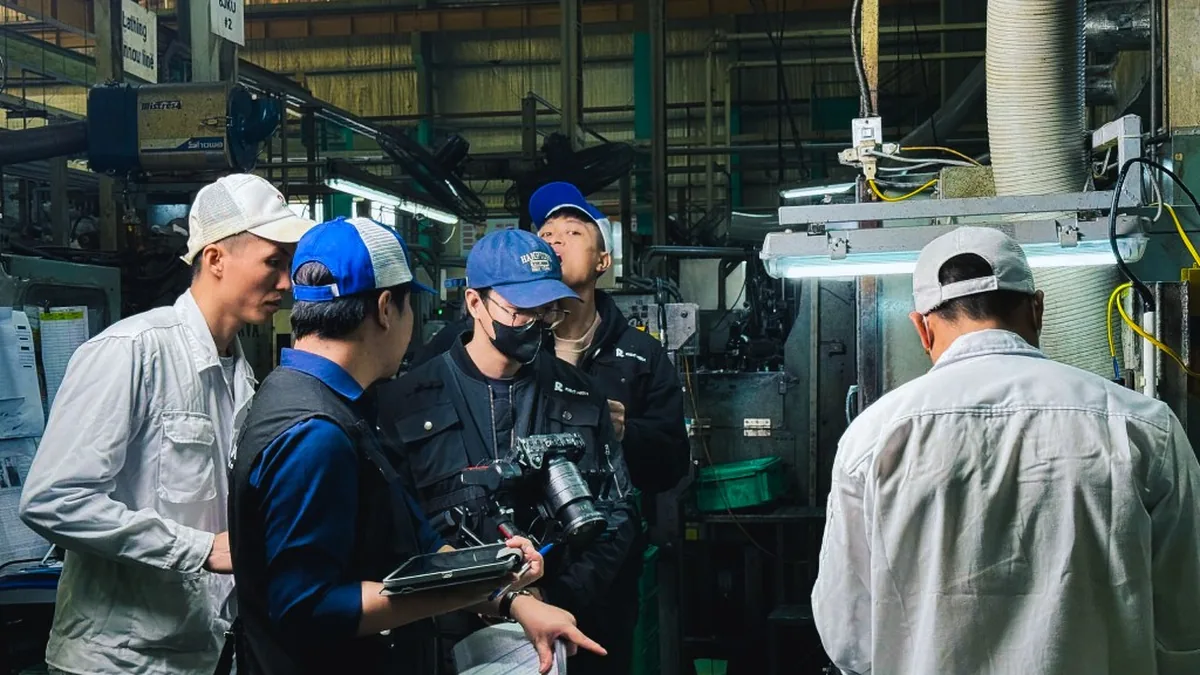
With Tanaka Precision Vietnam, a supplier of crankshaft pins, piston pins, and camshaft plates for the automotive and motorcycle production chain, the film showcases the capabilities of each stage of production, including heat treatment reaching 1 million products per month. Another detail of interest to customers, highlighted by Hoang Kim in the film, is that the company always keeps more than 10 backup machining machines ready for urgent orders. This information reflects the company's delivery capacity, part D of the QCD (Quality, Cost, Delivery) philosophy that the company pursues.
How are the performance metrics displayed on the screen?
The data should be presented alongside real-life scenes using motion graphics, one number at a time, in large font. B2B viewers remember the numbers better than the commentary.
Examples from projects:
- Tanaka Precision Vietnam: Revenue increased from 30 billion VND in 2014 to 269 billion VND in 2024; 62% products are exported to Thailand, Indonesia, and Brazil; heat treatment processes 1 million products per month. The film also has Japanese subtitles to introduce the product to Japanese leaders and partners.
- Hoang Kim Precision: Two factories, 2,000 m² and 500 m², over 70 employees, 47 CNC milling machines, 13 CNC lathes, 7 CNC wire cutting machines, and a 500 kW solar power system. Three language versions: Vietnamese, English, and Japanese.
- NTP Group: Instead of using data, the factory used the actual meeting with the client's audit team as evidence that it was working with an international client.
General rule: only present verifiable figures that the company is willing to reiterate during the meeting with the partner. The figures shown in the video will be questioned at the negotiating table.
What preparations are needed for filming in a mechanical workshop?
A day of filming in a mechanical workshop requires prior surveying, scheduling according to machine shifts, and adhering to the factory's safety regulations. Here's what Right Media does before filming in Tanaka and Hoang Kim:
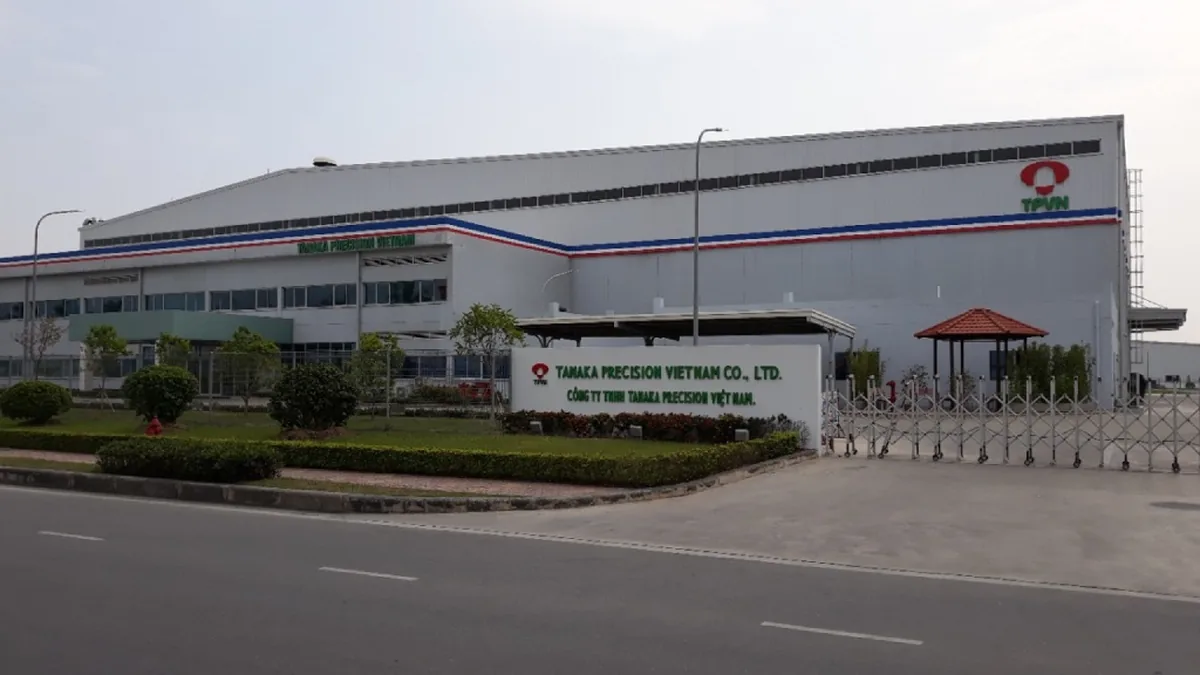
- Survey each factory: With Hoang Kim, the team visited both studios in Thu Duc and Binh Chanh to select camera angles, check lighting, and learn about the specific types of cameras.
- Timeline by machine shift: With Tanaka, the crew created a timeline for each scene and filming schedule, allowing the factory to proactively prepare personnel, production areas, and related items; filming days closely followed the timeline to avoid disrupting production.
- Safe: Wear a helmet, safety shoes, and goggles; maintain distance from running machinery; do not place the tripod in the forklift access. Factory personnel must accompany the crew.
- Noise: Interviews with leaders and engineers were filmed in the office, not next to the camera.
- Flycam: Most industrial areas require prior flight scheduling, personnel lists, and equipment lists; flying inside factories requires surveying suspended objects, electrical wiring, and hot air currents from machinery. Details can be found in the article. Flycam video of NTP Group's mechanical factory..
What can be produced from a single machining operation in a machine shop?
Typically, two to three videos and a set of photos, from the same shooting schedule:
- Full-power movie 3–5 minutes for partners, bids, and trade fairs.
- Short version for recruitment: Tanaka received a shortened version of the contract, omitting the manufacturing portion, retaining the corporate structure, and dedicating the time to training and internship programs in Japan.
- Foreign language version: Hoang Kim offers English and Japanese versions; Viet Nhat Company offers a bilingual Vietnamese-Japanese version.
- Catalogue photos of the machine and factory photos. Shoot them all at the same time, like Right Media does. SPON forklift and Golden factory.
Businesses attending VINAMAC, Metal & Weld, or Hardware & Hand Tools Expos at the end of the year should plan for 30-60 second silent footage for their booth screens right from the start, so the crew can film enough short, fast-paced shots.
Right Media has completed a video project on mechanical machinery.
- Tanaka Precision VietnamPrecision mechanical components for automobiles and motorcycles at Thang Long II Industrial Park, Hung Yen; full version and recruitment version, with Japanese subtitles.
- Hoang Kim Precision: Two factories in Thu Duc and Binh Chanh, 67 CNC machines, CMM measuring machines; three languages.
- NTP Group: Flycam panoramic and top-shot views of the processing plant, during the meeting with the audit team.
- Vietnam-JapanBilingual Vietnamese-Japanese profile video for a precision engineering company.
- S-shaped: Profile video and product photo set for industrial forklifts.
Mechanical engineering companies needing a capabilities video before a trade show or audit can watch this. factory video recording services by Right Media.
Corporate film by Hoang Kim Precision, precision engineering for FDI partners. View project details.
Profile video of the SPON forklift factory: frame fabrication, welding, painting, assembly, and inspection all filmed in a single day. View project details.
Với xưởng gia công CNC, khuôn mẫu hay linh kiện chính xác, Right Media có gói riêng tại trang quay phim giới thiệu công ty gia công cơ khí CNC.
Nếu doanh nghiệp chuẩn bị tham gia hội chợ, có thể cắt một bản 30–60 giây từ phim này để chiếu tại gian hàng; tham khảo dịch vụ quay video quảng cáo hội chợ by Right Media.
Frequently Asked Questions
Does the CNC machine need to stop before it starts rotating?
No. The footage that's valuable is the footage of the machine running. The crew films through the machine's window or from a safe location designated by the factory, according to the agreed-upon timeline, so production doesn't have to stop.
Is it necessary to obscure the drawing and client information in the video?
Yes, if the factory requires it. The drawings, customer name on the order, and details of the work being done under the confidential contract are identified during the site visit, so the crew can choose a different scene or blur it in post-production.
How long should a video about mechanical machinery be?
The feature film is 3–5 minutes long; the version for trade show screens is 30–60 seconds; and the version for social media is under 60 seconds. Hoang Kim and Tanaka both use a full version along with a shortened version for each purpose.
Are there any extra fees for setting up a mechanical workshop in the province?
There are travel and accommodation fees for the crew, clearly stated in the quotation. Travel within Ho Chi Minh City and a 100 km radius is free; further afield, Right Media has filmed in Hung Yen (Tanaka), Bac Ninh (Nissin Electric), and various other industrial zones.
Can the camera be used for catalog photography at the same time as the video shoot?
Yes, and it's best to do them all at once because the lighting, setting, and camera schedule are already arranged. White background photos for the catalog need a separate corner in the studio, so you need to inform the team in advance so they can bring the appropriate backdrop and lighting.
Mechanical engineering businesses preparing company profiles or exhibition booths for year-end trade fairs should contact Right Media for advice on filming schedules tailored to their factory's machinery shifts.
Right Media – A specialized media partner for B2B businesses, factories, and industrial parks.
CONTACT US
- Ho Chi Minh City: 06 Binh Quoi Street, Binh Quoi Ward, Ho Chi Minh City
- Hanoi: 105-E5, Trung Tu Street, Dong Da District, Hanoi
- Email: info@rightmedia.vn | anhtai@rightmedia.vn
- Hotline: 0901 391 002