A good factory video should answer questions your potential partners have before they even set foot in the factory: how big is the factory, what does it produce, what is the quality control like, and who is behind the product? This article lists nine scenes that should be included when shooting a factory video, each with its purpose, filming techniques, and examples from real projects, along with a checklist for businesses to prepare.
Why is it necessary to create a list of factory scenes before filming begins?
Because a filming day in the factory is very short, and the machinery doesn't wait for the crew, the company has a pre-determined list of factory scenes. They know which areas need cleaning, which machines need running, and who needs to be present. The crew also knows where to place the equipment without disrupting production.
With Hoang Kim Precision, the entire project was scheduled to avoid disrupting the factory's production. With Tanaka Precision Vietnam, the team created a timeline for each shot and filming schedule, allowing the company to proactively prepare personnel and production areas.
This list also serves as the framework for a factory video script. The order of shots typically goes from broad to narrow: wide shot, gate, production line, detail shot, quality shot, people, figures, customer shot, and conclusion.
9 factory shots that should be included in every script.
Not every film needs nine factory shots of the same length. Recruitment films will have a longer section on people, while export sales films will have a longer section on quality and certifications. But if even one scene is missing, the partner will usually ask about that specific area.
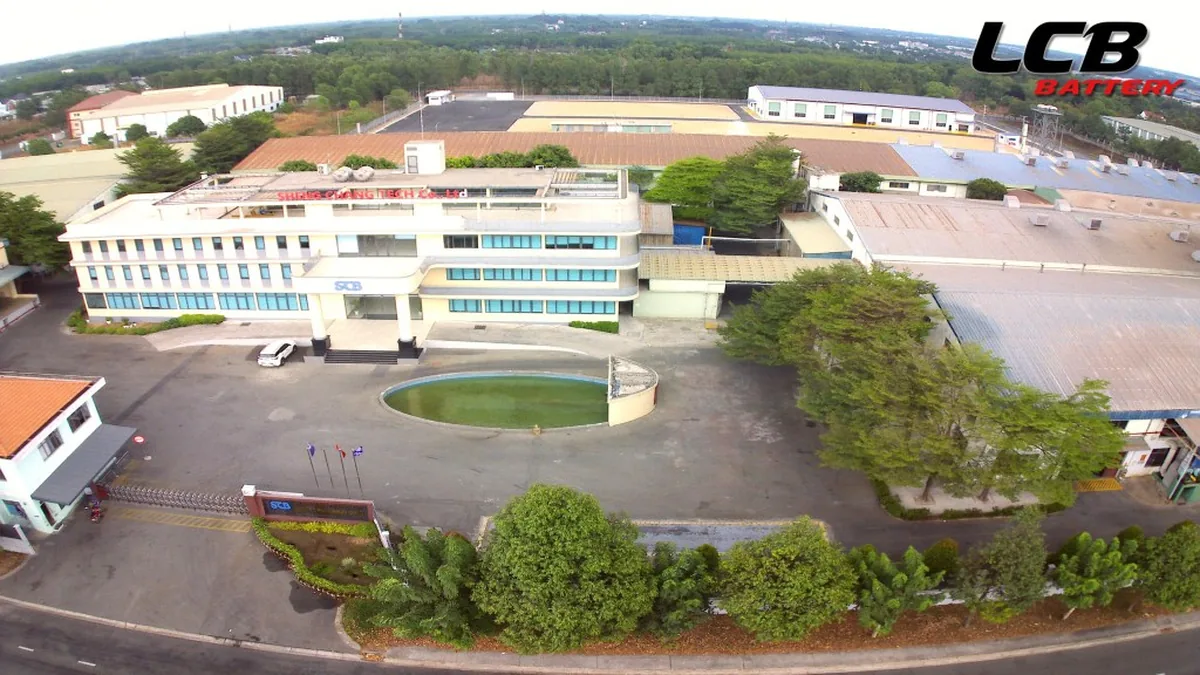
Scene 1 – Aerial view
Purpose: The first footage of the factory gives viewers a glimpse of its true scale in a few seconds. This is the first question customers ask: how big is the factory, and what is its layout?
How to film: A drone flew in from the outside, capturing the entire complex including the factory, warehouse, and loading/unloading area. The slanted sunlight of early morning or late afternoon highlighted the factory buildings; the midday sun made the corrugated iron roofs gleam white.
For example: LCB Battery's 2025 Factory Tour video combines drone footage with production line tracking, filmed over one day at two factories in Binh Duong. For Hoang Kim Precision, the drone footage captures a panoramic view of the Thu Duc factory and its 500KW solar power system.
Scene 2 – Gate, sign, and location
Purpose: This footage of the factory shows where the workshop is located and which industrial park it belongs to.
How to film: One shot shows the approach from the road leading to the gate, another close-up of the sign, filmed when the parking lot and entrance are clear.
For example: Tanaka Precision Vietnam's profile video showcases its factory in Thang Long II Industrial Park, Hung Yen. The flycam video by NTP Group opens with an aerial view, capturing the gate, signage, and the road in front of the factory.
Scene 3 – The production line follows the correct sequence of steps.
Purpose: Factory footage, showing the production process, reveals which stages the business handles itself. This is the part that B2B partners examine most closely.
How to film: The footage follows the product's path, with different camera angles for each stage. Workers appear in real action, not staged.
For example: SPON's profile video was filmed in one day at three workshops in Tay Ninh. The video sequentially shows seven stages: frame and lifting fork fabrication, workpiece cutting, structural welding, surface treatment, painting, wheel production, assembly, and inspection. Viewers can see that SPON handles the core processes itself, not just assembly.
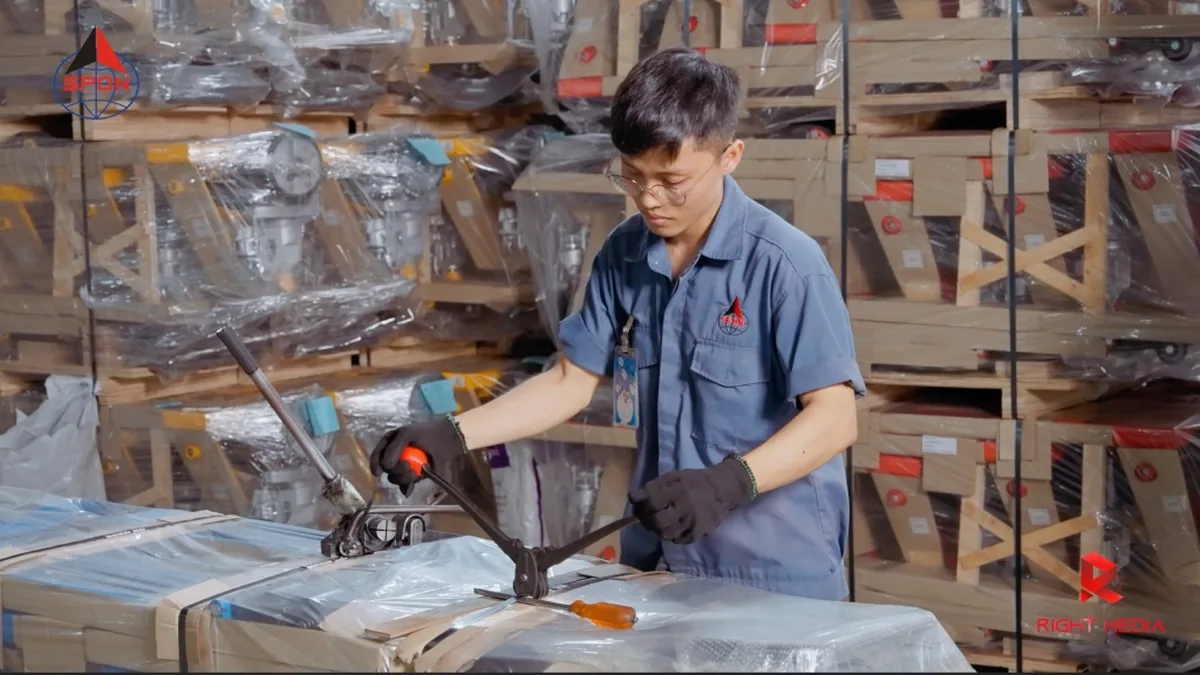
Scene 4 – Close-up of the machining details
Purpose: The close-up shots of the factory demonstrate accuracy. The wide shots show the scale, while the close-ups showcase the craftsmanship.
How to film: Use a telephoto or macro lens, placing the camera close to the knife tip, weld seam, or product surface. Additional lighting is needed to highlight the metal material.
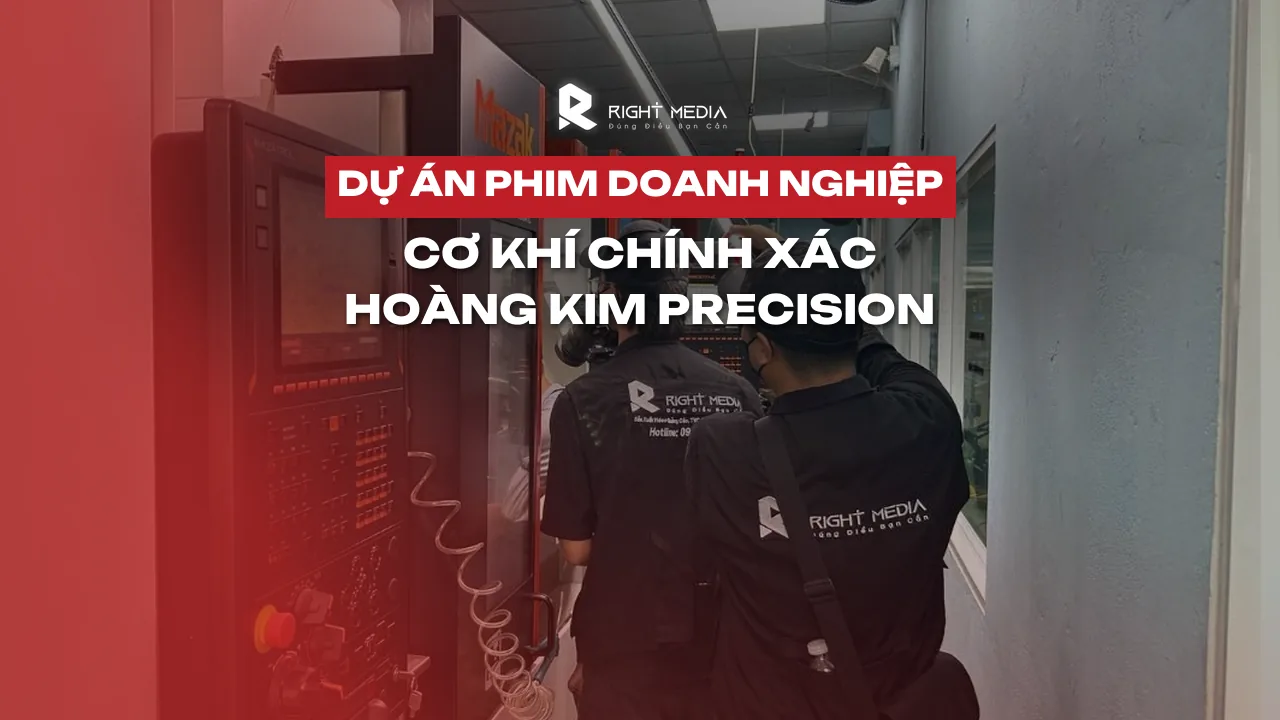
For example: Hoang Kim Precision's corporate film dedicates significant screen time to close-ups of CNC drills, wire-spark cutting, and the movement of 3D measuring machines.
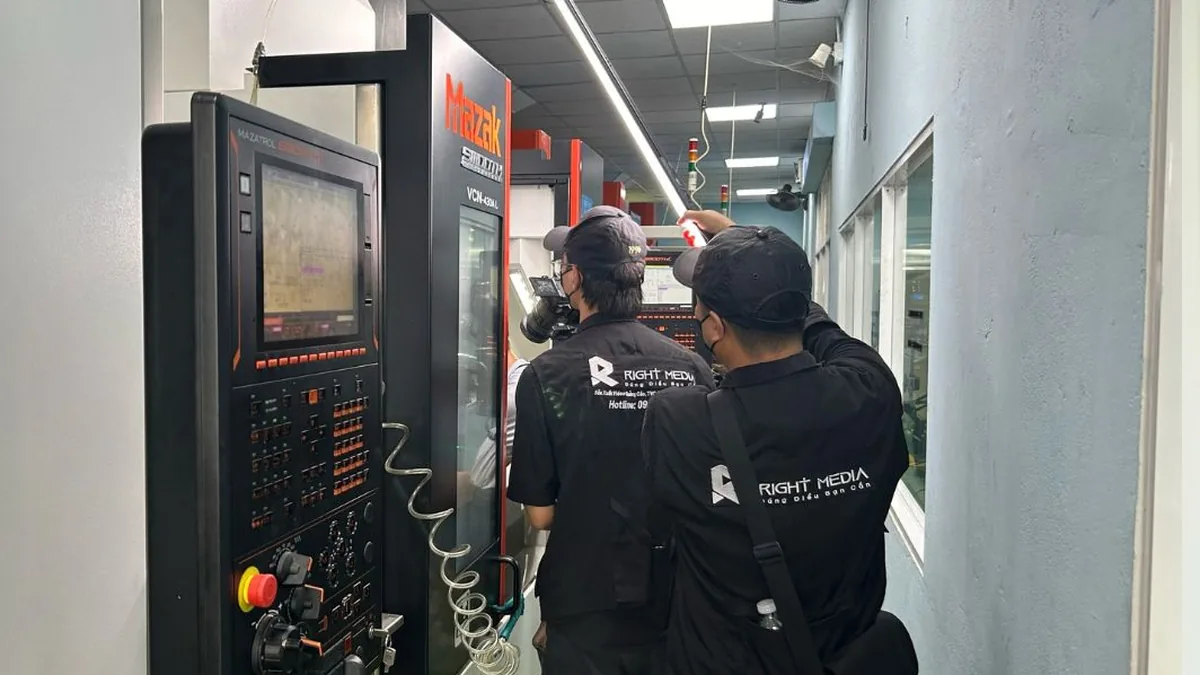
Corporate film Hoang Kim Precision has delivered three versions: Vietnamese, English, and Japanese. View project details.
Scene 5 – Quality Control and the Lab
Purpose: Answering the question "how to ensure uniformity in shipments." For exporters, this is often more important footage of the factory than footage of the machinery running.
How to film: The video shows QC staff measuring, recording, and comparing samples.
For example: The longest section of the LCB Battery film is about quality: the SPC system monitors stability and two labs test everything from raw materials to finished products. The film Far Eastern Polytex features footage of the quality control lab and factory personnel.
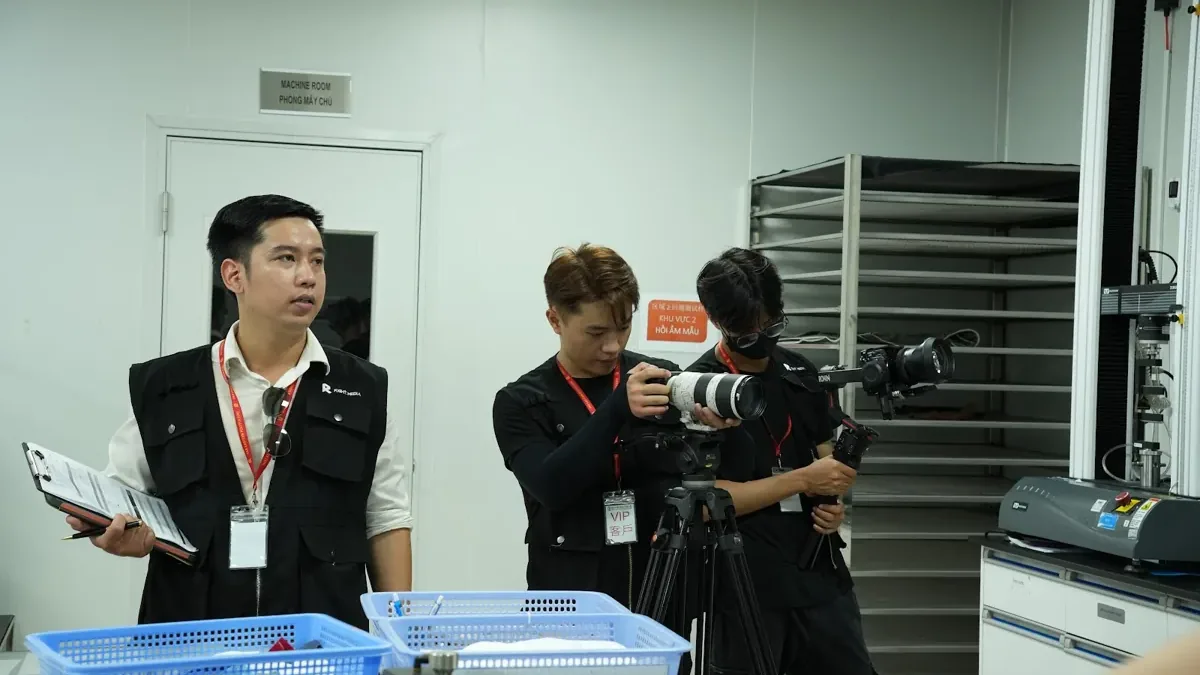
Scene 6 – People are working, meeting, and training.
Purpose: The footage shows that the factory actually has people operating it. The scenes show people working in the factory, both in sales and recruitment.
How to film: Record shift handover meetings, training sessions, and engineering team discussions on blueprints. Filming should ideally take place during a normal workday.
For example: Alongside the production line, the crew recorded meetings, employee training sessions, and scenes of workers operating machinery at Tanaka. The video was delivered in two versions: a full version for partners and a shorter version for recruitment.
Profile video of Tanaka Precision Vietnam, with Japanese subtitles for partners. View project details.
Scene 7 – Leaders and key personnel speak in front of the microphone.
Purpose: Give a face to the brand.
How to film: Seated interview, two computers, lapel microphones, backdrop depicting a production area or office with a logo. Questions are sent in advance to allow the interviewee to prepare.
For example: Kyodo Sojitz Feed (KSF)'s corporate film features scenes of Japanese and Vietnamese management teams. The film Far Eastern Polytex includes employee interviews for recruitment purposes.
Scene 8 – Numbers and certifications appear on the screen.
Purpose: This helps viewers remember the capabilities through numbers instead of descriptions. This part is done using graphics overlaid on real factory footage.
How to film: Film a sufficiently long background shot (camera setup, warehouse, certificate board), then overlay motion graphics in post-production. The data must be approved by the business before the editing day.
For example: The Hoang Kim Precision video displays figures about the machinery fleet, such as 47 CNC milling machines and 13 CNC lathes. LCB Battery's Factory Tour video shows 16 production lines with a capacity of 1,000,000 products per month. The LCB video also lists its certifications: ISO 9001:2015, IATF 16949:2016, ISO 14001:2015, and ISO 45001:2018.
LCB Battery's corporate film is available in both Vietnamese and English. View project details.
Scene 9 – The product reaches the consumer.
Purpose: The footage connects the factory setting with life outside. Viewers understand where the product is used and why quality in the factory is important.
How to film: A short filming session at the client's source area, construction site, or facility, if permitted.
For example: CJ Foods' Kimchi Bibigo film takes viewers from the cabbage growing region in Bao Loc to the factory in Kizuna Industrial Park, and finally to the dinner table. For the Branded Film NPK Phu My Sugarcane Fertilizer, the crew spent two days filming at a sugarcane farm in Ninh Thuan, where the fertilizer is actually used.
Summary of 9 factory scenes
| Scene | Partner's question | Main equipment | The factory needs to prepare. |
|---|---|---|---|
| 1. Overview | How big is the factory? | Flycam | Request flight permission, clear the airfield. |
| 2. Gates and signs | Where is the factory located? | Gimbal | The parking lot is tidy, and the signage is clean. |
| 3. Necklace | Which part do you do yourself? | Gimbal, slider | Machine schedules vary by zone. |
| 4. Machining details | Is that correct? | Telephoto, macro, flash | The most beautiful sample product |
| 5. QC, lab | Is the quality consistent? | Handheld device, flashlight | QC staff, filming area |
| 6. Human beings | Who operates it? | Two machines | Meeting schedule, training schedule |
| 7. Interview | Who is responsible? | Two machines, built-in microphones. | Speaker, pre-approved questions |
| 8. The number | What is your level of competence? | Post-production graphics | Data and certifications have been approved. |
| 9. Actual product | Where is it used? | Gimbal, drone | Contact customers, source of raw materials. |
What preparations are needed from the business side to shoot a factory video?
The company needs to prepare four key areas: safety, factory visuals, security, and operational schedule. Most risks on filming day stem from a lack of coordination in any of these four areas. The checklist below should be sent to administration and the foreman one week before filming, along with a list of factory scenes to be filmed.
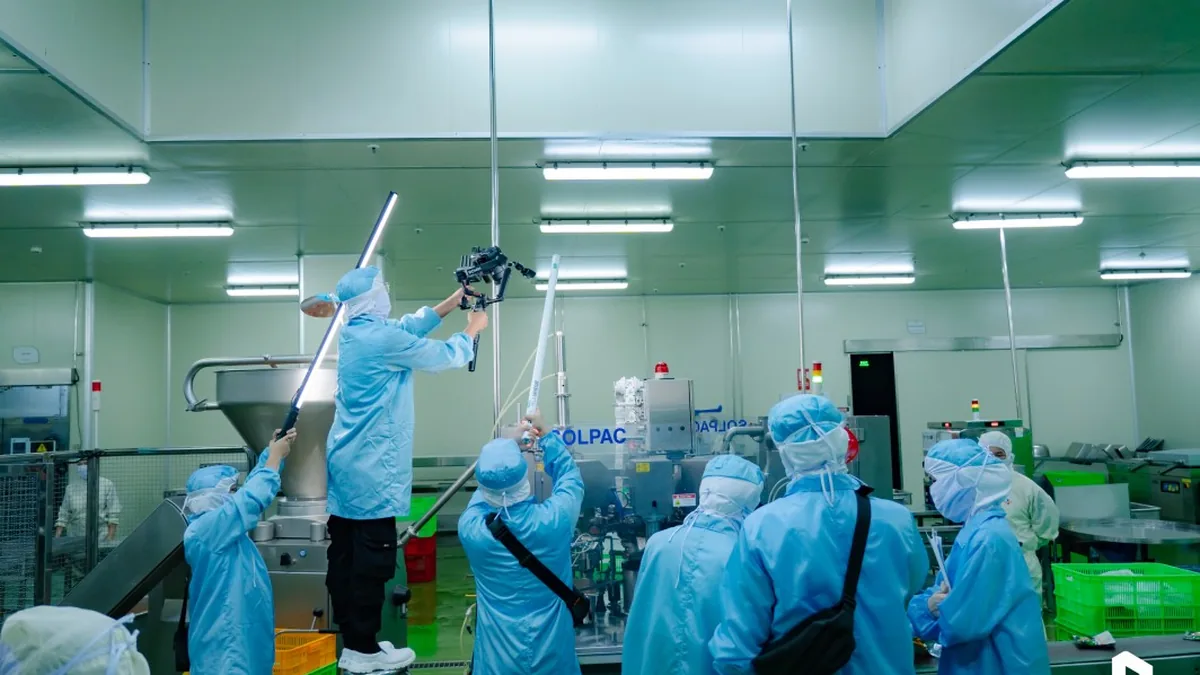
- Workplace safety: The list of crew members, equipment brought into the factory, and protective gear are regulated according to each area. At the CJ Foods factory, crew members wear protective gear and disinfect themselves before entering the production line.
- Uniform: Workers must wear new or clean uniforms, the correct color according to their department, and wear identification badges and full protective gear.
- 5S in the filming area: Clear the walkways, repaint the road markings, and remove excess electrical wires and posters in areas where factory scenes were filmed.
- Security, NDA: Areas where filming is prohibited, client products that have not yet been released, and internal software screens. If necessary, sign a confidentiality agreement with the production company before filming begins.
- Machine schedule: Identify the time slots when each production line is running smoothly, and determine which areas can be paused for a few minutes for close-up shots.
- Permission requested from drone: Many industrial zones require advance flight booking, along with a list of personnel and equipment. Areas near airports require separate procedures.
- Data and certifications: The list of figures has been approved by the management, along with the logo file and original certification.
- Coordinator: A factory employee accompanied the crew throughout the filming day and had the authority to open the area's doors and call the workers.
How long should a factory video script be?
Most of the sales videos are between 2 and 5 minutes long. The LCB Battery video is less than three minutes long, intended for screening at the international exhibition booth, while the Factory Tour is over four minutes long, allowing visitors from afar to closely observe each stage. The KSF video is 5 minutes and 8 seconds long, tracing the journey from the two Japanese shareholders to the factory, technology, and customers.
The length and number of factory shots should adhere to the purpose. Far Eastern Polytex made a full 8-minute 08-second version, then added recruitment and company introduction segments.
Language also influences the script for factory videos. Hoang Kim Precision has three versions: Vietnamese, English, and Japanese; ABC Bakery has a 5-minute 36-second Vietnamese version and a 5-minute 39-second English version. Commentary should be finalized before filming to ensure the footage matches the intended message.
Estimated cost for a factory scene set.
The cost of a factory video shoot depends primarily on the number of filming days and the number of language versions. The table below shows Right Media's reference prices for factory videos, using the same pricing scale as their service website.
| Package | Reference price | Scope | Suitable for |
|---|---|---|---|
| Standard | From 15,000,000 VND | 01 buổi quay flycam, video 1–2 phút, ekip 1 người, theo quy trình của nhà máy, 02 lần chỉnh sửa, bàn giao video 4K | SME, xưởng nhỏ |
| Professional | Từ 59.000.000 đ | 01 ngày quay, video 2–3 phút, ekip 4+ người, kịch bản + director treatment, flycam + nhạc bản quyền, 03 lần chỉnh sửa, bàn giao video 4K và toàn bộ source đã quay, bảo hành 3 tháng | Medium-sized enterprises |
| High-class | Từ 199.000.000 đ | 02 ngày quay, video 3–5 phút, ekip 5+ người, kịch bản + director treatment, lồng tiếng Việt, English, VFX chuyên nghiệp, bàn giao video 4K và toàn bộ source đã quay, ổ cứng 1 TB lưu trữ toàn bộ dự án, bảo hành 12 tháng | Large enterprises, FDI |
Reference price, excluding VAT, applicable to Ho Chi Minh City and a 100 km radius.
If you need a film that tells a business story, not just about the factory, you might want to consider other options. corporate video production services.
Với xưởng gia công CNC, khuôn mẫu hay linh kiện chính xác, Right Media có gói riêng tại trang quay phim giới thiệu công ty gia công cơ khí CNC.
Frequently Asked Questions
Is it necessary to stop production during filming?
Usually not. The crew should film during a normal workday to capture real activity. Only a few close-up shots require stopping a camera for a few minutes to set up the lights. This should be agreed upon with the foreman beforehand, with a specific timeframe, so that other production lines can continue running.
Should small factories and old workshops be converted?
Yes, if the workshop is tidy and the shots focus on its strengths. A small but clean workshop with skilled workers is still more convincing than a large, cluttered one. Choose fewer areas and dedicate more time to close-up shots of the factory, products, and workers.
What should be done when workers are reluctant to appear on camera?
Each team should be notified in advance, explaining where the video will be used and obtaining the consent of those appearing in close-up shots. Most factory scenes on the assembly line can be filmed from the hands, angles, or from behind. Those who are shy can continue working normally outside the frame, while close-up shots are for volunteers.
Which season is the best time to film the factory?
The dry season is generally more favorable because drone filming is less likely to be delayed due to rain or wind. If filming is unavoidable during the rainy season, reserve a day for outdoor shots. Additionally, avoid inventory weeks, audit weeks, or peak order periods, as the factory is difficult to clean and schedule.
Businesses are planning to film the factory premises so that viewers can watch. factory video recording services Contact Right Media, or call hotline 0901 391 002 to receive a list of sample footage for your industry.