Filming a food factory is different from filming a mechanical workshop at one point: the crew must enter a clean production area without contaminating it and without slowing down an ongoing shift. Right Media filmed at ABC Bakery, CJ Foods' kimchi and processed food factory, Kyodo Sojitz Feed's animal feed factory, and Khanh Hoang Seaprex's surimi processing plant. This article recounts what the factory required, how the crew followed the instructions, and which scenes are essential for a food factory video.
How is filming a food factory different from filming other factories?
Three key differences determine how to plan:
- Cleanliness is a requirement for entry. Food production areas have specific regulations regarding attire, access routes, and disinfection. Crews who do not comply are denied entry, even if they have signed contracts.
- The assembly line doesn't stop because of the camera. The bread is in the oven, the kimchi is fermenting, the fish has just arrived at the port. The filming must follow the actual production rhythm; there's no room for "running back to the camera crew."
- Food has to look delicious. When making a film for CJ Foods Vietnam, the team set one principle: viewers must "find it delicious" through the visuals. Lighting, color, and close-ups had to serve that purpose, not just be machine-recorded shots.
Viewers of food factory videos are typically importers, supermarket chains, restaurant chains, or distributors. They watch to verify the exact points that the audit team will be checking: raw materials, clean production areas, quality control, packaging, and warehousing. The video therefore serves as a visual portfolio, similar to how ABC Bakery used its English version to send to over 300 domestic and international partners.
What hygiene regulations must the crew follow when entering the factory?
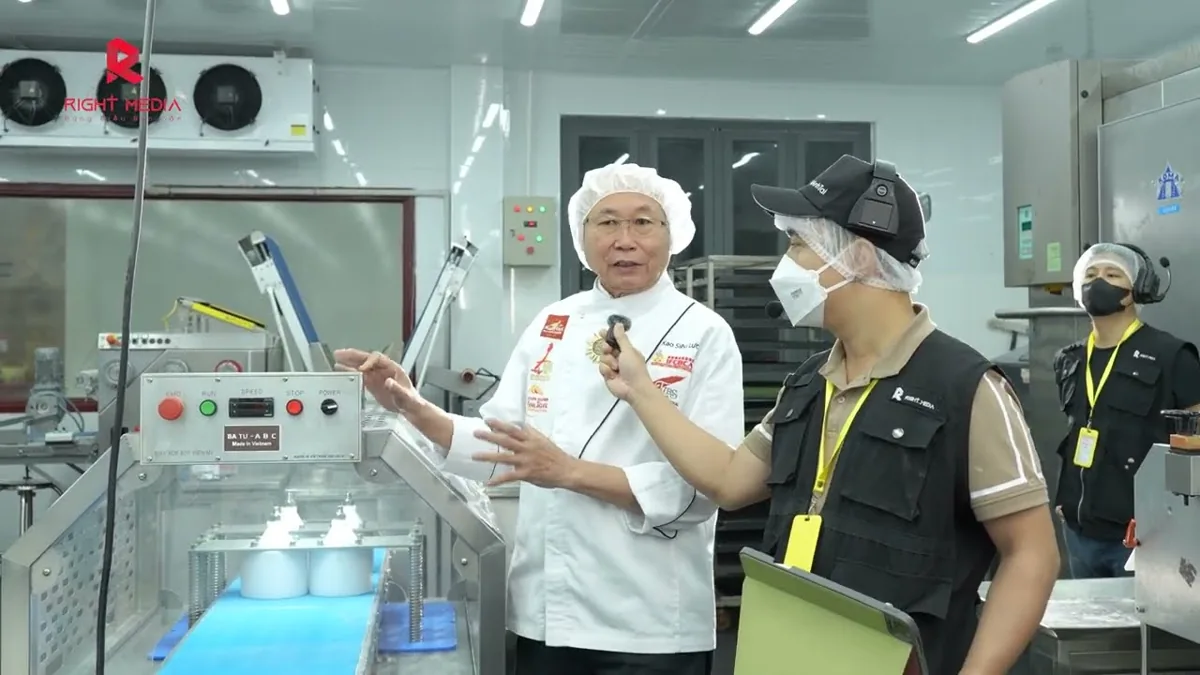
The Right Media team entered the food production area following all regulations for factory employees: hairnets, masks, protective clothing, shoes or shoe covers, hand and equipment sanitization before entry, following designated routes, and always being accompanied by a factory representative. This is how they did it at ABC Bakery and CJ Foods.
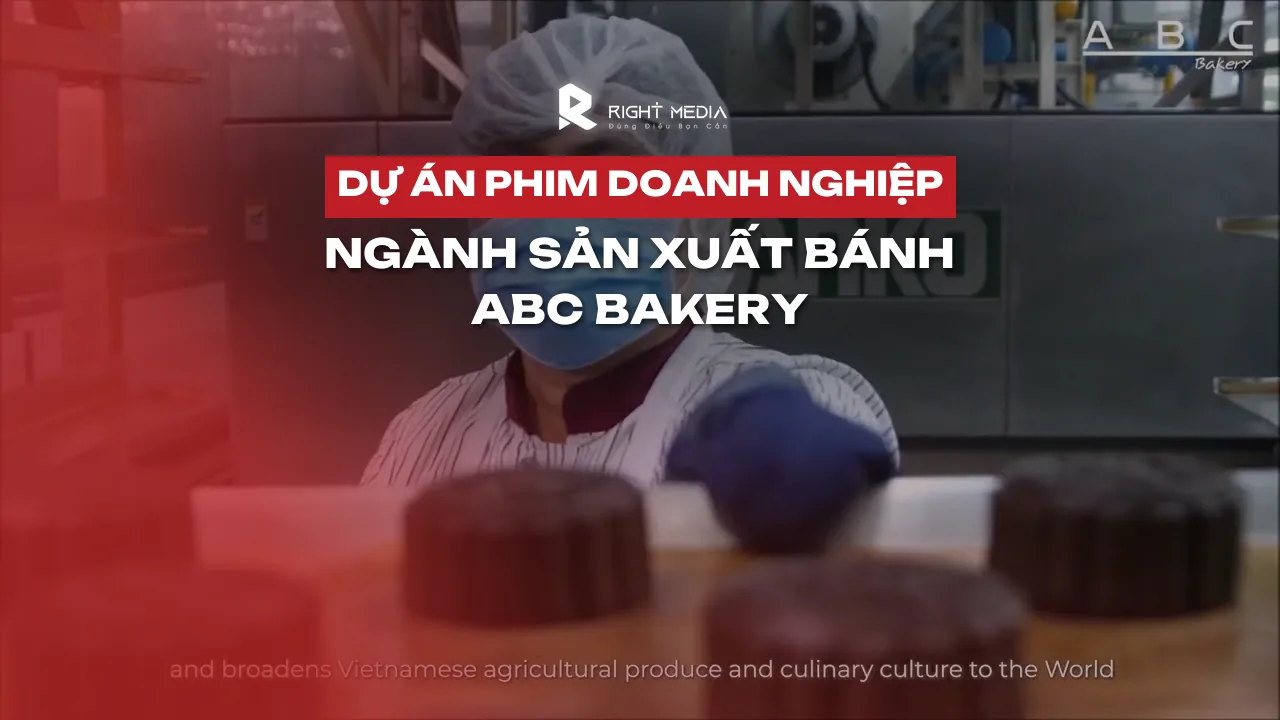
The ABC Bakery film was shot in a clean production area with protective gear as required by the factory regulations. View project details.
Common regulations and how the team handles them:
| Factory regulations | Affects the filming | How the team did it |
|---|---|---|
| Full protective gear: hairnet, face mask, gown, shoe covers. | The camera is harder to operate, gets hot, and the viewfinder fogs up easily. | Wear the same outfit throughout the session; take turns so the cameraman can rest; prepare lens cleaning cloths. |
| Disinfect your hands and equipment before entering the clean area. | Bulky equipment is difficult to sterilize. | Only bring the minimum amount of equipment, and disinfect tripods, gimbals, and lights before entering. |
| Follow the established procedures, do not go against the flow of production. | You are not free to choose the camera angle. | A preliminary survey was conducted, and camera angles were fixed along the walkway; a factory representative then led the crew through each area. |
| Do not stop the assembly line, do not touch the product. | The scene could not be staged. | Filming on location, following a pre-planned scene breakdown for each area. |
| Some areas were not filmed (recipes, R&D room). | Missing scene if not known beforehand. | Identify the restricted area during the survey, and replace it with a different scene in the script. |
At ABC Bakery, the entire crew wore hoods, masks, and protective clothing before entering the production area; the cameras followed the molding line, ovens, cooling area, and packaging. At the CJ Foods factory, the film crew wore protective clothing, and workers in protective gear appeared frequently in the film, as it was direct evidence of the factory's hygiene standards.
Does filming inside a food processing plant disrupt the production shift?
No, if the scene was surveyed and scripted beforehand. Right Media filmed while the production line was running, according to a filming schedule agreed upon with the factory, so the production shift didn't have to stop or restart for the cameras.
Here are some specific methods used in completed projects:
- Survey each location before filming begins. For CJ Foods, the film takes viewers through the kimchi production area, the seafood processing area, and the cold storage facility. The scene breakdown was pre-planned for each area to ensure filming did not disrupt food safety and hygiene procedures.
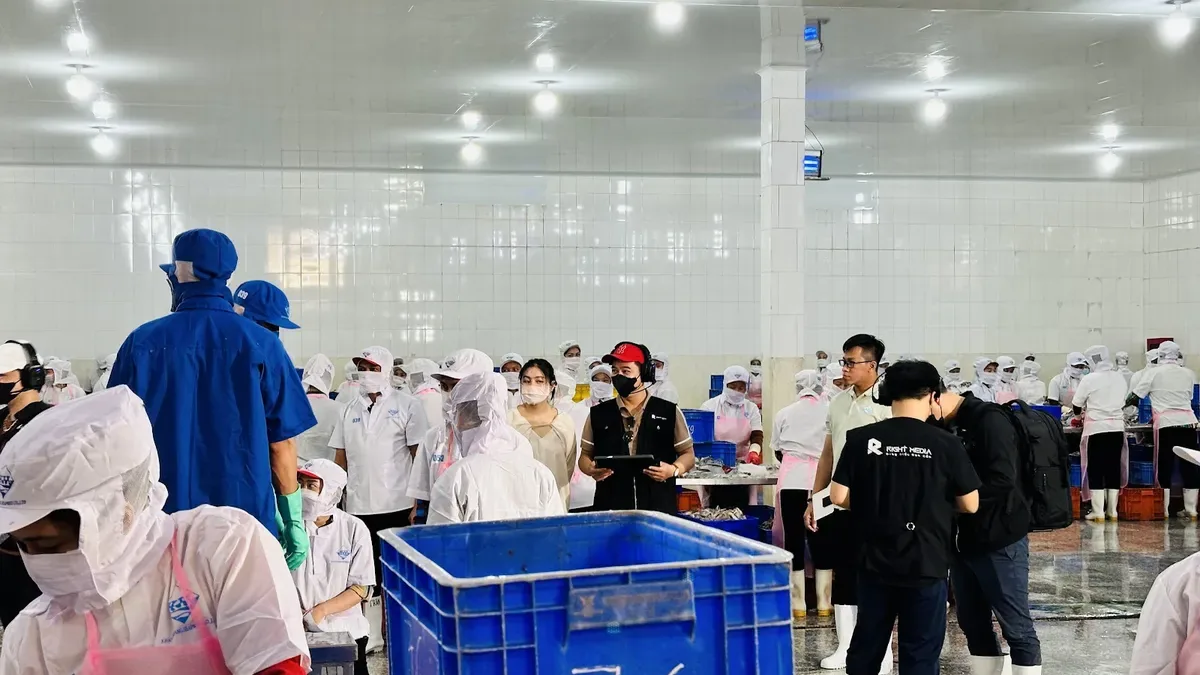
- Choose a time slot by shift. Some tasks only take place at specific times, such as baking a large batch of bread or bringing fish to port. The filming schedule follows that rhythm. For Khanh Hoang Seaprex, the filming schedule follows the journey of the fish: from the fishing port, onto the refrigerated truck, into the processing area, and ending at the office.
- Factory staff accompanied us and reviewed the photos on-site. Representatives from ABC Bakery and CJ Foods accompanied the crew throughout the filming, reviewing scenes on screens right in the factory. Any scenes that weren't allowed were immediately known, eliminating the need to reshoot on another day.
- The interview was conducted without the sound of the camera. The interviews with leaders and employees were filmed in the office, not in the factory.
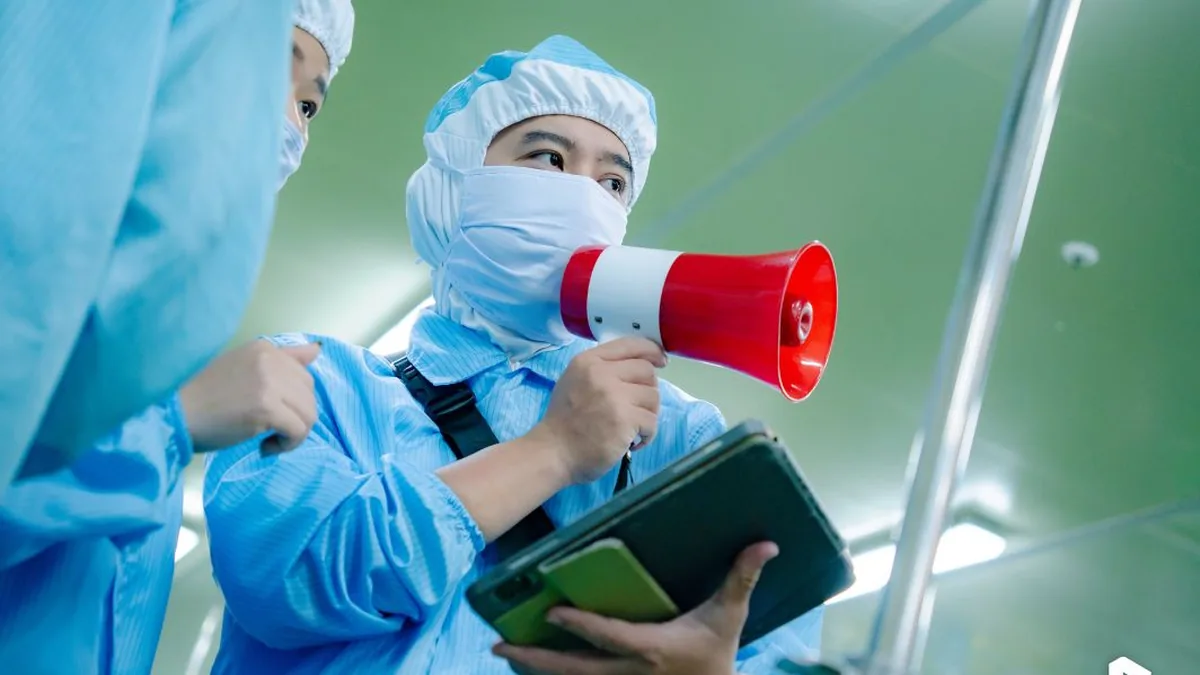
Ms. Nguyen Thi Long An, Marketing Communication Manager of CJ Foods Vietnam, commented after the project that the team "closely adhered to the deadline and were very understanding of the client's unforeseen circumstances." Filming in a running factory always involves unforeseen issues; the team's job was to handle them while still meeting the handover deadline.
What scenes are needed for filming a food factory?
A food factory video should focus on the points that the client's purchasing department will inspect. Based on past projects, Right Media typically creates videos using six scene groups:
This video shows the production process of Bibigo kimchi by CJ Foods, from the Bảo Lộc sourcing area to the packaging line. View project details.
1. Raw materials
The first question consumers ask about food is where the ingredients come from. The film Kimchi Bibigo opens with a cabbage field in Bao Loc, showing farmers harvesting and a close-up of dew drops on the leaves. The film Khanh Hoang Seaprex opens with a fleet of ships and a fishing port, because the fish used for surimi are caught by the company's own fleet.
2. Clean production area and production line
This is the longest part. The camera follows each stage: soaking, mixing, and fermenting kimchi; shaping, using long ovens and rotating ovens for the cakes; washing, deboning, pressing, seasoning, and freezing surimi. Each stage is a short scene, strung together to form a closed loop on the screen.
3. Quality control
The laboratory, QC staff taking samples, testing equipment. HACCP, ISO 22000, BRC, FSSC, and Halal certifications should be shown through the actual process being performed, followed by the certification name graphic. Both ABC Bakery and Khánh Hoàng's videos follow this approach.
4. Packaging and cold storage
The film features an automated packaging line, vacuum sealing, a cold storage area for frozen cakes, and a finished goods warehouse. For Khanh Hoang, the film concludes with the factory section at the 3,000 m² finished goods warehouse, where goods await shipment for large orders.
5. Human beings
A baker who once competed internationally at ABC Bakery, a farmer from Bao Loc sharing his story of growing Chinese cabbage with CJ Foods, and the Japanese and Vietnamese management team of KSF. Real people making films is more believable than commentary.
6. Competency data
ABC Bakery's production capacity is 20,000 hamburgers per hour, KSF produces 250,000 tons of animal feed annually, and Khanh Hoang harvests over 17,000 tons of seafood annually. These figures are displayed graphically on the screen, right next to the real-life scene.
How can I make food look delicious in photos?
Food looks delicious when filmed up close, slowly, and in the right colors. Three things the Right Media team does in every food project:
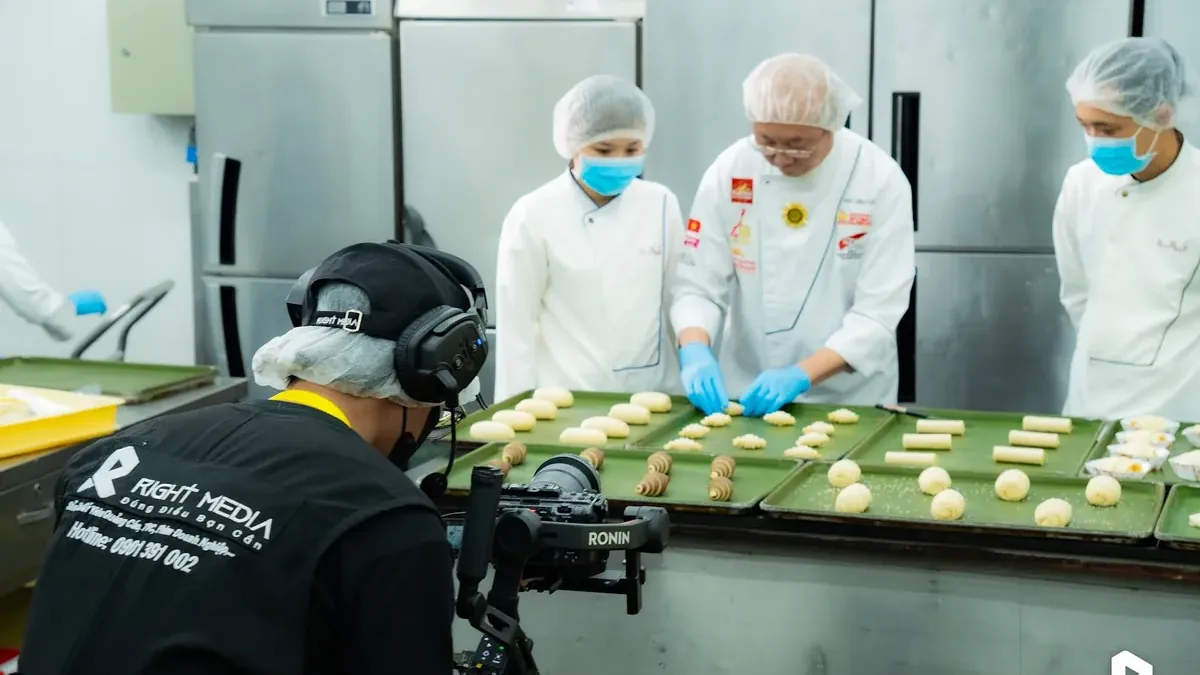
- Close-up and slow motion: The camera zooms in on the ingredients and processes such as wrapping rice paper, making kimchi, and making dumplings. In slow motion, viewers can clearly see the smoothness of the flour and the freshness of the vegetables.
- The light is bright, warm, and clean. Food factories typically use white lights; the crew adds extra lighting to prevent the products from appearing gray and to make the production area look clean and realistic.
- Color correction to maintain natural colors: With Bibigo Kimchi, the color correction process emphasizes the green of the napa cabbage and the red of the kimchi sauce. With CJ Foods, the color tone is kept natural to make the dish look safe and appetizing.
The sound was also kept authentic: the sounds of the assembly line machinery were retained in the CJ Foods film, so that the production scenes sounded like you were standing in the factory.
The Right Media food factories have been filmed.
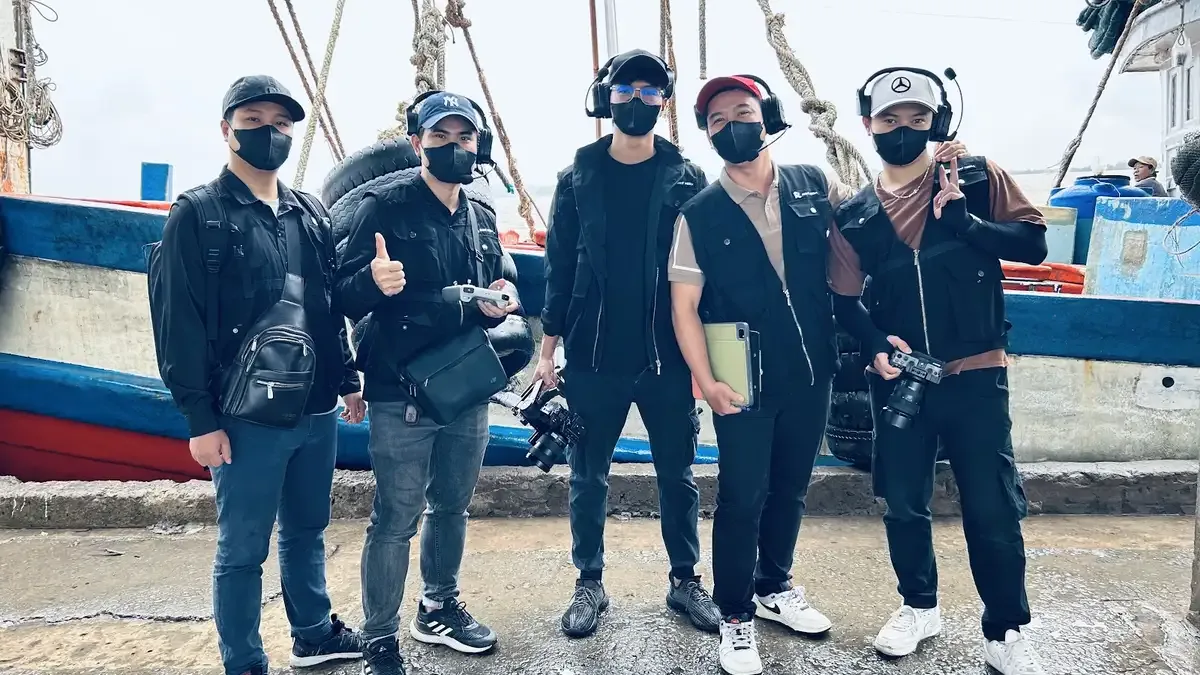
- ABC Bakery: bakery workshop, Japanese long oven and Swedish rotary oven, refrigeration and packaging area; both Vietnamese and English versions available. See more. Behind the scenes of the filming in the bakery..
- CJ Foods VietnamFilming took place over three days at the factory complex, studio, and office; the full version is 8 minutes long, and the shortened version is 5 minutes long, for use in bidding processes for supermarket chains.
- Kimchi BibigoFrom the cabbage growing region of Bao Loc to the factory in Kizuna, the fermentation and packaging process meets HACCP and BRC standards.
- Kyodo Sojitz Feed: Animal feed factory in Long An, with Japanese thin-pressing and spray-drying lines; carried out concurrently with the 2023 brand repositioning.
- Khanh Hoang Seaprex: fleet of vessels, surimi and fishmeal production lines, English-language films for importers.
- Besides factory films, Right Media also produces TV commercials for food products in their studio. Lai Phu and House FoodsThis is used when businesses need both factory footage and product advertising.
Businesses need a factory video that partners can view before a trade show or audit. factory video recording services by Right Media, or read more What is a factory film? If you're undecided between factory videos and product videos.
This video introduces KSF animal feed products and was filmed at the Long An factory. View project details.
Nếu doanh nghiệp chuẩn bị tham gia hội chợ, có thể cắt một bản 30–60 giây từ phim này để chiếu tại gian hàng; tham khảo dịch vụ quay video quảng cáo hội chợ by Right Media.
Frequently Asked Questions
Do the crew members need health certificates to enter the food production area?
It depends on the factory. Some factories require visitors to enter the clean area to meet the same conditions as employees. Right Media inquired about this during the site visit and prepared according to each factory's requirements, so that filming wouldn't be stopped at the entrance on the day of shooting.
How many days does it take to film a food factory?
One to three days depending on the number of areas and locations. CJ Foods filmed for three days at the factory, studio, and office. Bibigo Kimchi only needed one day in the Bao Loc growing region because the factory scenes were already available from a previous project.
Is it possible to film inside cold storage and freezer areas?
Yes, with short timeframes for each entry and equipment being warmed up before entry, to prevent condensation on the lens. Cold storage scenes are typically short, used to demonstrate the cold chain and capacity, and don't require long takes.
Did the factory get its footage approved before the film was released?
Yes. Factory representatives review the scene on-site, and a draft is sent for approval before finalization. With CJ Foods, the final version goes through review by corporate management before being released as a file.
What types of videos can be made from a single studio shoot?
Typically, this includes full factory footage, abridged versions for trade shows, English versions for partners, and product videos. KSF uses shared factory footage for corporate films and product introduction videoCJ Foods reused factory sources for the Kimchi Bibigo movie.
Food businesses preparing for Vietfood, Foodexpo, or an importer's audit should contact Right Media for advice on a filming schedule that fits their production shifts and factory hygiene regulations.
Right Media – A specialized media partner for B2B businesses, factories, and industrial parks.
CONTACT US
- Ho Chi Minh City: 06 Binh Quoi Street, Binh Quoi Ward, Ho Chi Minh City
- Hanoi: 105-E5, Trung Tu Street, Dong Da District, Hanoi
- Email: info@rightmedia.vn | anhtai@rightmedia.vn
- Hotline: 0901 391 002