
A TV commercial script is a scene-by-scene description of an advertisement: what images, sounds, and commentary are used, and how many seconds each scene lasts. This article presents three sample TV commercial scripts (15, 30, and 60 seconds), created from real TV commercials that Right Media produced for DOTACO, VNRA, and House Foods. Each sample includes a storyboard, instructions on transitioning to a storyboard, and a checklist for review before filming.
What is a TV commercial script?
A TV commercial script is a document that divides the commercial into scenes, specifying the images, sound, voiceover, and duration of each scene. This is the version that the client approves before filming, and it's also the version that the director, cinematographer, and post-production team use. A good script allows everyone to visualize the film before shooting begins.
With TV commercials, length is the biggest constraint. A 30-second clip only has room for about 6 to 8 scenes and a few lines of commentary. Therefore, the script must take every second into account, not just convey the idea.
What is the difference between a written script, a storyboard, and a storyboard?
| Document | Content | Who uses it the most? |
|---|---|---|
| Concept | A short segment outlining the main idea and the emotional tone the film aims for. | Customers, to choose a direction |
| Text script | The plot development, dialogue, and commentary. | Screenwriter, sound engineer |
| Storyboard | Scene, images, sound, duration | Director, cinematographer, post-production |
| Table | Drawings or illustrations for each frame | Both the team and the client |
The three examples in this article are storyboards, the kind of scripts Right Media uses when finalizing content with clients.
What sections should a TV commercial script include?
A complete TV commercial script includes a general information section at the beginning and a storyboard at the bottom. The beginning answers: who the film is for, what the message is, how long it is, and where it will be shown. The storyboard divides the film into an opening, middle, and ending.
- Main message: One phrase viewers should remember: For DOTACO, it's "Roman tiles – a sustainable solution for your roof."
- Viewers: Who, where, and what are they worried about? VNRA aims to reach rural viewers through television.
- Duration and broadcast channel: Decide on the number of scenes and the aspect ratio.
- Voiceover and music: Male or female, quiet or cheerful, with or without commentary.
- Required information: The logo, slogan, place of purchase, and hotline are in the last box.
The opening should hold the viewer's attention for the first few seconds. The body should show what the product solves. The closing should include the brand name and an invitation.
Sample 15-second TVC script: shortened version of the DOTACO roofing TVC.
DOTACO's 40-second TV commercial for Roman-style tile roofs is filmed in a single, seamless shot on a dolly at the factory, without using 3D. The camera pans across the tile color palette, while images and sounds sequentially evoke four weather conditions: intense sunshine, strong winds, thunderstorms, and hail. The narration is a strong, decisive male voice.
15-second storyboard
The 15-second template below retains that idea and compresses it into a shorter broadcast timeframe. This is a suggested shortened version, suitable when a business already has a longer version and needs an additional brand reminder.
| Scene | Image | Audio/Voice | Duration |
|---|---|---|---|
| 1. Open | The machine began running over the Roman tile colors arranged side by side. | Background music is playing, but there are no lyrics yet. | 0–2 seconds |
| 2. Sunshine | The harsh golden sunlight shone down on the roof tiles. | A male voice mentions worries about the summer heat. | 2–5 seconds |
| 3. Wind, rain | Leaves fall, raindrops fall on the roof tiles, the machine continues to move. | The sound of wind, thunder, and rain. | 5–9 seconds |
| 4. Hail | Hail fell on the roof, but the tiles remained intact. | Impact sound | 9–12 seconds |
| 5. Conclusion | Overview of the tile color palette and DOTACO logo. | "Roman tiles – a sustainable solution for your roof" | 12–15 seconds |
Notes on writing a one-shot script
With a one-shot script, there are no cuts to correct mistakes. Camera angles, lighting, and weather effects must all be synchronized in a single take. In the original version, the crew prepared the leaves, water, lights, and fans at the studio, and then filmed everything in one day.
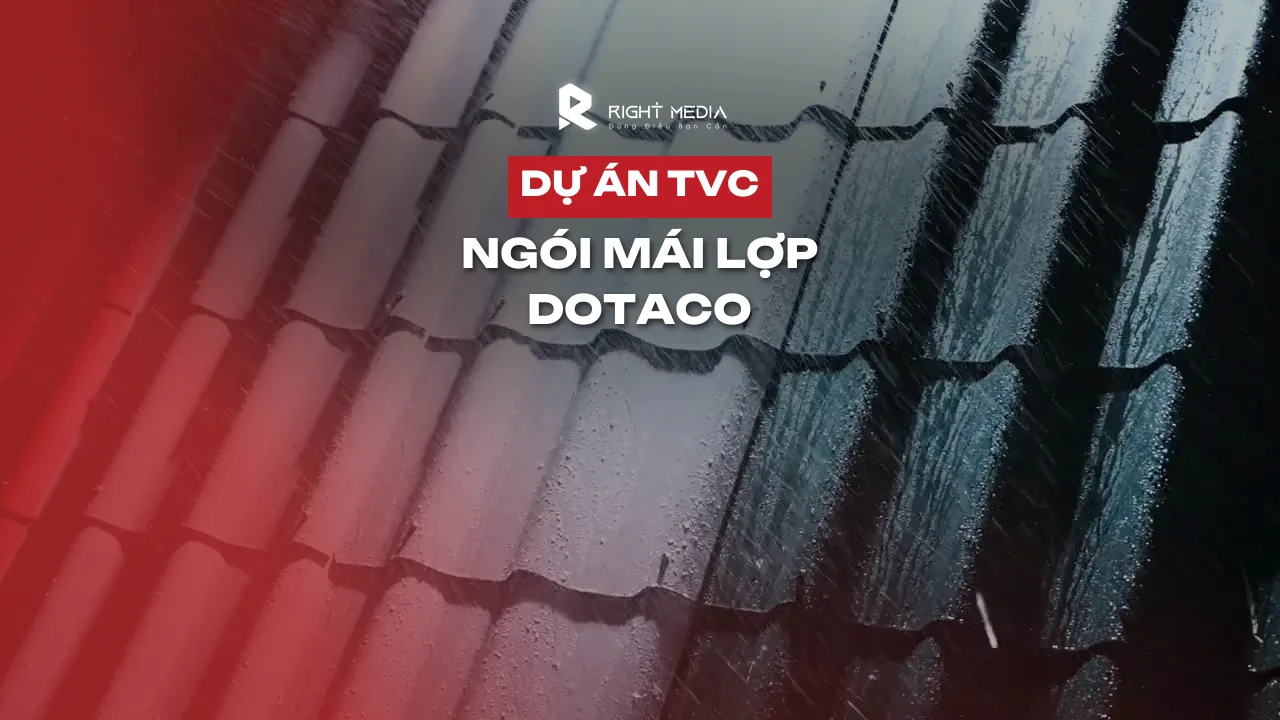
The original 40-second TV commercial for the DOTACO roofing project was filmed in a single shot without any cuts. View project details.
Sample 30-second TV commercial script: VNRA's three-generation home.
The Vietnam Roofing Association (VNRA) needed a TV commercial for fiber cement roofing sheets to be broadcast to rural viewers. Right Media proposed using the roof as a "witness to time," accompanying a family through three generations—grandfather, father, and son. The story unfolds through the pages of a family album, told in the first person through the grandson's voice.
| Scene | Image | Audio/Voice | Duration |
|---|---|---|---|
| 1. Album | The family album page opens, revealing a picture of our first, simple home. | A deep, warm male voice said, "This is the house my grandfather built..." | 0–6 seconds |
| 2. His generation | The grandfather held his son under the small roof. | “…and this is my father in my grandfather’s arms.” | 6–12 seconds |
| 3. The father's generation | The father grew up, and the house was expanded. | The story goes that when the grandchild was born, the house "became bigger." | 12–19 seconds |
| 4. Reunion | Three generations gathered together, the fiber cement wave clearly visible on the roof. | The whole family "under one roof," with warm background music. | 19–25 seconds |
| 5. Conclusion | A spacious house, VNRA identification. | A message about the roof for generations of families. | 25–30 seconds |
Why this scenario doesn't need parameters.
This TV commercial doesn't mention any technical specifications. The product is present at every stage of the house's construction, so viewers can connect the roofing panels to their own durability. The old and new scenes are combined using CGI and 3D compositing in post-production, while the filming itself took a full day in the studio.
The key takeaway from this model is the workflow. The narration is recorded as soon as the script is finalized, even before filming begins. Thanks to the accurate voiceover, the director knows exactly how long each scene needs to be.
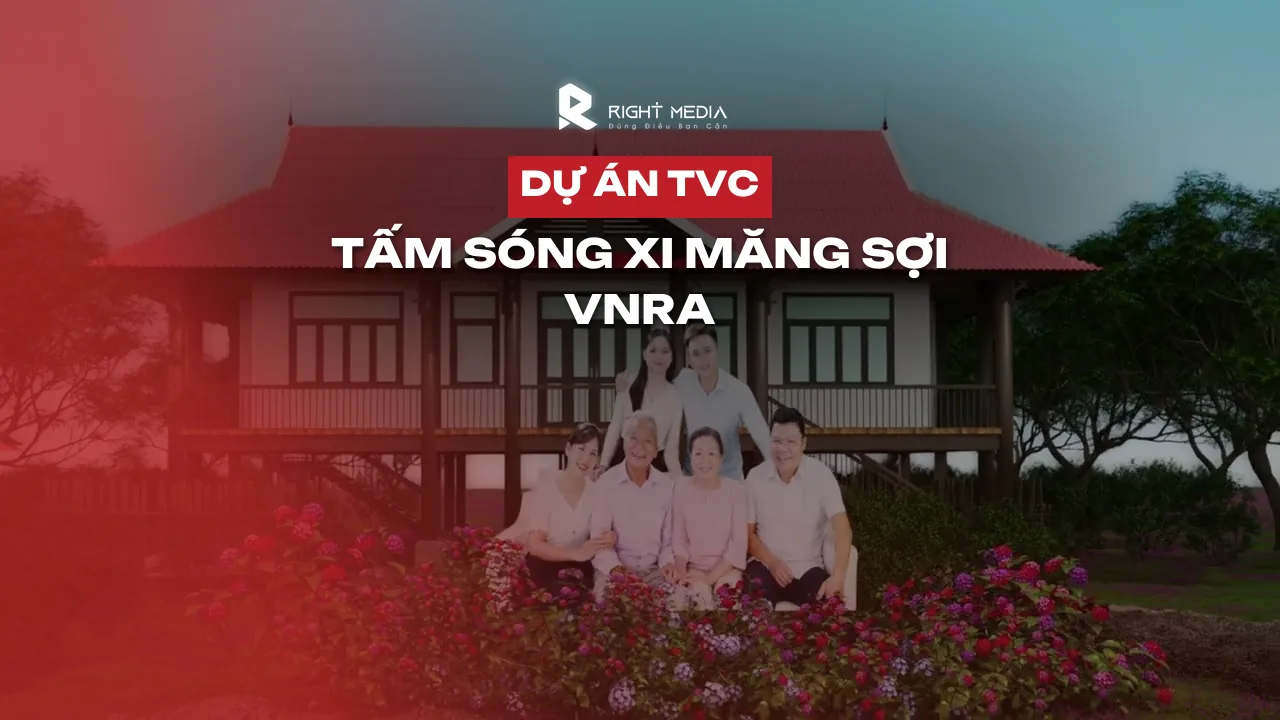
The 30-second TV commercial tells the story of three generations living under one roof and is currently airing on several television channels. View project details.
Sample 60-second TV commercial script: Four curry dishes from House Foods
House Foods wanted Vietnamese people to see that Japanese curry could be eaten with rice, bread, udon noodles, and ramen. The final idea was "1001 ways to enjoy Japanese curry." The actual video is 50 seconds long, filmed in a studio with many close-up and ultra-close-up shots, and the camera moves slowly following the food.
| Scene | Image | Audio/Voice | Duration |
|---|---|---|---|
| 1. Dining table | The table was laden with four curry dishes, steam rising from them. | Upbeat background music begins the video. | 0–5 seconds |
| 2. Curry rice | The golden-brown curry sauce is slowly drizzled over the breaded fried meat, potatoes, and carrots. | Background music, the sound of flowing sauce. | 5–14 seconds |
| 3. Curry bread | The young man broke the Curry Pan in half, saw the sauce filling inside, and took a bite. | The "crispy" sound was clearly defined. | 14–23 seconds |
| 4. Udon Noodles | The young man picks up the udon noodles, pulling them along with the sauce, and tonkatsu pork slices next to them. | The "rustling" sound when pulling noodles | 23–32 seconds |
| 5. Ramen Noodles | Curry ramen with char siu pork and soft-boiled egg. | The background music continues. | 32–39 seconds |
| 6. The Eater | The girl enjoys a plate of Tonkatsu curry rice. | Background music pitches higher. | 39–45 seconds |
| 7. Conclusion | House Foods products and purchasing information | Ending music | 45–50 seconds |
| 8. Extensions (suggested) | Curry sauce and quick cooking steps | Short instructional commentary | 50–60 seconds |
Extend the 50-second version to a 60-second format.
Scene 8 is an additional segment when a business needs the exact 60-second timeframe, for example, to purchase airtime. The first seven scenes follow the already produced 50-second version.
Each dish only appears on screen for a few seconds, so the script focuses on capturing the most appetizing moments rather than filming the entire cooking process. The diverse cast adheres to the message: Japanese curry is suitable for everyone in the family.
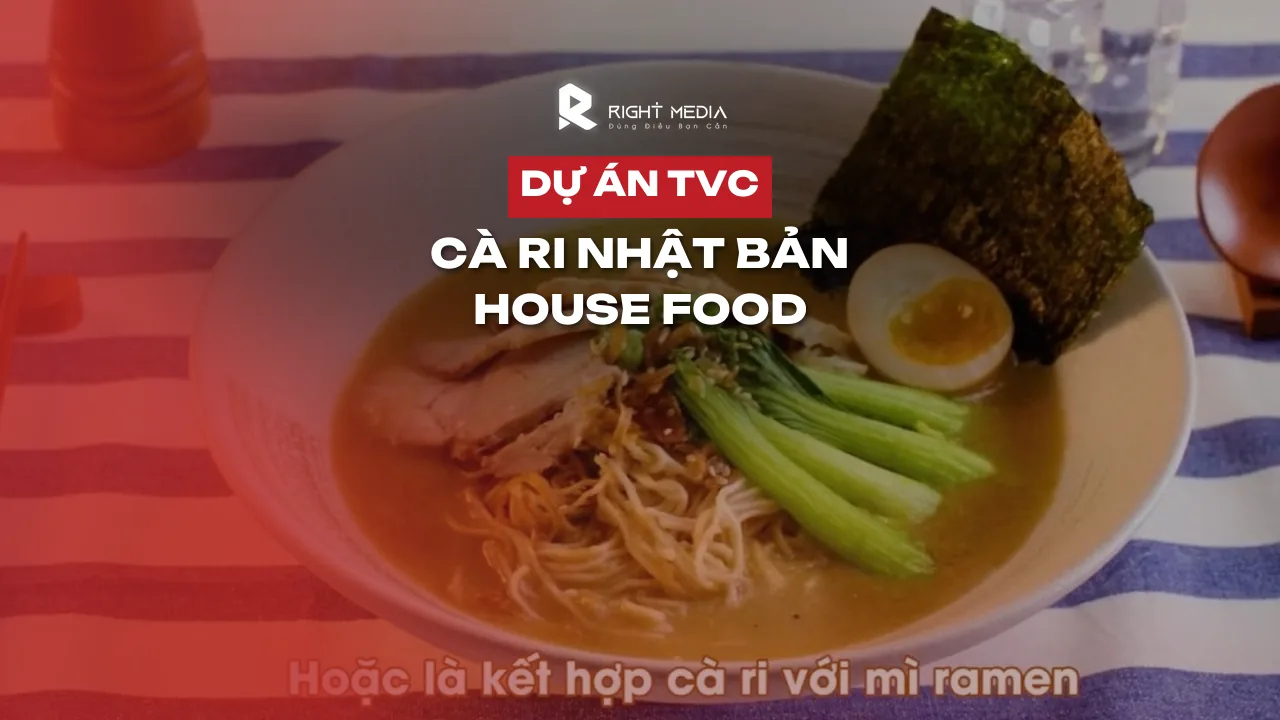
The 50-second TV commercial showcases four ways to eat Japanese curry, featuring close-ups and clear sound of the dish. View project details.
From TV commercial script to storyboard
Once the storyboard is finalized, the team converts each line into a frame in the storyboard. Each frame records the shot size, camera angle, camera movement, and lighting. This step allows the client to preview the composition, while the team can create a prop list and shooting schedule.
For the DOTACO roof TVC, the storyboard had to include the path of the dolly cart, as the film didn't have any cuts. For the House Foods TVC, the storyboard focused on food styling: the color of the vegetables, the consistency of the sauce, and the placement of the hot smoke. Drawing techniques and frame templates are included in this article. TVC storyboard.
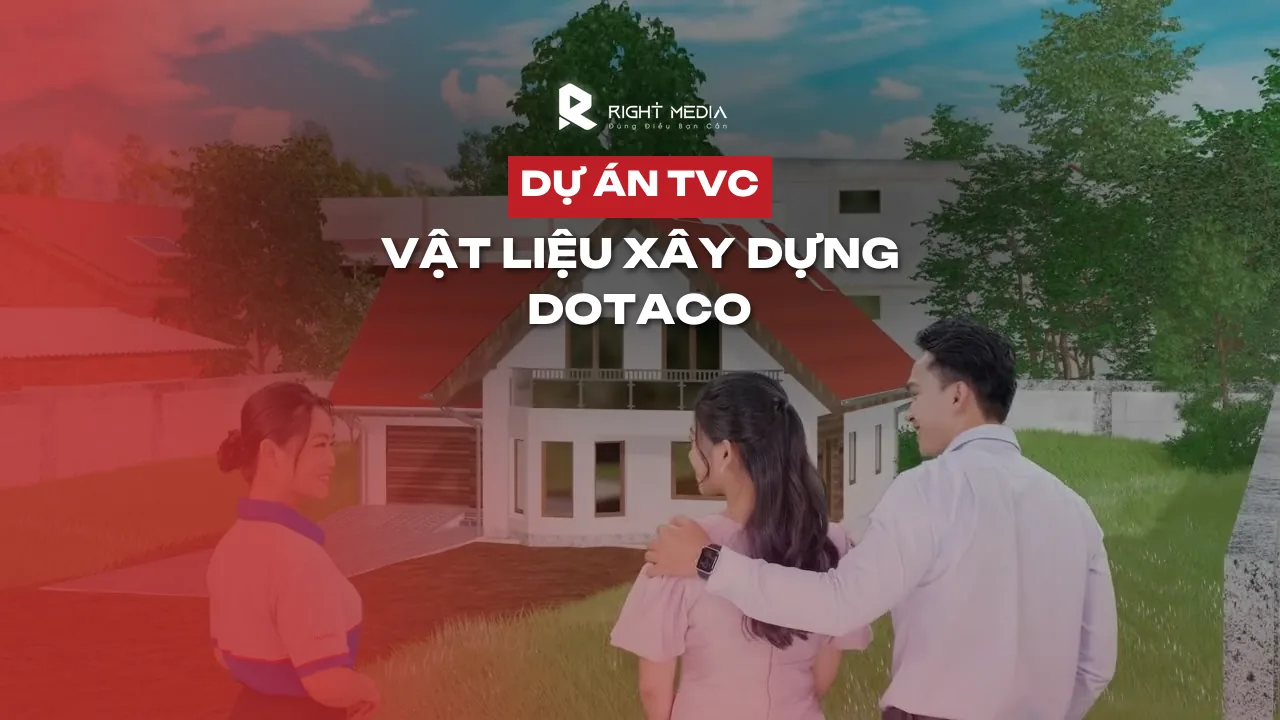
The DOTACO building materials TV commercial is an example of a script that combines live footage with graphics. The film opens with the line, "I wish I could build a house right now," followed by the response, "Don't worry, DOTACO has you covered." The storyboard must clearly mark which scenes feature actors and which are rendered in 3D, ensuring that the live footage matches the post-production.
The 6-step process for writing a TV commercial script.
In these projects, the TV commercial script went through six steps before being sent to the set. Each step included a client review point.
- Receive brief: Clearly define the product, audience, distribution channel, and required message.
- Proposed concept: Present one or more design options for the client to choose from.
- Write a script: The plot, dialogue, and commentary accurately reflect the product's true characteristics.
- Create a storyboard: Divide the scene, record images, sound, and duration as shown in the three examples above.
- Record the commentary: Start immediately after finalizing the script, to determine the appropriate scene length.
- Draw the storyboard and finalize it: The client approves the shots, and the crew schedules the filming and arranges the props.
If a business needs a team to handle everything from scriptwriting to delivery, they can consider these options. TVC production services By Right Media. TVC production costs have 3 starting levels: VND 15,000,000, VND 35,000,000, and VND 80,000,000 (reference price, excluding VAT, applicable in Ho Chi Minh City and within a 100 km radius). Details of each package are available on the page. TVC production price quote.
Checklist for reviewing TV commercial scripts before filming.
Before signing off, please read the script along with the following table. Each "no" answer represents a potential point where retake costs could increase.
- Is the main message contained within a single sentence and presented in the final box?
- Do the total durations of the scenes match the playback timeframe (15, 30, or 60 seconds)?
- Is the commentary read aloud within the allotted time, and not read in a rushed manner?
- Is all the product information accurate, and are there supporting documents available if needed?
- Are the logo, slogan, purchase location, and hotline numbers spelled correctly and in their latest versions?
- Have all the necessary actors, props, and product samples for each scene been listed?
- Have you clearly indicated which scenes were filmed live and which were created using 3D or graphics?
- Have you considered cropping or vertical framing options for social media?
Frequently Asked Questions
How long does it take to write a TV commercial script?
The time required depends more on the number of feedback rounds than the length of the film. A 30-second TV commercial script can be completed quickly if the brief is clear and only one person reviews it. When multiple departments provide feedback, it's best to consolidate all suggestions into a single revision to avoid extending the filming schedule.
Can businesses write their own scripts and then hire a crew to film them?
Yes. The team will review the footage to check the length, feasibility of filming, and set costs. Often, adjustments to the narration and removal of scenes are necessary to fit within the timeframe. Businesses should include their main message and target audience so the team can provide appropriate feedback.
If a TV commercial has no narration, how do you write the script?
The sound column then records music, sound effects, and text on the screen. The Elaiya beverage TV commercial by Impotas Group is an example: no commentary, each flavor has a different background color, neon lettering, and real fruit. The script must meticulously describe the visuals because the images carry all the information.
Can a script be used for multiple versions of varying length?
Yes, if you start with that idea in mind. The team pre-selects core scenes for the short version and marks scenes that are only included in the long version. Lotte Cinema is an example: one shoot produces three TV commercials, including one full version and two shortened versions for individual and corporate clients.
Is permission required before using music in a script?
Yes. The music used in the script must be copyrighted music for advertising purposes, or original compositions. Using unlicensed music may result in the video being removed from the platform. The music source should be clearly stated in the script for simultaneous review by the legal department.
Businesses needing a TV commercial script that closely matches their product and broadcast channel can find more information here. What is a TV commercial and 6 common types of TV commercials?or send the brief via the page TVC production servicesCall the hotline. 0901 391 002 Let Right Media's team advise you on the script and provide a price quote.