Flycam footage of factories is the quickest way for clients to see the scale of workshops, warehouses, and location within an industrial park. This article points out when flycams are worthwhile and the procedures to prepare before flying in an industrial park. It also includes information on optimal flight times, six recommended shots, safety precautions, and reference prices. Examples from projects Right Media has completed for NTP Group, LCB Battery, SLP, and Golden Lotus are provided.
When is drone footage of a factory really worth the money?
Drone filming of a factory is worthwhile when the scale is what customers want to see before placing an order. This means a factory with a large floor area, many workshops, large warehouses, or located near a port or highway. For small workshops in alleys, a few gimbal shots on the ground are usually sufficient.
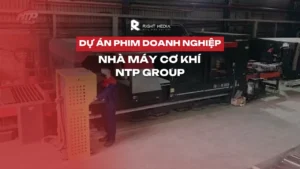
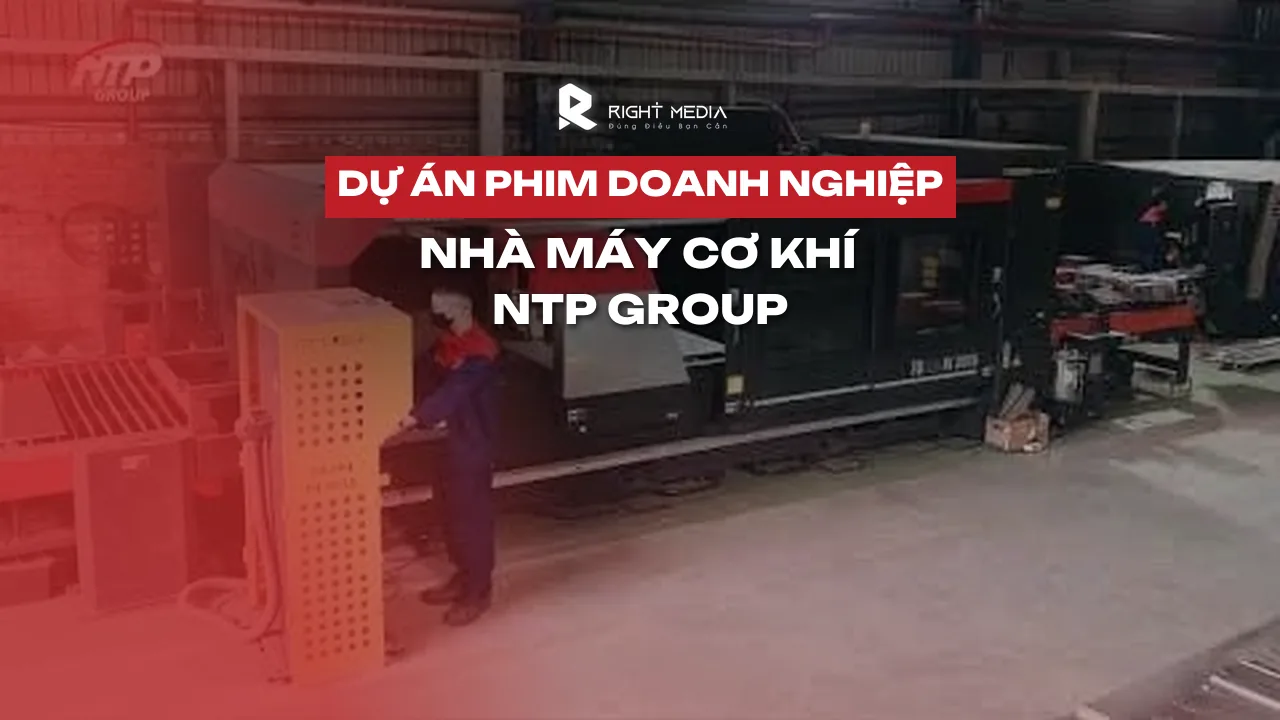
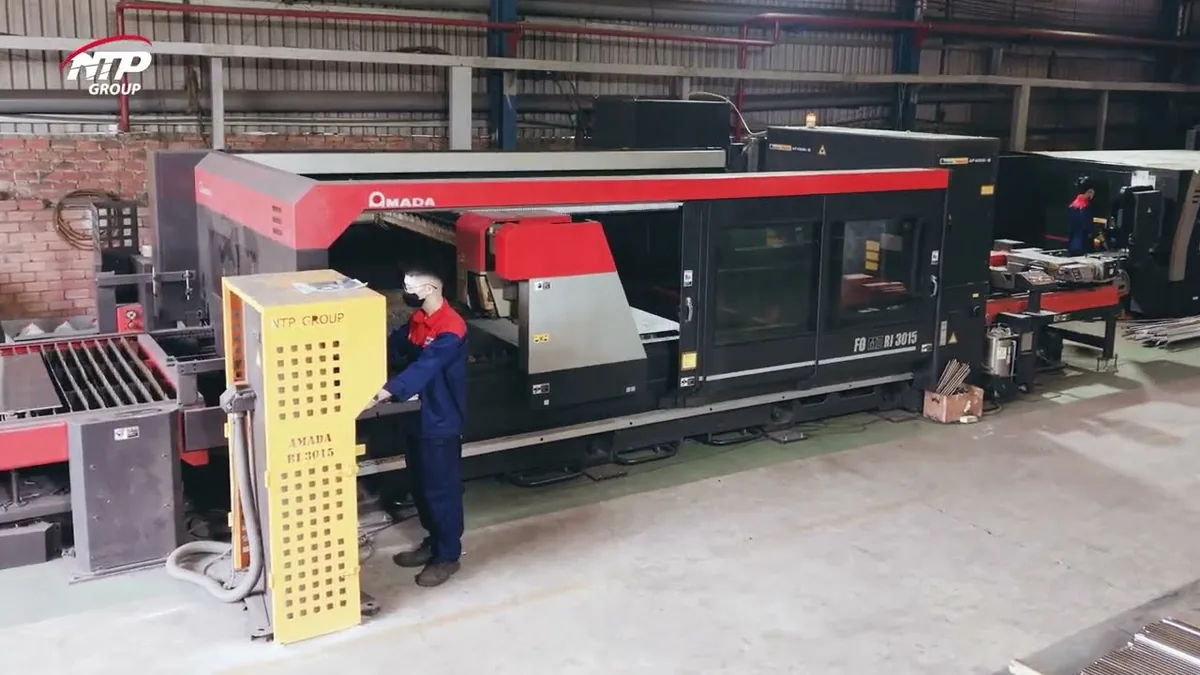
At the NTP Group project, the questions from the mechanical processing client were very specific. How big is the workshop? How many machines are running? How is the flow of goods in and out? A flycam shot from the entrance provides a panoramic view, answering all three questions in a few seconds. Therefore, the aerial shots are usually placed at the beginning of the capability video.
Four situations where drones should be included in the quotation process:
- The factory or industrial complex consists of many interconnected rows, such as Core5 Hung Yen with workshops numbered from 2 to 23.
- Industrial park or factory developers are selling plots of land, such as SLP and Core5.
- The factory has logistical advantages: it's close to the port, close to the highway, and has its own container yard.
- The main contractor needs to document the recently completed project for use in the bidding process, like with Golden Lotus (GLC).
If your strengths lie in precision manufacturing or quality control, allocate your budget to close-up lenses and lighting. Aerial shots should only take up 20–40 seconds at the beginning and end of the film, avoiding making the video lack focus.
Flight procedures within industrial zones: who needs permission?
Flying drones in industrial zones requires permission from at least two levels: the airspace management authority as per current regulations and the industrial park management board. Additionally, the factory's own security department is also required. Regulations may change depending on the time and location, so always double-check before each filming session.
In the NTP Group project, the team noted that most industrial parks require advance flight scheduling. The documentation includes a list of personnel and equipment. Areas near airports require separate procedures. The actual implementation usually involves the following steps:
- Ask the industrial park management: Is the area within a restricted airspace? What forms are needed, and how many days in advance should they be submitted?
- Check the no-fly zone: Airports, military zones, and government offices near industrial parks can all lead to flight restrictions.
- Please confirm with the factory: The document specifies permission to fly over rooftops and areas where filming is and is not permitted.
- Report from nearby factory: The flying maneuver could easily land on the roof of the neighboring factory, so a warning is necessary to avoid misunderstandings.
Businesses should clarify when receiving a quote: who will handle the permit application process, and who will be responsible for any additional costs. Right Media also clearly states this point in the frequently asked questions section of the NTP Group project. More detailed information about the flight operations can be found on the website. aerial filming services.
Convenient flight times and why you always need a backup date.
The best times to film a factory with a drone are early morning and late afternoon. The slanted sunlight highlights the factory buildings, and the long shadows accentuate the height of the structure. Midday sun makes the corrugated iron roofs appear too white and reduces detail, which is a common mistake when shooting aerial shots.
At Core5 Hung Yen, the crew chose a time when the corrugated iron roof and factory walls were clearly visible. At Far Eastern Polytex, filming outdoors under the intense sun required the crew to use umbrellas to shield both the equipment and the crew. Temperature also affects the drone's battery, so each flight needed to allow sufficient time for landing.
Strong winds and rain are two reasons for flight delays. The contract should specify whether weather-related delays incur a fee. Companies working on many industrial projects usually allocate a contingency day. If the factory schedule is full, schedule the flight scenes early in the day to allow for a compensatory flight in the afternoon.
6 drone shots of a factory that should be on your list of scenes.
When filming a factory with a drone, the list of flight shots must be prepared in advance. NTP Group's construction goes from wide to narrow. The six shots below are the framework that Right Media typically proposes for factories in industrial parks.
1. Overview of the gate and main road
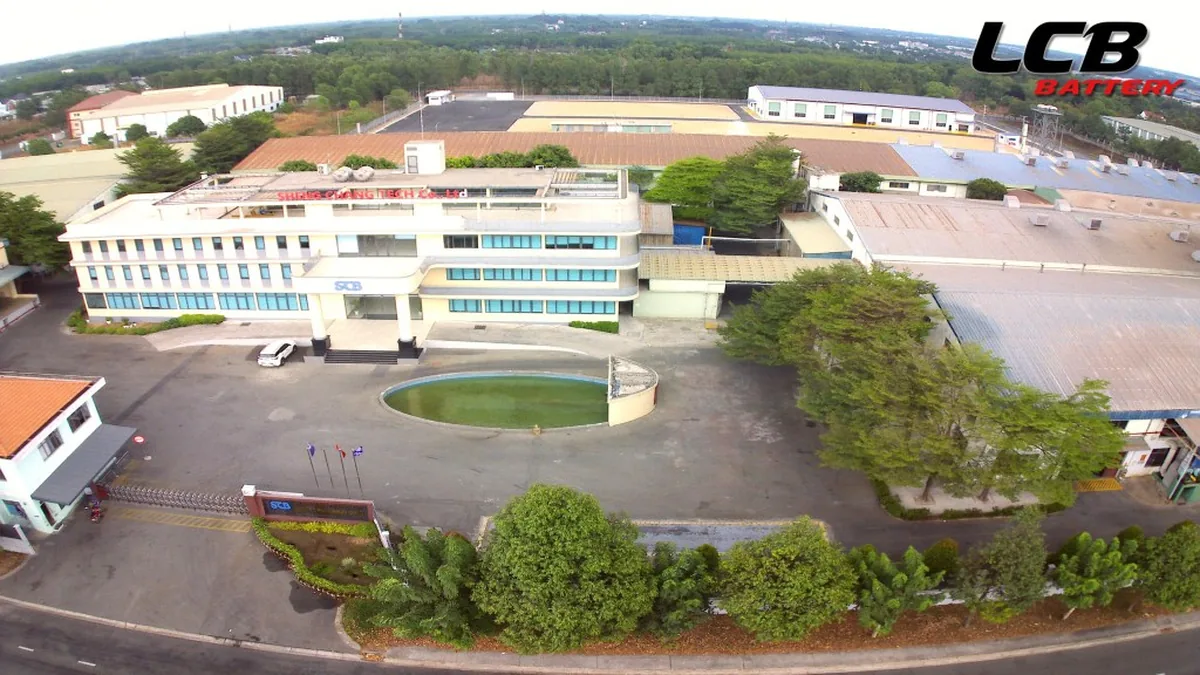
Flying in from the outside, capturing the gate, sign, and the road in front of the factory. Viewers immediately know where the factory is located and how large the site is. This is a familiar opening scene as it answers the first question from the audience.
2. Fly along the outdoor conveyor belt.
For conveyor belts, silos, tanks, or outdoor loading and unloading areas, drones fly low along the transport route. The speed is kept slow, as industrial scenes require a sense of stability rather than rapid movement.
3. Around the factory building
The looping flight reveals the factory from all sides and the surrounding infrastructure. At Core5 Quang Ninh, the drone was combined with ground shots. The drone shows the scale, and the ground shots clearly reveal the details of the completed project.
4. Pull back to reveal the position.
Start close to the roof or sign, then zoom in and out until you can see the entire industrial park, main road, and port. This shot will directly transfer to the map graphics in the following section.
5. An aerial view of the warehouse and container yard.
A top-down view reveals the warehouse layout and traffic flow. At NTP Group, a top-shot view of the running machinery clearly shows how the layouts are coordinated. Core5 Hung Yen uses a bird's-eye view to help viewers visualize the land area.
6. Fly into the factory using a small drone.
In the workshop, a small drone with a protective cage was used, flying low and slowly along the walkways between the machine racks. NTP Group needed the work done urgently, so Right Media proposed using one drone for the entire workshop. Close-up shots of the CNC machines and the workers were also filmed using the drone.
LCB Battery's corporate film. In 2025, the team will continue filming a one-day Factory Tour at two factories in Binh Duong, using a drone. View project details.
Safe to fly near power lines, chimneys, and steel structures.
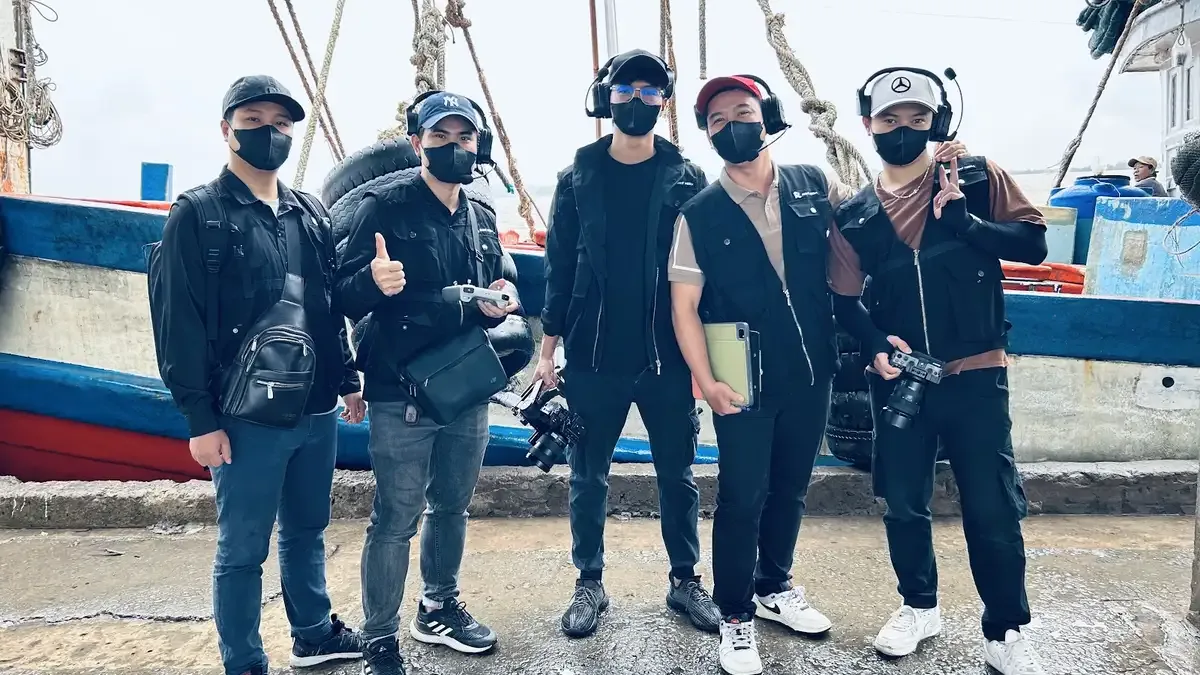
When filming a factory with a drone, safety is paramount. The crew needs to survey the flight path beforehand. This includes identifying obstacles, power lines, and areas of the factory that are off-limits for filming. Nissin Electric is an example of thorough surveying: the DOP and Account Manager of Right Media visited three factories two weeks before filming.
- Power lines and substations: The thin wire is difficult to see on the control screen. Maintain a wide distance and fly higher than the wire line before changing direction.
- Chimneys, cooling towers: The hot air currents caused the drone to wobble. In the NTP Group project, the team also had to account for the hot air rising from the machinery in the factory when flying indoors.
- Steel structure and corrugated iron roof: This can interfere with navigation. Take off in an open area, check the signal before flying too close to the roof.
- People and forklifts below: It doesn't fly directly over the workers' heads. At SLP, the warehouse is still running while rotating, so the equipment has to be positioned out of the forklift's path.
- Construction site in progress: At the Golden Lotus construction site, the crew wore proper protective clothing and only used permitted equipment.
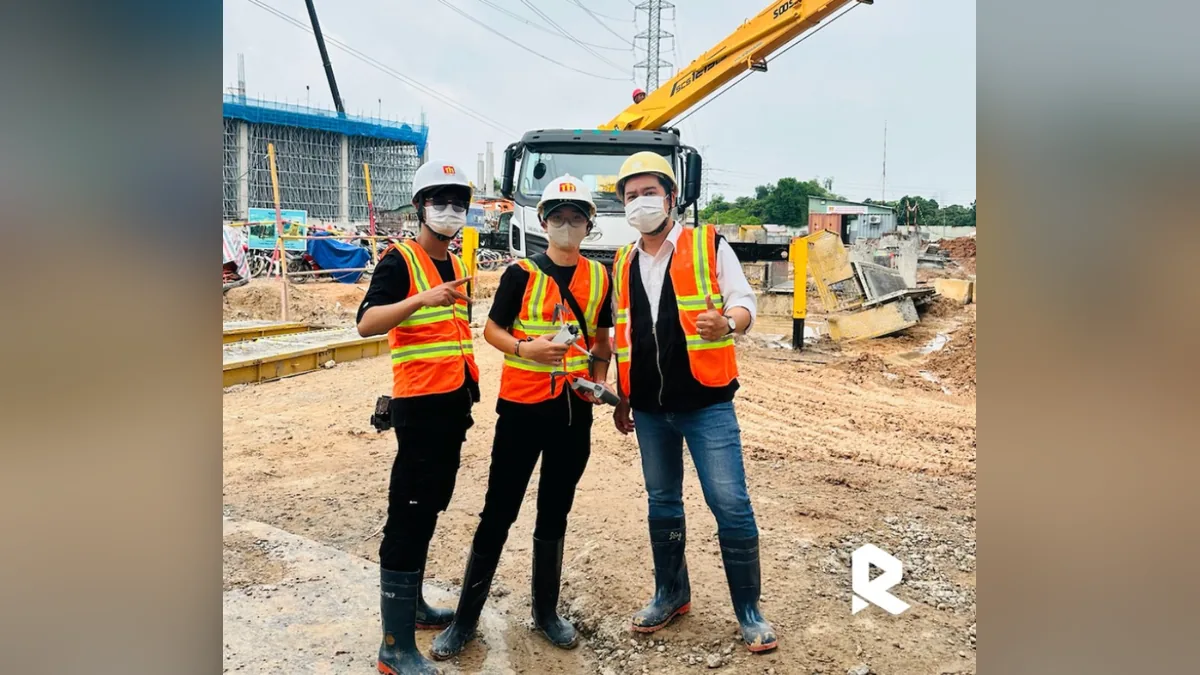
The Golden Lotus corporate video was filmed over two days at the office and construction site, using drones and boom lifts for aerial shots. View project details.
Integrating drone footage of industrial zones with maps showing port and highway connections.
The drone footage shows the factory's size, but it doesn't reveal its distance from the port. That part requires a map. An effective approach is to have the rewind shot end at a high altitude. Then, switch to a map showing the routes connecting to the port, highway, and airport.
Core5 Quang Ninh is a project that follows this direction. GLC requested clarification on the location's advantages within the industrial park-seaport-logistics network in the North. The video, over 2 minutes long, immediately captures the location from various flycam angles to close-ups of the infrastructure.
At Core5 Hung Yen, the team inserted factory numbers and logos using text that follows the camera's movement. Viewers know which area they are looking at, while the frame remains concise. The video uses no narration, so viewers of any language can follow along.
For a seafood processing plant like Khanh Hoang Seaprex, the advantage lies in its location at the fishing port. The commentary clearly states that the plant is right next to the port, allowing fishing boats to go directly to the factory to shorten transit time. This type of information should be illustrated with an aerial view accompanied by a map. See more about how to arrange this view in the article. Trends in factory promotional film production.
Cost of drone filming at a factory: reference price list
Aerial filming of factory buildings is rarely a standalone service. All three of Right Media's factory video packages include a drone; additional flight days are charged separately for dedicated or compensatory flights. Reference prices, excluding VAT, apply to Ho Chi Minh City and a 100 km radius.
| Category | Reference price | Scope |
|---|---|---|
| Flycam for extra flights, compensatory flights. | 5,000,000 VND/day | Personnel and equipment, when flying outside of the package's flight dates. |
| Standard Packaging Factory Video | from 15,000,000 VND | One drone filming session, 1-2 minutes, 1-person crew. |
| Professional Packaging Factory Video | from 59,000,000 VND | One day of filming, 2-3 minutes, crew of 4+ people, drone, and licensed music. |
| Premium Packaging Factory Video | from 199,000,000 VND | 2 days of filming, 3-5 minutes, Vietnamese and English voiceover, VFX. |
| Filming the event at the factory. | from 12,000,000 VND/session | 2 cameras + drone, highlight 2-3 minutes |
| Compilation of photos from the filming session. | +6,000,000 VND | Add photos to your company profile and website. |
| Additional filming days / additional languages | 12,000,000 VND / from 4,000,000 VND | When more filming locations are needed or Japanese or Korean versions are added. |
Costs vary depending on the number of flights, indoor flights, procedures in restricted areas, and map graphics. Factories located more than 100 km away, such as SLP's Bac Ninh project, will incur additional travel costs. Package details are available on the page. Factory promotional video production service in Ho Chi Minh City..
Checklist before the factory drone filming day.
- ☐ I have inquired with the industrial park management about the restricted airspace and the registration form.
- ☐ The factory has issued flight authorization, along with a list of personnel and equipment.
- ☐ Areas not permitted for filming have been marked: secret production line, adjacent factory roof.
- ☐ The flight path has been surveyed: power lines, chimneys, cranes, tall trees, and objects hanging in the workshop.
- ☐ The list of 6 shots and the flight order based on the direction of the sun has been finalized.
- ☐ Flights have been scheduled for early morning or late afternoon, with a backup date.
- ☐ The premises have been cleaned: cars are neatly parked, the gate is clean, and the sign is lit if you have an afternoon flight.
- ☐ We have informed the workers and security of the flight time and assigned someone to accompany the crew.
- ☐ Maps, distances to the port, and highways have been prepared for the graphics section.
- ☐ We have agreed to deliver the aerial still images for the website and company profile.
Frequently Asked Questions
How long should a standalone drone video of a factory be?
A standalone video is typically 2–3 minutes long, enough to move from a wide shot to detailed shots without repetition. If used only as an opening for a corporate video, the flight scenes should be around half a minute. The rest should be ground shots, people, and machinery, as that's what clients scrutinize.
Does flying drones in the factory require stopping the production line?
Usually not necessary. Small drones with protective cages fly low along walkways, avoiding areas where people are directly operating the equipment. The team chooses a time slot with less forklift traffic and informs the shift supervisor beforehand. Only areas with strong hot air currents or densely packed objects require a few minutes of pause.
Can the factories in Bac Ninh and Hung Yen produce the same results?
Okay. Right Media filmed at SLP Park Nam Son – Hap Linh (Bac Ninh), Core5 Hung Yen, and Core5 Quang Ninh. The team also filmed Nissin Electric at Tien Son Industrial Park. With factories outside a 100km radius, there are additional costs for travel and accommodation. Combining multiple factories in the same area into one filming session would be more cost-effective.
Can photos taken with a drone be used in a company profile?
It's usable, and should be booked from the start. Aerial panoramic photos are often used for company profile covers, website banners, or factory introduction pages. Because they're taken during the same flight, the additional cost isn't significant compared to organizing a separate photoshoot.
Can tenants of factory space use drones for filming, or is it only the industrial park developer who can do it?
Tenants can still fly, but they need the owner's or management's approval. The reason is that the airspace and roof are shared. The simpler solution is to get written confirmation from the owner. Flights should be limited to the factory's land boundaries.
Does your factory need panoramic views for a company video, trade show, or tender document? Right Media can survey the flight path and create a list of scenes before providing a quote. View project Flycam video of NTP Group's mechanical factory., testimonial SLP industrial parkor call the hotline 0901 391 002.