Bilingual corporate videos are made for foreign partners, not simply Vietnamese translations. Japanese and European partners use two different sets of criteria when reviewing factory videos. This article describes how the Right Media team chooses dubbing or subtitles and reviews terminology with clients. It also discusses how they film scenes of Japanese managers working with Vietnamese staff. The article concludes with a price list and checklist for FDI businesses.
What do the Japanese and European partners want to see in the factory film?
Japanese partners want to see production discipline: 5S, quality control at every stage, and how people are trained. European and American partners want to see certifications, workplace safety, social responsibility, and traceability. Therefore, bilingual corporate films must be written from two perspectives, not just translating a script into two languages.
A Japanese customer's perspective: processes and people.
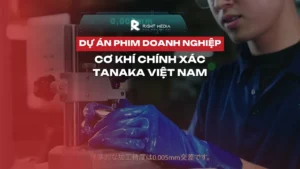
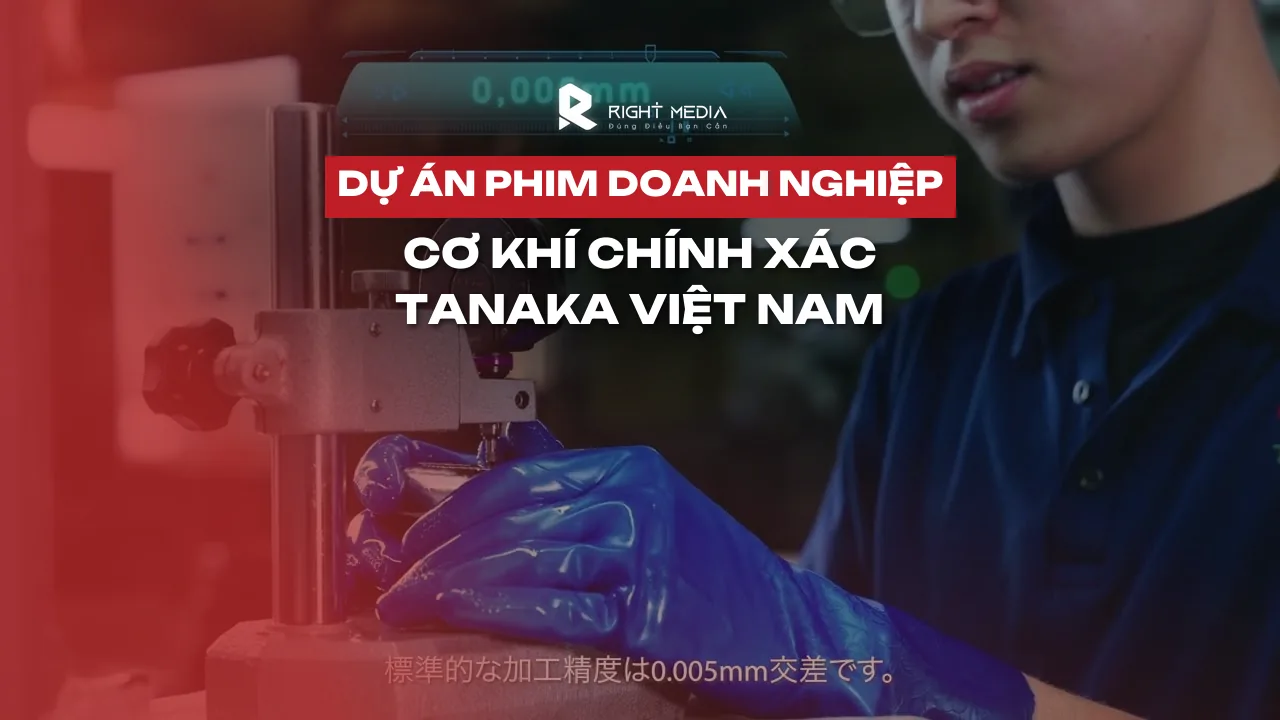
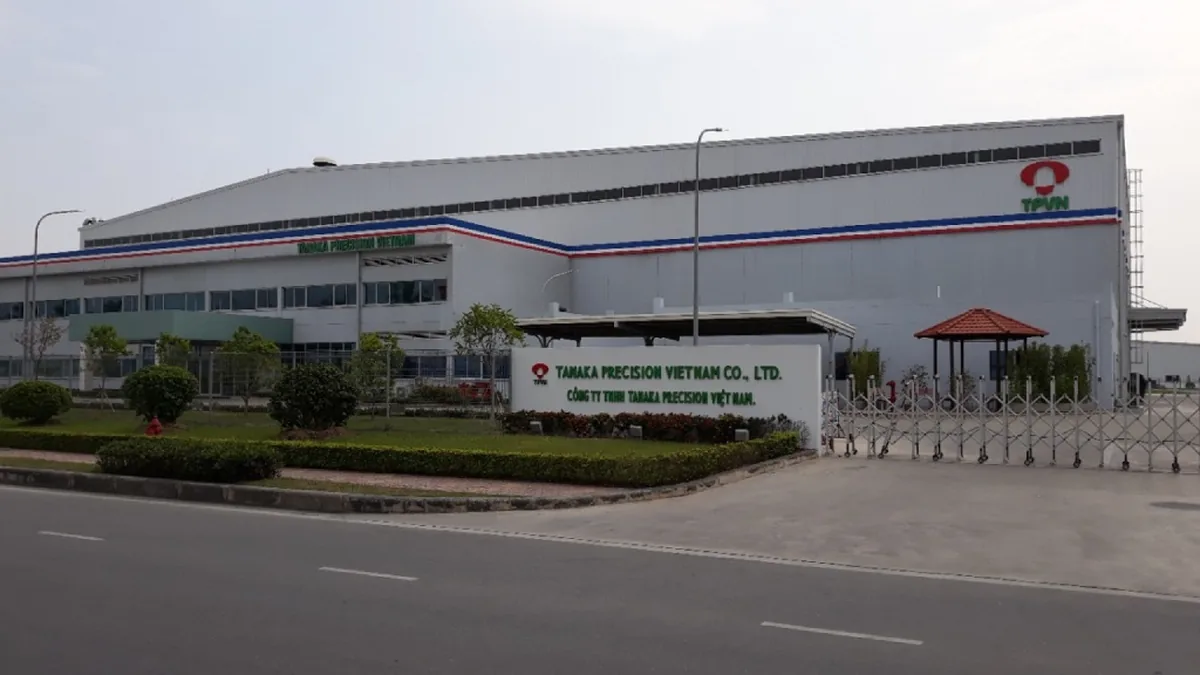
At Tanaka Precision Vietnam, Thang Long II Industrial Park, Hung Yen, the film crew shot entire employee training sessions and departmental meetings. This is a Japanese-owned company (100%), exporting 62% products to Thailand, Indonesia, and Brazil. The scenes of machine operation and the data displayed on the screen are immediately recognizable to the Japanese partners.
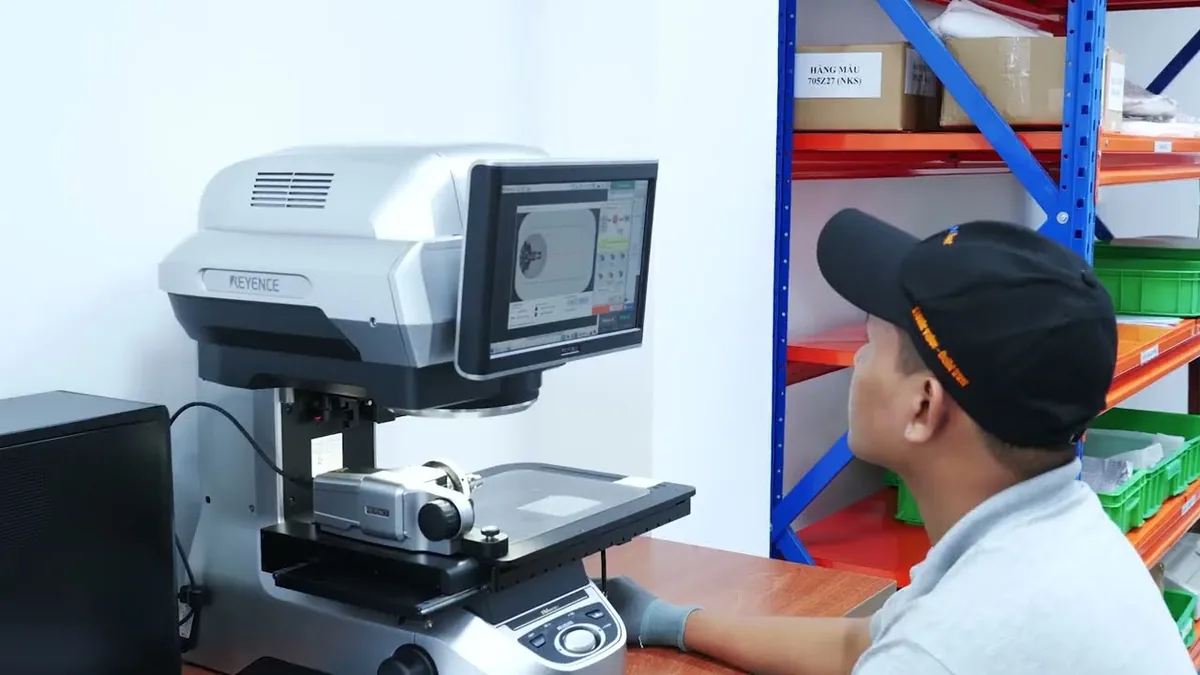
For Viet Nhat Precision Engineering Company, the comment mentions that the technical team was trained in Japan. The accompanying image shows the testing room with a CMM 3D measuring machine and an optical measuring machine for tolerance inspection. Japanese clients don't need praise; they need to see the measurements.
The perspective of European and American customers: certification and traceability.
Top Royal Flash is a Taiwanese FDI corporation with six factories in Vietnam. Their video highlights their BSCI, GRS, and OCS certifications, as well as Costco's assessment. The quality control process is fully filmed: fabric inspection machine, color inspection lights, in-line QC, end-of-line QC, and metal detector. Khánh Hoàng Seaprex's English video mentions HACCP, Halal, and the export code DL406. The video then traces the fish's journey from the ship to the factory and then to the finished product warehouse. This is how they answer the question of traceability using images.
| Criteria | Japanese partner | European and American partners |
|---|---|---|
| What made them stop and stare | 5S, standard operating procedures, shift handover meetings, training. | Certification, occupational safety, environment |
| Proof of preference | QC room, CMM measuring machine, tolerances | HACCP, BSCI, GRS, OCS, export code |
| Human scene | Japanese and Vietnamese managers work together. | Workers have protective equipment and working conditions. |
| Information needed | Stable supply capacity, commitment to delivery. | Traceability, export market |
| Language version | Japanese, dubbed or subtitled | English, often dubbed. |
Bilingual corporate films start with structure, not translation.
The Right Media team always asks beforehand: who is the film being sent to, in which country, and under what circumstances will it be viewed? The answers determine the film's structure before deciding on the language.
Far Eastern Polytex is the largest FDI enterprise in Binh Duong, with over 2,000 employees. A single filming session resulted in three versions: a full 8-minute and 8-second version, a 3-minute and 53-second company introduction, and a recruitment segment. The company introduction goes straight into the production chain, from plastic pellets and polyester yarn to weaving, dyeing, and finished products. The recruitment segment discusses benefits, career development opportunities, and concludes with the greeting, "Welcome to FENC Polytex." Using the same source material, the order of scenes and commentary is rearranged to suit the viewer's preferences.
Tanaka also received two versions: a longer one for introducing the company to partners, and a shorter one for recruitment. The shorter version emphasized skills training and the internship program in Japan. If only one long version were prepared and translated into Japanese, Vietnamese applicants would not see the section specifically for them.
Dubbing or subtitles: when to use which?
Voiceovers are used when the film opens a meeting or client interaction, where viewers listen and engage in conversation. Subtitles are provided when the film plays muted in booths, is sent via email, or viewed on mobile devices. Separate cuts are available when two different teams require two distinct stories.
When does the team choose to do voiceovers?
Viet Nhat Precision Engineering Company uses films to open meetings with Japanese clients. The team created a separate Japanese dubbing version, not just subtitles. During the meeting, viewers can listen and discuss simultaneously; if they had to read the text, they would miss the visuals. Top Royal Flash also has an English dubbing version with the same script as the Vietnamese version. Fletcher Vietnam received three dubbing versions—Vietnamese, English, and Chinese—for its domestic and international sales teams.
When does the team choose subtitles?
Tanaka Precision Vietnam chose Japanese subtitles for the company profile. The video has Vietnamese narration, and the Japanese partner reads the subtitles while watching. This method preserves the authentic voice and atmosphere of the factory while saving on recording costs. At the exhibition booth, the video often loops and is muted due to noise, so the text on the image is the primary element.
When should I streamline the foreign language version?
Khánh Hoàng Seaprex created a corporate video for the seafood industry in English from the start, lasting 4 minutes and 8 seconds. The main audience consists of importers in Japan, South Korea, the United States, Canada, Spain, and many other markets. They need to hear it directly in English, without translation. Since almost all viewers are foreign customers, writing directly in a foreign language is more concise than translating it.
Profile video of Tanaka Precision Vietnam, with Japanese subtitles, sent to partners and the parent company. View project details.
Comparison table of three methods for creating foreign language versions.
Below are three options the team typically recommends, along with reference costs. Reference prices, excluding VAT, apply to Ho Chi Minh City and a 100 km radius. The first two options are additional charges based on the completed Vietnamese original film; the third option is calculated according to the Professional or Premium package.
| Making | Suitable when | Advantage | Limit | Reference cost |
|---|---|---|---|---|
| Separate subtitles | Send emails, view on phone, run mute loop at booth. | Inexpensive, quick to produce, and easy to revise terminology after client approval. | Viewers at the meeting have to read the text, making it easy to miss the visuals. | Additional language charges: 4,000,000 VND |
| Voice acting | Projecting in the meeting room, to open a meeting with guests. | Viewers don't need to read; the film conveys the feeling to them. | The terminology had to be reviewed before recording; Japanese lyrics are often longer, so the tempo had to be adjusted. | Additional language services cost from 4,000,000 VND, native speaker voice services are charged separately. |
| Custom build | The two groups of partners need two different stories. | The right audience, the right priority. | It takes twice as long to build and approve. | Professional package from 59,000,000 VND or Premium package from 199,000,000 VND (2 days of filming, including Vietnamese and English dubbing); each individual edit is priced according to the script. |
Hoang Kim Precision chose the third option, creating three separate versions in Vietnamese, English, and Japanese. The company uses video instead of paper profiles in bidding, trade fairs, and when sending them to foreign partners. All three versions were filmed over two days at their two factories in Thu Duc and Binh Chanh.
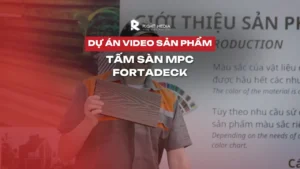
The corporate film "Top Royal Flash" was filmed at the Lai Vung factory, with both Vietnamese and English versions sharing the same script. View project details.
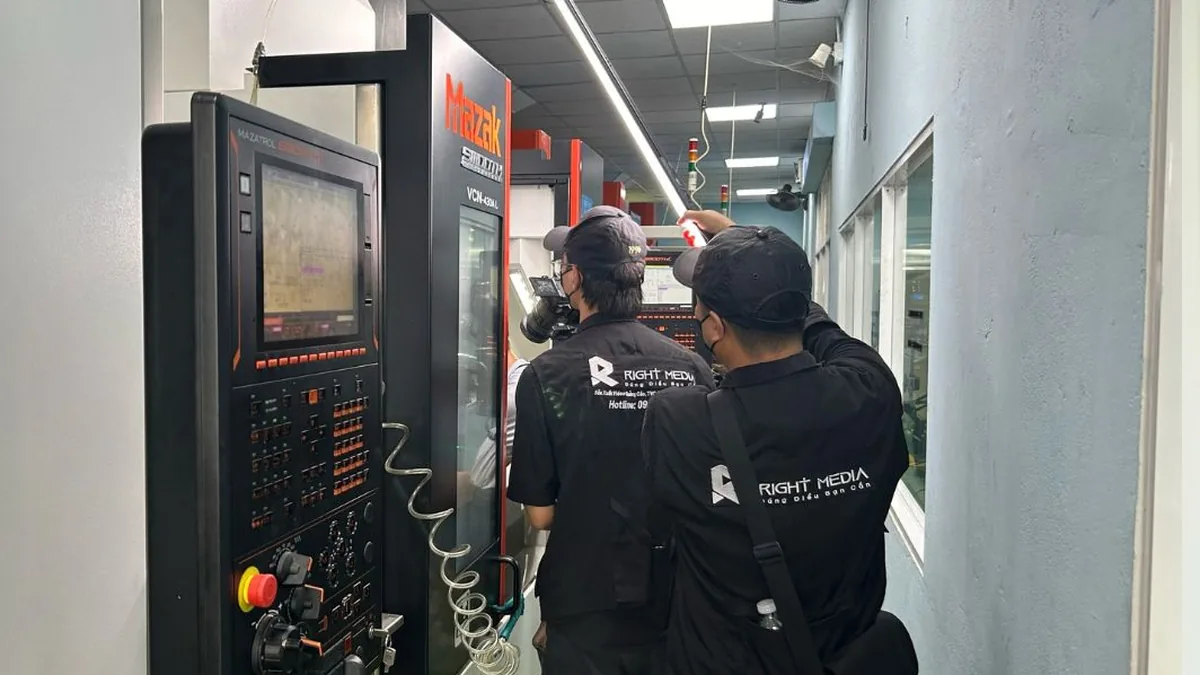
Terminology review process with the client
A single mistranslated word in a bilingual corporate video can cause partners to doubt the entire factory. "Crankshaft pin," "cam plate," "wire-dip splicing machine," or "surimi" all have their own industry terms. The Right Media team doesn't let translators decide on their own. The terminology is finalized with the client before recording or adding subtitles.
Four steps the team implemented
- Create a glossary from the Vietnamese script. The machine name, process name, certification, and product are separated into a table with columns in Vietnamese and a column in a foreign language.
- Send the data sheet to the technical department or the foreign manager of the client. For Japanese FDI companies, the approver is usually a Japanese manager at the factory. They make the revisions using the terms the parent company calls them.
- Lock the glossary before recording. Voiceovers are recorded in a single take. If you correct just one word after recording, the entire sentence, sometimes even the whole paragraph, is re-recorded.
- Review the edited version with subtitles or voiceovers for each scene. Customers should review the time-numbered version and immediately note where corrections are needed.
With Nissin Electric, the script went through multiple revisions before filming began. The client's representative, Mr. Hieu, commented that the script "presented many excellent ideas" through the review rounds. The suggestions made on set remained "consistent with the overall script that had been outlined." The glossary should also have been finalized pre-production in this manner, rather than being left until post-production.
Scene of Japanese managers working alongside Vietnamese staff.
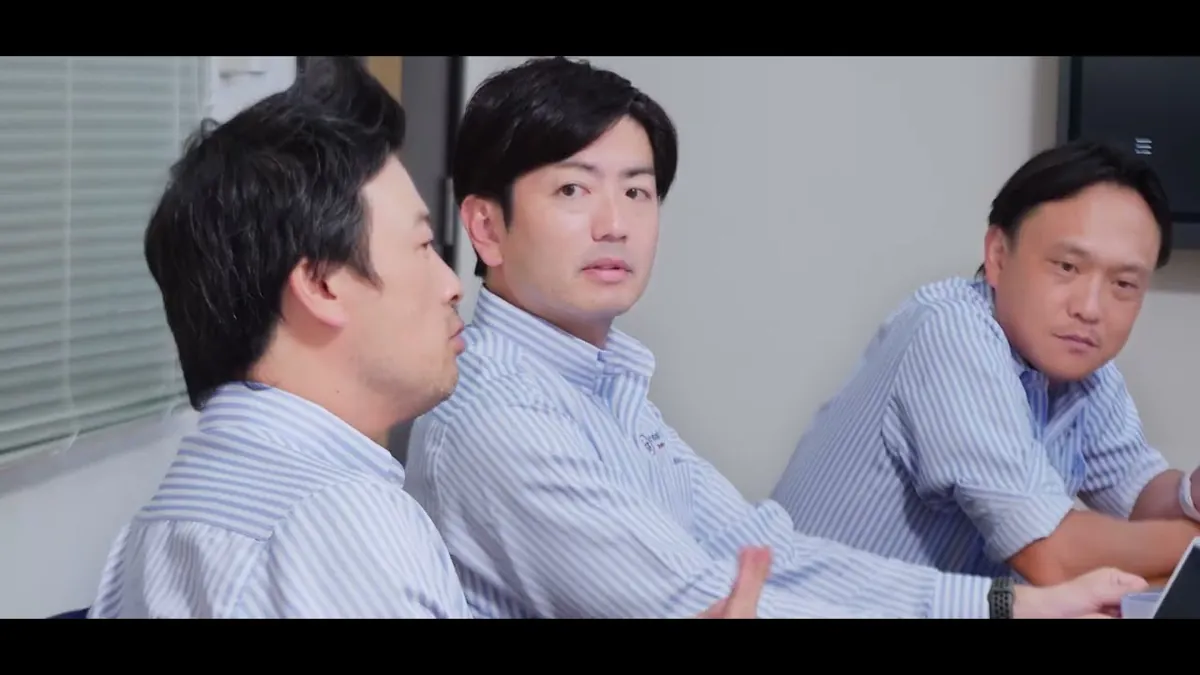
The Japanese partners wanted to see their managers actually present in the factory. The scene of Japanese managers and Vietnamese engineers inspecting the production line was something that couldn't be said in the commentary. It shows that Japanese standards are being transferred, not just displayed on the wall.
Kyodo Sojitz Feed is a joint venture between Sojitz and Feed One of Japan. The film crew captured the Japanese and Vietnamese management teams in the same frame. KSF's slogan is "Japanese Quality, Vietnamese Prosperity," and this scene embodies the slogan with real people. The factory in Thinh Phat Industrial Park, Long An, has a capacity of up to 250,000 tons per year.
How the crew staged the scene to make it look real.
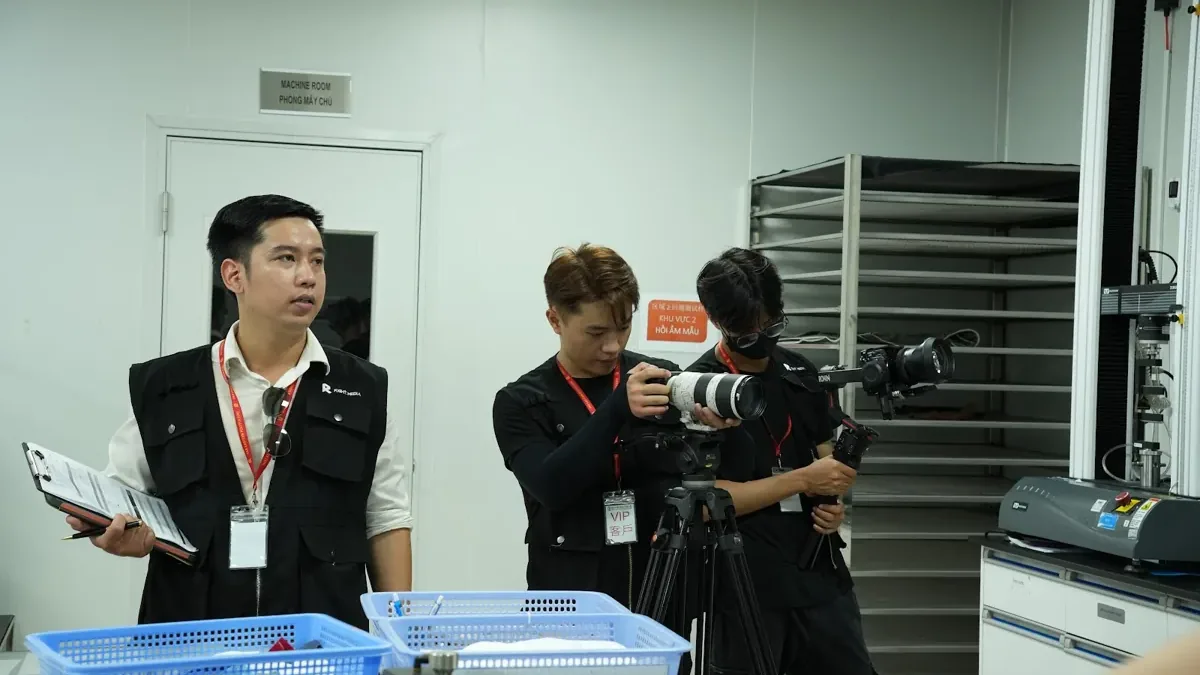
The crew didn't tell the two to "pretend to exchange information." Instead, they asked the Japanese manager if there was a real inspection scheduled for that day and requested permission to film it. At Nissin Electric, the crew surveyed the site two weeks in advance. The filming schedule coincided with the production shifts of the three factories in Tien Son Industrial Park, Bac Ninh. The Japanese viewers immediately recognized which scenes were real and which were staged.
Checklist of what FDI businesses need to prepare before returning.
Projects are often delayed in the documentation and approval stages, not the filming date. The list below helps clients prepare proactively before the site visit.
- Identify the end audience: the purchasing department, the parent company's board of directors, the importer, or the candidate.
- List the valid certifications and their correct names.
- Finalize the list of areas where filming is permitted and areas where filming is prohibited due to technological secrets.
- Assign someone to review the terminology, preferably someone in charge of foreign affairs or the technical department.
- Confirm that a Japanese or foreign manager will be present on filming day and agree to appear on camera.
- Prepare accurate data: capacity, number of devices, export markets, year of establishment.
- Agree on who is speaking in the image and in which language.
- Decide on the number of versions right from the start so the crew can film enough scenes for each one.
Reference price for bilingual corporate films
The quoted price, excluding VAT, applies to Ho Chi Minh City and a 100 km radius. Prices vary depending on the number of filming days, the specific drone model, and the required drone specifications.
- Standard Package: from 15,000,000 VND, one drone filming session, 1-2 minutes, 1-person crew.
- Professional Package: from 59,000,000 VND, one day of filming, 2–3 minutes, crew of 4+ people, script and director treatment, flycam.
- Premium Package: from 199,000,000 VND, two days of filming, 3–5 minutes, crew of 5+ people, Vietnamese and English voiceover, VFX.
- Additional languages: from 4,000,000 VND per language. Additional filming days: 12,000,000 VND.
For projects requiring three versions (Vietnamese, English, and Japanese) like Hoang Kim Precision, the Premium package is usually included: this package already includes two days of filming and dubbing in Vietnamese and English; Japanese is an additional language. Adding Japanese subtitles to an existing film costs an additional 4,000,000 VND on top of the package. The crew will provide a quote after a site survey, as the number of studios determines the number of filming days. See scope for more details. Factory promotional video production service to choose the right package.
Frequently Asked Questions
Do bilingual corporate videos need to be filmed twice?
No. The crew shoots one batch and creates multiple versions from the same source material. The condition is that the number of versions is finalized before filming begins, so the crew can film enough scenes for each version. Far Eastern Polytex has three versions created from one filming batch. Hoang Kim Precision has three language versions from two filming days.
Who should read the Japanese dubbed version?
The team prioritized using native-speaking voices for the screening before the Japanese partner. Before recording, the glossary had to be approved by the client's Japanese manager. Japanese dialogue is often longer than Vietnamese dialogue, so the team planned the editing pace in advance and left space for the text within the frame.
How long does it take to produce a film for a foreign direct investment (FDI) company?
The Nissin Electric project lasted three weeks, including two weeks of preliminary site visits and two days of filming. The timeframe was longer due to the geographically dispersed factory locations or multiple rounds of reviews with the parent company overseas. For Nissin, the team delivered the film along with all original materials for the company to reuse later.
Should we create a Chinese version at the same time?
Therefore, if your business has Taiwanese or Chinese partners and someone has already reviewed the terminology, each additional language costs around 4,000,000 VND, which is much cheaper than having to redo it later. Fletcher Vietnam already has a Chinese dubbed version along with Vietnamese and English versions for the sales team.
Businesses needing films for Japanese, American, or European partners can send Right Media a list of viewers and screening locations. The team will then suggest dubbing, subtitling, or a custom cut, along with a price quote. See more. corporate video production services and projects Vietnamese-Japanese bilingual profile video, testimonial Nissin ElectricHotline: 0901 391 002.