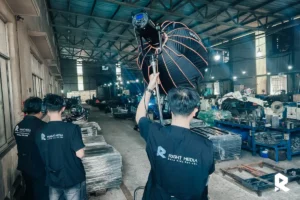
Photographing machinery catalogs should be combined with the factory filming. The crew has already set up the lights in the workshop, the machines have been cleaned, and the technicians are on hand, so taking 40 additional catalog photos only takes half a day, and 60 photos a full day, instead of a separate shoot with a different crew. This article describes how Right Media did it at the SPON forklift factory and the Golden components factory, the six groups of photos needed for a machinery catalog, a preparation list, and a cost estimate.
Where else can I take photos of machinery catalogs, or photos of consumer products?
Catalogue photos of machinery must show technical buyers the exact size, structure, and operating details of the machine, not just look good. Viewers are purchasing engineers, distributors, or OEM partners; they compare models using photos before asking for a quote. Therefore, there are three differences compared to photographing cosmetics or food:
- Size and weightA hand pallet truck nearly two meters long, a CNC machine weighing several tons, couldn't be transported back to the studio. The backdrop and lights had to be taken to the factory.
- Metal surfacePowder coating, stainless steel, gold plating, or black plating reflect the light source. Incorrect lighting will leave only a bright or dark area on the machine's surface.
- Same background, same angle for the entire product line.The catalog displays 10–30 models side-by-side, so all images must have the same focal length, camera height, and white background to be comparable.
Why should we take photos during the factory filming?
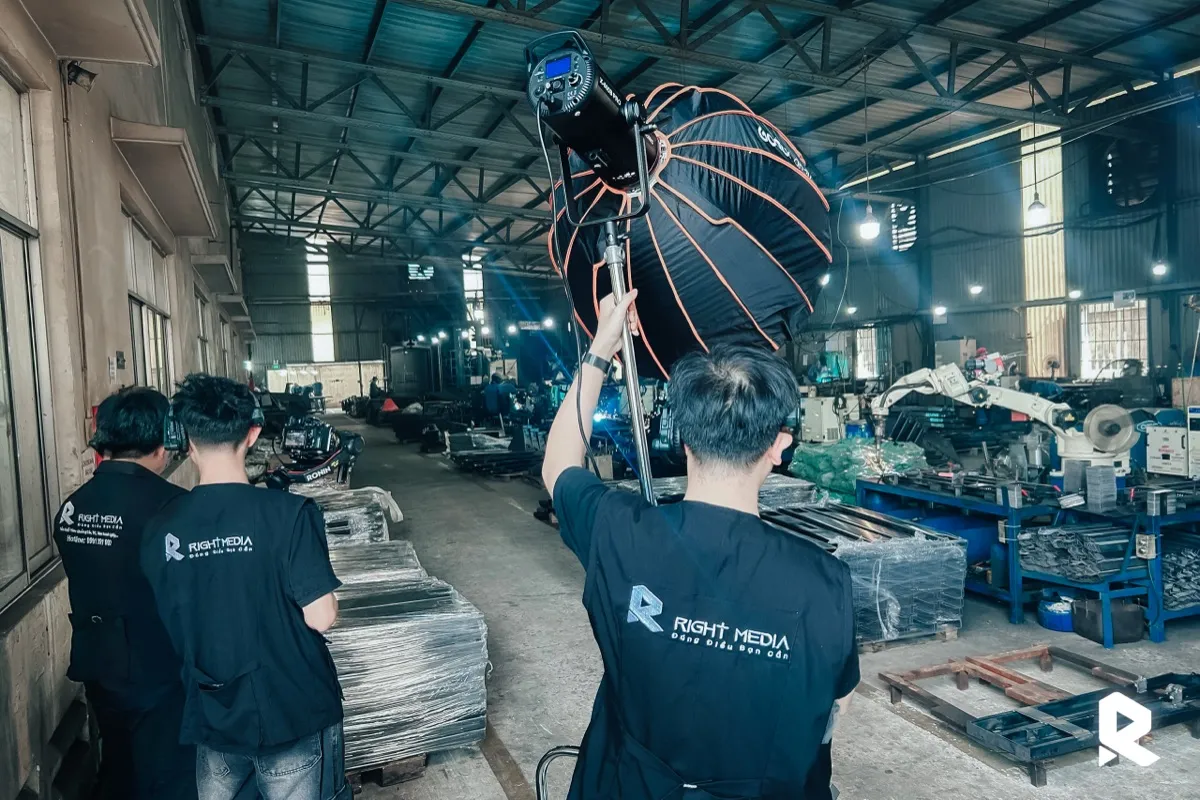
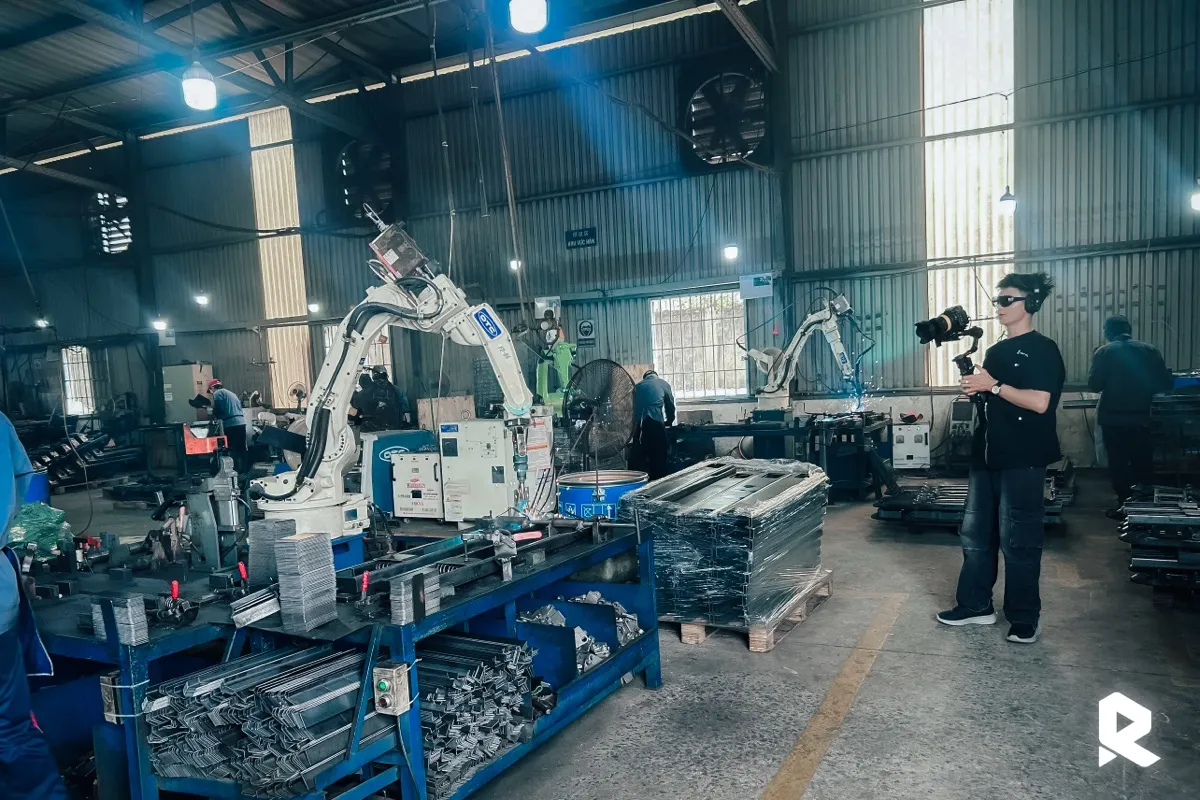
Combining the two tasks into one operation reduced the workshop downtime by one day and the lighting setup by one time. (In the project) Profile video of SPON forklift factoryThe Right Media team completes the processing, welding, painting, and assembly lines in a single day. 60 forklift catalog images The photo was taken in a private area right inside the factory using that same lighting setup.
This profile video of the SPON forklift factory was filmed on the same day as the 60 catalog photos. View project details.
Four specific benefits of consolidation:
- The equipment had been cleaned and set up for the filming day, so there was no need to prepare it twice.
- The technician operating the machine was present, so photos of the machine running and the person operating it correctly were taken.
- The photos and videos should have the same color scheme and style, and be used consistently for catalogs, websites, and trade shows.
- The cost of a combined photoshoot is lower than a single shoot because it eliminates the costs of transportation, backdrop setup, and lighting.
Should the photos be taken at the factory or brought back to the studio?
Shoot at the factory when the product is bulky or requires a scene of machinery in operation; bring back to the studio when the product is small and has a highly reflective surface. Two projects by Right Media illustrate these two approaches:
| Project | Product | Making | Result |
|---|---|---|---|
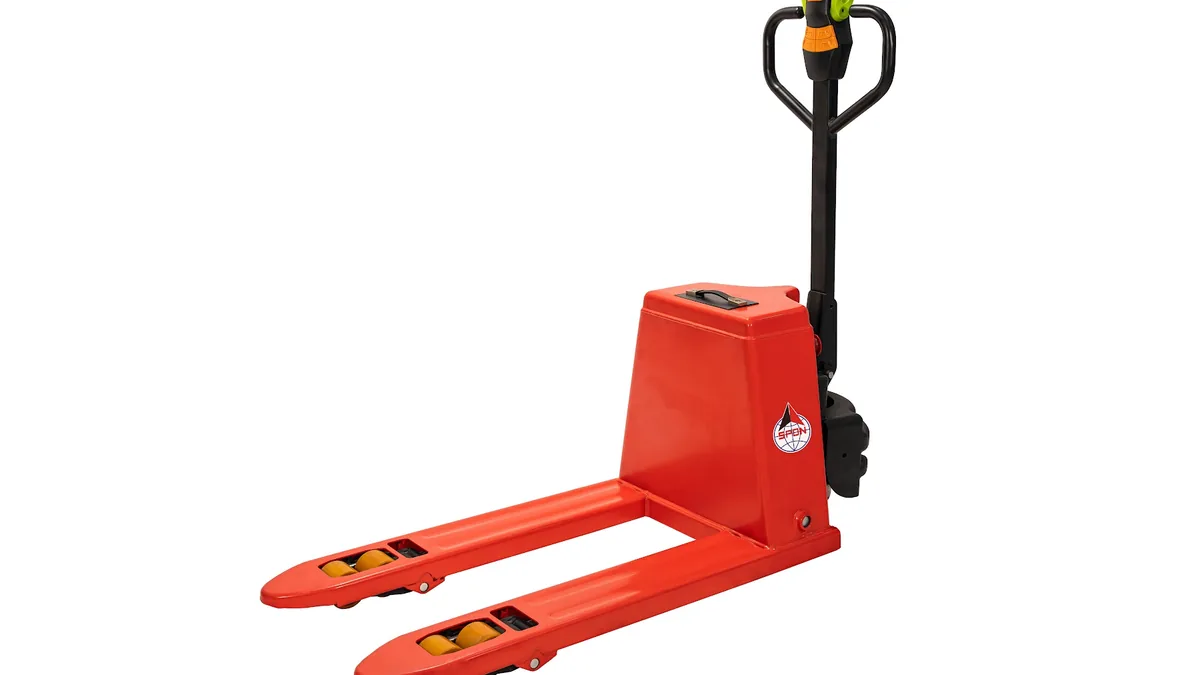
| SPON | Hand pallet trucks, semi-electric pallet trucks, up to 2 meters long. | Setting up a 3x6 meter white backdrop and lights inside the Tay Ninh factory, each model was brought into the shooting area one by one. | 60 photos with the same background and angle in one day. |
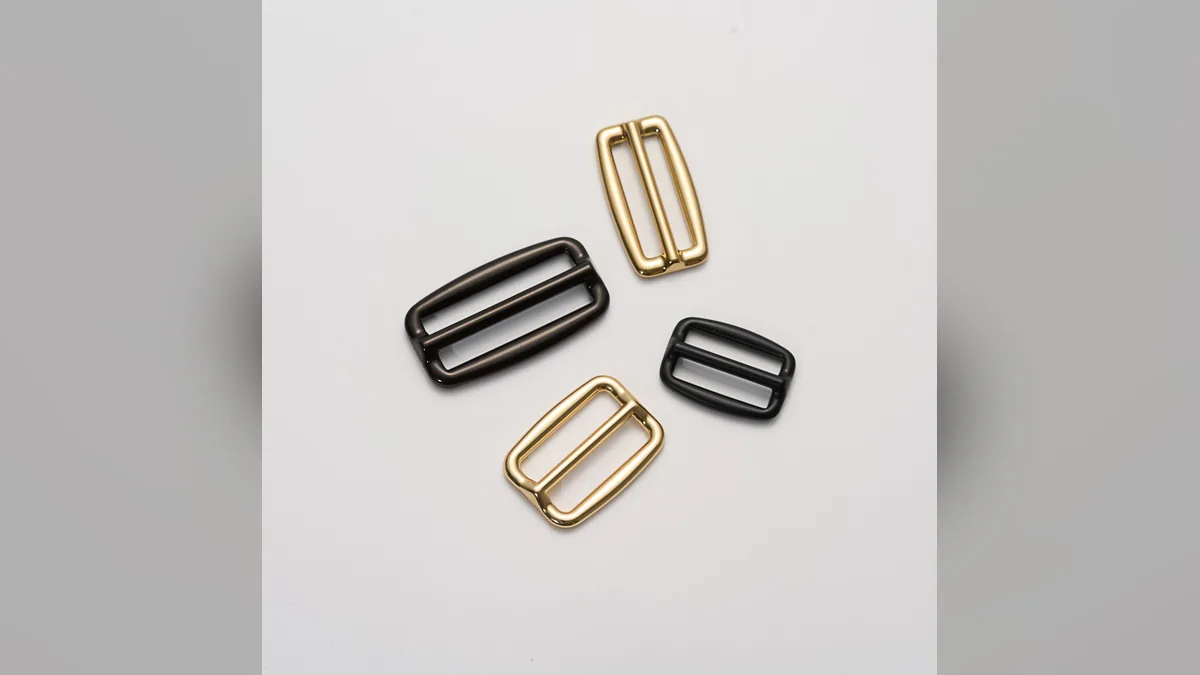
| Golden | Rings, clasps, and chains, plated in gold or black. | Photographs of the factory and personnel at Golden; components were brought back to Right Media Studio for reflection control. | 30 factory photos, 50 packshot photos, 15 concept photos, compiled into a 20-page e-catalogue. |
See the full photo set in the article. Golden factory and product photography project.
Six groups of images are needed for a machinery catalog.
- Packshot with a white background, 3–4 corners of each model.Front view, 45-degree angle, side view, and back view. These images are used for product pages and comparison tables.
- Technical details: control panel, wheel assembly, welds, engine, specification labels. Technical buyers look at these to assess the quality of workmanship.
- The machine is in operation.Forklifts are lifting pallets, CNC machines are cutting, and welding robots are running. The images show movement, proving the machines are in operation, not just display models.
- The photo has people in it.The worker stands next to the machine so that viewers can estimate its size and see how it is operated.
- Factory and production line: A panoramic view of the processing area, assembly area, and finished goods warehouse, used for the capabilities showcase page in the catalog.
- On-site installation: The machine is currently in use at the customer's warehouse or factory, for a typical project.
Lighting and background for large machinery
Right Media uses a 3x6m or 6x6m white backdrop, two to three high-power continuous lights with softboxes, plus one edge light to separate the machine from the background. For glossy painted surfaces and stainless steel, the team places a large softbox in a low corner and uses a black reflector to create a metallic outline, avoiding glare. The brand's paint colors (red, yellow, and green of the forklift) are checked against a standard color chart on-site to ensure the catalog photos accurately reflect the actual machine colors.
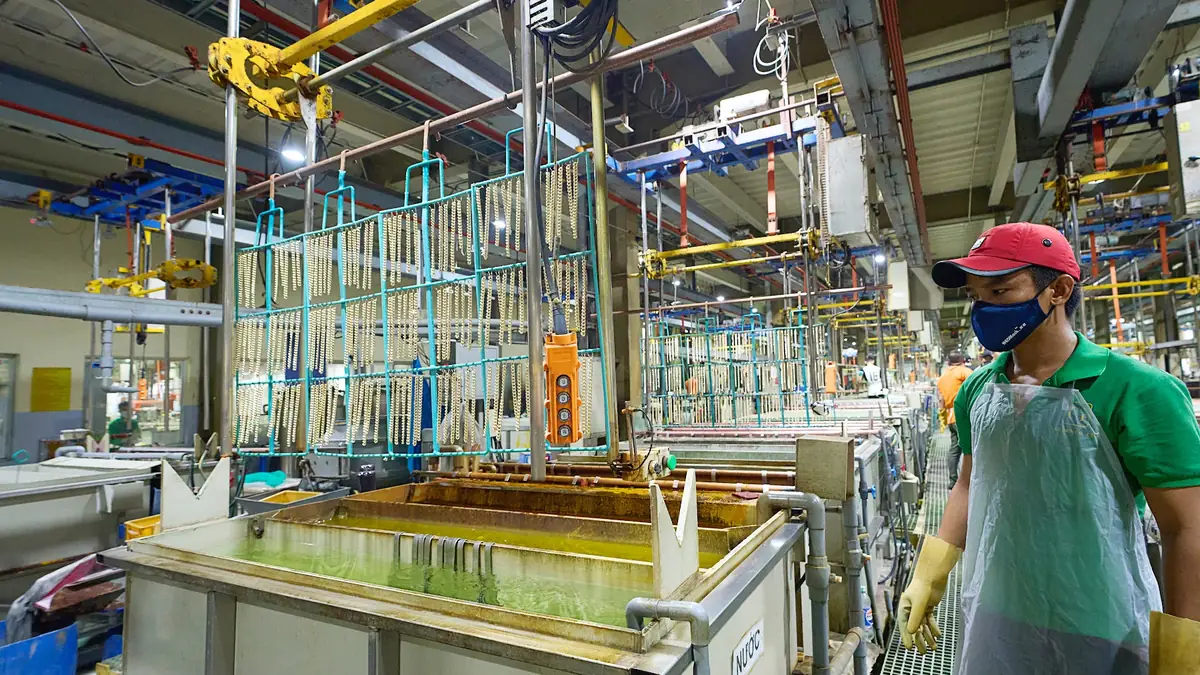
White backgrounds in factory photos are often not perfectly white because the factory lighting has a yellowish tint; background separation and white balance are done in post-processing, but the original image must be evenly lit so that details are not lost.
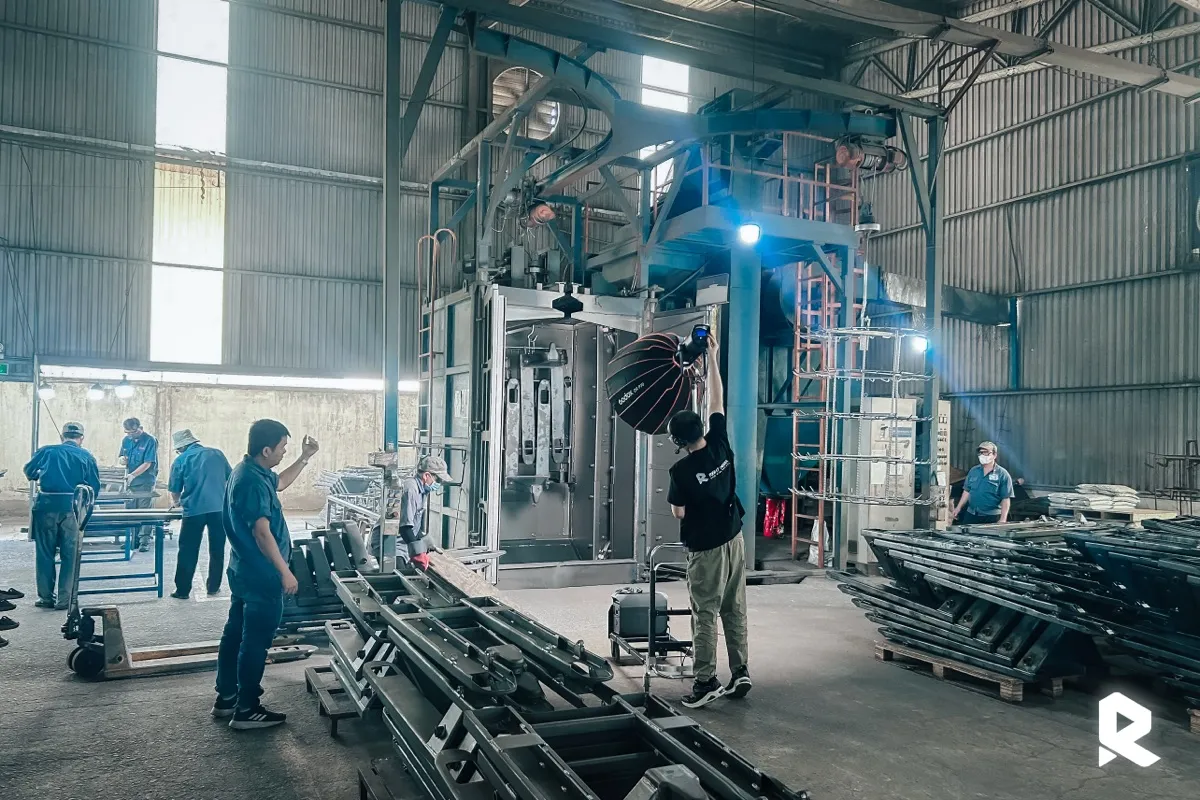
What preparations does a business need to make before the photoshoot?
- List of models to be photographed, including SKU codes, in order of priority; forklifts and small machines require 15–20 minutes per model, while on-site CNC machine photography requires 30–45 minutes.
- Clean the machine, touch up scratches with paint, attach labels in the correct position; remove protective packaging.
- An empty space of about 6x8m near the receiving door to set up a backdrop, with a 220V power outlet.
- Technicians operate machines and forklifts to move products into the inspection area.
- A permit for taking photos inside the factory and a list of restricted areas are required, if the factory is processing work for a partner and requires confidentiality.
- The logo and brand color palette are used for on-site color testing.
Cost of photographing machinery catalogs
The prices below are for Ho Chi Minh City and surrounding provinces, and do not include VAT; for factories in distant provinces, additional travel costs for the team will apply.
| Form | Include | Reference price |
|---|---|---|
| Photoshoot at the factory, one day only. | Background, lighting, 2 photographers; 40–60 post-processing photos including packshots and studio shots. | From 12,000,000 VND |
| Composite photos taken during the factory filming session. | Add half a day to a full day of shooting to the filming schedule, sharing the crew and lighting equipment; 40–60 post-production photos. | From 6,000,000 VND added to the spin package. |
| Packshot at Right Media Studio | Small products under 30 kg, white background, 3–4 corners per model, minimum 20 models. | 250,000 VND/model |
| E-catalogue design | Layout 16–24 pages from photo set, print files and PDF | From 8,000,000 VND |
If the business needs both videos and other content, see Complete factory video recording serviceThe photo shoot will be included in the total cost of 6,000,000 VND as shown in the table above.
What are the differences in the catalog images for each group of machines?
- Forklifts, industrial vehiclesThe photos were taken at the factory against a large white backdrop, with four fixed corners. One photo included people to show the dimensions, and another showed the load being lifted. The brand's paint color had to be accurate because customers compared it to the actual vehicle. The SPON project followed this method, taking 60 photos in one day.
- CNC machines, machining equipmentSince the machine cannot be moved, take the photo at the installation location with a portable light, tidy up the surroundings, and include close-up shots of the machine table, spindle, and control panel; photos of the machine cutting with flying chips are the best-selling images.
- Electrical equipment, electrical cabinets, motors: powder-coated surface and specification label; a photo of the cabinet door open showing neat wiring is needed, along with a close-up photo of the technical label where the text is legible.
- Small components, metal accessoriesBring them to the studio, photograph them against a white background with a light box, group them by set and photograph each item individually; plated components require a black reflector to protect the metal edges. Golden took 50 packshot photos of eyelets and keychains using this method.
Post-production: background removal, color synchronization, and file naming.
Catalogue photos of machinery require more post-production work than on-location work. Three things Right Media does for every photo set:
- Background separationAll packshot images have their backgrounds manually removed and are delivered with a transparent PNG file for placement on any catalog or website background.
- Synchronize color and lightThe entire product line, photographed at different times of the day, must maintain the same color tone; the paint color is checked against a standard color chart taken on-site.
- Name the file according to the product code.: For example xe-nang-tay-2-5-tan-goc-45.jpgThis allows the sales department to find the correct image and website whose filename contains the keyword.
Where can I find a catalog of machinery images?
A properly taken set of photographs can be used in at least four places for two to three years:
- Printed catalogues and e-cataloguesPackshot photos with a white background arranged in a comparison chart of models; Golden compiled a 20-page e-catalogue from the photo set itself.
- Website and product pagesEach model has 3–4 different angles, close-up detailed photos, and photos of the model in operation; the web version is 1600 px and lightweight for fast loading.
- B2B platform and export offer documentsAlibaba, Global Sources, and the documents submitted to importers require photos with a white background and the correct square aspect ratio; photos of the factory are used for the capability presentation section.
- Fair boothLarge-format printed photos for backdrops and flyers, and photos of the machine in operation displayed as a slideshow on the booth screen.
Execution and delivery time
A project to photograph a catalog of 20-30 machinery models takes approximately two weeks from finalizing the list to receiving the photos: 1-2 days for site survey and preparation, 1 day of shooting at the factory, 5-7 days for post-processing (photo selection, background removal, color synchronization), and 2 days for editing. Right Media sends a preview of the photos to 20% immediately after shooting for the business to approve the processing plan before proceeding with the entire project. Businesses needing photos urgently for trade shows or upcoming catalog printing can receive a priority batch of photos within 3 working days, with the remainder delivered according to the regular schedule. All photos are delivered via download links and hard drives if requested by the business, along with a comparison sheet of file names against product codes for immediate use by the sales department.
Frequently Asked Questions
Do you need a model when photographing equipment?
Professional models aren't necessary. Factory workers or technicians, wearing proper uniforms and protective gear, standing next to or operating machinery, are sufficient; viewers tend to trust photos of real factory workers more than photos of models.
How often should I retake photos of my catalog?
When a new model is released or the paint color and logo are changed, the process is done every two to three years. Right Media stores the original files for 12 months and retains the lighting and camera angle settings for each project so that the supplementary shoot for the new model matches the old set of photos.
How many camera models can be photographed in a day?
Approximately 15–25 models, with 3–4 angles per model, depending on size and the time it takes to move the machine into the shooting area. A small forklift takes 15 minutes; CNC machines need to be shot at the installation location, which takes 30–45 minutes because the lights need to be re-set up.
Is it possible to photograph a machine that is running without stopping the production shift?
Okay. The photos of the machine in operation were taken right on the production line during working hours, with the crew wearing protective gear and following the path designated by the supervisor. Only the white-background packshots require the camera to be moved to a separate area.
What format are the delivered photos in, and are they already background-removed?
We deliver full-resolution JPG files for printing, 1600 px web versions, and background-removed PNG files for packshots. Original RAW files are stored at Right Media for 12 months for future editing.
Do the factories in Binh Duong, Dong Nai, and Tay Ninh charge any additional fees?
Within a 100km radius of Ho Chi Minh City, there are no additional travel charges. For distances further than that, Right Media will quote the cost of transportation and accommodation based on the number of days, clearly stated in the quotation.