

Film editing is a crucial stage in creating a complete film. This article will help you understand the nature of film editing and the essential skills you need to embark on this creative path.
What is film editing?
Film editing is the most important post-production process in film and video production. Technically, it involves selecting, arranging, and connecting raw footage to create a complete storyline according to the director's and script's intentions. However, understanding film editing simply as cutting and splicing is completely insufficient.
Film editors act as the “final scriptwriters.” They control the pace, guide the audience’s emotions, and decide what appears or disappears on screen. The role of a film editor begins immediately after the filming phase ends:
- Editors will have to deal with dozens, even hundreds, of hours of raw footage to distill the most exquisite moments.
- A skilled editor can salvage a flawed scene with clever editing, or transform an ordinary segment into a dramatic one through precise timing.
- In modern film production, editing also includes handling basic sound, color, and visual effects to create the best visual experience before moving on to more specialized areas.
- Film editing is considered the crucial link between the idea on paper and the final product delivered to the audience.
The workflow of a professional film editor.
The film editing process typically involves several rigorous stages to ensure the highest artistic quality. Specifically, these stages are as follows:
- Phase 1: The first stage involves data preparation and classification. After receiving footage from the film crew, the editor must review everything, note down flawed shots and good shots, and organize them into systematic folders.
- Phase 2: Next comes the rough editing stage. In this step, the editor will piece together the footage in the most rudimentary order according to the script to check the storyline. This is when they can identify gaps in the film's logic or sections that need to be cut to prevent the film from becoming too drawn-out.
- Phase 3: Following the rough cut is the refinement stage. This is when editors focus on the smallest details: each frame, each cut, to create a smooth rhythm. They will apply techniques such as J-cut and L-cut to make the sound and image blend naturally.
- Phase 4: Next is the image locking phase, meaning the image structure is complete and no further changes are needed. Finally, the film will move on to advanced post-production stages such as color grading, sound editing, and publishing.
A professional film editing process requires immense patience and discipline, because sometimes even a single second of incorrect footage can ruin an entire valuable scene.
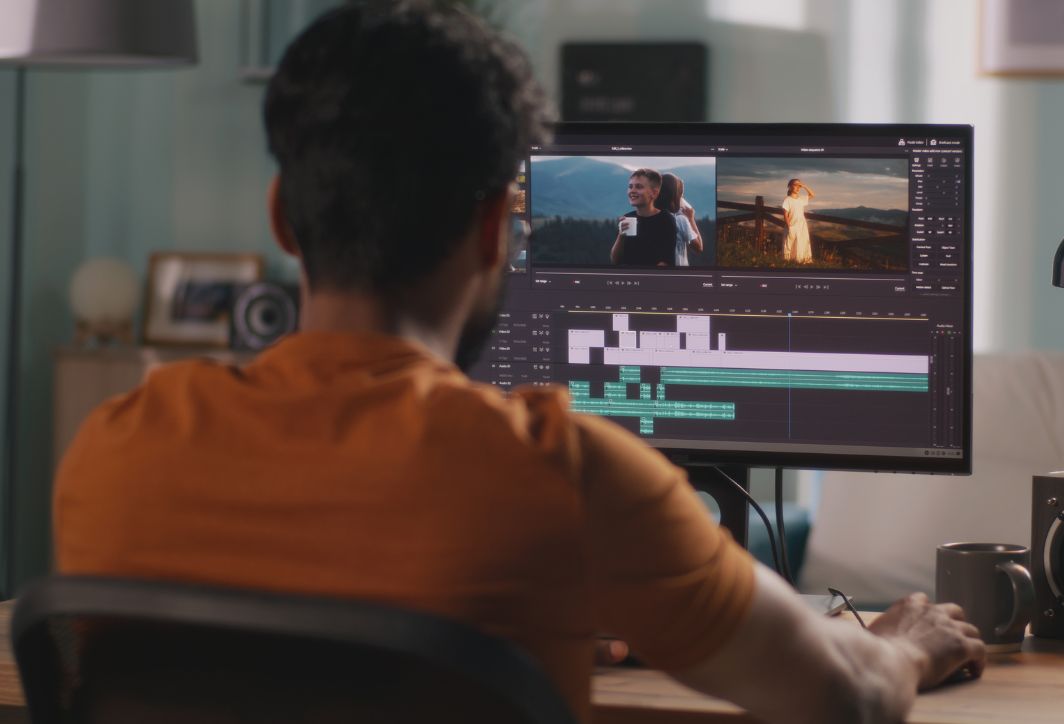
Video editors need to concentrate so as not to miss valuable scenes.
Essential skills for a professional film editor.
To become a film editor, you need basic skills in storytelling, artistic sensibility, software proficiency, teamwork, and more. Below are the essential skills you must practice every day:
Storytelling skills and artistic sensibility
The most important skill for a film editor lies not in their hands, but in their thinking. Storytelling is the soul of this profession. Editors need to understand the psychological structure of the characters and the desires of the audience. You must know when to keep a close-up shot so the audience can feel the character's pain, and when to cut to a wide shot to create a sense of emptiness.
Film editing is the process of selecting facts to create the illusion of continuity. You must be able to see through the raw dialogue to create a distinct “visual language” for the film. Furthermore, an artistic sense of rhythm is what distinguishes an amateur editor from a professional.
Rhythm in film editing is like the drum beat in a piece of music. It's not just about speed, but about matching the atmosphere of the scene. An action film needs sharp, rapid cuts to create intense pressure. Conversely, a deeply psychological film needs longer periods of silence to allow the audience time to reflect.
This skill requires editors to have a sensitive soul, the ability to observe real life, and a rich cultural and artistic background in order to make the most refined editorial choices.
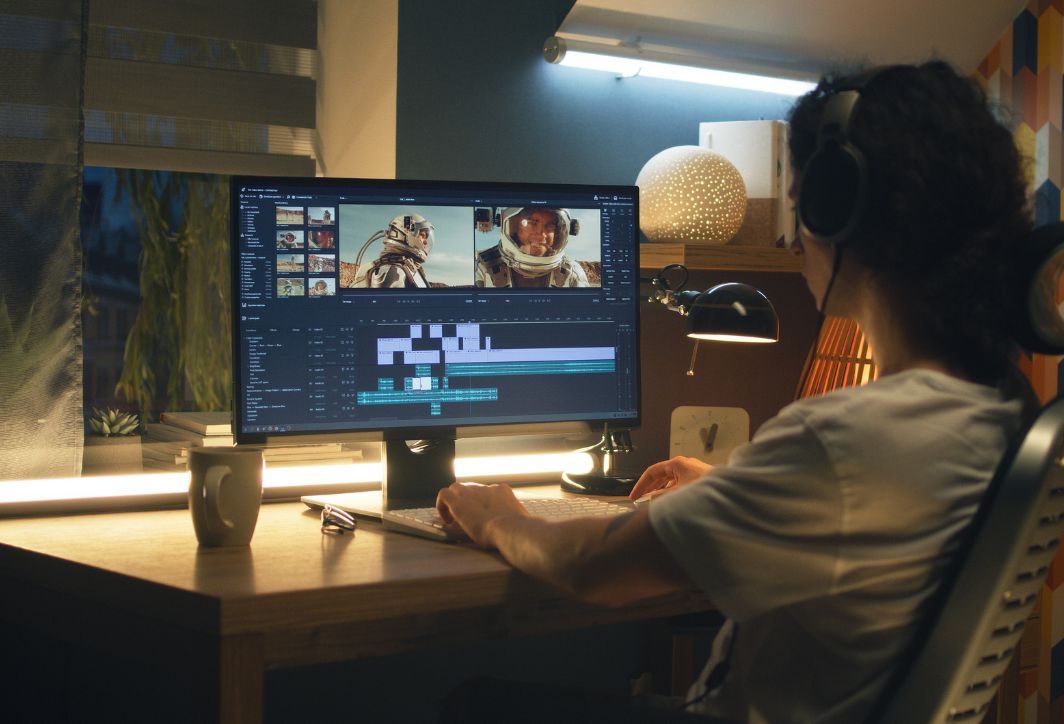
Editors need creativity and an artistic sensibility.
Skills in using specialized film editing software and tools.
While thinking is paramount, without the skills to use the right tools, you cannot realize your ideas. A professional film editor needs to master at least one of the leading software programs such as Adobe Premiere Pro, Final Cut Pro, or DaVinci Resolve.
Each software has its own strengths; for example, Premiere Pro excels in flexibility and its ecosystem, while DaVinci Resolve is the "king" of color grading and Fairlight audio. Mastering keyboard shortcuts, file management procedures, and digital effects techniques is essential to optimize workflow time.
However, tool skills go beyond simply knowing which buttons to press. Film editors need to understand technical specifications such as codecs, resolution, bitrate, and color space. A thorough understanding of how computers process data helps avoid technical errors during film output and ensures the best possible image quality across various platforms, from theaters to mobile devices.
Furthermore, continuously updating with new technologies such as 360-degree video editing or the application of artificial intelligence (AI) in automatic cutting and splicing is also a way for editors to avoid falling behind in the rapidly changing job market of 2026.
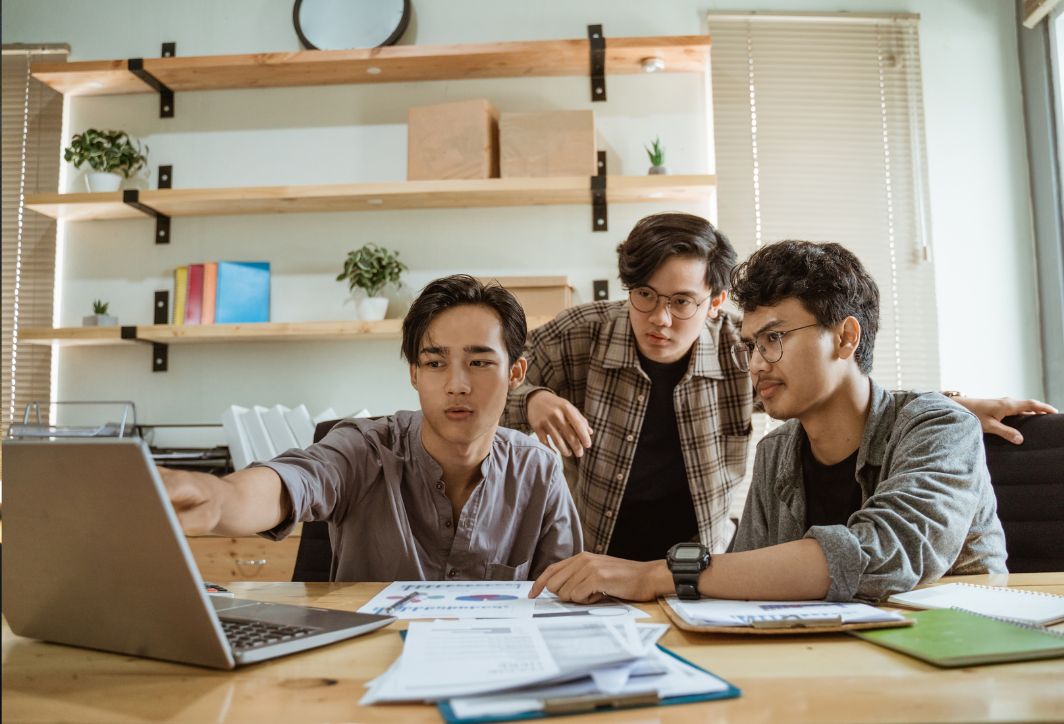
Editors also need to discuss and exchange ideas with the crew to create the most impressive footage.
Teamwork and effective communication skills
Many people mistakenly believe that film editors are solitary individuals sitting in dark rooms with computer screens. In reality, film editing is a highly collaborative job. Editors frequently work directly with directors and producers. These individuals have a comprehensive overview of the project, and their opinions may sometimes contradict your editing style.
Communication and negotiation skills are key to keeping the post-production process smooth. You need to know how to explain why one cut is more effective than another, using technical jargon and the film's goals. Teamwork in film editing also includes coordinating with other departments such as sound design, visual effects (VFX), and color grading.
The editor is at the center, coordinating the flow of data. If you don't communicate clearly about specifications or timelines, the entire post-production system can grind to a halt. Patience and the ability to listen to feedback are essential qualities.
Sometimes you have to be prepared to discard your favorite footage if it doesn't serve the team's overall goal. A good film editor knows how to balance personal creativity with the director's vision.

Ensure deadlines are met to avoid disrupting the film crew's schedule.
Time management skills and the ability to work under pressure.
Film editing is one of the most stressful stages in the film production process. You're often the last person to receive the data, but you have to complete the product on time for the premiere or broadcast date. Therefore, time management skills are crucial.
You need to know how to divide your work, knowing when to focus on rough editing and when to refine details. Getting bogged down in a small scene and neglecting the overall project is a common mistake for newcomers. The pressure in film editing also comes from having to work continuously for long hours with intense concentration. The editor's eyes and brain are constantly working at full capacity to scrutinize every frame.
This requires good health and a strong mental fortitude. Stress management skills help you stay alert and make sound editorial decisions even when time is running out. Furthermore, editors must constantly deal with changing opinions from clients or directors. Maintaining a professional attitude and the ability to make quick revisions are key indicators of a true film editor's competence.
Film editing is a wonderful blend of dry technical skills and a free-spirited artistic soul. To succeed, you need more than just a powerful computer or expert software skills; you need a heart that resonates with stories and a keen analytical mind. It's a journey of continuous learning, where each new project presents a new challenge in terms of emotion and rhythm. If you possess perseverance, passion, and the core skills mentioned above, the doors to a professional film and media career are always open to you.





 English
  Vietnamese