

TV commercials and Viral Clip These are two popular forms of brand promotion for businesses. However, many people still confuse these two concepts. This article will help you understand the difference between TV commercials and viral clips so you can choose the right format.
TV Commercials and Viral Clips – Two Forms of Brand Marketing
Video marketing is becoming increasingly popular, with TV commercials (TVCs) and viral clips being widely used. These two video formats have a wide reach, helping brands establish their reputation and easily connect with potential customers. So, what are TVCs and viral clips? Many people still don't understand these two concepts. Let's explore them in the content below:
What is a TV commercial?
TVC stands for Television Commercial. This is a type of professionally produced video advertisement intended for broadcast on television channels. They are typically short (15s, 30s, 60s), involve high production costs, feature well-structured scripts, special effects, and a professional crew.
The TV commercial for Cái Lò Nướng's mooncakes was produced by Right Media.
The primary goal of a TV commercial is to promote products, services, or build a brand directly and clearly. This type of video advertisement is often used to launch new products, build a reputable and professional brand image, or boost sales in large-scale campaigns.
Advantages of TV commercials:
- Reaching a large audience: Especially traditional customer segments.
- Building trust and credibility: A professional image on television builds strong confidence.
- Tight control over the message: Ensure the message is conveyed precisely as intended.
Disadvantages of TV commercials:
- The costs are very high: from production to broadcasting fees.
- Difficult to measure interaction: Can only be measured through ratings, without direct interaction.
- Easily overlooked: Viewers may switch channels when commercials appear.
What is a viral clip?
Viral clips, also known as viral videos, are videos that spread rapidly and widely on the internet, primarily through social media platforms. This spread usually happens naturally as viewers actively share them.
Viral clips have flexible lengths, unlike TV commercials. Production costs are usually lower, and most importantly, they must contain elements that evoke strong emotions (humor, emotion, surprise, shock, inspiration) to encourage viewers to share.

The primary purpose of using viral clips in businesses is to increase brand awareness, create interaction, spark discussion about products/services/brands, or promote word-of-mouth campaigns.
Advantages of Viral Clips:
- Rapid and powerful spread: Saves on distribution costs.
- Low cost: Suitable for businesses of various sizes.
- High engagement: Likes, comments, and shares help create a community effect.
- Targeting a young, dynamic audience: This aligns with current trends in digital content consumption.
Disadvantages of Viral Clips:
- Difficult to control the 100% message: The content may be altered from the original as it spreads.
- High element of chance: Not every video goes viral.
- It can have the opposite effect: If the content is offensive or misinterpreted.
The difference between a TV commercial and a viral clip.
Many people mistakenly think that TV commercials and viral clips are the same type of advertising video. However, these two forms of video are different, although they share many similarities. To help readers better understand these two concepts, below we will analyze their distinctive differences:
Regarding objectives:
- TV commercials aim for direct promotion, sales, and building a strong brand image.
- Viral Clip: Focuses on creating emotion, fostering interaction, and spreading naturally to increase awareness and generate interest.
Regarding production and distribution costs:
- TV commercials: Production costs and broadcasting fees are very high.
- Viral Clips: Production costs are much lower, and distribution costs are almost free or very low through social media sharing.
Regarding distribution channels:
- TV commercials: Primarily shown on traditional television channels (VTV, HTV, SCTV, etc.) and in movie theaters.
- Viral Clip: Social media (Facebook, YouTube, TikTok, Instagram…), websites, blogs, email.
Regarding duration:
- TV commercials: Fixed and concise (15s, 30s, 60s).
- Viral Clip: Flexible, can be very short (a few seconds) or longer (a few minutes), depending on the content and its ability to hold viewers' attention.
Regarding professionalism and appearance:
- TV commercials require a high level of professionalism, from scriptwriting, directing, and acting to post-production.
- Viral Clips: These can be simple, even amateur-produced videos, as long as the content is engaging enough and touches the viewers' emotions.
Regarding the potential for dissemination and measurement of effectiveness:
- TV commercials: Spread according to broadcast schedules, effectiveness is measured primarily through ratings and market surveys.
- Viral Clip: Its potential for spread is unlimited due to user sharing; its effectiveness is measured by views, shares, comments, and interactions.
Regarding the approach to the audience:
- TV commercials: A passive approach; viewers receive information while watching TV.
- Viral Clip: A proactive approach that encourages viewers to interact, share, and become part of the viral process.
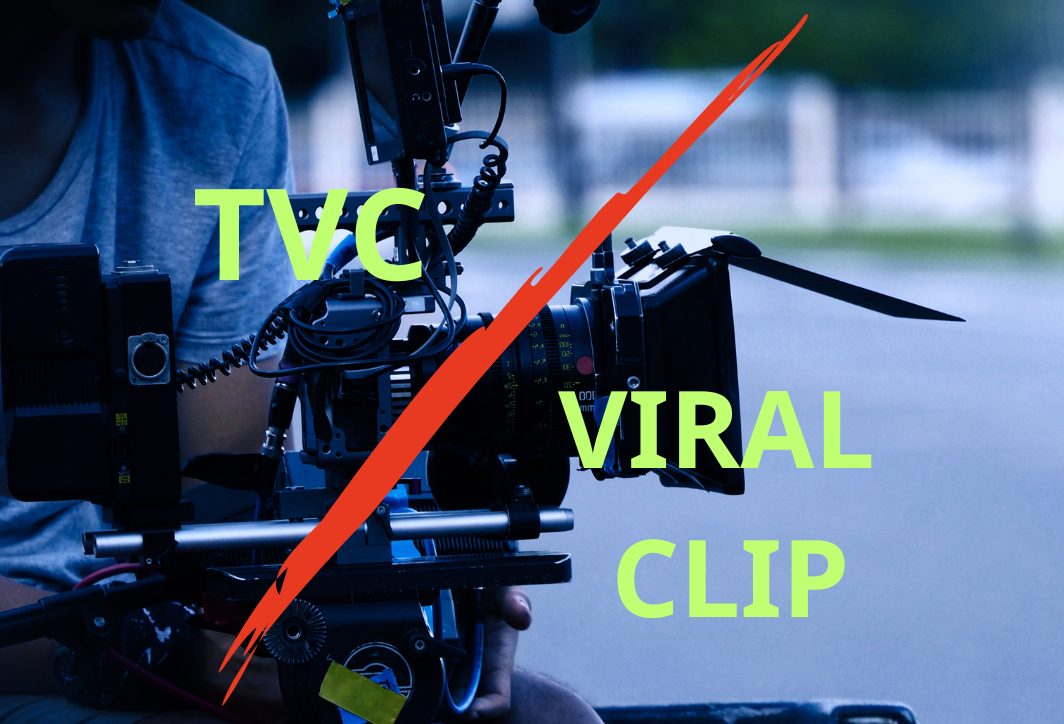
When should you use a TV commercial and when should you use a viral clip?
As mentioned above, the main differences between TV commercials and viral clips are discussed. So when should these two forms of video marketing be used? The choice of video advertising depends on each company's marketing campaign. Specifically:
Use TV commercials when:
- The main objective is to build a reputable, professional, and solid brand image in the market.
- Launching a new product/service requires widespread public awareness and trust.
- The goal is to reach a large traditional audience, especially age groups that are less likely to use social media.
- They have a large marketing budget and are willing to invest in high-quality production.
- The message conveyed needs to be carefully controlled to avoid misunderstandings.
Use Viral Clips when:
- The goal is to rapidly increase brand awareness and create a buzz on social media.
- The goal is to encourage interaction, generate discussion, and attract attention from the online community.
- Despite having a limited budget, we still want to achieve high communication effectiveness.
- We want to reach a young, dynamic audience who are frequent social media users and tend to share content.
- Be prepared to accept a certain level of risk in controlling the message in order to achieve effective dissemination.

Should both TV commercials and viral videos be combined in a marketing campaign?
Using TV commercials and viral videos separately can still be effective for marketing campaigns. However, with the increasingly dynamic and volatile marketing market today, businesses can flexibly combine both forms to expand their reach to potential customers.
Here are some reasons why you should consider combining both TV commercials and viral clips in your brand communication campaign:
- Enhance the effectiveness of multi-channel communication: Cover both traditional and digital platforms.
- Wider coverage, reaching a wider audience: Attracting both TV viewers and social media users.
- Leveraging the advantages of both formats: TV commercials for brand building, and viral clips for creating a viral effect.
- Overall cost savings: Viral clips can increase the effectiveness of a TV commercial without requiring significant additional advertising costs.
So when will combining these two forms of video advertising be most effective? You can refer to the strategy below:
- Use a TV commercial to launch your main campaign/product, then create short viral clips such as behind-the-scenes footage, funny moments, related challenges, or memes based on the TV commercial to spread on social media.
- Transform a standout TV commercial into a viral clip by editing, adding effects, humorous subtitles, or a specific call to action for social media.
- Use viral clips to generate curiosity before the official TV commercial airs, then guide viewers to find out more information on TV or websites.
- Create a series of related content: In which the TV commercial is the "soul" of the campaign, while the viral clips are the supporting pieces, exploring different angles of the message.
In summary, TV commercials and viral clips are essentially two different advertising video concepts, but they share the common goal of brand promotion. Based on each business's marketing plan, the advertising video is chosen in different formats, ensuring quality and quantity for the campaign. If your business needs professional advertising video production, contact Right Media immediately for quick and effective advice and support.