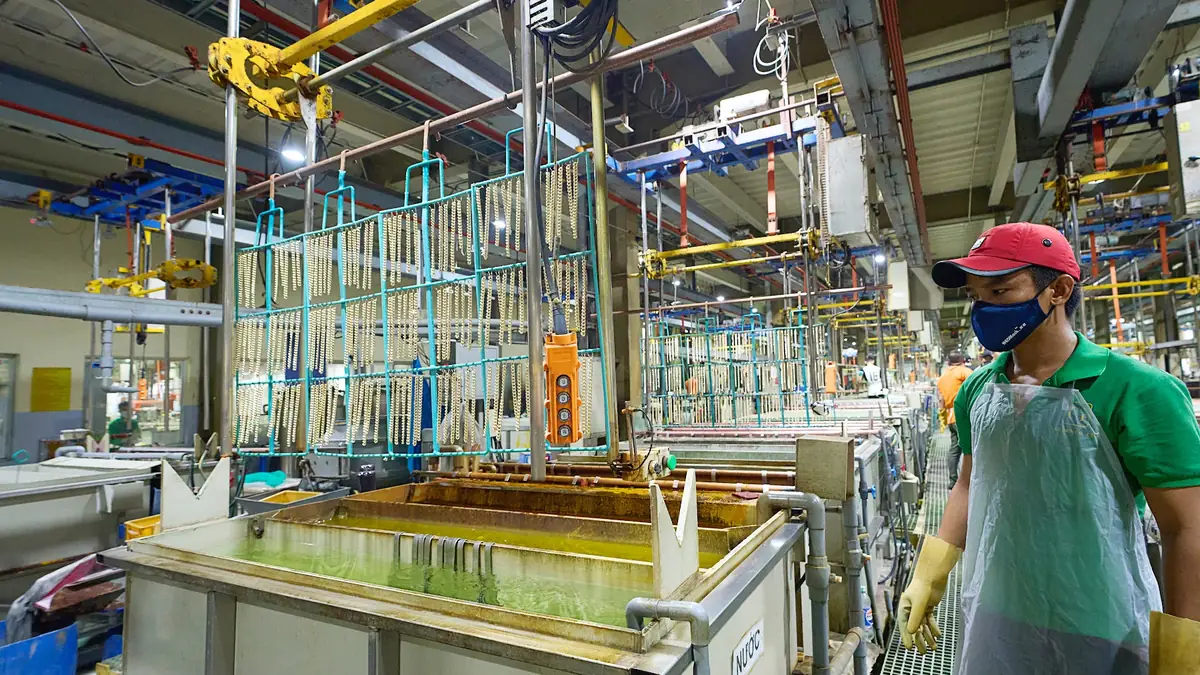
Taking photos of a factory is something many manufacturing companies only consider when their company profile is about to be submitted. At that point, they realize their old photo archive lacks panoramic views, doesn't include the QC area, and the photos of workers are often of outdated uniforms. This article lists 30 essential factory photos categorized into 6 groups, discusses lighting management in the workshop, how to photograph real workers, necessary preparations, reference pricing, and file delivery procedures.
Where are the photos of the factory used?
A well-executed factory photoshoot can produce a set of images suitable for at least four places: company profile, website, trade show booth, and job postings. Each place requires slightly different image sizes and content. Therefore, it's advisable to create a list of images for each location before starting the shoot.
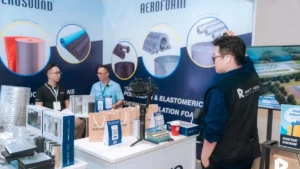
Company profiles require supporting photos: machinery, quality control area, and wall-mounted certifications. Websites need horizontal images with space for a title. Trade fair booths require several high-resolution panoramic photos for large-format printing. Job postings require photos of the employee at work, showing their face.
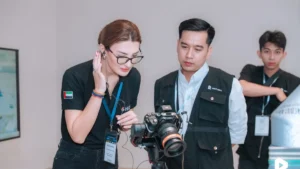
Nam Viet Group is a prime example. When refreshing their brand, the company's profile, catalog, and website all required new photos that matched the new identity. Right Media spent two days photographing the company at the factory, delivering 30 photos of the staff and the factory, along with 40 packshot photos.
30 photos a factory needs, divided into 6 groups.
The number 30 is the core, enough to build a portfolio and the main pages of a website. A typical shooting day yields more than that, with the extra space allocated for alternative angles and sizes. The table below lists the team members used for planning.
| Photo group | Number of photos | Includes scenes | For use |
|---|---|---|---|
| 1. Panoramic view, drone | 4–5 | The factory from above, the gate and signage, the grounds, the office facade. | File covers, website banners, trade fair booth backdrops |
| 2. Necklace | 6–7 | A panoramic view of each workshop, the running production line, and the characteristic processes of the industry. | Production capacity section, factory introduction page |
| 3. Machinery | 4–5 | Main machine, control panel details, welding sparks, cutting head, workpiece on the machine. | Equipment catalog and technical articles on the website. |
| 4. Quality control | 4–5 | Measurement room, product inspector, measuring equipment, wall-mounted certification. | The QC section in documents, tenders, and supplier evaluations. |
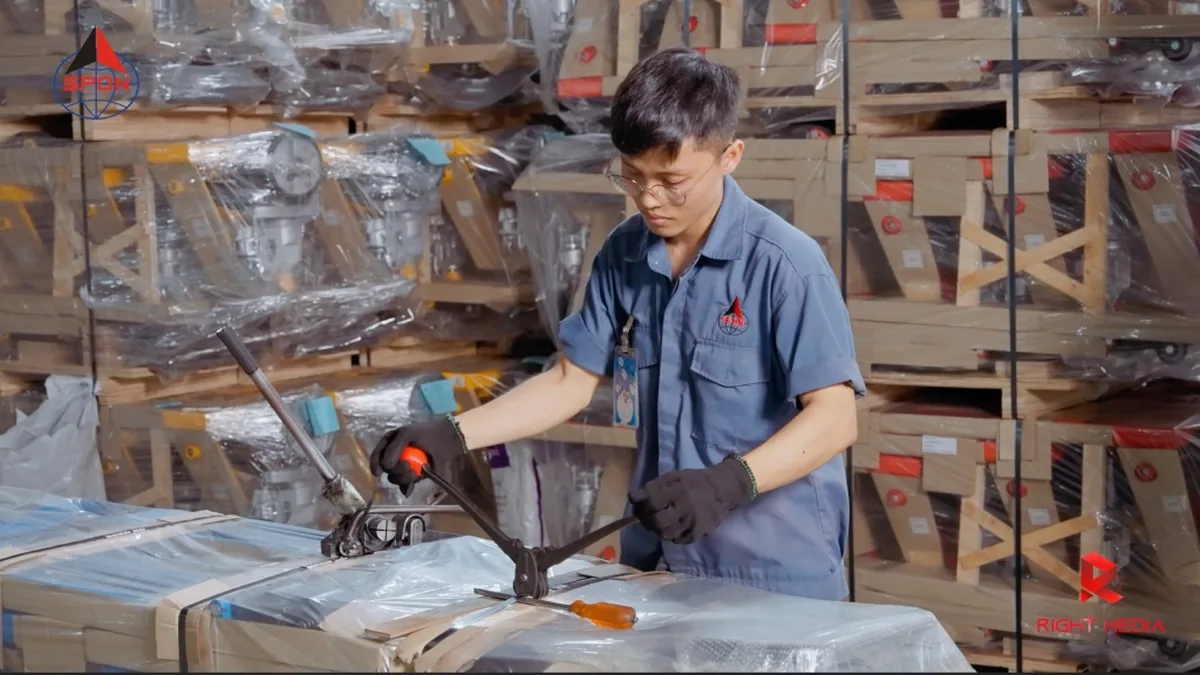
| 5. Human beings | 6–7 | Management team, group photo, individual departments, workers at work, engineers | Team page, recruitment, social media |
| 6. Warehousing and Shipping | 3–4 | Shelves, forklifts, palletizing, trucks loading goods. | Delivery capacity section, logistics page |
The photo set Golden Factory Photography Project This structure is quite accurate. Golden manufactures metal components for the fashion industry, and their clients want to know where the components are made, what machines are used, and who does the quality control. Section 30, featuring photos of the staff and factory, includes aerial views, the stamping workshop, the CNC area, engineers designing patterns on computers, workers inspecting individual components through magnifying glasses, and a group photo in front of the headquarters.
Group 4 is the most overlooked, even though it's the first group that supplier evaluators look for. A photo of a worker inspecting components through a magnifying glass in Golden speaks louder than a paragraph about quality control. Group 6 is also often missing, while foreign clients are very interested in delivery capabilities.
What is the lighting like in the processing workshop?
When photographing factories, the available light in the workshop is rarely sufficient for good photos, so the crew brings in supplemental lights for the cameras and the crew. The problem isn't a lack of light, but rather uneven lighting. The warehouse doors are brightly lit, the middle of the workshop is dark, and the ceiling lights give people's skin a bluish tint.
There is a difference in lighting between the door and inside the workshop. It's best to shoot from a window-facing angle in soft sunlight, or turn the camera in the opposite direction. For scenes where the angle cannot be changed, you can shoot at different light levels and then combine them in post-processing.
The ceiling lights distort the colors. Many types of factory lights emit a green light or flicker according to electrical frequency. White balance is adjusted for each zone, and color correction is done in post-production to ensure that the paint colors on the machines and uniforms are true to life.
Additional lighting for both the machine and the person. A diffused light positioned at an angle is sufficient to highlight the metal surface and the worker's face. The light is placed outside the path of the forklift and the worker. When working SPON video profileThe crew set up the lights right inside the factory but still maintained the factory's original colors.
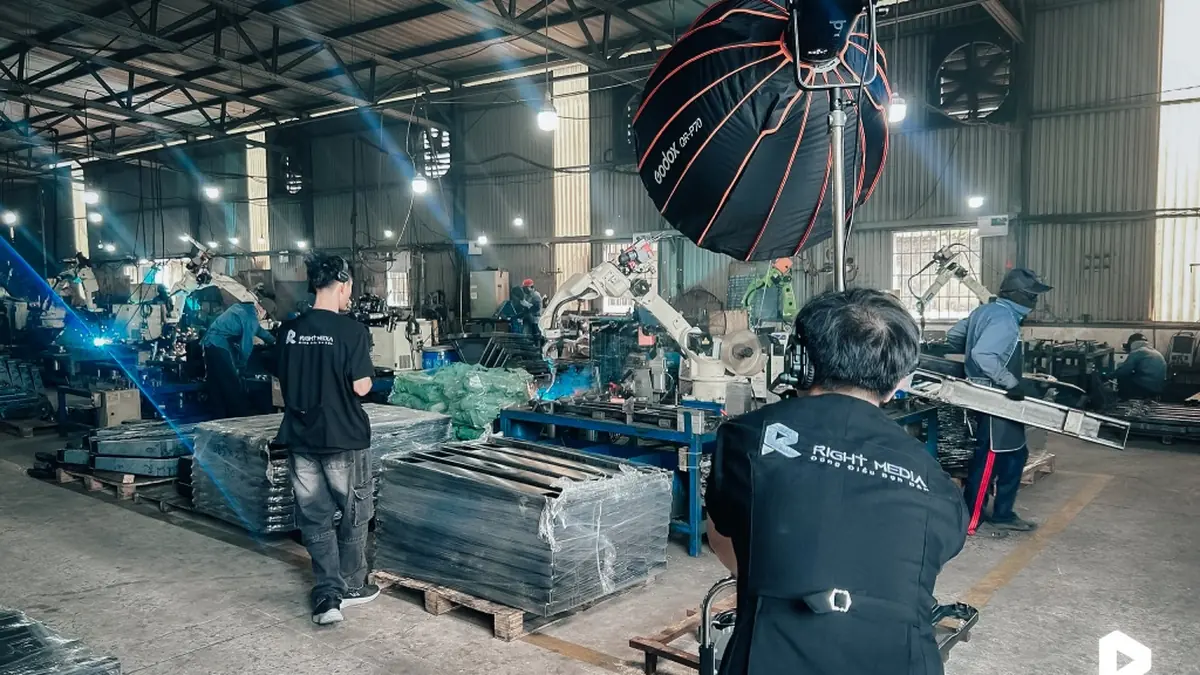
Drone footage taken in the direction of the sun. An aerial view of the factory should be taken when sunlight is shining on the facade. A preliminary survey will help determine whether morning or afternoon is a better time to fly. The drone should only fly within the permitted area, avoiding areas where people are working below.
Real photos, no acting.
The most compelling factory photos are those of workers doing their jobs. Customers immediately recognize a pose in front of the camera. Therefore, the crew takes photos during normal production hours, without stopping the production line to stage a scene.
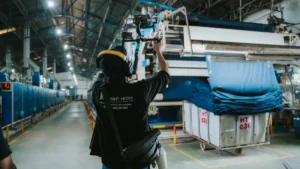
At SPON, the film crew shot during a typical workday at three factories in Tay Ninh. Workers appeared while they were working, without any staging. The same principle applies to still images: choose the right moment, the right angle, instead of telling people to stand still.
SPON profile videos trace the product's path through the factory, with workers appearing at work. View project details.
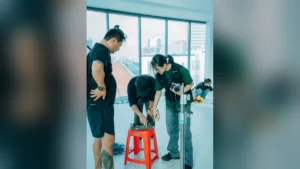
No demonstration doesn't mean no instruction. At Nam Viet Group, the crew accompanies workers and factory managers through each area, showing everyone where to stand and repeating the necessary movements. The filming time is chosen so that the production line is still running normally. Ms. Mo, a representative of Nam Viet, said that the company "doesn't have much experience" filming production lines, but they received support from the crew.
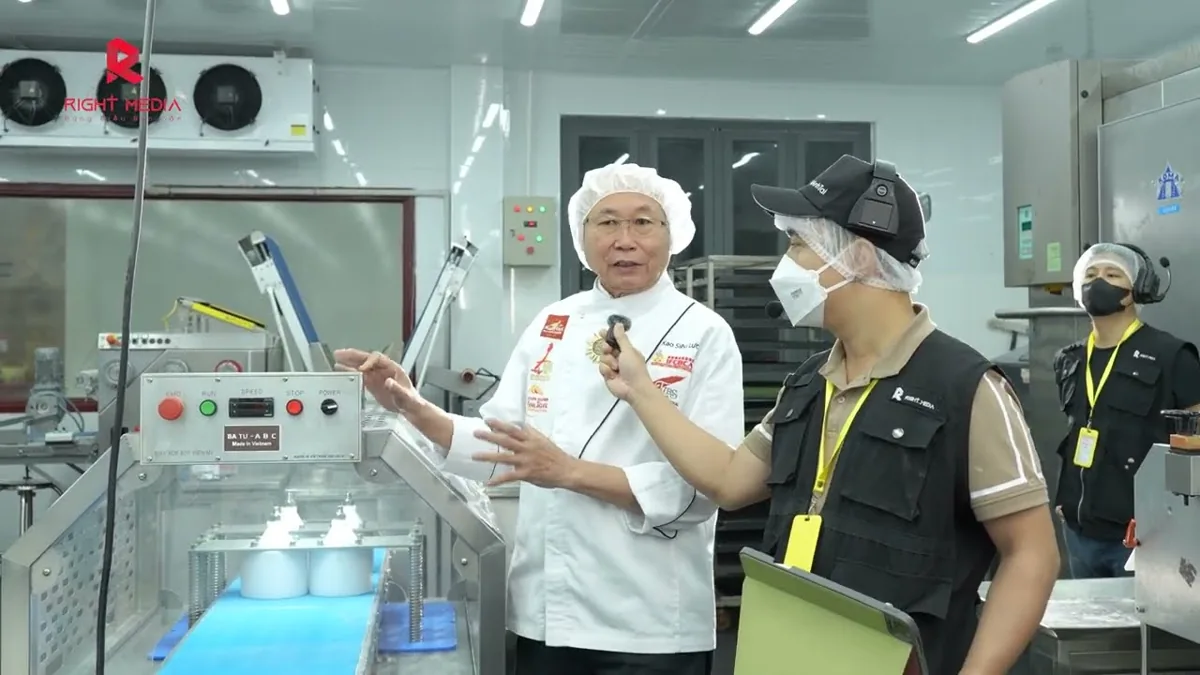
Protective gear is a detail viewers scrutinize closely. At ABC Bakery, the entire crew wears hoods, masks, and protective clothing before entering the production area. Workers in the frame must also adhere to regulations. A photograph lacking a hood or gloves could be disqualified from a food business's profile.
What preparations are needed before the factory photoshoot?
You need to finalize the list of photos, permitted shooting areas, camera schedule, and guide. Most photoshoots fail because of poor preparation, not equipment. The checklist below should be completed at least three days before the shoot.
- Send a list of 30 photos, divided into 6 groups, and mark the photos that are required.
- Conduct a survey with the safety department to finalize the permitted shooting areas, pathways, and lighting placement.
- Permission is required to fly a drone if the factory is located within an industrial zone.
- Schedule the main cameras to be running during the shooting time.
- Clean the workshop according to the 5S methodology: clear walkways, no trash cans, and no electrical wires running across the floor.
- Distribute clean, correctly identified, and adequately protective uniforms for those in the frame.
- Wipe down signs, logos, and wall-mounted certificates.
- Finalize the time for the group photo and the list of leaders whose portraits are needed.
- Send a factory employee to accompany the team throughout the entire session.
The final aspect is more important than its appearance. At Far Eastern Polytex, factory representatives accompanied the crew and reviewed the footage on-site. In a large factory, with a guide, the crew entered the right area at the right time, and production continued as normal.
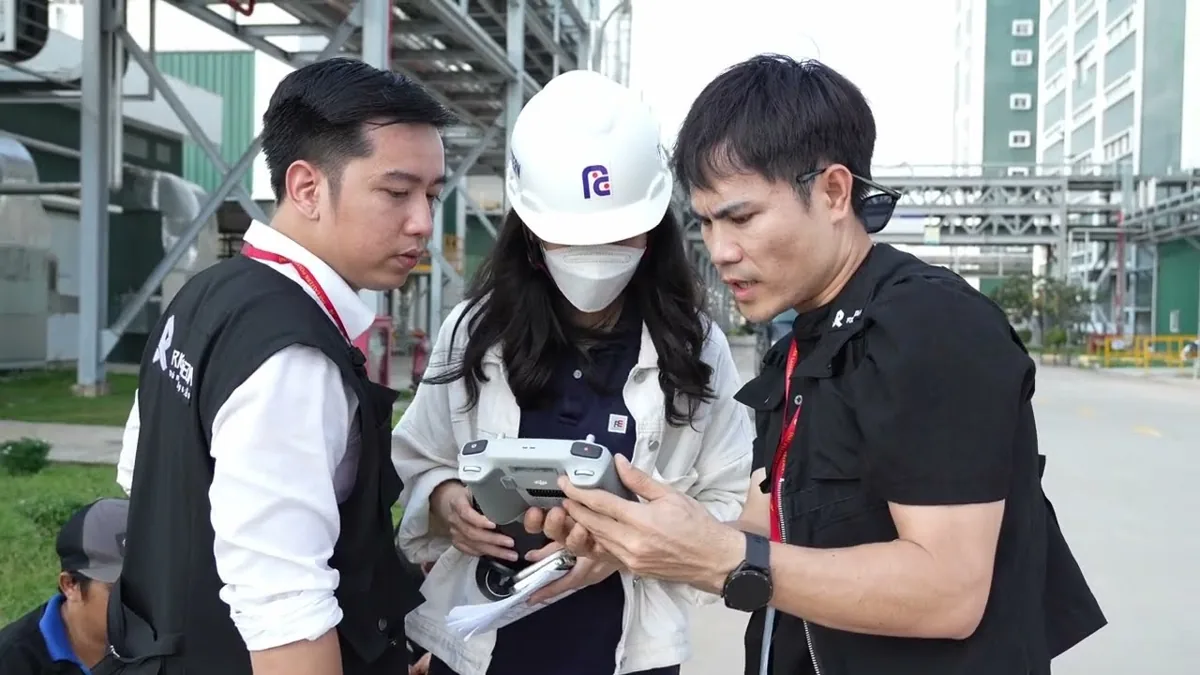
Should we include factory photos in the filming session?
Therefore, if a business needs both video and photos, one factory cleanup, one worker mobilization, and one drone permit application for both are all necessary. Photos and videos share similar lighting and uniforms, so they can be placed side-by-side on the website for a cohesive look.
The brand refresh of Nam Viet Group is a prime example. During the two days of filming, Right Media brought two teams to the factory: one for corporate videography and one for photography, working in parallel. See the photo set here. Nam Viet Group corporate photography project.
The condition for merging is that the two teams don't compete for the same angle. The filming team needs continuous motion shots, while the photography team needs a still moment. The schedule should be divided by area: when the filming team is on the assembly line, the photography team is taking portraits, then they switch places. Merge into one session. shoot a video introducing the factory. That's the most economical way.
Reference price list for factory photography
The quoted price, excluding VAT, applies to Ho Chi Minh City and a 100 km radius. The final cost will depend on the number of areas, the number of people needing portraits, and whether a drone is required.
| Category | Scope | Reference price |
|---|---|---|
| Taking photos of factories and businesses. | 40–60 edited photos per day | From 12,000,000 VND |
| The photos were taken during the video shoot. | Add more photography crews on the filming day. | Add 6,000,000 VND |
| Flycam | An aerial view of the factory. | 5,000,000 VND/day |
| Portfolio: photos + designs | Photo set and profile layout | From 22,000,000 VND |
| Factory video, three packages | From one drone filming session to two days of filming, 1-5 minutes per shot. | From 15,000,000 / 59,000,000 / 199,000,000 VND |
If you need photos, videos, and profile design, see more. business profile servicesProduct images for the catalog are a separate category; details can be found on this page. product photography.
Hand over and name the files.
The post-photoshoot images of the factory are only useful if the website designer, profile designer, and HR department can find the right photos. The delivery method should be agreed upon in the quotation.
Two copies for each photo. High-resolution original for printing brochures and trade show backdrops. Lightweight, landscape-formatted compressed version for uploading to websites without slowing down the page.
The folders are organized into 6 groups. Name the folders according to the correct categories: overview, production line, machinery, QC, people, warehouse. This way, subsequent users won't have to open each image to find what they're looking for.
File names should be meaningful and free of accents. For example: tencongty-xuong-cnc-01.jpg instead of IMG_4821.jpg. Clear file names help manage image libraries and are beneficial when uploading to a website.
Note the usage rights. Clearly state which channel the photos containing people are being used for, especially for recruitment and advertising photos.
Frequently Asked Questions
Does taking photos of a factory require production to stop?
No. The best photos are taken while the machine is running and the workers are at work. The crew sets up the tripod, lights, and power cords out of the way of the forklifts and workers. Only photos requiring many people, like group photos, need a short appointment, usually at the beginning or end of a shift.
If the factory is old and the equipment isn't new, will the photos turn out well?
Yes, if the workshop is tidy and the lighting is properly managed. Buyers are more interested in stable machine operation and clear processes than in new machines. Focus on the cleanest areas, the details being processed, and the people, rather than trying to capture a panoramic view of messy areas.
What about factories located in provinces far from Ho Chi Minh City?
The reference price applies to Ho Chi Minh City and a radius of 100 km. Further distances will incur additional travel and accommodation costs. For factories located far away or with multiple workshops, it's advisable to combine photo shoots with video shoots to avoid a single trip, as the team did when filming three SPON workshops in Tay Ninh in one day.
Can the secret technology area be photographed?
The company decides which areas are photographed during the site survey. For clean rooms, chemical storage areas, or areas with specialized technology, the crew only enters with approval and according to the factory's access procedures. Photos from these areas should be reviewed before being included in the documentation.
If your business needs factory photos for a company profile, website, or upcoming trade show, please send Right Media a list of the areas and intended use. Our team will create a list of photos categorized into 6 groups and suggest a shooting schedule. View our photo, video, and design packages on our website. company profile Or call the hotline at 0901 391 002.