
TVC stands for Television Commercial, which means a television commercial.A TV commercial is a short video, usually 15 to 60 seconds long, that uses images and sound to introduce a product, service, or brand to viewers. Nowadays, TV commercials are not only broadcast on television but also run on YouTube, Facebook, TikTok, and outdoor screens. This article explains what a TV commercial is, common types of TV commercials, recommended lengths, and the production process of a complete TV commercial.
What is a TV commercial?
A TV commercial (TVC) is a short advertising video produced for broadcast on television and other video platforms. The goal of a TVC is to convey a clear message in a very short time, thereby increasing brand awareness and encouraging viewers to learn about or purchase the product.
In Vietnam, the term "TV commercial" is often used more broadly than its original meaning: it generally refers to short commercials that are well-produced in terms of script, actors, lighting, and post-production, whether broadcast on television or social media. Vietnamese WikipediaTelevision commercials are also known as television advertisements or TV ads in English.

What does TVC stand for?
TVC stands for Television CommercialSome of the fully written documents are: Television Video CommercialBoth ways of writing refer to the same type of content: short television commercials.
What benefits does TV commercial advertising bring to businesses?
- Increase brand awareness: Images and sounds help viewers remember a brand faster than text-only advertisements.
- Convey product information concisely: In just a few dozen seconds, a TV commercial shows viewers what the product is, how to use it, and what makes it different.
- Build trust: A well-produced and truthful TV commercial helps customers feel more confident when choosing a product or service.
- Compatible with multiple channels: A TV commercial can be cut into multiple versions to run on TVs, YouTube, Facebook, TikTok, and point-of-sale screens.
How many seconds long are TV commercials usually?
The most common TV commercial lengths are 15 seconds, 30 seconds, and 60 seconds. A 15-second commercial is suitable for brand reminders, a 30-second commercial is enough to tell a short story, and 60-second or longer commercials are for more explanatory content or product launch campaigns.
| Duration | Suitable when | Commonly used channel |
|---|---|---|
| 6 seconds | Mention the brand name, increase its frequency of appearance. | Bumper ads on YouTube |
| 15 seconds | To emphasize a message or an offer | Television, social media |
| 30 seconds | Tell a short story with a beginning, a climax, and an ending. | Television, YouTube |
| 60 seconds or more | Product launch, feature explanation, emotional TV commercial. | YouTube, Facebook, events |
The specific duration depends on the broadcast budget, campaign goals, and the viewing habits of the target audience. You can find a detailed analysis in the article. What is a reasonable length for a TV commercial?.
Popular types of TV commercials today
There are currently five common types of TV commercials: television commercials, online commercials, recruitment commercials, internal communications commercials, and 3D commercials. Each type serves a different purpose and target audience.
| TVC type | Main broadcast channel | Main objective |
|---|---|---|
| TV commercial | Television channels | Reaching the masses, building trust. |
| Online TV commercial | YouTube, Facebook, TikTok | Target the right customers, optimize costs. |
| Recruitment TVC | Websites, social media, job sites | Attracting candidates, building employer brand. |
| Internal communication TVC | Events, internal channels | Spreading culture and guiding business direction. |
| 3D TVC | Television, social media | Product simulation, creating visual effects. |
TV commercial
This is the most familiar type of TV commercial, aired between movies and entertainment programs on television. Television advertising has a wide reach and creates a sense of trust, but it is expensive to broadcast, has limited airtime, and requires content to be censored before airing. This type of commercial also makes it difficult to precisely target a specific customer group.

Online TV commercial
Online TV commercials (TVCs) are run on YouTube, Facebook, TikTok, and other video platforms. The biggest advantage is that businesses can target the right audience based on age, interests, and location, while also having flexible cost control. However, the competition is very high: viewers can skip ads after only a few seconds, so the opening must be engaging. This type of TVC, inserted within online content, is also known as an iTVC.
For example, this TV commercial promoting the movie theater service was produced by Right Media for Lotte Cinema:
TV commercial for recruitment
A recruitment TV commercial introduces the company and the position being advertised to attract suitable candidates. The content typically includes:
- Company name and notable achievements
- Work environment and culture
- Job opening and job description
- Salary, bonuses, and benefits
An engaging recruitment TV commercial not only helps find the right candidate but also enhances the company's image in the eyes of both applicants and customers.

Internal communication TVC
This is a video circulated within the company, conveying the core values, culture, and direction that the leadership wants employees to understand. Internal TV commercials are often shown at events, training sessions, or on internal communication channels, helping to increase engagement between leaders and employees.
3D TV commercial
3D TV commercials use three-dimensional graphics to simulate products, their internal structures, or scenes that are difficult to film in reality. 3D imagery creates a realistic and eye-catching feel, making it particularly suitable for technology products, devices, and consumer goods that require detailed visual representation.
What is the difference between a TV commercial and an iTV commercial?
TV commercials focus on conveying the brand message effectively within a short timeframe. viral clip Content that is easily shareable and spreads naturally is prioritized, while iTVC refers to TV commercials broadcast online.
| Criteria | TV commercial | Viral clip | iTVC |
|---|---|---|---|
| Target | Brand recognition and reputation | Spread the word, generate discussion. | Reach the right online audience. |
| Broadcast channel | Television and video platforms | Social network | YouTube, online newspapers, social media |
| approach | Clear message, well-produced. | Entertaining, surprising, and relatable. | Like a TV commercial, but optimized for small screens. |
What are the steps involved in the TV commercial production process?
A typical TV commercial is produced in seven steps: information gathering, ideation, script writing, visual script creation, filming (production), post-production, and delivery. Each step has a review point for the business to control the content before moving on to the next step.
- Gather information (brief): The production unit researches the product, target customers, messaging, and budget. This forms the foundation for all subsequent steps to proceed correctly.
- Brainstorming: The creative team proposes ideas that align with the brand's message and image.
- Write a script: The idea was developed into specific plot points, dialogue, and commentary, closely adhering to the actual characteristics of the product.
- Create a visual script: draw storyboard (Storyboard) to help the entire crew visualize each frame before filming begins.
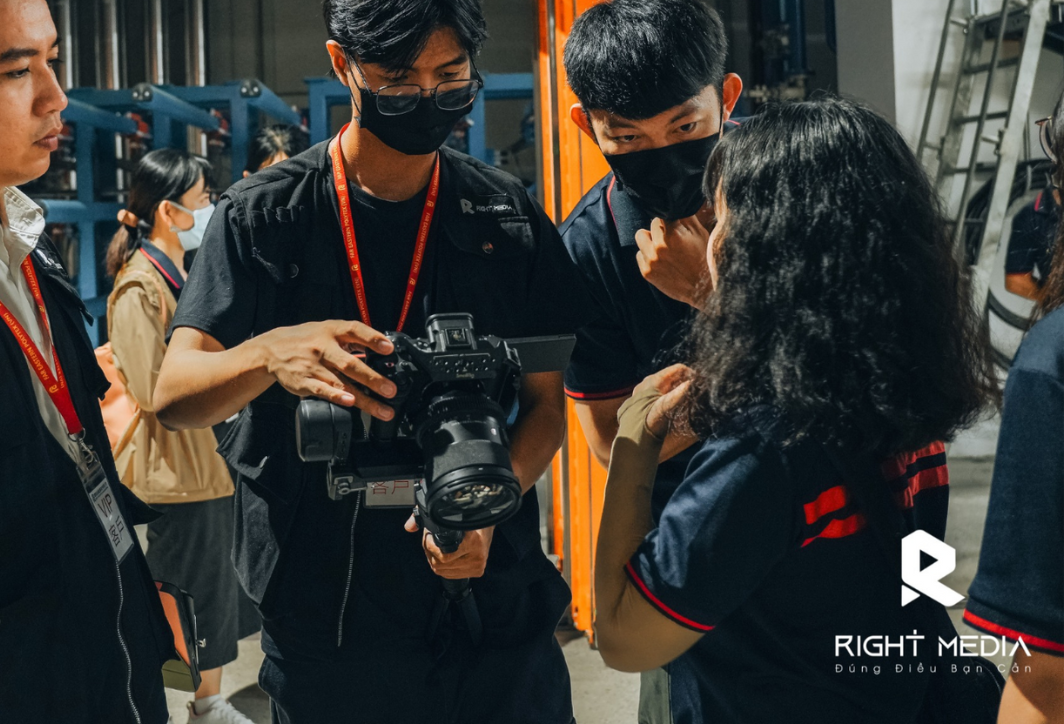
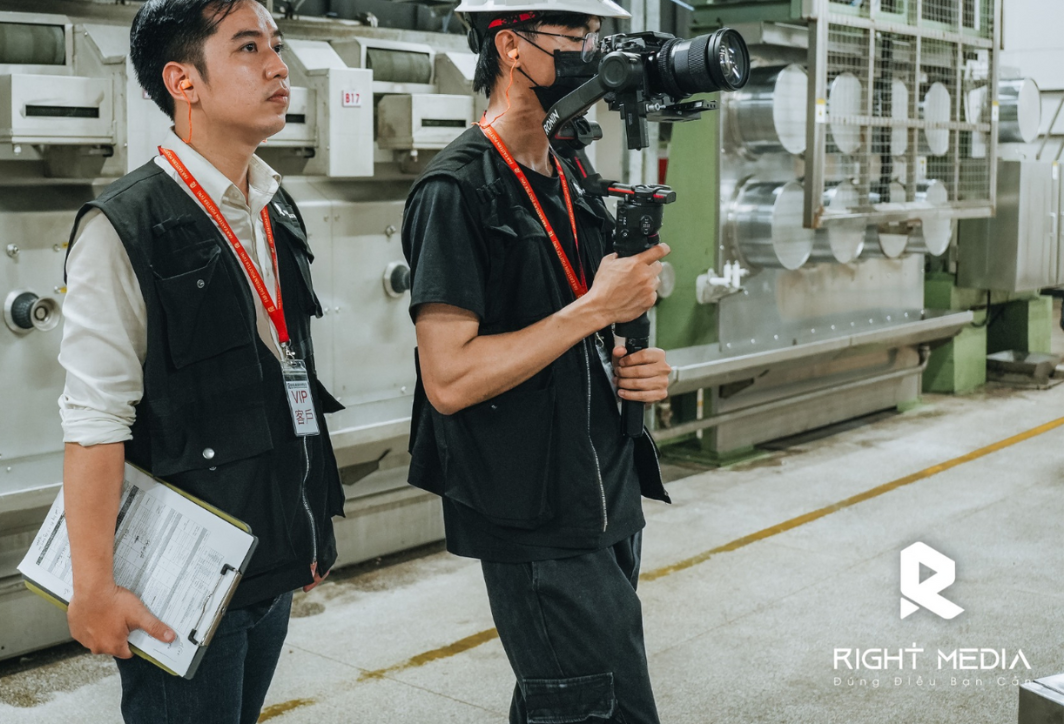
- Spinning (production): The director, cinematographer, lighting technician, actors, and set designers coordinate to film according to the approved script.
- Post-production: Film editing, color grading, special effects, voiceover recording, and sound engineering.
- Hand over: Submit the build for the business to review and edit based on feedback, then export different versions for each distribution channel.
If your business needs a company to handle all of the above steps, Right Media offers that service. TV commercial production services in Ho Chi Minh City with a team from scriptwriting to post-production.
Things to note when producing TV commercials.
A TV commercial is only effective when the message is clear, the content is truthful, and it's placed on the right channel. An exaggerated or confusing TV commercial can cause customers to lose trust from their first experience with the product.
- Identify your target customers first: The content, colors, music, and duration should all be tailored to the target audience the business wants to reach.
- Keep the message simple: Each TV commercial should focus on one main idea, avoiding confusing metaphorical imagery.
- Tell the truth: Do not exaggerate the product's benefits and comply with legal regulations on advertising.
- Budget estimates for both production and broadcasting: The cost of television broadcasting or online advertising is often a significant expense and should be factored in from the outset. (See reference) TV commercial production price list.
- Prepare multiple versions: Produce both short and vertical versions for use on social media, maximizing the efficiency of a single production run.
- Choose a production company with actual project experience: Carefully review the TV commercials they have produced to assess their capabilities before collaborating.
Conclude
In short, what is a TV commercial? It's a short advertising film that helps businesses convey their message quickly, clearly, and memorably on both television and online platforms. For a TV commercial to be effective, businesses need to choose the right type of commercial, the right length, and a production company with practical experience. Contact Right Media for advice. TV commercial production Suitable for your goals and budget.
Frequently Asked Questions about TV Commercials
Essentially, a TV commercial is a type of advertising film. The original meaning of TVC is an advertising film broadcast on television, while "advertising film" is a broader concept encompassing advertising videos on social media, outdoor screens, and at points of sale. In Vietnam, these two terms are often used interchangeably.
No. Although the name originates from television, TV commercials are now widely used on YouTube, Facebook, TikTok, and other video platforms. Businesses can choose to run TV commercials exclusively online to target the right customers and control costs better than buying airtime on television.
Production time depends on the script's scale, the number of locations, the number of filming days, and the volume of post-production. TV commercials with simple scripts and few locations are completed much faster than those requiring elaborate sets, a large cast, or 3D special effects. Businesses should agree on a schedule for script and editing review from the outset to avoid delays.
The cost of a TV commercial typically includes: concept and script, filming crew, equipment, actors, setting, post-production, and music. The total cost varies depending on the complexity of the script and the desired image quality. Broadcast or advertising costs are separate expenses and should be budgeted separately from production costs.