The voiceover in an advertisement determines whether viewers hear a promise or a mere sales pitch. With the same script, a firm voice makes the product seem more enduring, while a warm voice makes the story seem more genuine. This article analyzes five types of TV commercial voiceovers across projects Right Media has done for DOTACO, VNRA, Phu My, and SONY, then examines casting techniques and factors that affect recording costs.
What is voiceover advertising and how does it differ from dubbing?
Voice-over advertising involves a voiceover performed by someone not appearing on screen, narrating the message for the entire TV commercial. Dubbing advertising involves recording the voice for the on-screen character, requiring precise lip-syncing and acting. A TV commercial may use only one or both methods.
The difference between voice-over for commercials and voice-overs directly impacts the production schedule. Voice-overs can be recorded after the script is finalized and then used as a pacing base for the editing. Voice-overs for characters must be planned from the casting stage, as the voice and face need to match.
In Right Media's TV commercials, the typical order is script finalization, voiceover recording, and then filming and editing. For the DOTACO roofing TV commercial and the VNRA TV commercial, the project page clearly states that the voiceover was recorded immediately after the client finalized the script. Therefore, script quality comes before voiceover quality; you can see the article for more details. 20 great advertising quotes and why they are effective. before choosing a voice.
Type 1: A strong, decisive male voice for products requiring durability.
This type of voiceover is ideal for advertising building materials, machinery, and industrial equipment. Viewers need to believe that the product can withstand the test of time. A firm voice, concise enunciation, and minimal intonation make the promise sound like a firm affirmation.
DOTACO's Roman roof tile TV commercial uses this exact style. The project page states the choice is a male voiceover, strong, decisive, "suitable for the message about durability." The TV commercial is about 40 seconds long, filmed in a single shot at the factory, with no subplot. It's almost entirely roof tiles and the voiceover on screen.
The challenge with this type of voiceover in commercials lies in the rhythm. The TV commercial depicts four weather conditions: intense sun, strong winds, rain, and hail. Each spoken sentence must coincide with the corresponding visual segment, synchronized with the sounds of wind, thunder, and impact. Reading faster than half a beat will cause the words and images to be out of sync.
The Roman tile TV commercial was filmed in one shot at the DOTACO factory, using a strong and decisive male voice. View project details.
Style 2: A warm, deep narrative voice, slow reading in the first person.
When a TV commercial tells a story instead of listing features, the voiceover should sound like someone inside the story. A deep, warm voice, a slow pace, and pauses allow viewers time to connect with the story.
The TV commercial for fiber cement corrugated sheets for the Vietnam Roofing Association (VNRA) is a clear example. The project page features a deep, warm male voice, reading slowly and emotionally. The narrative is in the first person, through the words of the grandson: "This is the house built by my grandfather, and this is my father in my grandfather's arms."
The TV commercial is approximately 30 seconds long and airs on television channels targeting rural viewers. For this audience, the voiceover needs to be easy to listen to, unhurried, and without the typical commercial emphasis. The image of three generations under one roof completes the rest.
The VNRA TV commercial is told in the first person using a deep, warm male voice, read slowly. View project details.
Type 3: The voice of a character in dialogue, almost like everyday speech.
This is essentially voice-over advertising in the truest sense: the characters in the video speak to each other. The voices don't need to be beautiful like announcers' voices. They need to be the right age, the right role, and sound like real people speaking.
The Phu My fertilizer TV commercial for urban gardeners revolves around a grandfather and grandson tending to a kumquat tree. The boy asks why his grandfather's tree is bearing so much fruit. The grandfather replies, "It's all thanks to Phu My fertilizer, grandson." Following this dialogue, the commentary introduces the product line for urban dwellers.

The DOTACO building materials TV commercial also features an actor introducing the product, opening with the wish, "I wish I could build a house right now." In this project, actor casting and voice recording were scheduled together in the pre-production phase. The reason is simple: the voice and face had to be approved together.

Note when choosing voiceovers for type 3 commercials: an older voice and a younger voice must be clearly distinguishable. If the two voices are too close together, viewers will still not know who is speaking even after the video is turned off.
Style 4: Fast-paced commentary for promotions and snacks
A promotional TV commercial needs to convey a lot of information in a few seconds: what product, what offer, and where to buy it. The voiceover plays the role of a guide, speaking clearly, evenly, and keeping up with the fast pace of editing.
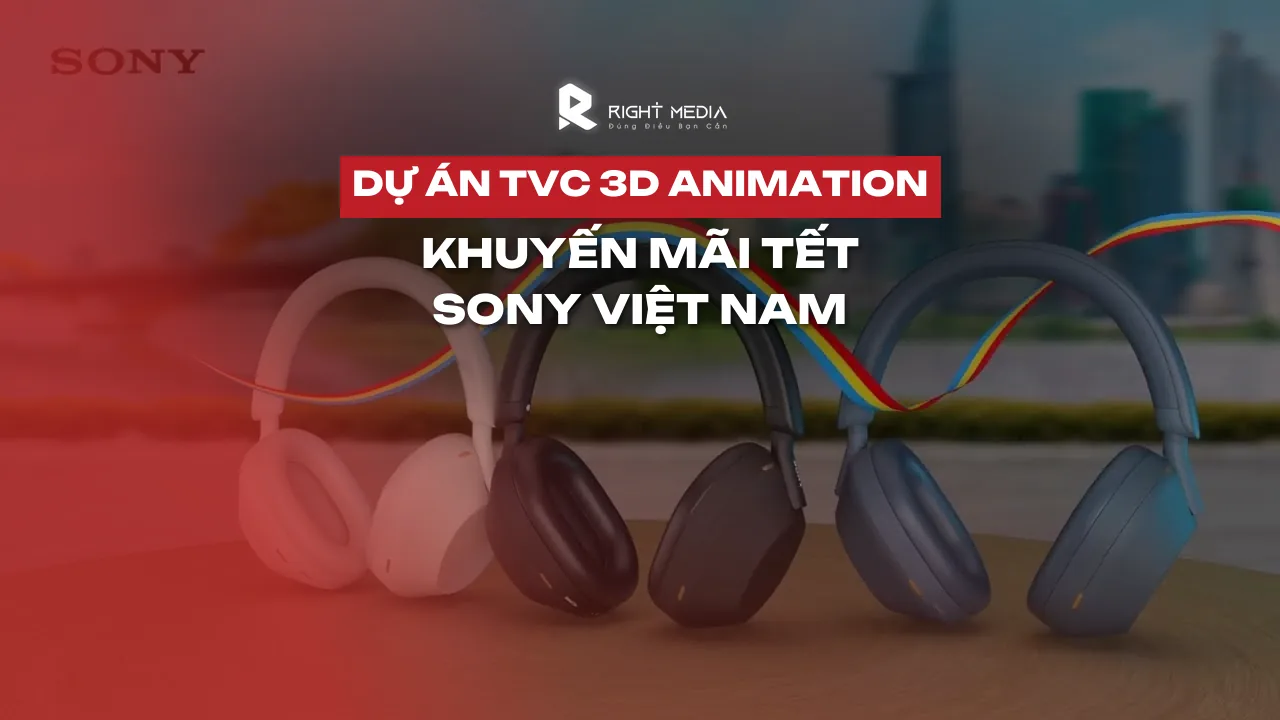
The 52-second 3D animation TV commercial for Sony Vietnam's Tet program "Together with Sony, Tet Flourishes, Abundant Blessings" divides the six product groups into three main themes: family bonding, abundant music, and creative Tet celebrations. At the end of the film, the commentary invites viewers to visit electronics supermarkets and dealers to receive special offers.
Lai Phu's Cherish pudding TV commercial is 33 seconds long, opening with the commentary, "Start your day feeling refreshed." Each flavor has its own commentary, accompanied by a unique background color. The commentary had to be short, as each flavor only appeared for a few seconds on screen.
Type 5: English voiceover for international partners and markets
Businesses that export or work with foreign partners often need English versions. In these cases, the voiceover for the TV commercial must have accurate pronunciation and a natural, native-like intonation to maintain the product's credibility.
The Seasonal Storytelling video for Dotaco's Uniboard uses English narration, featuring foreign actors next to a Christmas tree. The narration opens with the traditional opening of a gift box, then transitions to the specification "Strength over 18 MPa". A sentence recorded in Vietnamese on the project page reads: "This is not a promise, this is a standard for stable production."
When doing voiceovers for English commercials, it's advisable to have someone review the English script before recording. Literal translations from Vietnamese are often long and difficult to pronounce naturally.
Dotaco Uniboard's Christmas video uses English narration to send to international partners. View project details.
Comparing 5 types of voiceovers for TV commercials and when voiceovers are unnecessary.
| voice type | Characteristic | Suitable for | For example, Right Media |
|---|---|---|---|
| 1. A man who is firm and decisive. | Pronounce words concisely, with minimal intonation. | Durable materials, machinery, and products. | DOTACO Roman Roof Tile TVC |
| 2. Tell a heartwarming story. | Read slowly, with pauses, in the first person. | Long-established brand, mass audience. | VNRA TVC |
| 3. Dialogue characters | The right age, the right role, as the saying goes. | Family stories, everyday situations | Phu My Fertilizer TVC |
| 4. Fast-paced commentary | Clear, consistent, short sentences following a rhythmic pattern. | Promotions, snacks, and a wide variety of products. | Sony Tet TVC, Cherish TVC |
| 5. English | Accurate pronunciation, natural intonation. | Exports, international partners | Dotaco Uniboard Video |
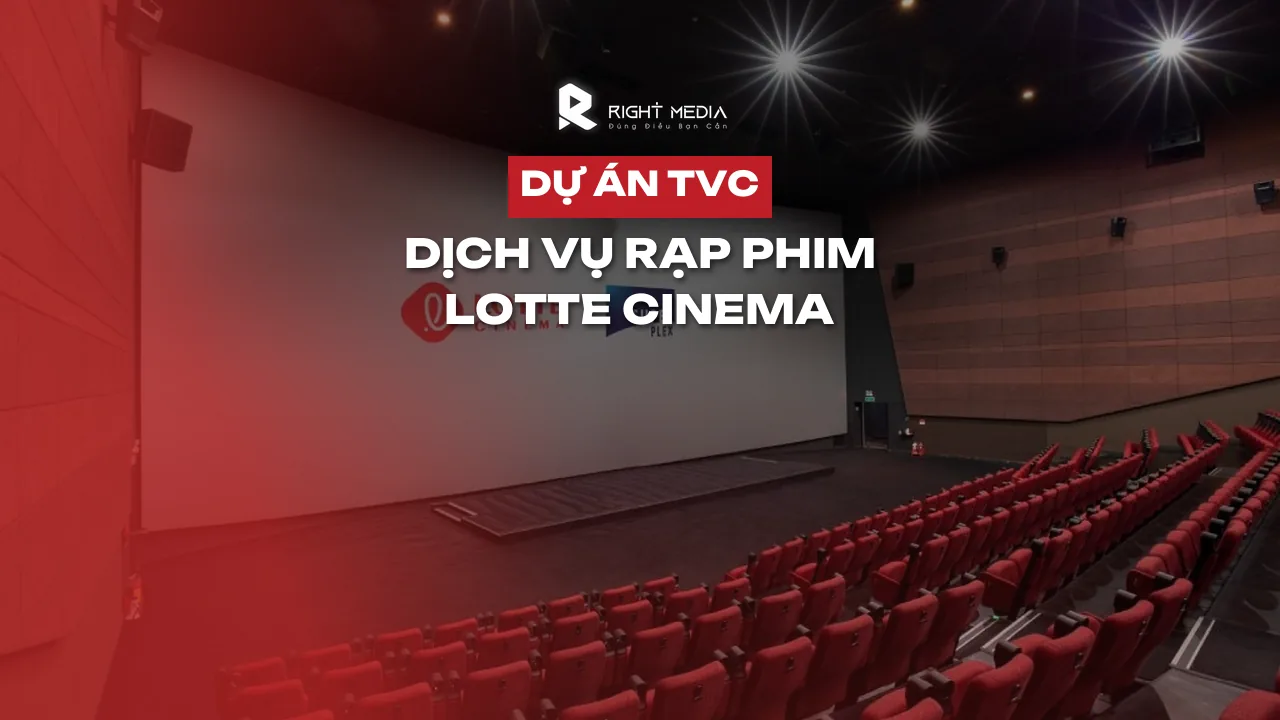
Not all TV commercials need voiceovers. The Lotte Cinema TV commercial, over a minute long, is unvoiced, telling the story through the cinema atmosphere and music. The 38-second Elaiya beverage TV commercial features only music and English text, intended for the European market. FOX cosmetics videos and Life360 electric toothbrush videos also lack narration.
Omitting voiceovers in commercials is appropriate when videos are primarily sold on social media, where many viewers mute their screens, or when a single version needs to be used across multiple markets.
How to cast voice actors for TV commercials?
Voice casting involves selecting a voice actor based on the finalized script, not on a feeling of "good voice." The simplest method is to listen to several voice actors performing the same script excerpt, place them on a storyboard or reference image, and then choose the voice that proves most credible.
The steps should be followed in this order:
- Let's finalize the script first: Voice recording is only done after the script has been approved. The scriptwriting instructions are included in the article. TV commercial script.
- Describe the voice in writing: Gender, age, speed, emotion. For example, "masculine, firm, decisive" like in the Roman tile TV commercial.
- Listen to the most difficult part: The sentence contains the product name, number, or English word.
- Listen and watch: Place the sample reading on the storyboard to check the rhythm.
- Test with your target audience: Rural viewers, contractors, or foreign partners will hear things differently.
- Here's how to pronounce proper names: Brand name, product name, unit of measurement.
- Agree on the number of copies to be collected: Original version, abridged version, other language versions.
- Clarify the scope of voice usage: Broadcast channel and validity period.
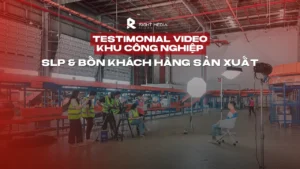
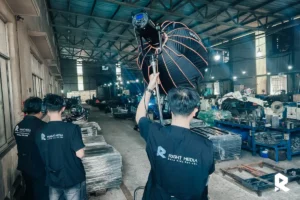
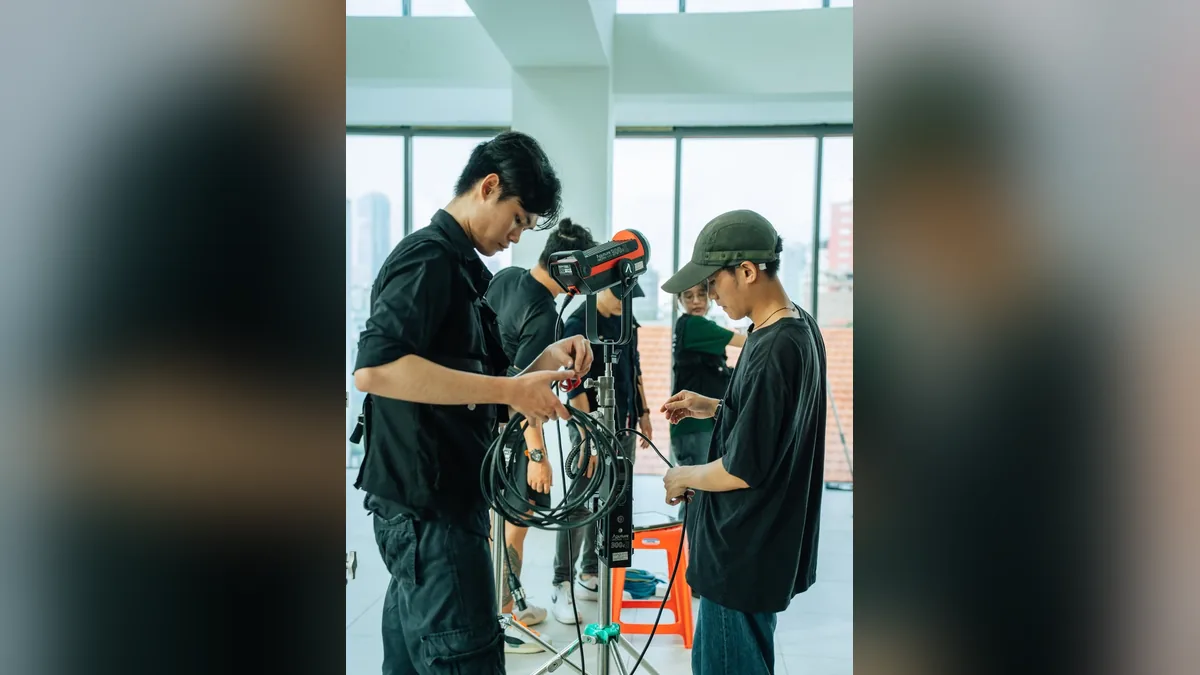
One often overlooked detail is the on-location sound. For scenes where characters speak or are interviewed, the crew must prepare the recording equipment before filming begins.
What factors determine the cost of recording voiceovers for commercials?
At Right Media, voiceover recording is included in the post-production phase of our TVC production package, along with editing, color grading, special effects, and background music. Businesses don't need to hire a separate voiceover artist. The difference in voiceover costs for commercials comes from the following factors.
- Voice-over or character dubbing: Dubbing requires lip-syncing, so it takes more time.
- Number of voices: A different commentary with multi-character dialogue, like the Phu My TV commercial.
- Number of languages: Each language requires its own script, reader, and recording sessions.
- Version number: Original version, abridged version, vertical version for social media.
- Changes to the script after recording: If corrections are made after the initial submission, they must be collected again.
- Celebrity voices and broadcast ranges: Television, digital, expiration date.
The three TVC packages that Right Media is currently offering include voiceover recording in post-production:
| Package | Prices from | Filming date | Team | Deliverables |
|---|---|---|---|---|
| Standard | 15,000,000 VND | 1 day | 3 people | Full HD, 2 edits |
| Professional | 35,000,000 VND | 2 days | 6 people | 4K, social media cropping, drone footage, copyrighted music. |
| High-class | 80,000,000 VND | 3–5 days | 10+ people | 4K, with its own director. |
The reference price, excluding VAT, applies to Ho Chi Minh City and a 100 km radius. The cost of purchasing broadcast time is a separate charge and is not included in the production price.
Frequently Asked Questions
Should you choose a male or female voiceover for commercials?
Choose based on the message and the audience, not industry conventions. A male voice is probably suitable for promises of durability, like in a Roman tile TV commercial. But if the decision-maker is female, or the product needs a sense of care, a female voice might be more persuasive. The surest way is to listen to both in the same video clip.
Should AI voiceovers be used for TV commercials?
AI voices can be used for drafts, helping to review the rhythm and length of the script before the final recording. For broadcast versions, a real human voice is still safer in terms of emotion, intonation, and pronunciation of proper names. If using AI for the final version, check the commercial terms of use for the tool.
How long does it take to record a 30-second TV commercial?
Recording is usually done in one session if the script is finalized and proper names are agreed upon. The real time is spent on proofreading: listening to the recording, comparing it to the video, and correcting sentences. Re-recording often happens if the script changes after the initial recording, so lock in the text beforehand.
Can businesses get their voices reviewed before editing?
It's a good idea. The recording serves as the rhythmic foundation for the editing, so late voice-over review means re-editing. Ask to hear the recording along with the storyboard or a rough edit. That way, feedback on speed, emphasis, and pronunciation of product names is still easier to correct.
The TV commercial already has Vietnamese voiceover; do we need to reshoot it for an English version?
Reshoots are usually unnecessary if the footage doesn't include characters lip-syncing. Simply translate, adjust the script for a natural sound, record a new voice, and recreate the on-screen text. If there is dialogue, consider lip-syncing or subtitles.
If a business is preparing a TV commercial and is unsure what type of voiceover to use, the Right Media team can offer suggestions as soon as they receive the brief and script. See details on the page. Voiceover and voice-over services for TV commercials.Package scope at page Full-service TV commercial productionor call the hotline 0901 391 002.