Bilingual Vietnamese-Japanese profile video project for Viet Nhat Precision Engineering Company.
Businesses with international clients often need bilingual video profiles, as a single film cannot cater to both audiences. For Viet Nhat Precision Engineering Company, Right Media produced two versions, one in Vietnamese and one in Japanese. The film was screened at exhibitions and used to open important client meetings.
| Client | Viet Nhat Precision Engineering Company |
|---|---|
| Industry | Precision engineering |
| Category | Bilingual profile video |
| Delivery version | Vietnamese and Japanese |
| Purpose of use | Screened at exhibitions, presented before meetings. |
| Production unit | Right Media – Ho Chi Minh City |
Why are two versions needed instead of one with subtitles?
For Japanese viewers, reading subtitles and listening to commentary are two different ways of watching. During a meeting, viewers often listen and discuss simultaneously; if they have to read subtitles, they will miss the visuals. A separate Japanese dubbing solves this problem.
Two versions of a bilingual video profile can differ in emphasis, not just in the audio. Domestic viewers are usually interested in scale and team size. Japanese purchasing departments, on the other hand, scrutinize quality control and manufacturing precision most closely.
Project overview: two film use scenarios
- Screened at the exhibition: The film looped around the booth, often muted due to noise, so viewers had to understand it through images and text.
- Opening the meeting: The video replaces the introduction, allowing both sides to get straight to the main point without wasting time presenting the company's capabilities again.
These two approaches may require two different length cuts, so the screening location must be determined right from the scriptwriting stage.
What needs to be showcased in a bilingual video profile for the mechanical engineering field.
Viewers of precision engineering films aren't looking for grandiose factory scenes. They're looking for proof of precision: CNC machines in operation, tolerance testing rooms, and quality records traceable by batch.
Therefore, close-up shots of the machining surface are more important than wide shots. In the Viet Nhat film, viewers see technicians operating CNC machines, a parts measurement and inspection room, and optical measuring machines checking tolerances (see images extracted from the film at the end of the article).
The Vietnamese commentary follows that line with specific facts. Viet Nhat was established in 2010, has two production facilities, equipment imported from Germany, Japan, and India, and specializes in machining components for semiconductor manufacturing machines and designing jigs and fixtures. The technical team is trained in Japan, and the company collaborates with Hung Vuong Vocational College of Technology to recruit and train young technicians.
The quality section introduces the QC department, which inspects everything from raw materials to each processing stage, using a CMM 3D measuring machine and other measuring equipment. The film mentions the milestone of the company achieving ISO certification for quality management in 2015, and concludes with the statement, "Building value – creating trust."
Notes when creating a bilingual video profile
Three things should be finalized right from the scriptwriting stage to avoid rework. First, agree on technical terminology with the client before translation, as each company may have its own way of referring to the same process. Second, leave space on the screen for text in both languages, as sentence lengths can vary significantly. Third, Japanese commentary is often longer than Vietnamese, so the editing pace must be planned in advance to allow for more space.
The process of producing a bilingual video profile.
Creating two versions doesn't mean translating the commentary at the last minute. The second language must be considered from the scriptwriting stage; otherwise, post-production will require reshooting.
- Original script in Vietnamese. Write and review this version beforehand, as it determines the structure and duration of each scene.
- Glossary. List any industry-specific terms and company terminology, and send the list to the client for approval before translation.
- Translation and editing. The proofreader should understand the industry, because a translation that is literally accurate doesn't necessarily reflect the professional terminology.
- Group filming. Both versions use the same spin, the most expensive part, so it's not doubled.
- Create the original version. Complete the Vietnamese version first, including color correction and graphics.
- Separate the layers and create a duplicate version. Replace the commentary, change the text, and adjust the editing rhythm to match the sentence length of the second language.
The final step is often the most laborious: when some scenes need to be extended by a few seconds to fit the narration, the pacing behind them also needs to be adjusted.
The most difficult part: filming in a precision machining workshop.
Filming bilingual profile videos in a precision machining workshop often encounters three problems.
Vibrate. A running CNC machine transmits vibrations through the floor, easily blurring the scene placed on the tripod. Often, it's necessary to switch to a gimbal in the vibrating area, or wait for the adjacent machine to pause.
Reflection on metal. The machined surfaces and casing of the camera easily reflect both the cameraman and the lights into the frame. The light needs to be softened and offset from its axis, not shining directly at the subject.
Coolant solution. CNC machine rooms are often airtight and filled with vapor, causing lenses to fog up very quickly. Scenes inside the machine room should be filmed through a clean glass door, or using a small, fixed camera.
Typical factory films prioritize wide shots; precision engineering films require more close-ups so viewers can see the surfaces and details of the machining process.
Cost and time required to create a bilingual video profile.
A bilingual video profile doesn't cost twice as much. The footage, which makes up the largest portion, is shared between both versions. The additional cost comes from three things: translation and editing, recording commentary in the second language, and recreating the text and pacing.
In terms of time, the original version typically takes three to four weeks from the initial idea approval. The second version requires about another week, mainly for reviewing the translation with the client. If the film needs to be ready for an exhibition, the completion date should be set at least a week before the opening to allow time to address any terminology issues.
Images from the movie
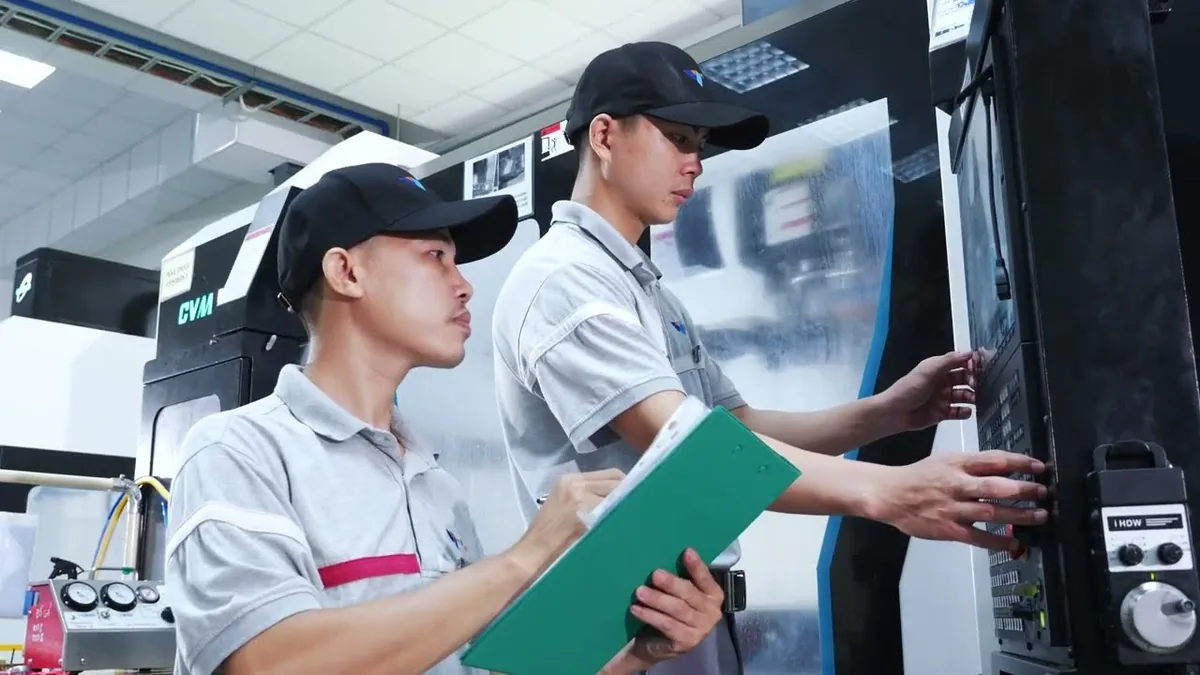
CNC machine operator at Viet Nhat Precision Machining Workshop
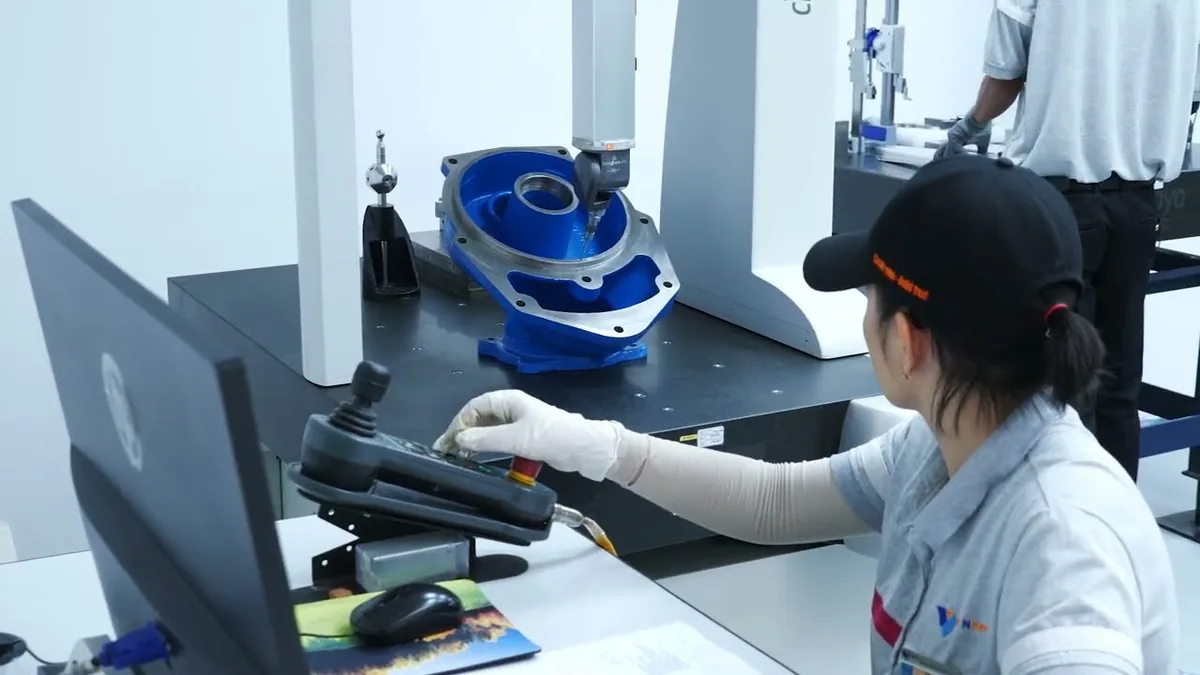
Precision mechanical parts testing and measurement laboratory at Viet Nhat
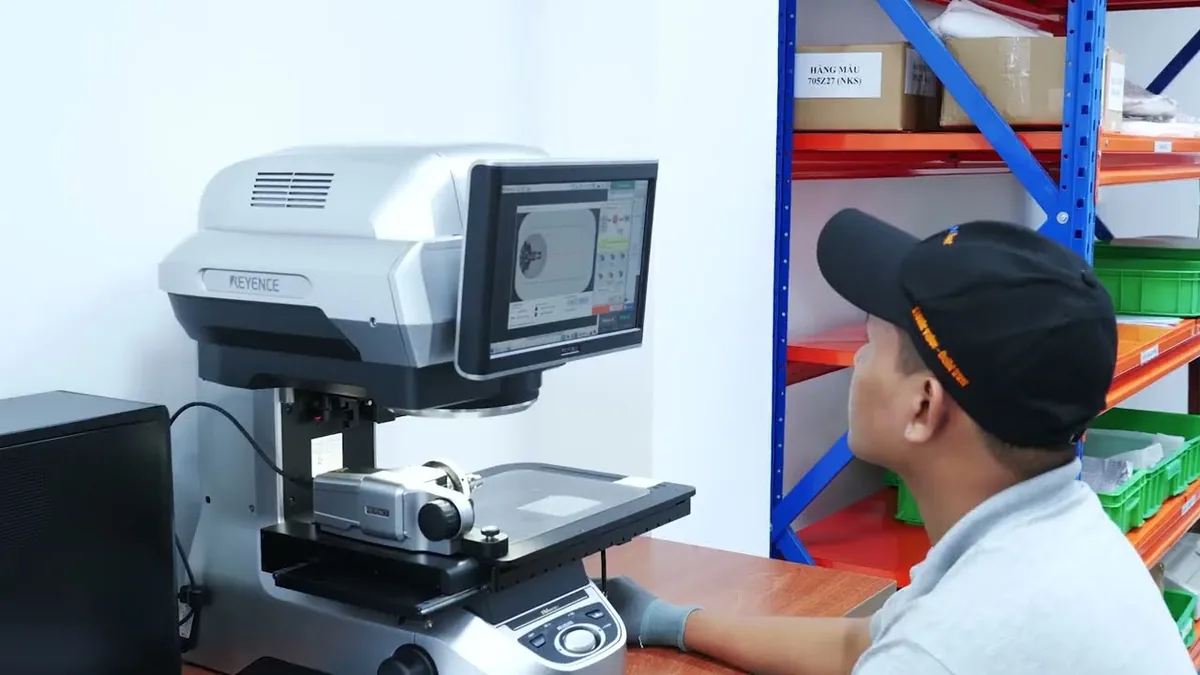
Optical measuring instruments for tolerance testing at Viet Nhat Company.
Related articles and services
- Corporate video production services
- Video introducing the precision engineering factory.
- Voiceover and narration services
If a business is preparing to participate in a trade fair, they can cut a 30–60 second clip from this video to show at their booth; see the trade fair video production service by Right Media.
If your business needs a short video to attach to a tender document or send to a partner, you can refer to the following. company profile video production service by Right Media.
Frequently Asked Questions
No. The footage is shared between both versions, so there are no additional costs; the only extra expenses are translation, recording second-language voiceovers, and re-editing the text. The increase is usually much smaller than organizing a separate filming session for each language.
It depends on the screening location. Films shown in meetings should be dubbed, as viewers will be listening and discussing simultaneously, and reading subtitles would cause them to miss the visuals. Films looping at exhibition booths are more suitable with subtitles, given the noisy environment and the fact that visitors usually don't stay long enough.
The best way to prevent this is to send a glossary of terms to the client for approval before recording the commentary, as each company has its own terminology for the same process. If an error is discovered after editing, the correction only requires re-recording that particular phrase and replacing the text, rather than re-editing the entire film.
Right Media – A specialized media partner for B2B businesses, factories, and industrial parks.