In a context where many partners learn about businesses through websites and online channels, a professional factory video will help convey production capabilities more visually and convincingly. That's why more and more businesses are choosing factory video services in Hanoi to build brand image and support business operations.
Why are many businesses investing in factory video?
Previously, businesses typically showcased their capabilities through catalogs or PDF documents. However, in today's B2B business environment, video is becoming a more visual and effective way to communicate. In just a few minutes, customers can observe the scale of the factory, production lines, operating team, and quality control process.
For manufacturing businesses in Hanoi, factory videos not only help partners assess capabilities remotely but also shorten the communication process before on-site visits. Therefore, many businesses have included videos in their company profiles and used them on websites, introductory emails, at trade shows, or during customer meetings to increase professionalism and build trust.
A good video not only captures images, but also builds trust.
Many people believe that filming a factory simply means recording machinery in operation. However, if you only stop at recording, the video will struggle to make an impression on viewers.
Customers don't just want to see how many square meters a factory is or how many production lines it has. What they care more about is whether the business operates professionally, how the quality control process is implemented, and what kind of environment the product is created in.
Therefore, an effective video needs to answer the questions that customers often ask before deciding to collaborate.
- Does the company have the capacity to fulfill large orders?
- Is the production line modern and well-integrated?
- At what stages is the quality control process carried out?
- Are the technical team experienced and do they follow clear procedures?
When this content is presented with authentic images, businesses will build a much higher level of trust compared to simply using words.
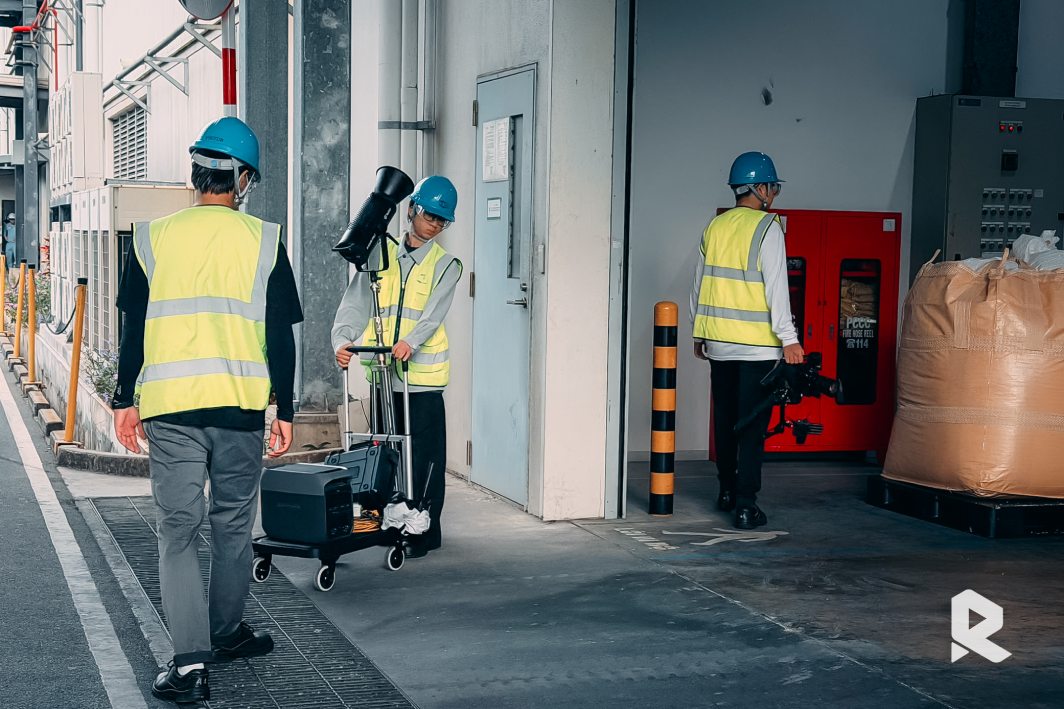
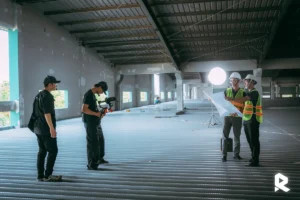
Behind-the-scenes footage shows Right Media traveling to the filming location.
What determines the quality of a studio video?
Using expensive cameras or drones doesn't automatically guarantee an impressive video. In fact, many businesses invest a significant amount of money but still don't achieve the desired results. The reason is often not the equipment, but rather the way the content is created and the project is implemented.
A factory video that offers lasting value needs to ensure three things: conveying the right message, accurately reflecting production capabilities, and providing an easy-to-follow experience for viewers.
Start by understanding the business.
Each business has its own strengths, so videos need to be built around the goals, target audience, and competitive advantages of each unit. By understanding these factors, the script will be focused and convey the right message.
Beautiful images must serve the content.
An effective video should not only be visually appealing but also accurately reflect the company's capabilities. Each shot needs a clear purpose, helping viewers easily visualize the production process and build trust.
Camera movement creates a realistic experience.
The combination of gimbal, drone, and flexible camera angles helps to recreate the factory environment more vividly. As a result, viewers feel as if they are directly visiting and observing the entire production process.
How did Right Media execute the factory production filming project?
After numerous corporate and factory filming projects, Right Media chose a process-based approach rather than focusing solely on filming. This ensures thorough preparation for each project and minimizes unforeseen issues during execution.
Survey before scriptwriting
The crew will visit the factory in person to observe the space, lighting conditions, production line, and areas that need to be filmed.
This is also the time for both parties to discuss the video's intended use, target audience, and the content the business wants to emphasize. This information will form the basis for developing the script instead of using a pre-made template.
Create content tailored to each industry.
If the client operates in the mechanical engineering sector, the video will prioritize showcasing machining capabilities, CNC systems, and production processes. For food or pharmaceutical businesses, the focus will shift to the production environment, hygiene standards, and quality control procedures.
Personalizing content helps each video accurately reflect the unique characteristics of the business and differentiate it from competitors.
Prepare thoroughly before filming day.
A productive filming day always begins with preparation. Right Media collaborates with businesses to finalize filming schedules, arrange filming locations, prepare personnel, and check necessary conditions. This ensures a smoother production process and minimizes disruption to factory operations.
For businesses with high security requirements, the team also discusses in advance the permitted filming areas and the content that should be restricted from appearing in the video.
Flexible recording based on real-world conditions.
During filming, the crew adhered closely to the agreed-upon script but remained flexible, making adjustments whenever they discovered additional beautiful camera angles or moments that clearly showcased the production process.
In addition to capturing the entire factory, the team also focused on recording valuable details such as the technicians' operations, inspection processes, product packaging, and goods transportation. These images help make the video more authentic and trustworthy.
Finalizing the post-production process before delivery.
After filming is complete, all the data is transferred to the post-production department for editing, color correction, and sound processing.
Depending on the intended use, Right Media can add illustrations, subtitles, or voiceovers to make it easier for viewers to follow along. Clients will be able to review the edited version beforehand, provide feedback if needed, and only accept delivery when the product meets all requirements.
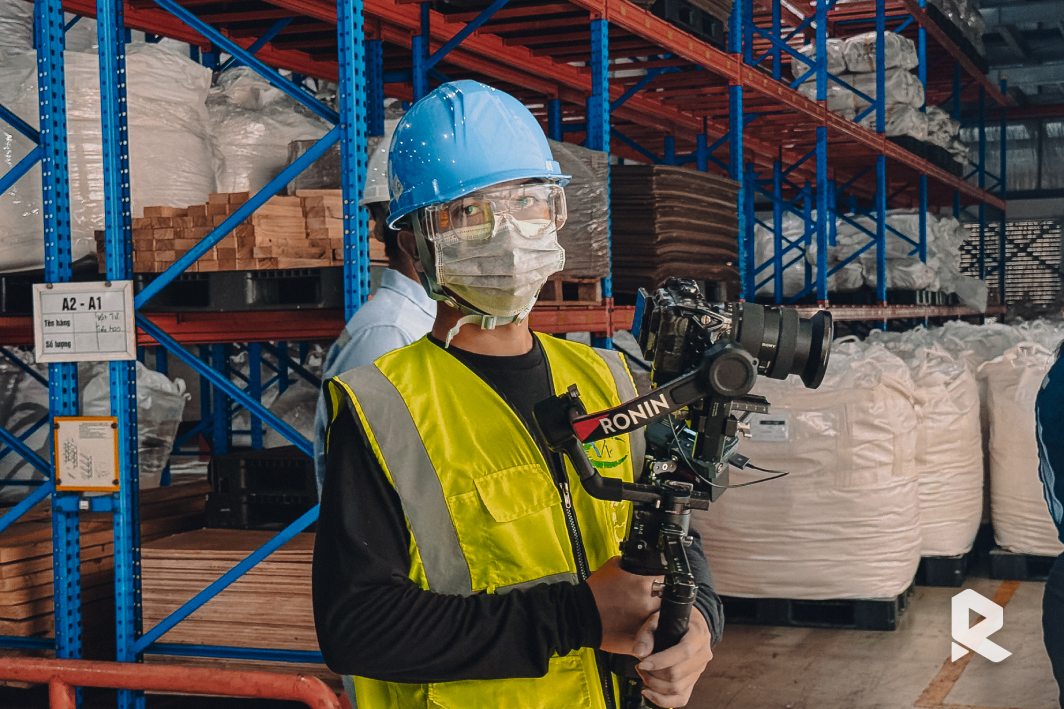
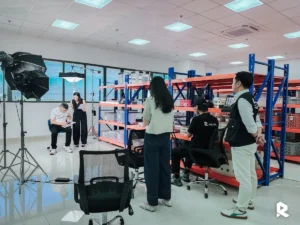
Behind-the-scenes footage from the filming of the VREC project.
What factors determine the cost of filming a production studio in Hanoi?
This is a question most businesses are concerned about when they start looking into factory videography services. However, it's difficult to give a fixed price because each project has different scale and requirements.
Instead of quoting a general price, professional production units usually conduct on-site surveys before proposing a suitable plan. This helps businesses invest only in items that are truly necessary.
Below are the factors that most significantly affect video production costs.
Size and characteristics of the factory
A factory with an area of several thousand square meters and a single production line will have a different layout compared to a business that owns multiple workshops, raw material warehouses, and office areas.
As the number of areas requiring filming increases, so will the filming time and post-production workload. This is the first factor determining the overall cost of the project.
Purpose of using video
Businesses should clearly define the purpose for which the video will be used before implementation.
If you only need an introductory video to post on your website or send to clients, the duration is usually only 2–4 minutes. Conversely, if you want to build a comprehensive content package including brand videos, recruitment videos, production line demonstration videos, and short versions for social media, the workload will be significantly larger.
Defining the right goals from the outset saves time and money and avoids the need for rework later.
Recording equipment and techniques
For large factory areas, drones or FPV drones can help recreate the production space more visually. Meanwhile, close-up shots of processes or technical operations are usually taken using cameras with gimbals to ensure stable and sharp images.
An experienced team will know how to select the right equipment for each project instead of using too much unnecessary equipment, optimizing the budget while ensuring quality.
Post-production volume
After filming is complete, the video will be edited, color-corrected, audio processed, and final details will be refined.
Depending on their needs, businesses can add bilingual subtitles, voiceovers, animations, or visual effects to enhance the visual appeal. These elements will affect the project's timeline and cost.
Why do many businesses choose Right Media to film their production facilities?
Right Media doesn't aim to create videos that are merely visually stunning, but rather focuses on the practical applicability of the finished product.
The team always begins by understanding the client's goals to develop a script tailored to each industry and target group. From surveying and filming to post-production, everything is implemented according to a clear process, allowing businesses to easily track progress and proactively coordinate.
In addition, having an in-house production team allows Right Media to maintain consistent quality control, shorten processing time, and ensure confidentiality throughout the project execution.
Right Media not only delivers a complete video, but also advises on how to leverage the content across various platforms, enabling businesses to maximize the value of their product.
If you're looking for factory video production services in Hanoi, Right Media is ready to assist you from concept development and site survey to filming and post-production. With extensive experience in production projects and a clear workflow, Right Media delivers videos that are not only visually stunning but also help businesses convey their values effectively and make a lasting impression on clients.