
What is a video camera? What types are commonly used today? This article will help you understand this concept better. We will also introduce some popular video camera models currently available so you can choose the product that best suits your needs.
What is a video camera? Concept and basic operating principles.
What is a video camera? Unlike still cameras, video cameras are optimized to process a series of continuous frames per second:
- Basic definition: A camcorder (or video camera) is a device that captures moving images by recording a series of consecutive images onto a storage medium (magnetic tape, memory card, hard drive).
- Principles of light conversion: Light passes through the lens and impacts the image sensor (CCD or CMOS). Here, light energy is converted into an electrical signal.
- Signal processing: The processor inside the device will encode these electrical signals into a digital format (such as MP4, MOV, AVCHD) so that they can be viewed on display devices.
- Frame rate (FPS): The characteristic of a camera is that it records at a high speed, usually 24, 30, or 60 frames per second, to create smooth movement for the human eye.
- Multimedia combination: A complete video camera always includes a built-in audio recording system (microphone) and image stabilization system to ensure that the output video quality is synchronized between sound and image.
The core structural features of a modern video camera.
Every video camera, whether large or small, is made up of key components that directly determine the final image quality:
- Lens system: This is the first light-receiving component. Cameras typically have large optical zoom lenses, allowing for smooth focal length changes without sacrificing image sharpness.
- Image sensor: Often referred to as the "heart" of the camera, the sensor size (Full Frame, APS-C, 1-inch) determines the bokeh effect, light sensitivity, and noise level of the video.
- Image processor: Responsible for color processing, white balance, and data compression. Newer processing chips enable cameras to record 4K and 8K video with true-to-life colors.
- Display and viewfinder (EVF): It helps the videographer control framing, focus, and monitor technical parameters such as ISO, shutter speed, and sound level.
- Storage system: Most modern cameras use SD, CFexpress, or removable SSD memory cards. The write speed of the memory card must be extremely fast to handle the enormous amount of data from high-quality video.
- Control system and connection ports: It includes mechanical buttons, an HDMI port for video output, an XLR/3.5mm port for a microphone, and a USB-C port for data transfer or charging.

There are many types of video cameras on the market to meet users' needs.
Classification of popular video cameras
The current camcorder market is divided into several distinct segments depending on the needs and budget of the user:
Professional video cameras (Broadcast Cameras):
- The camera body is large, usually designed to be carried on the shoulder.
- Includes multiple professional connection ports (XLR, SDI).
- Capable of operating reliably in harsh conditions, often used for television broadcasting and live show filming.
Cinema Cameras:
- Focus intensely on dynamic range and color science.
- Supports RAW format for advanced post-production. Popular brands include RED, ARRI, and Blackmagic.
Handheld camcorder (Handycam):
- Compact design, easy to use for home and travel.
- Its strengths include excellent long-range zoom capabilities and superior image stabilization (integrated gimbal).
Mirrorless cameras that support video recording:
- Many people now use Sony Alpha and Canon EOS R cameras for video recording because of their large sensors and versatile interchangeable lens systems.
- Features: Compact, ultra-fast autofocus, suitable for vlogs and short films.
Action cameras and pocket cameras
This represents a remarkable advancement in camera technology over the past decade, catering to travel enthusiasts and extreme sports lovers:
- Design features: Extremely compact, often waterproof, shockproof, and weather-resistant without the need for a protective case.
- Ultra Wide Angle: It helps capture the entire scene from a panoramic angle, suitable for filming driving scenes, scuba diving, or skydiving.
- Electronic image stabilization (HyperSmooth/RockSteady): This is the most powerful "weapon" of this camera series, helping to stabilize videos like using a gimbal even when the person filming is running or shaking violently.
- Typical models: GoPro Hero Series: The gold standard for action cameras. DJI Osmo Action: A formidable competitor with a convenient front-facing screen.
- Pocket Cameras: * A prime example is the DJI Pocket series with its built-in 3-axis physical image stabilization. It's ideal for those who want smooth cinematic shots without the hassle of carrying bulky equipment.

There are large cameras used for shooting outdoor scenes and those requiring advanced technical skills.
The most popular and worthwhile camcorder models currently available.
Below is a list of the top-selling camcorders on the market, trusted by users of all levels, from amateurs to professionals, thanks to their superior performance and durability:
Sony ZV-E10 / ZV-1 (For Vloggers and Creators):
- Characteristic: This is a compact camera line specifically optimized by Sony for creating social media content.
- Strengths: The ZV-E10 boasts ultra-fast eye-focusing (Eye-AF) capabilities, a "Product Showcase" mode for product reviews, and a flexible flip-out screen. It also allows for interchangeable lenses to create professional-looking bokeh effects.
Sony FX3 / FX30 (Compact Cinema Series):
- Characteristic: Part of Sony's Cinema Line but designed like a mirrorless camera.
- Strengths: With its ability to shoot smooth 4K 120fps video and a fan-based cooling system that allows for continuous filming without overheating, this is the number one choice for short film crews, music video shoots, or high-quality event productions.
Canon EOS R5 C (Powerful Hybrid Camera):
- Characteristic: A perfect combination of a high-end camera and a professional cinematographer.
- Strengths: Capable of shooting incredibly sharp 8K RAW video. Canon's Dual Pixel CMOS AF II focusing system helps capture every fast-moving moment without losing focus.
Blackmagic Pocket Cinema Camera 6K G2:
- Characteristic: This professional camcorder is designed for those who want cinematic image quality at an accessible price.
- Strengths: Using the intuitive Blackmagic OS operating system, shooting in Blackmagic RAW format allows for extremely flexible color grading in post-production. The large 5-inch touchscreen makes frame control easy.
GoPro Hero 12 Black (The most popular action camera):
- Characteristic: This device is "small but mighty," and can be attached anywhere from helmets to motorcycles.
- Strengths: Featuring top-tier HyperSmooth 6.0 image stabilization, HDR video recording capabilities, and incredible durability underwater or in harsh environments.
DJI Osmo Pocket 3 (Pocket camera with built-in gimbal):
- Characteristic: The camera is about the size of a candy bar but boasts a powerful 1-inch sensor.
- Strengths: Featuring an integrated 3-axis physical image stabilization system, ensuring perfectly stable videos without the need for bulky accessories. The smart rotating screen allows for quick switching between landscape and portrait (TikTok/Shorts) modes.
Tips for choosing and buying:
- If you make vlogs about your daily life: Choose compact models like the Sony ZV-1 or DJI Pocket 3.
- If you are providing videography services (weddings, events): The Sony FX30 or Canon R6 Mark II are good choices that strike a good balance between performance and price.
- If you shoot feature/art films: The Blackmagic 6K will deliver the best color range for post-production.

Choose the type of machine that suits your needs and intended use.
Technical specifications to consider when buying a camcorder.
To own a suitable camcorder, you need to understand the meaning of the numbers on the specifications sheet:
Resolution:
- Full HD (1080p): Sufficient for basic needs and social media.
- 4K/8K: The standard for professional productions, allowing for cropping of images without loss of sharpness.
Frame Rate:
- 24/30fps: Provides a natural movie viewing experience.
- 60/120/240fps: Used for shooting slow-motion.
Light sensitivity (ISO): A good camera is one that has good noise reduction capabilities at high ISO levels, allowing you to record clear footage in low light or at night.
Bit Depth and Color Sampling: Specifications like 10-bit 4:2:2 allow videos to contain more color information, greatly assisting in post-production color grading.
Lens mount: Decide which lens mounts you can use. Common mounts include Sony E-mount, Canon RF, or MFT mount.
Essential accessories for video cameras.
A good camcorder only does 50% of the job; the rest depends on the supporting accessories:
- Audio system (Microphone): Built-in microphones are often not good enough. You should invest in a lavalier microphone (Wireless Go) or shotgun microphone for clear, noise-free sound.
- Anti-shake device (Gimbal/Tripod): Tripod: Essential for static shots and interviews. Gimbal: Essential for moving shots and chasing subjects.
- ND (Neutral Density) Filters: Often described as "sunglasses" for cameras, they allow you to shoot with large apertures in bright sunlight without overexposure.
- Batteries and Backup Power Supplies: Shooting videos consumes a lot of energy. Always have at least 2-3 spare batteries or power banks that support the PD standard on hand.
- LED Video Lights: Lighting determines image quality. A small LED light attached to the camera can illuminate the subject's face in a dark environment.
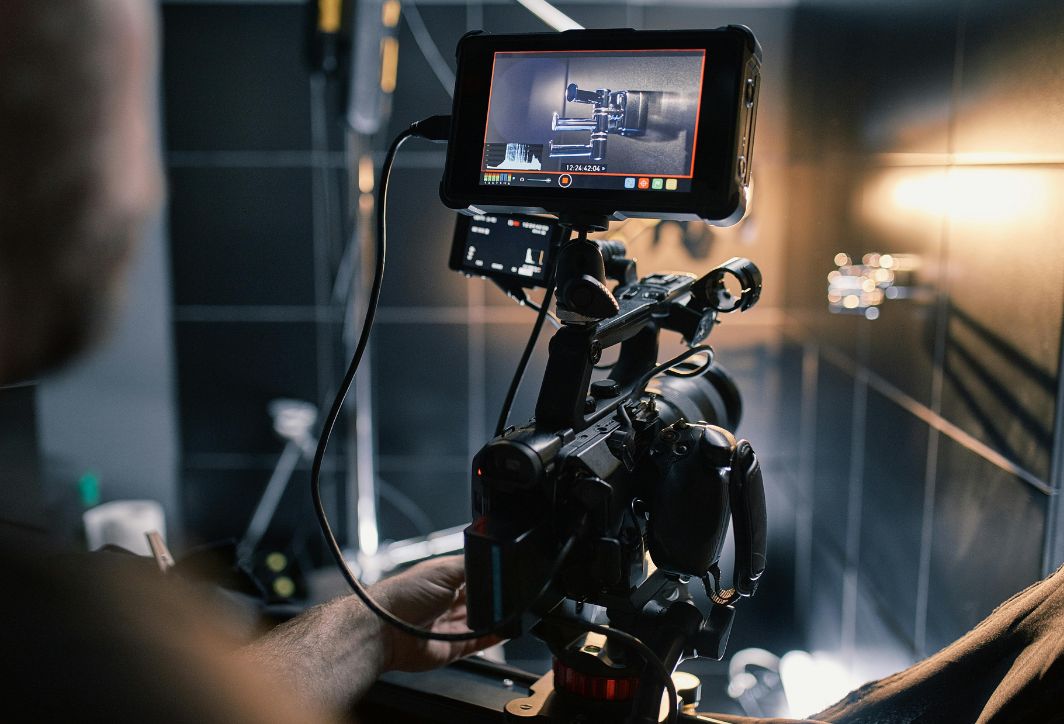
Purchase additional camera accessories if needed to ensure the sharpest video quality.
Future trends in camcorder development.
Camera technology is changing rapidly with the advent of new technologies:
- Integrated artificial intelligence (AI): AI helps the camera automatically recognize faces and eyes and focus perfectly in real time, even when the subject is obscured.
- 360-degree filming and VR: Allowing viewers to experience a panoramic view, a strong trend in tourism and real estate.
- Connect to 5G and livestream live: Modern cameras have built-in capabilities for high-quality live streaming to social media without the need for a computer.
- The rise of drones: These "flying cameras" help capture unique aerial perspectives that were previously only possible with helicopters.
- Minimize large sensors: The trend of incorporating full-frame sensors into increasingly compact camera bodies is making cinematic quality more accessible to everyone.
A video camera is a tool for unlimited creativity. Whether you're a beginner vlogger or a seasoned filmmaker, understanding the characteristics and types of cameras available today will help you choose the right one to tell your story most vividly. Start with equipment that fits your budget, focus on focusing, composition, and lighting, and you'll soon be creating quality footage.