
Leveraging and implementing Influencer Marketing appropriately can yield high effectiveness for product and service marketing campaigns. Simultaneously, it increases brand awareness and builds trust with target and potential customers, easily boosting sales.
What are influencers and influencer marketing?
Understanding influencers and influencer marketing is the fundamental first step towards running a successful marketing campaign.

What is an influencer?
Influencers are individuals with a large following or high levels of engagement and attention on social media platforms such as Facebook, Instagram, YouTube, TikTok, etc. They have significant influence in a specific industry such as fashion, beauty, travel, sports, food, or any other field. They create content centered around their area of expertise and share it with followers who share similar interests.
In particular, influencers have the ability to impact the thoughts, behaviors, and purchasing decisions of others thanks to their expertise, credibility, or relationships with the target customer group of a brand.
What is Influencer Marketing?
Essentially, Influencer Marketing is a collaboration between a brand and an influencer to promote products or services. Unlike traditional advertising, this collaboration between influencers and brands delivers quick results and easily measurable outcomes across multiple platforms.
Instead of businesses advertising themselves, they negotiate costs with suitable influencers and ask them to use their influence to convey the message of their products or services to the audience. This is an extremely effective method that benefits both parties.
The role of influencers in marketing campaigns.
The development of the internet and social media has made influencers increasingly popular. So what is the role of influencers in a company's marketing campaign?
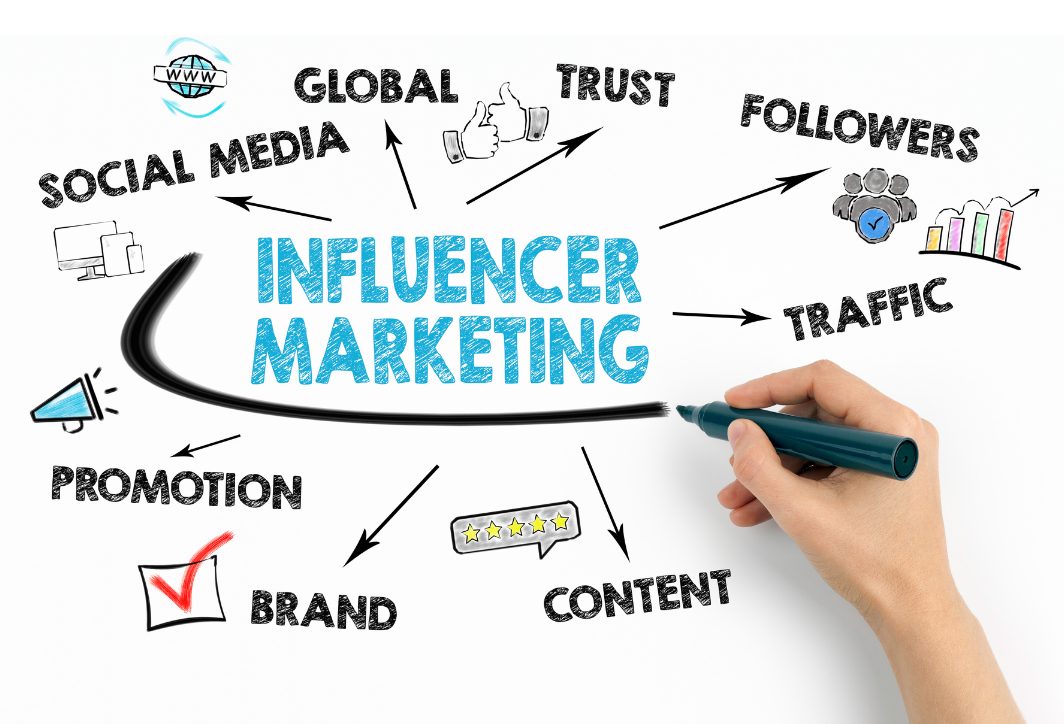
- Increase brand awarenessCollaborating with reputable influencers is the simplest way to improve brand awareness. By leveraging influencers with a large number of followers who are a good fit for the brand's target audience, businesses can reach a large number of potential customers.
- Building trust with customers: Influencers with a larger number of followers demonstrate higher credibility. Importantly, influencers understand their fans best, knowing what they want and using that knowledge to select and recommend suitable products and services. In this way, brands that collaborate with influencers also gain customer trust.
- Improve ROIROI – Return on Investment is a metric that measures the percentage of revenue generated from a total investment. Simply put, it's the return on investment a business achieves. Investing in influencer marketing can improve this ROI by leveraging the influencers' credibility to attract potential customers, increase conversion rates, and boost sales.
Classification of Influencer Types in the Vietnamese Market
Depending on the specific requirements of each marketing campaign and the value or message it aims to convey, brands will have different criteria for selecting the right influencer.
In the Vietnamese market, there are many different types of influencers that businesses need to understand before making a decision.
Classification by number of followers
- Mega-InfluencersMega-Influencers are those with a very high number of followers, usually over 1 million. They are often famous stars in the entertainment industry, actors, models, singers, etc. Mega-Influencers typically collaborate with large brands because the cost of partnering for an influencer marketing campaign is very high.
- Macro-InfluencersWith follower counts ranging from 400,000 to 1 million or more, they possess a sufficient fanbase to collaborate with mid- to high-end brands, as collaboration costs are typically lower than those for mega-groups. The results achieved are also highly promising because this group has a significant impact and influence on social media users.
- Micro-InfluencersInfluencers are a group of influencers with 1,000 to 40,000 followers. This group is suitable for brands and small businesses that want to promote their products and services. The cost is not too high, but the results are very good.
- Nano-InfluencersWith fewer than 1,000 followers, this group of influencers doesn't have a huge impact. However, within the scope of their communication, they can be suitable for many brands and businesses with similar goals.
Classification by impact
- CelebrityThese are entertainment stars, actors, and singers with a huge fan base. They have a very strong influence on the potential customer base of many brands and businesses. However, in return, brands have to pay them very high fees.
- ProfessionalsThese are individuals with expertise in a particular field, such as directors, CEOs, journalists, marketers, etc. With their existing expertise, they gain a large following on social media platforms. They regularly post content related to their field, share experiences, or inspire others in the same profession.
Classification by activity content
- BlogPeople who use blogs are called bloggers. The content they create is usually written content, published on social media platforms or WordPress. By using words, they effectively convey messages, share positive values, and influence the thoughts and behaviors of their followers.
- YouTubeYouTube videos are often quite long, so influencers who create content for YouTube have to invest a lot of time and effort, both in visuals and sound. In return, they receive tremendous support from their channel subscribers.
- Social mediaCurrently, many social media applications are widely used, such as Facebook, Instagram, TikTok, and Twitter. Influencers who emerge from these platforms have a huge appeal, a large following, and produce high-quality content that attracts viewers.
4 Criteria for Evaluating Influencer Marketing
To assess the effectiveness of an influencer marketing strategy, businesses need to objectively evaluate and consider the following criteria:
Reach
This metric is crucial for businesses to assess the potential of influencers and consider potential collaborations. It's evaluated based on the influencer's reach and scale, measured through the number of followers on their channel or fan page, views, likes, and shares.
Influencers with higher scores in these metrics have a greater chance of reaching a large number of potential customers. However, it is also necessary to assess whether the quality of these potential customers is suitable for the business sector.
Relevance
Relevance is demonstrated through the alignment between influencers and the business sector, products, and services. More specifically, the influencers' knowledge, expertise, lifestyle, etc., must align with the brand's values.
The ability to influence and change the behavior of followers (Resonance)
High engagement is only part of the equation; influencers must have the power and ability to change the thinking and behavior of their followers. Only then will collaborations with brands be highly effective.
This depends heavily on the ability to produce content and convey messages and values to followers. And when collaborating with influencer marketing, businesses can track, measure, and evaluate effectiveness through interaction levels, responses, comments, likes, shares, etc.
Sentiment Index
Simply put, influencer marketing is the community's reaction to the content that influencers deliver to the public to promote a particular brand. Influencer marketing campaigns are typically considered successful when they generate a wave of positive feedback, good reviews, or agreement from their followers.
For brands, simply monitoring and evaluating sentiment metrics is essential to gaining timely customer insights. This allows for quick adjustments to any inconsistencies or errors in marketing campaigns.
5 Effective Influencer Marketing Trends in 2024
According to a survey by Ogilvy Media Group, seven unique influencer marketing trends are predicted to be highly regarded and have the potential to change and reshape the advertising industry in 2024 and 2025.
Influencer AI
AI influencers are individuals created by artificial intelligence (AI) who are capable of creating engaging content, interacting with viewers, and delivering valuable benefits to brands. Examples include popular AI influencers like Shudu Gram and Lil Miquela, who have attracted millions of followers and generated massive engagement.

Compared to real people, AI influencers possess many strengths, such as:
- Create original, unique content that resonates with viewers.
- They have the ability to create and produce content continuously, without being limited by space or time;
- Suitable for the nature of any industry, from fashion and entertainment to beauty…;
Content trends related to social issues.
While content marketing used to be highly personalized, influencer marketing will now and in the future shift towards social issues such as the environment, domestic violence, child abuse, and school-related problems. Brands collaborating with influencers will also focus on these values.
This offers numerous benefits, such as building credibility through responsibility towards the community, attracting customer trust and loyalty, and providing long-term advantages that help the brand develop sustainably.
Group Influencers
On social media platforms like Facebook, TikTok, YouTube, and Instagram, there are many prominent influencer groups. This is considered a new trend where individual influencers collaborate, shaping styles and producing engaging content within the same field.
And 2024 was a year of strong growth for this influencer marketing trend. Many brands collaborated with influencers to increase communication effectiveness, attracting diverse audiences by leveraging the influence of multiple influencers simultaneously.
Kid Influencer
Kid influencers are becoming a dominant trend, attracting a large following. Therefore, they are becoming an indispensable and effective form of influencer marketing. Not only do they provide authentic and engaging content, but images and videos of kid influencers also have the potential to create a strong connection between brands and consumers through the stories they convey.
When selecting Kid Influencers, in addition to criteria such as follower count, engagement, and positive feedback, brands should also carefully evaluate the content before collaborating to ensure that the value delivered aligns with the brand and delivers effective campaign results.
Pet influencer
Those who regularly follow social media are certainly familiar with famous cats and dogs like "Lan is a boy," "My Dieu," "Putin," etc. These are also a very promising type of influencer, capable of bringing positive value to brands and the community as a whole.
Pet influencers are typically suited to creating entertaining content, helping to advertise pet products such as food, drinks, pet supplies, and pet grooming services.
A guide on how to become a famous influencer in just 6 steps.
You want to become a professional influencer but are still unsure where to start. Check out these 6 incredibly simple steps:
Step 1: Choose a niche market or area of expertise.
Before you begin, take some time to think about and list all your strengths and interests, or simply write down what you do best and would like to have the opportunity to learn and research in more detail.
Next, refine the process again by asking yourself questions and answering them.
- If you choose this topic, you'll be dealing with it daily. Do you have the strength and perseverance?
- Do you have the necessary knowledge and expertise to create content and share it with others?
- In the initial stage, did you already have a clear idea of the content you wanted to share?
Once you've completed that, you'll have a topic you want to develop further. Based on that, continue to delve deeper and research to see if you have enough knowledge about it.
Step 2: Choose the platform you want to develop on.
Each topic will have a different target audience, so once you have a topic of your own, delve deep into understanding who your target audience is and who will be inclined to enjoy your content.
Thorough research into your target audience will provide you with crucial data, which will help you choose the right communication channels to build your work and image. Simultaneously, set long-term goals to select suitable platforms that you can use and stick with for the long term.
Step 3: Optimize your social media accounts
The next step to becoming a professional influencer is to create a polished and comprehensive personal profile. In particular, you must be creative to establish your own unique style, one that cannot be mistaken for anyone else on social media.
Some things you need to do to optimize your social media accounts include:
- Convert your personal account to a business account in your profile settings.
- Think about writing a compelling biography to make a good impression on new viewers;
- Change your profile picture and cover photo to something impressive and high-quality to show professionalism;
Step 4: Develop and create content that resonates with a wide audience.
Develop those initial ideas into actual content. Remember, creating content is the only way to get attention, increase engagement, and attract more followers.
Based on what you have, what you do best, and synthesize it into a useful video to share with viewers. It could be an entertaining video, a daily vlog, a work-related tip, cooking secrets, makeup tips, etc. Besides knowledge and information, try to incorporate valuable insights to make the content more memorable for your audience.
Step 5: Consistently post regularly and consistently.
Once you have met all the necessary conditions to become an influencer, what you need to do is schedule regular and consistent posting at a reasonable frequency. Each social media platform has a different algorithm. For example, Instagram, Facebook, and YouTube only require posting once or twice a week, while platforms like Twitter require more frequent posting for your channel to grow.
Step 6: Receive collaboration bookings with brands and labels.
Once your channel or fan page is running smoothly, you've developed your personal brand image. At this point, confidently introduce yourself as an influencer and seek opportunities to collaborate with brands and companies.
Showcase what you can do, your influence, and your suitability for the brand's marketing campaign. However, it's important to carefully select partners, avoiding accepting everything, including unsuitable offers, to prevent damaging your personal image.
In summary, influencers are an indispensable part of any marketing campaign. This mutually beneficial collaboration brings valuable benefits to individuals, businesses, and the community. If you want to become a professional influencer, learn more, persevere, and be creative to increase your chances of collaborating with major brands.