Construction industry testimonial video project: Kizuna talks about ProMETAL
Testimonial videos in the construction industry differ from customer testimonial videos in one respect: the speaker is an engineer or project manager, and they can only convince their colleagues when speaking using specific technical standards. In this project, Right Media filmed Mr. Luong Trong Quyen, project manager of Kizuna's service factory in Tan Kim Industrial Park, sharing his reasons for choosing ProMETAL for the ceiling and partition frame category.
| Client | ProMETAL |
|---|---|
| Branch | Building materials – ceiling frames, partitions |
| Category | Testimonial video for the construction industry |
| Figure | Mr. Luong Trong Quyen – Project Director, Kizuna |
| Filming location | Kizuna Service Factory, Tan Kim Industrial Park |
| Production unit | Right Media – Ho Chi Minh City |
Project overview: The film follows the real-life decision-making process.
For a testimonial video in the construction industry, the questionnaire cannot be generic. The questions here are structured according to the exact sequence of an industrial project selecting a supplier: the role of the item, evaluation criteria, screening process, reasons for selection, and post-use experience.
Three sets of Kizuna standards apply.
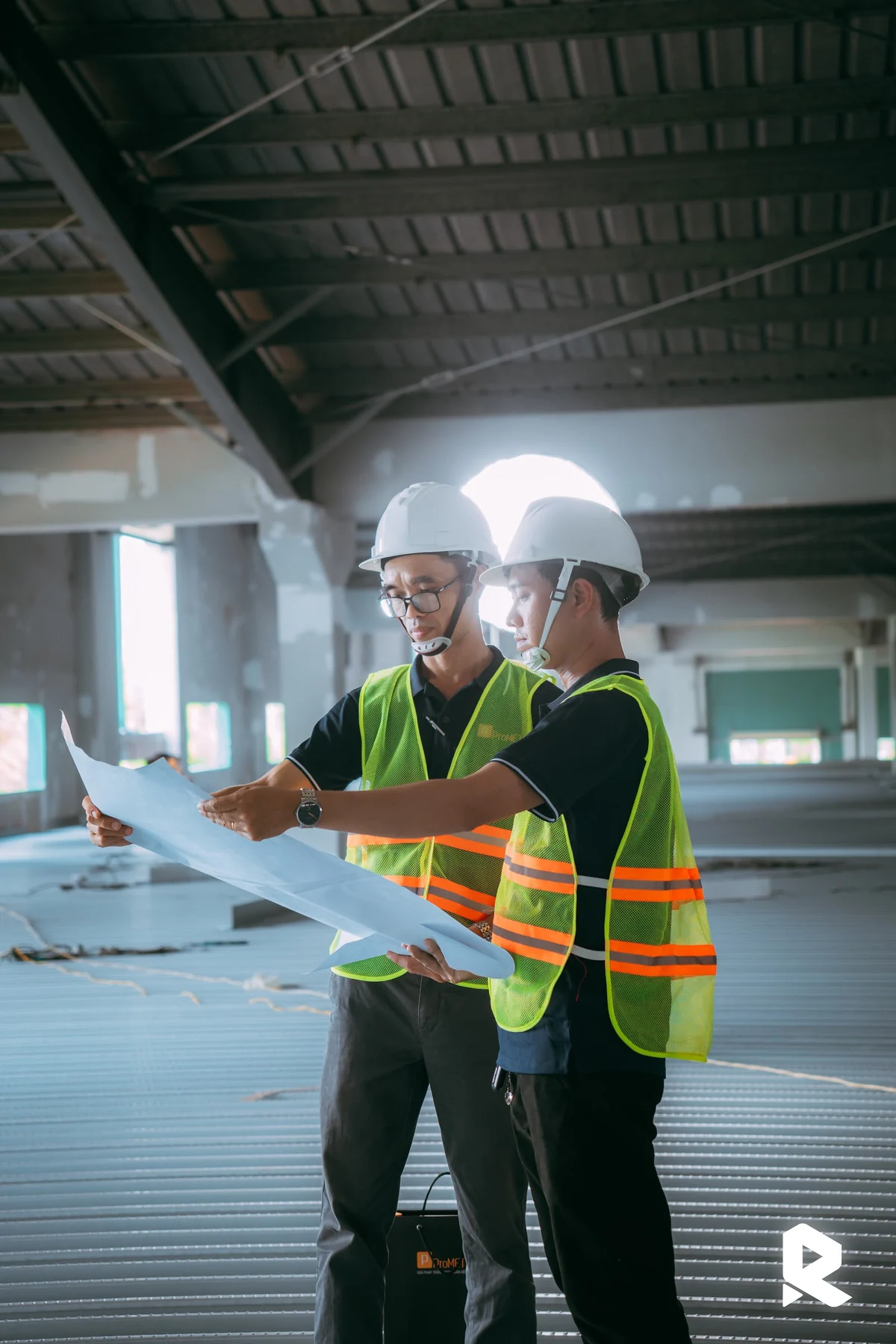
The most valuable part of the film is when the client clearly outlines the three sets of criteria used to evaluate the supplier:
- Raw material quality — base steel standards, plating technology, and the manufacturer's brand reputation.
- Production technology — Modern machinery and synchronized production lines ensure stability in both quality and supply capacity.
- Quality control process — Strict adherence to procedures from raw materials to finished products.
These three sets of criteria transform praise into a framework for evaluation that viewers in the same industry can apply. That's what keeps films watched to the end instead of being abandoned halfway through.
Why are ceiling and partition frames key components?
As shown in the film, this category impacts four things simultaneously: thermal insulation, fire resistance, and soundproofing; the overall aesthetics of the factory space; construction progress and project costs; and finally, the durability of the structure and the maintainability of the internal technical systems.
For factory and warehouse rentals catering to international clients, these four factors all directly impact the ability to retain long-term tenants.
The chosen storytelling approach for the construction industry testimonial video.
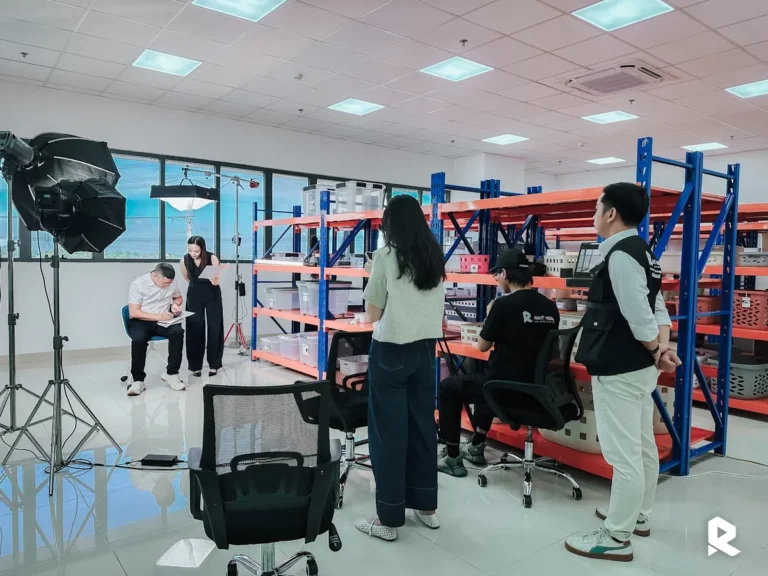
The film was shot in two locations: Kizuna's project site and ProMETAL's production studio. This approach allowed for a mix of spoken scenes and real-life footage illustrating what they were saying — when a client mentioned the synchronized production line, the frame cut to the actual production line.
This is the difference between an interview video and a complete construction industry testimonial video. If it's just footage of someone sitting and talking, viewers will leave after a minute; with visual aids, the words become tangible evidence.
Preparing before filming a testimonial video for the construction industry.
Much of the quality of a construction industry testimonial video is determined before the crew arrives on-site. Three things need to be done early.
Choose the right people to show up. The speaker should be someone directly involved in the evaluation and decision-making process, usually the project manager or head of the engineering department. Higher-level leaders often only speak in general terms, while professionals can immediately recognize who is speaking based on their real-world experience.
Please send the questionnaire in advance. Respondents need a few days to recall the evaluation process and the relevant figures. This is quite different from being given a script to read: they prepare the ideas, but the wording remains their own.
Standardize the scope of information. Contract values, production volumes, and client names are often confidential. Finalizing this list beforehand helps prevent filming from stopping midway and speeds up the editing process.
The most challenging task: filming inside a factory under construction.
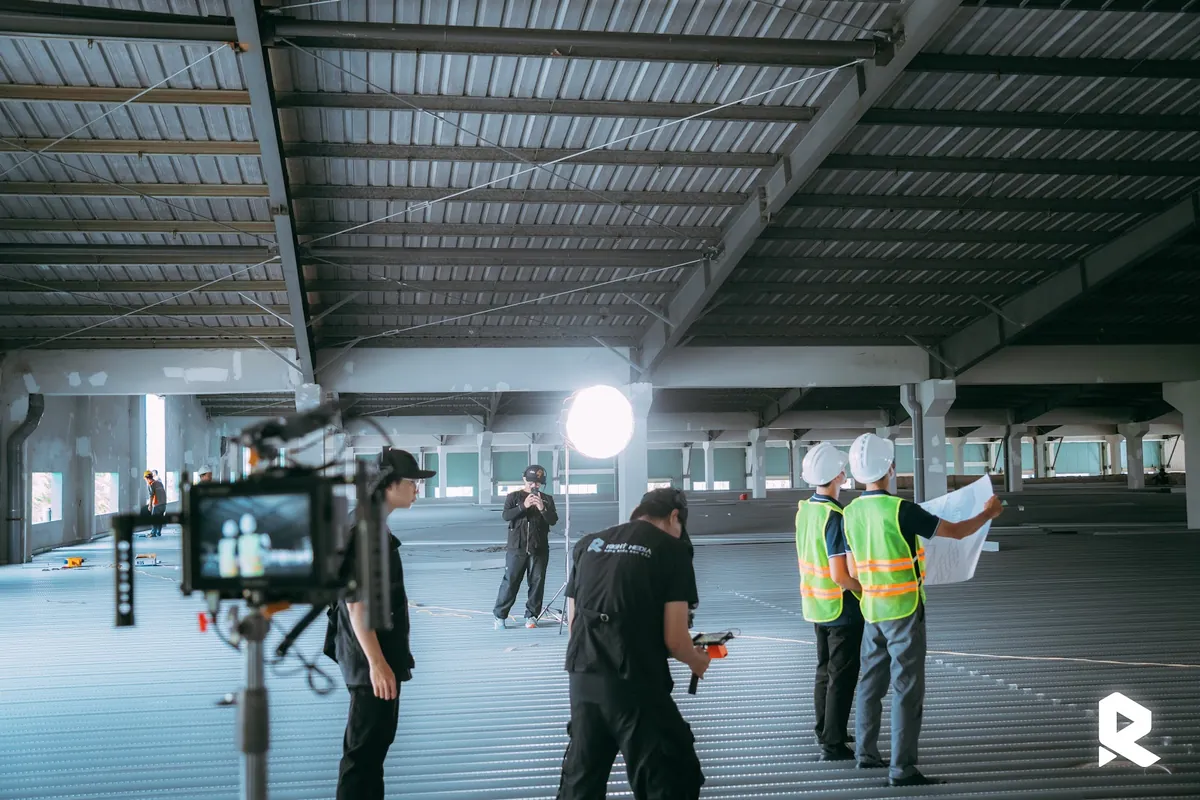
This project was filmed in an unfinished workshop, a completely different environment from an office or a factory in stable operation.
- Dust and loose materials. The scattered concrete floor, scaffolding, and materials created dust and limited the available space for the equipment. The crew covered the equipment and only changed lenses outside the construction area.
- The lighting is uneven. The workshop lacked a lighting system; the primary source of light was natural sunlight filtering through gaps. High-powered spotlights were used to provide the main light source for the speaker, preserving detail even in dark areas.
- Workplace safety. The entire crew wore safety helmets and reflective vests, moving according to the instructions of the site management. This detail also appears in the film and contributes to creating a sense of professionalism.
- Construction progress. The construction site changes weekly, so the filming schedule has to be finalized according to the stage of the project when it reaches the desired state for filming.
How will the company exploit the film after handover?
For material suppliers like ProMETAL, testimonial videos in the construction industry directly support sales activities, not just image building.
The sales team played the video during a meeting with a new client, right when the client was comparing multiple suppliers. The words of an investor who had used the product carried more weight than any catalog. A short clip was attached to the electronic company profile sent via email, and the full version was posted on the website in the featured projects section.
Another less-considered use is internal communication: films show production staff how their products are being evaluated by customers, something that sales reports cannot convey.
Related articles and services
- Customer testimonial video service
- Film about a building materials manufacturing plant.
- ProMETAL video profile
Source: Ministry of Construction – Standards and Information for the Construction Materials Industry.
Frequently Asked Questions
It's better to invite the person directly involved in the technical decision-making, usually the project manager or head of the engineering department, rather than senior management who only speaks in general terms. Professionals can immediately tell who is speaking from real experience and who is reading a marketing message.
Most people aren't bothered, as this is a common industry technical standard, not a trade secret. What needs to be agreed upon beforehand are specific figures like contract value or production volume; these details are often omitted during the proof review process.
Typically, a client spends half a day, including installation, introductory conversations before filming, interviews, and on-site demonstration footage. If additional filming is required at the supplier's factory, another half day is needed for the production line footage.