Employee training videos help factories recruit more staff without having to retrain each batch from scratch. The entire new class learns the same standardized content on onboarding, safety, and procedures, regardless of who is teaching. This article presents five types of videos that should be included, how to film them on the production line, and the structure of a 3-5 minute SOP video. It also includes multilingual versions, distribution channels, methods for measuring effectiveness, and reference costs.
How do employee training videos help factories shorten their integration time?
Video training for employees shortens the onboarding time because new learners follow a standardized approach. They can review the videos multiple times, without having to wait for their shift supervisor to be available. Team leaders only need to supervise the practical aspects, not re-teach the theory to each individual. For a factory that hires dozens of workers each month, these savings accumulate very quickly.
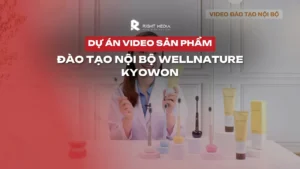
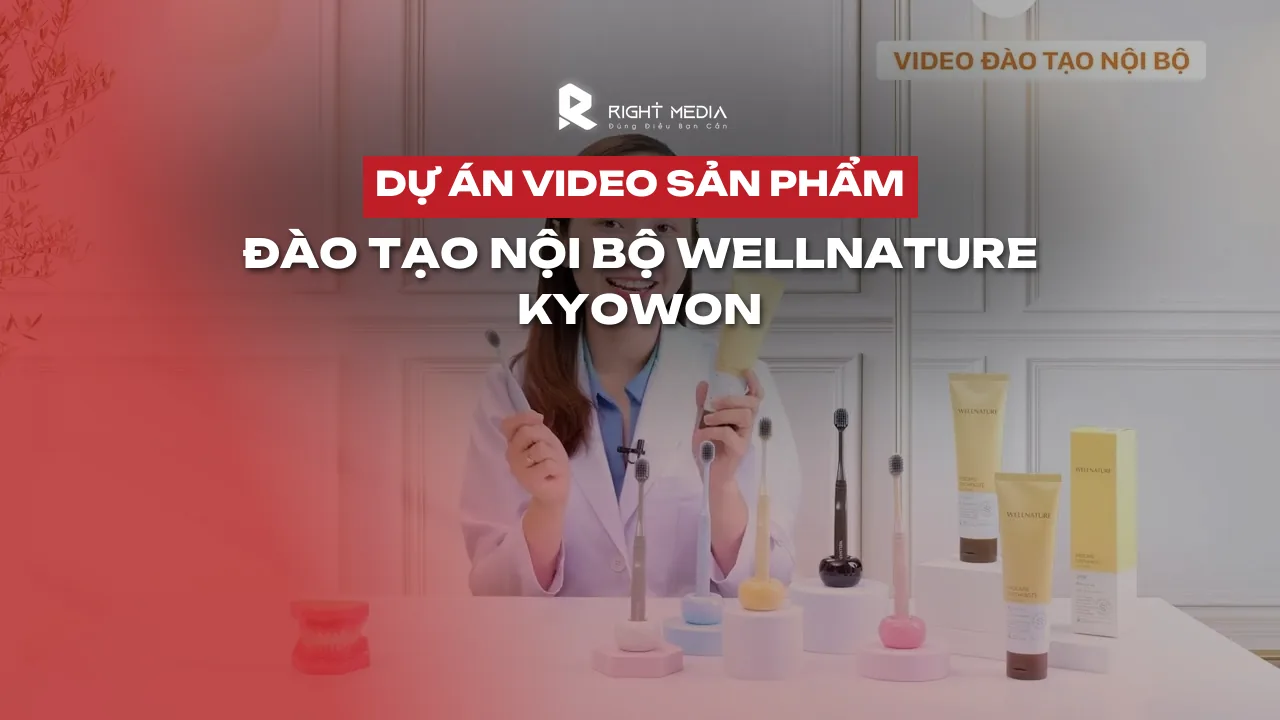
The problem with word-of-mouth training is that everyone teaches differently. In the Kyowon project, Right Media encountered this exact situation in the sales team. When each person did their own research, their answers to customers would vary. Internal training videos helped the entire team, including new members, learn the same standardized content.
Video can't replace a human supervisor at the computer. It replaces the repetitive parts: company introductions, regulations, protective equipment, and names of areas. That part takes up many hours of the team leader's time but rarely changes.
5 types of factory employee training videos that should be included.
Not every factory needs all five types of employee training videos right from the start. Begin with the one that takes up the most time for the supervisor, usually onboarding and workplace safety.
1. Onboarding video on the first day
The job posting includes company information, factory layout, working hours, canteen, shuttle service, and timekeeping procedures. Far Eastern Polytex includes similar information in its recruitment document: dormitory, shuttle service, mid-shift meals, and monthly training programs.
2. Workplace safety videos
Protective equipment for each area, emergency exits, signage, and rules for walking near forklifts. This type of filming should use real factory footage, with illustrations of correct and incorrect actions. Incorrect actions should be staged safely, without showing workers actually performing dangerous maneuvers.
3. Video SOP for each step
Each video, lasting 3-5 minutes, focuses on a single step, showing close-ups of hand movements and the computer screen. This is the most time-efficient method as it can be reused for all recruitment rounds. It's best to start with the step where new recruits are most likely to make mistakes.
4. Company culture video
The stories of long-time employees, core values, and a greeting from the management team. Far Eastern Polytex lets four employees tell their own stories, including Mr. Tam from the plastic resin factory who received six months of training in Taiwan.
5. Sales skills and product knowledge videos
For sales teams, agents, and consultants: Kyowon has invited dentist Do Ngoc Anh, with 10 years of experience, to lead the video instead of using marketing personnel.
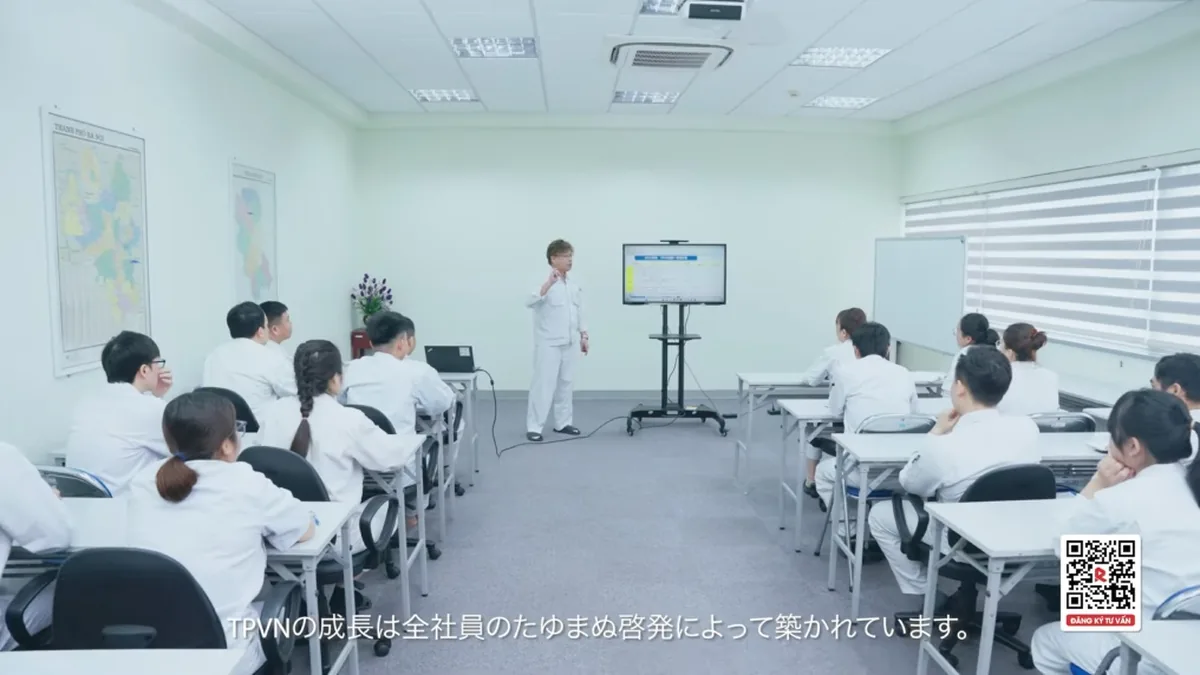
Why should you film live on the production line with real workers?
Newcomers need to see the right machine, the right angle, and the right colleagues they will meet. Video footage from a conference room with slides won't help them recognize the actual location when they enter the workshop. Skilled workers demonstrating the techniques are also more believable than actors, as their movements have become reflexive.
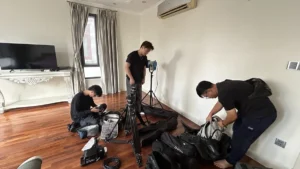
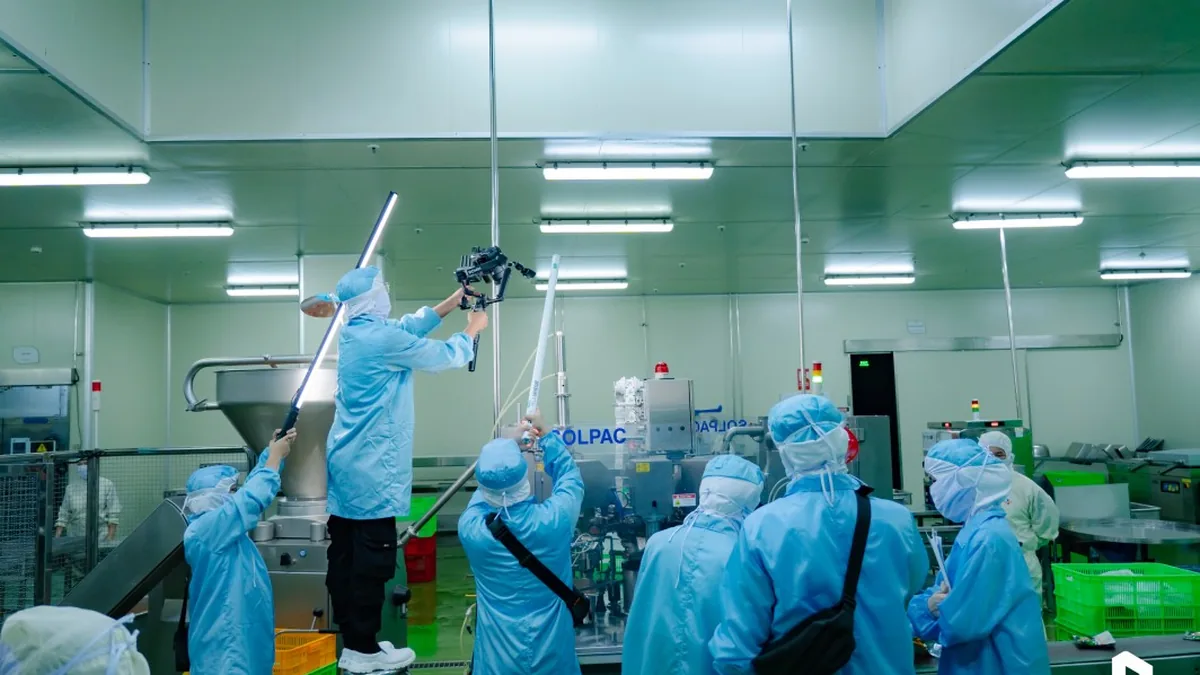
Filming while the production line is running requires careful preparation. At Top Royal Flash, the crew spent two days filming at the Lai Vung factory. The footage shows the fabric being laid out, automatic cutting, hanging conveyors, embroidery machines, and QC steps such as fabric inspection and color matching using spotlights. The crew worked right next to the workers, setting up additional lights because the factory lighting might not be ideal for filming.
For food factories, maintaining strict hygiene standards is the biggest challenge. At CJ Foods, the filming schedule for each area is pre-planned. This ensures that filming doesn't disrupt the food safety and hygiene process. The crew wears protective gear, disinfects, and doesn't slow down the production line.
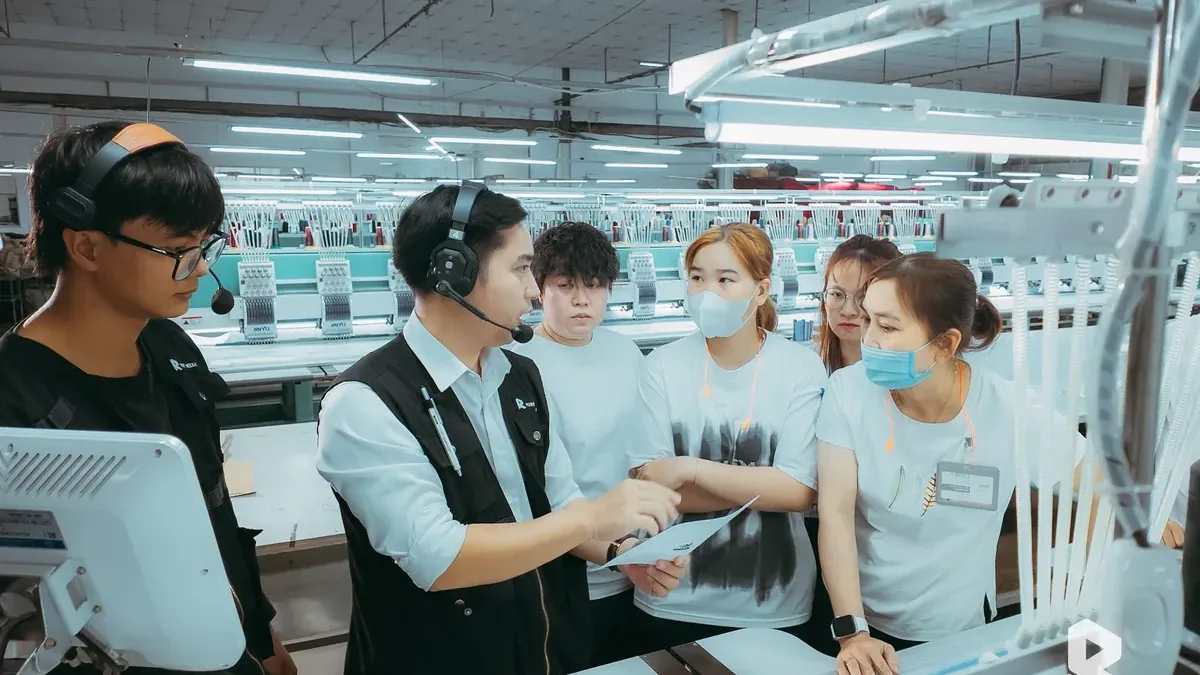
Structure of a 3-5 minute SOP video
A good factory internal training video answers three questions: what to do, how to do it, and where to go wrong. Below is the proposed Right Media framework for a production process.
- Objectives and equipment (20 seconds): Name of the process, output product, tools and protective equipment required.
- Safety note (20–30 seconds): Hazardous points on the machine, emergency stop button.
- Instructions (2–3 minutes): Each step features a close-up shot, numbered on the screen.
- Common errors (30–60 seconds): Place the correct and incorrect images side by side.
- Summary (15 seconds): Three to four key points to remember, shown in large font.
Kyowon is a clear example of proper technique. The video concludes with a close-up shot of each step, such as tilting the toothbrush 45 degrees between the teeth and gums. The technique must be clearly visible because viewers will follow exactly what they see. The video ends with four short notes, fulfilling the role of a summary.
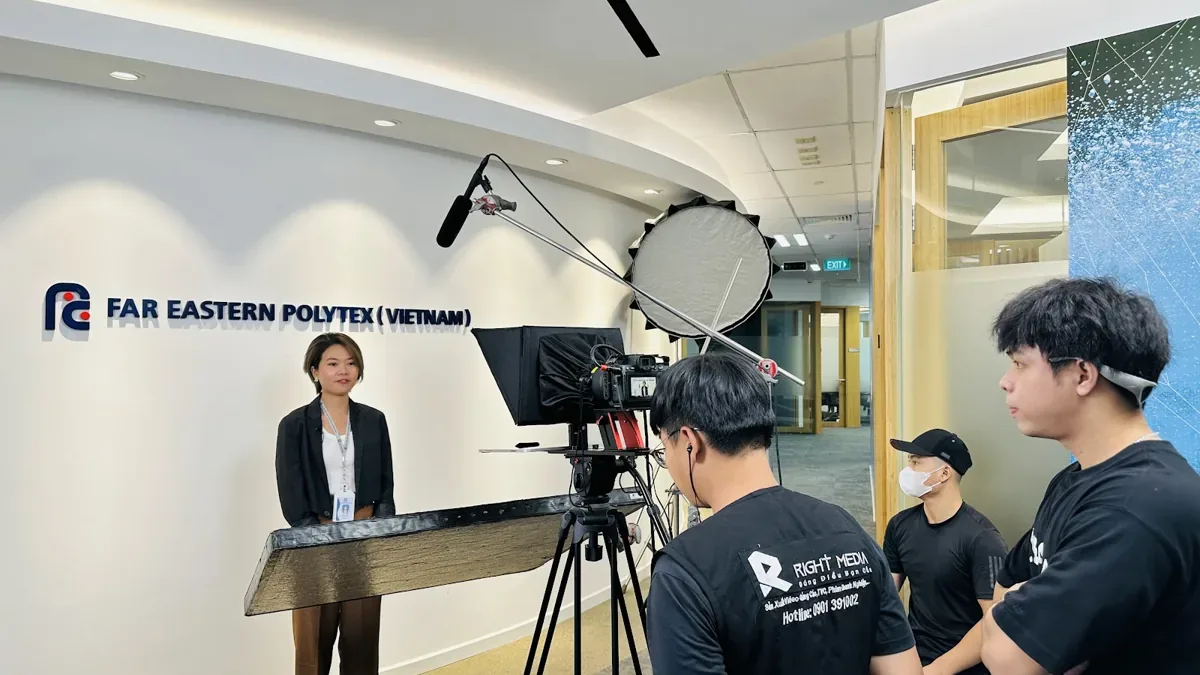
The workshop is usually noisy, so the commentary is recorded separately in a quiet room and then edited together later. At Top Royal Flash, the interview also has to be done in a sufficiently quiet location amidst the noise of the sewing machines.
Kyowon's project page also highlights three differences between training videos and promotional videos. Training videos are allowed to be longer. Clearly, visual appeal is more important, so distracting special effects are avoided. And they can be used for a long time, replayed for every batch of new employees.
Kyowon's Wellnature internal training video features a dentist guiding viewers from dental pathology to proper brushing techniques. View project details.
Multilingual videos for foreign workers and managers: subtitles or dubbing?
For SOP videos, subtitles and on-screen text are usually sufficient, as viewers primarily focus on observing the operations. For safety videos, voiceovers or separate commentary are recommended, as workers may not have time to read the instructions while watching the scene. For onboarding videos for foreign managers, subtitles are the most convenient option.
Tanaka Precision Vietnam is an example of subtitling. The video has Japanese subtitles for use with Japanese partners, clients, and management. In the same filming batch, Tanaka received both the full version and a shortened version for recruitment purposes.
For factories with foreign supervisors or engineers, a bidirectional recording is recommended. New Vietnamese employees need to understand management instructions, while new managers need to understand the regulations and operating procedures in Vietnam. The additional cost for each language is significantly lower than a separate recording.
Tips for filming in multiple languages later:
- Leave space below the image for longer subtitles in Vietnamese.
- Limit the amount of text that appears in the scene, such as handwritten text on a whiteboard.
- Standardize the glossary for each stage before translating.
- Keep the original graphic project file so you can change the text without having to rebuild it.
Where can onboarding videos be shown so that workers can actually watch them?
Employee training videos are only effective when shown at the right time for new employees. The following four channels are suitable for your factory:
- Screens in the workshop and cafeteria: Short, safe video, no sound, loud subtitles, repeat playback.
- First day training room: Video onboarding and culture, watching together and asking questions.
- Internal app or team chat group: This is a video SOP that workers can review on their phones when needed.
- YouTube is set to private mode: Only those with the link can view it, making it convenient to send to candidates and managers located remotely.
Far Eastern Polytex is an example of splitting channels from a single shot. The film has three versions. These serve international audiences, internal communications for over 2,000 employees, and recruitment with universities. Read more about other formats in the article. Compilation of various types of internal communication videos.
The film Far Eastern Polytex has a full version, a trailer, and a recruitment notice detailing benefits and training. View project details.
Measuring the effectiveness of internal factory instructional videos.
Measure effectiveness by changes in operations, not by views. Record baseline data before releasing the video, then compare it after one or two recruitment cycles.
- Time to meet standard: Number of days from the start of employment until the worker can operate the machine independently.
- Team leader's mentoring time: How many more hours does the team leader have to re-teach each new class?
- Errors in the first week: The number of defective products due to new employees in the process is shown in the SOP video.
- Short test: 5–10 questions after each video, graded according to class level.
- Safety incident: Number of violations of safety equipment regulations, near-collision with forklift.
If a video doesn't show any improvement in any aspect, ask the team leader what the newcomer is still struggling with. Often, it just requires adding a close-up shot or addressing a common mistake.
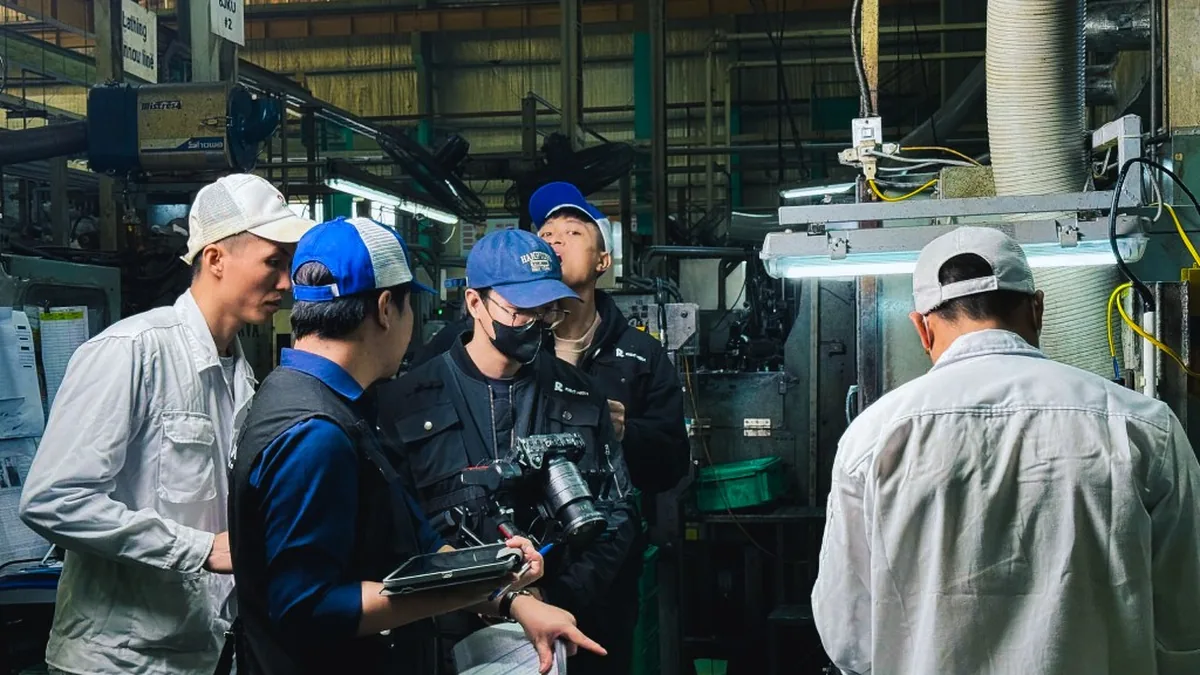
Table of video types, durations, and reference costs.
The Right Media price list does not yet have a separate section for training videos. The table below groups each type into the nearest package. Reference prices, excluding VAT, apply to Ho Chi Minh City and a 100 km radius.
| Video type | Suggested duration | Reference Package |
|---|---|---|
| Onboarding Day One | 3–5 minutes | Standard factory video package from 15,000,000 VND (1 filming session); longer versions (over 2 minutes) will be priced according to the script. |
| Workplace safety | 2–4 minutes | Combine with the onboarding filming on the same day. |
| SOP for each stage | 3–5 minutes per exercise | An additional 12,000,000 VND is charged per filming session for each production stage. |
| Company culture, employee interviews | 3–8 minutes | Corporate videos from 59,000,000 VND |
| Sales skills, product knowledge | 5–15 minutes | According to the scenario, separate price quote. |
| Add languages | According to the original | from 4,000,000 VND/language |
The most cost-effective approach is to combine onboarding, security, and several SOPs into a single shoot. Many factories also incorporate corporate videos, as Far Eastern Polytex and Tanaka have done. See packages on the website. corporate video production services.
Checklist before shooting employee training videos.
- ☐ List the most frequently asked questions from new students in their first week.
- ☐ Select 3–5 processes that cause the most errors to create your SOP first.
- ☐ Standardize the existing SOP document before writing the script.
- ☐ Select a worker to demonstrate proper procedures and agree to appear in the video.
- ☐ Agree on a no-filming zone and require hygiene and protective equipment.
- ☐ Schedule filming in shifts, avoiding peak production hours.
- ☐ Finalize the required language and glossary.
- ☐ Select the channel for each video and the link manager.
- ☐ Record baseline data: standard completion time, first-week errors, coaching hours.
- ☐ Regularly review the video whenever the machinery or process changes.
Frequently Asked Questions
What about workers who aren't used to standing in front of a camera?
There's no need for them to say much. In the SOP video, the workers simply perform their daily tasks; the commentary is recorded separately. The crew films a few practice takes before the main shoot. For the interview, send the questions in advance so they can prepare; don't make them memorize answers.
When machinery or processes change, do we have to go back to the original setup?
No. If each video only covers one step, when the process changes, you only need to go back to that specific video. The graphics and subtitles are kept in the project file, so they can be edited quickly. This is why it's better to break down the SOP video into smaller parts instead of making one long video for the entire production line.
Should we use animated videos instead of live footage?
Animation is suitable for explaining the internal mechanisms of the machine, where the camera can't see. However, hand movements, positioning, and protective gear should be filmed realistically, as beginners need to recognize the correct scene. Many videos combine both in a single piece.
How many SOP videos can be produced in a single filming day?
Depending on the complexity and distance between the stages. Stages that are close together and involve short operations can be combined into many tasks in a day. Stages that require waiting for the machine to complete its cycle will take more time. A preliminary survey will help determine a specific number.
Who in the factory should manage the training video inventory?
Typically, the HR or training department, in coordination with the workshop manager, will manage the video list, language versions, and links. The workshop manager is responsible for reporting any changes to the process. A complete inventory review should be conducted annually.
Is your factory hiring a lot and looking to reduce repetitive training hours? Right Media can survey your production line, select priority processes, and create a sample SOP (Standard Operating Procedure). See project. Kyowon internal training video Or call the hotline at 0901 391 002.