
Branding is a process of creating unique characteristics that bring long-term value to a business. A brand is not simply a name, slogan, or logo; it's also what customers perceive and evaluate about your business.
Definition of Branding
According to the Cambridge Dictionary, branding is defined as the act of building a brand. It is a process by which a business builds its unique identity to present to the public. Successful branding will help your brand stand out and differentiate itself from competitors in the market.
In short, branding is the process of researching, developing, and applying a set of elements such as images, language, colors, logos, symbols, etc., to create customer awareness of a company's brand.
When people think of branding, they often picture large-scale, well-structured, and professional branding projects, typically those of well-known brands both domestically and internationally.
However, in reality, branding isn't as complicated as we might think. Essentially, it's about shaping awareness of a brand or a person's personal image. Not only large businesses, but also small companies and even those with fixed jobs like teachers, doctors, and construction workers can brand themselves by highlighting their strengths.
What does branding include?
For businesses, branding is essential to help your company stand out and differentiate itself. To achieve this, you need a brand identity system to create consistency and uniformity.
It includes the following elements:
Logo
A logo is one of the most important elements in a brand identity. It's considered the face of a business; by looking at the logo, customers can identify the brand, its industry, the products it sells, and its origin.
The market offers many prime examples of logo design for brand recognition. For instance, Xiaomi, a Chinese technology company, invested a hefty 2 million RMB solely in logo design. Similarly, tech giants like Facebook, Google, and Amazon regularly update their logos to keep up with modern trends.
In Vietnam, Viettel is also one of the leading companies in rebranding and adopting a new slogan to better suit the era of building a digital society. Similarly, Nokia completely changed its logo to rebuild its brand from scratch.
Slogan
A slogan is a short, clear, and concise message that reflects your company's unique values and is easily communicated to customers. A suitable slogan should not only be short and easy to understand but also clearly convey an emotional connection.
Emotional connection is crucial because potential customers who trust your brand are those who already have a need for the services and products your business offers. A brand can have many slogans depending on the products and services it provides.
Form & shape
In brand identity design, the form and shape group is closely related to the logo. It focuses on studying the shape, nuances, and style of the logo to ensure it aligns with the brand's identity.
For example, you can choose a triangular, circular, square, or asymmetrical design. The appropriate shape should be chosen based on the brand's style, giving the logo and brand its distinctive character.
Color
The dominant color is just as important as the logo in the branding process. Each color has a different meaning, so to choose the right color for your logo and brand, you first need to understand the meaning of each color:

- Red: Belonging to the warm color spectrum and the most commonly used color in the color palette. Red is relatively striking, easily attracts attention, and exudes powerful energy.
- Yellow and orange: Not overly flashy, but still appealing, creating a fresh and friendly atmosphere.
- Green: Brands that use green often have an association with nature or are environmentally friendly.
- Blue: A psychological study shows that blue is a popular, pleasing color that evokes feelings of sincerity and trustworthiness.
- Pink and purple: Evoke cuteness and symbolize creativity and joy.
Product packaging
For businesses, any product needs to be carefully and securely packaged before being sold on the market. Therefore, take advantage of this to carry out your branding campaign. Because when looking at a product, the packaging is the first thing that attracts the customer's attention.
Do your best to invest in packaging design that is meticulous, eye-catching, and professional. A good tip is that instead of using ordinary cardboard boxes and labels, you can print your company information, logo, and brand slogan. This not only shows professionalism but also does an excellent job of branding.
Business card
Business cards contain a wealth of information about your business or company and are used in many situations, especially when interacting with partners. By effectively utilizing this tool and incorporating your entire brand identity, you can make PR campaigns and brand positioning much easier.
team
On the internet, every business needs a website with its own unique style and character. When starting to design a website, businesses should aim for it to be the face of their brand, defining their style and conveying all the messages about their mission, vision, and core values.
A website must accurately reflect the brand's main colors, slogan, and logo so that users can immediately recognize the brand and the products/services it offers. Therefore, a website is an indispensable tool in the branding process.
Why is branding important?
Branding plays a crucial role for the following reasons:
- Increase brand awarenessEvery brand wants to be remembered by customers. To achieve this, your brand needs to implement a branding strategy that helps establish its position in the industry. At the same time, this helps your company compete with rival companies offering similar products and services.
- Communicate the message clearly.A reputable brand plays a crucial role in communicating the value proposition of products and services. The better the message is communicated, the more effective it is in attracting new customers.
- Remind customersBrand building is not only about attracting new customers, but it also effectively reminds existing customers of what your business does, the quality products and services your company provides.
How to do branding effectively?
The result of the branding process is a well-known brand along with its associated values. Brand reputation demonstrates a strong brand with a prominent market position. These values can include influence on customers and perceived value. Once a brand is well-built, it becomes a crucial factor in increasing the overall value of the business.
The 10 basic steps to building an effective brand include:
1. Identify your target customers.
Before even thinking about brand development, you need to identify the right target audience for your brand. This is extremely important in the brand building process; by understanding the preferences and aesthetic tastes of your users, brand building becomes much easier.
2. Research your competitors.
Conduct a survey to research your competitors in your industry. Identify and combine their strengths and leverage their weaknesses to make your brand stand out.

Research your competitors in the same field to find unique ideas for your brand.
Beyond product and service characteristics, your brand can also focus on other aspects such as website and pricing. Furthermore, active SEO is crucial for increasing brand awareness. It boosts website traffic through organic search and provides valuable ideas and topics to focus on. Keyword search tools can also be used to identify topics your competitors haven't yet developed, allowing you to compete effectively.
3. Define the brand's vision and mission.
To build a perfect brand, clearly define your company's mission. This will ensure that all other branding activities are effective, aligned with your business plan, and reflect your core values.
However, remember that a mission and vision statement is largely for internal unification and doesn't contribute much to marketing aimed at the target customer group. Therefore, build it in a simple yet effective, emotionally resonant way that guides all of the business's activities.
4. Focus on developing brand personality.
Brand personality is crucial to the operation of a business. It's what you need to demonstrate that your company is different and more attractive than your competitors.
It's important to focus on researching which personality traits the target audience is interested in, and then develop the brand personality in that direction optimally, or combine it with existing identity to develop a unique brand personality.
5. Building a brand story
Brands with authentic business stories are key to attracting customers. A meaningful story helps customers understand why your brand thrives, building trust through beneficial products and services.
6. Choose a brand name.
Naming a brand is very important, so prioritize short, memorable names, abbreviations, or names with only one or two words. Some easy-to-remember big brands include Facebook, Adidas, Nike, Pepsi…
Make sure your brand name doesn't conflict with any existing brands. Doing so can easily lead to your brand being less memorable, giving customers a chance to find a competitor's brand.
7. Choose a slogan
A valuable slogan is a core element that elevates your brand to a higher level. Furthermore, it helps to synchronize your brand identity across all aspects. The slogan should be concise, easy to understand, and memorable, with a strong connection to the company's business model and products.
8. Logo and brand interface design
As mentioned above, logo and brand design are crucial for making a good impression on customers. A few things should be noted:
- Color: Learn about the psychological effects of each color to reinforce what you want your brand to convey.
- Font: Choose a font that reflects your brand's personality and complements the colors and imagery.
- Images: Including images with the logo is also a good idea. Choose images that are appropriate for your business and marketing goals. For example, circular, square, or triangular symbols, mascots (human or animal faces), abstract logos, interlocking letters, etc.
- Logos combine symbols, letters, and images to create a unique design.
9. Build a website that highlights your brand.
Once you've established your own brand, the next step is to integrate it into all aspects of your communication. Your official website needs to fully incorporate your brand's identity.
10. Change the brand when necessary.
Everyone knows that consistency is essential for building a brand. However, if your branding strategy isn't working, don't hesitate to change it to better suit your needs and attract both new and existing customers.
3 Companies that have been successful in brand building.
In Vietnam, there are many well-known and large brands. Many of these are also recognized by world-renowned brands, enjoying high brand recognition. Below are five names that any business would aspire to achieve similar brand value in their field:
Vinfast – A car brand from Vietnamese people.
Vinfast is frequently cited in the media as an example of a successful Vietnamese brand with global recognition. This brand has employed an extremely intelligent branding strategy, meticulously preparing in market research and vehicle development. Simultaneously, they have focused on human resources, infrastructure, and technology transfer.
The Vinfast logo carries many special meanings, combining the first letters of the phrases "Vietnam – Style (Ph is modified to F) – Safety – Innovation – Pioneer". This logo affirms that Vinfast's creation is not simply an automobile company, but also a symbol of the pioneering development of the automotive manufacturing industry in Vietnam.
The V logo represents multiple meanings, such as Vietnam or Victory (quality, success). The design of two interlocking Vs creates a 3D effect, with a strong silver tone. Previously, Vinfast's brand identity was red (showrooms) and green (charging stations). However, this has now been changed and standardized to blue across all showrooms and service centers.
Viettel – A brand worth billions of USD.
Viettel is a large and established brand known for its slogan "Speak your way" and its logo featuring a dominant blue and orange color scheme. On February 7, 2021, it officially updated its brand identity with a complete change to its logo and slogan.
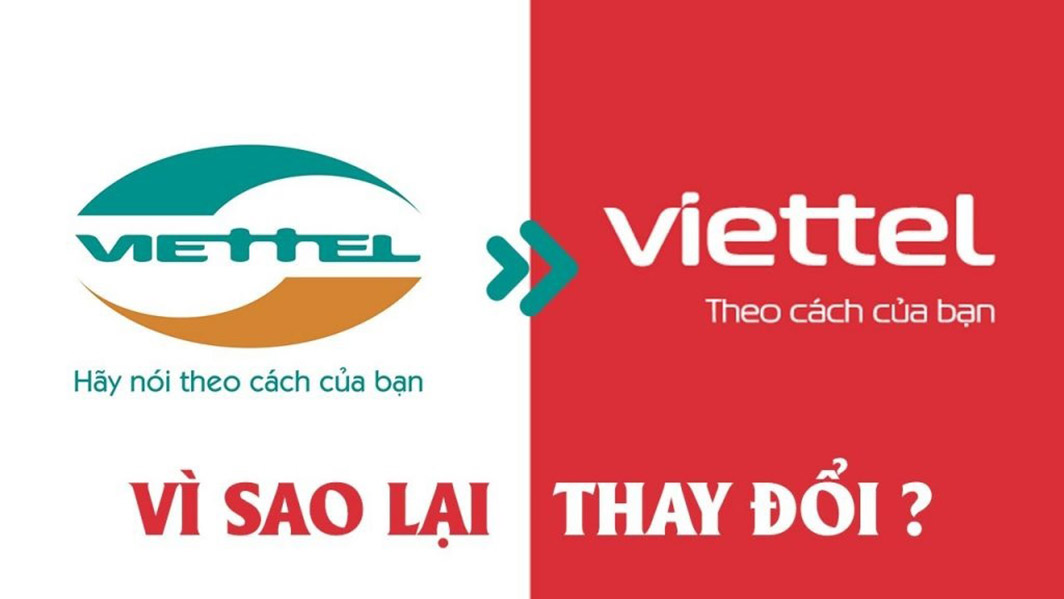
Viettel's new logo stands out with its youthful and dynamic red tone, reflecting the brand's strength and pioneering spirit. The Vietnamese slogan, "In your way," and the English slogan, "Your way," express a spirit of freedom, encouraging people to be creative in their own way.
Vinamilk – A famous fresh milk brand from Vietnam.
Vinamilk is a renowned brand with a 48-year history of development. To achieve success, Vinamilk has clearly defined its brand strategy. From 1976 to 2015 and 2017, the focus was on the value of "Vietnamese Trust," affirming its position and product quality. From 2017 to the present, the focus has been on the mission of "Reaching New Heights in Vietnam," providing nutritional solutions for Vietnamese people and expanding globally.
Vinamilk is a prime example of successful brand repositioning and transformation. From logo design to main colors, the brand has moved towards simplicity yet stands out thanks to the use of strong visual effects. This helps the brand differentiate itself and easily attract customer attention, especially at points of sale.
It can be said that for a business to stand firm and grow in the long term, it needs to make an effort in building its brand positioning. The larger the business, the more difficult, time-consuming, and expensive the branding process becomes. Therefore, focus on exploiting strengths, overcoming weaknesses, and building a detailed roadmap when implementing it to achieve success in the field.