
Creating and posting product introduction videos on social media platforms like Facebook and TikTok is a proactive way for both individuals and businesses to attract customers. The advantage of this method is that it saves costs and utilizes existing resources; however, its effectiveness depends on many other factors such as the script, visuals, and the product itself.
Product introduction videos – the foundation for building trust with customers.
Product introduction videos are one of the most convenient, effective, and easy ways to provide information to customers. Through videos, customers can evaluate the product in detail (material, color, style, size); receive instructions on features, usage, and many other factors. In addition, providing product videos also offers greater authenticity and credibility to viewers, easily stimulating sharing or interaction from interested customers.
Product introduction videos give customers a sense of security and trust.
If you pay attention, when browsing most social media platforms like YouTube, TikTok, or Facebook, you'll easily find videos introducing products in every industry, from electronics and fashion to makeup. The creators of these videos could be celebrities, business representatives, or individuals, all with the goal of promoting products, attracting customers, generating revenue, and building brand value.
Customers often prefer watching product videos over just images because videos allow viewers to get a more detailed assessment of the product. For example, with fashion items, product videos help viewers verify the fit, material, and color; and with electronic devices like headphones, introductory videos can provide a more detailed audio experience, thus enabling them to make an informed purchasing decision.
Currently, most businesses and individuals involved in marketing are focusing on producing product introduction videos combined with boosting multi-platform advertising activities because it yields high returns in terms of revenue, engagement, and a stable supply of new customers. The investment cost for creating product introduction videos is also not too high, and they can be self-produced, making them accessible to small businesses and individual sellers.
How to create a simple and fun product introduction video for beginners.
Essentially, a product introduction video needs to meet key criteria such as providing necessary product information (color, style, size); uses/benefits; usage instructions; and possibly including promotions/calls to action. The key to making this video unique and attractive to customers lies in the script and the use of sound and lighting effects.
In general, creating product introduction videos isn't difficult, but meeting sales, engagement, or customer attraction goals is certainly not easy. Here are some simple and engaging steps for beginners to create product introduction videos.
Step 1: Prepare the props
To shoot videos, you definitely need recording equipment first. You don't necessarily need professional equipment like a digital camera; you can absolutely use a regular smartphone, but it needs to meet criteria for sharpness, high resolution, a large image sensor, and enough storage space for the video. Most people who make personal videos start shooting and editing with their own phones instead of professional equipment.

To start making videos, you need to prepare recording equipment with stable quality.
Additionally, you may also need to invest in other equipment and props such as tripods, microphones (to capture/filter sound), lighting, backdrops, etc., depending on the specific product. The preparation of these props will also depend on the filming environment, script, and individual needs. For example, if you are filming an introduction in a very noisy area with a lot of background noise, a microphone is essential. Or, if filming outdoors with sufficient light, you may not need lights.
Of course, if you want to create a polished and perfect product introduction video, you should use professional equipment to provide a better visual experience for customers. Product videos must be sharp, vivid, and as detailed as possible in showcasing the product's features to attract viewers' attention.
Step 2: Brainstorming for the script
Why is it that for the same product and price, brand A's promotional video attracts significantly more views than brand B's? The reason lies in the video's script and content. The scriptwriting process must meet several key elements, such as: target customersProduct information, promotions, calls to action, etc. Once the script is in place, the setting, props, and language will gradually take shape.
Creating a product introduction video that simply showcases the product's appearance or features is incredibly boring and fails to attract viewers. Therefore, building an engaging video script that is both humorous and incorporates information about the product will create excitement, leave a lasting impression, and set you apart from the competition.
For example, instead of opening your video with a typical greeting, you could use catchy, surprising, shocking language or a question that sparks curiosity in the viewer. With videos, you need to make an impression from the very first 3 seconds to keep viewers engaged until the very end. For instance, start with "Extremely disappointed with product A...", then mention its outstanding features, and end with "Disappointed that I didn't buy it sooner."
Step 3: Record a video
In reality, shooting videos isn't too complicated, even for beginners. You just need to ensure the right camera, lighting, environment/location, and camera angle. For product introduction videos, you can choose environments with minimal noise and sufficient lighting so viewers can clearly perceive the product's color, style, and size. Additionally, the camera angle directly impacts the customer's perception of the product's characteristics.
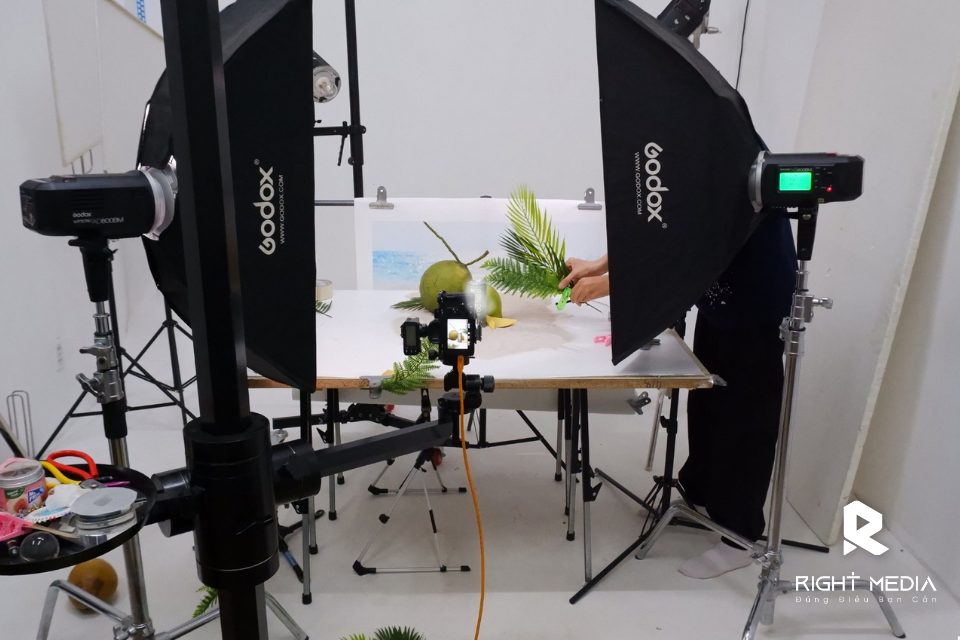
Multiple camera angles should be chosen to highlight the main product.
For example, if you're shooting a product introduction video like food, you might choose to film directly at the factory to create a sense of credibility for viewers; however, if it's a fashion item, you might prefer filming in a studio to easily highlight the product. Similarly, when introducing cosmetics, you need to use many close-up shots so viewers can appreciate the texture or color of the product.
The main purpose of the video is still to introduce the product, so choose camera angles that highlight the main subject, ensuring that anyone watching the video will notice the item. Of course, beginners won't know how to choose the perfect camera angles, but it's essential to keep the product at the center of the video.
Additionally, if shooting live product introduction videos, the filming environment needs to be quiet, or use a microphone to filter out noise, avoiding interference that could affect video quality. If the environment is dimly lit, prepare and set up lighting to ensure a clearer and more polished video. You should also use a variety of camera angles to capture more scenes, making post-production editing more interesting.
Step 4: Edit the video
Post-production editing also plays a crucial role in the success of product introduction videos. Video editing isn't simply about cutting and pasting disparate video clips to make sense; it also requires adding effects and sound to create a complete video. Post-production editors, in addition to relying on the initial script, need creativity and imagination to perfect the final video.
For basic video editing on a phone, the most popular app currently is CapCut, which offers a full range of features including cutting, splicing, sound effects, adding music, adjusting video speed, etc. Meanwhile, if aiming for professional video editing, software like InShot or Adobe Premiere Rush are commonly used. The choice of app or software depends on your needs and skill level to create polished videos.
For beginners with limited video editing skills, you can still perform simple cutting and splicing operations to create a cohesive video, remove unnecessary content, and then add suitable music. With more experience, you can start adding sound and lighting effects such as unboxing sounds, wow sounds, applause, etc., or other lighting effects, skin smoothing, or subtitles.
Shooting videos with sufficient lighting and diverse camera angles has simplified post-production for 50%. In addition to adhering to the main script, the editor also needs to incorporate creativity and a sense of humor to make the content engaging and unique compared to competitors' product introduction videos. In reality, sound and lighting effects aren't absolutely necessary, but doing them well guarantees high views and engagement.
If you want a professional promotional video, you can also collaborate with media production companies.
On the other hand, if you want to create professional product videos, you can also collaborate with media production companies for the most polished visual support. The media team will handle everything from preparing props, advising on settings, filming, editing, and delivering the finished videos based on the initial script provided by the client. Post-production challenges such as adjusting lighting, blurring backgrounds, removing unnecessary objects, and adding appropriate sound effects will be completed quickly and professionally, meeting the client's expectations.
Creating product introduction videos for beginners isn't actually that complicated, especially for young people who frequently use social media and are familiar with smartphones. The key to success lies in the script, effects, and image quality to differentiate yourself from competitors creating similar content. Additionally, you can dedicate time to learning scriptwriting, filming, and video editing skills to improve the quality and professionalism of your final product.





 English
  Vietnamese