
What is a shooting board? Why is it the "secret weapon" of directors of photography? And how do you distinguish it from a regular storyboard? Let's explore the details in the article below to better understand the process of creating a high-quality video product.
What is a shooting board?
A shooting board, also known as a technical storyboard, is a detailed visual document derived from a storyboard, but supplemented with precise technical specifications for actual filming. While a storyboard helps clients understand "How will this story unfold?", a shooting board answers the production team's question: "What camera will we use, where will we place it, and how will we move to film that scene?".
A shooting board at professional production houses such as Right Media It usually includes the following components:
- Visuals: Describe the composition of the image.
- Shot Size: Close-up (CU), Medium shot (MS), Wide shot (WS),…
- Camera Angle: Low angle, high angle, eye level angle, or Dutch angle.
- Camera Movement: Clearly indicate whether the camera will pan, tilt, dolly, or zoom.
- Lens specifications (Lens/Focal Length): Use a wide-angle lens or a telephoto lens.
- Floor Plan: The camera placement, actor positioning, and lighting direction within the 3D space of the setting.
The difference between a Storyboard and a Shooting Board
Although both use drawings for illustration, their purposes and uses are completely different. Understanding this difference will help businesses work more effectively with video production companies. The differences include:
Purpose and target audience:
- Storyboard: This is a communication tool between the agency/production house and the client. It focuses on describing the storyline, character emotions, and event progression. The goal is for the client to "approve" the idea before funding production.
- Shooting Board (Technical Storyboard): This is an internal communication tool between the director and the technical team. It focuses on execution. Clients sometimes don't need to see this version because it contains too much technical jargon, but the production team can't live without it.
Characteristics of the image:
- In the Visitboard: The images need to be beautiful, soulful, and clearly express the characters' emotions to "convince" the viewer emotionally.
- In the Shooting Board: The visuals only need to be spatially clear. Sometimes the director just needs to draw "figures," but they must have arrows indicating the direction of movement with extreme precision. Technical information is more important than the aesthetic appeal of the drawing.
The change depends on the actual context:
- Storyboards can be drawn based on the artist's imagination immediately after receiving the script.
- The shooting board is only finalized after the crew has completed a site survey. A camera angle in the imagination might look beautiful, but when arriving at the actual location, if the space is too narrow or obstructed, the shooting board will have to be adjusted based on the actual terrain.
Duration calculation capability:
A shooting board allows the director to estimate the real-time duration of each shot. For example, a 5-meter-long shot of Dolly would take approximately 10 seconds. This allows for extremely precise control over the final video length, which is especially important for television commercials with tight time constraints.
The role of the Shooting Board in optimizing the production process.
Why are large projects willing to spend thousands of dollars just to create a shooting board? The answer lies in the economic benefits it provides. Specifically, its role is as follows:
- Save time: On a film set, every minute that passes represents a cost for renting equipment, lighting, and employing dozens of staff. Without a shooting board, the director and cinematographer would have to discuss on the spot: "Which angle should we shoot this scene from?", "Where should we place the lights?". Having a pre-prepared plan allows the crew to operate like a well-oiled machine, knowing exactly what to do next after finishing one scene.
- Optimize your device: If the shooting board shows that all the wide shots take place in one corner of the office, the director will film all those shots once, then change lenses for close-ups. This minimizes the need to constantly change equipment and lighting, which is a very time-consuming process.
- Ensuring safety during post-production: A shooting board helps the director control the pacing between shots. It ensures that the shots are aligned in terms of axis, character viewing angle, and frame coverage. A video without a shooting board often suffers from frame skipping or missing supporting shots, making editing very difficult.
Right Media – A professional video production company with a standardized process.
Finding a film production company in the market isn't difficult, but finding a partner who understands the value of pre-production preparation is challenging. Right Media That's what truly sets your brand apart.
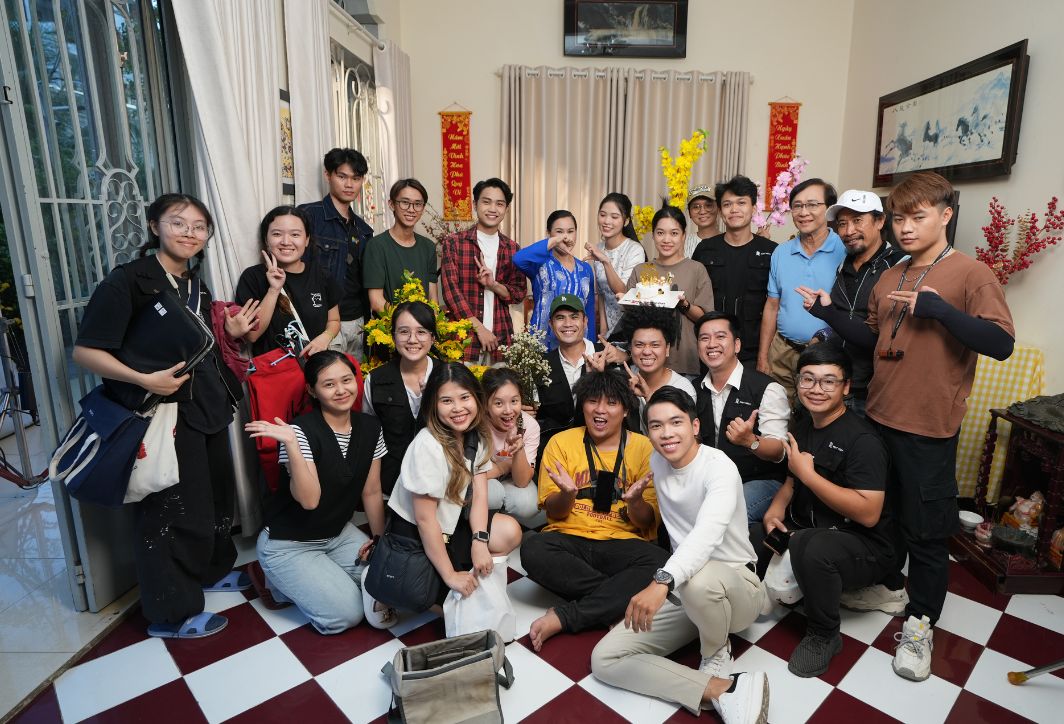
In Right MediaWe don't just offer the most modern cameras. We offer... complete peace of mind through a transparent and scientific production process.
Professionalism comes from the smallest details.
Every project at Right Media, from corporate films and event recap videos to TV commercials, undergoes a thorough shooting board preparation. We believe that the success of a video is determined before the camera actually clicks. Careful preparation helps us control risks and ensure timely delivery of the final product to our clients.
Dedicated customer service
We are not just the implementers, we are the partners. The Right Media team is always dedicated to answering all of our clients' questions. We will explain to you why we chose this camera angle, why we needed that equipment, all with the ultimate goal of achieving effective communication for your business.
Transparent production costs
One of the biggest concerns for clients when producing videos is unexpected costs. At Right Media, thanks to our shooting board and detailed production plan, we are committed to providing transparent pricing from the outset. Clients will not have to pay any exorbitant additional fees due to the team's lack of preparation.
Support in building a sustainable brand strategy.
We don't just sell a single video. Right Media advises you on how to use those videos most effectively across social media platforms, helps you develop a unique visual style, and makes a strong impression on your customers.
Steps to building an effective shooting board.
To create a truly worthwhile shooting board, we typically follow this 5-step process:
- Step 1: Study the script and storyboard: The creative team and directors will meet to grasp the overall spirit of the project. All ideas will be documented.
- Step 2: Field Survey (Recce): This step is crucial. We visit the filming location, measure the room dimensions, check the power supply, sunlight direction, and surrounding noise levels. These parameters directly determine where the camera can be placed.
- Step 3: Sketch the floor plan: The director of photography will draw a top-down diagram of the scene, marking the camera positions for each shot. This step helps the lighting team know how to position the lights without them being in the frame.
- Step 4: Draw a technical illustration: The artist will redraw the frames, but this time focusing on camera composition. For example, if the scene involves movement, the artist will draw the starting and ending positions of the camera within the same frame, along with directional arrows.
- Step 5: Complete the accompanying Shot List: Finally, there is a list detailing the scene number, the type of equipment needed, the actors involved, and any special notes for sound or post-production effects.
Important tips for creating a perfect shooting board.
If you are a young filmmaker or business wanting to oversee this process yourself, please note:
- Use the movement arrows: Don't skimp on the arrows. They are the language for expressing the camera's actions.
- Notes about the lens: Choosing between a 35mm or an 85mm lens will create completely different emotions for the same scene.
- Consider the rhythm: Imagine how the shots will follow one another. The shooting board must demonstrate a smooth transition.
- Always have a backup plan: Sometimes, real-world conditions don't allow for filming exactly as on the shooting board, so always have a "B-angle" to ensure you don't run out of footage when editing.
In summary, a shooting board is not just a collection of images; it also demonstrates professionalism, a commitment to quality, and a measure of a video production company's dedication. Understanding the difference between a storyboard and a shooting board will give you a deeper insight into the art of filmmaking and help you make informed investment decisions for your marketing campaigns.
With Right Media, you not only receive beautiful footage, but also a standardized, transparent, and highly efficient production process. We pride ourselves on bringing your brand vision to life through meticulously planned frames.




 English
  Vietnamese