

VFX software creates unique and captivating works for viewers. With the advancement of computer technology, VFX software is constantly being improved and perfected. This has brought many benefits to the film, advertising, and diverse other fields. Let's explore some of the most commonly used software in the following article from Right Media.
What is VFX software? What fields is it used in?
A simple definition of VFX software.
VFX, or Visual Effects, is the process of creating, editing, or adding visual elements to a real scene that cannot be achieved in real life. For example, VFX can create the image of an actor flying through the air, a non-existent creature (often seen in fantasy films), recreate a historical event, a natural disaster, etc.
VFX software is essentially the "digital paintbrush" of VFX artists. They use it to create virtual characters and scenes. The software allows users to combine live-action footage with computer-generated imagery (CGI), remove unwanted details, or add realistic effects like fire, explosions, smoke, and flames.
The power of VFX in the creative industries
The applications of VFX software are incredibly vast and are increasingly permeating many areas of life, such as:
- For the film and television industry:
This is one of the fields that uses VFX the most. From Hollywood blockbusters like the series... Avengers Marvel's epic battles, or the fantastical world of Pandora... SantaAll of this relies heavily on VFX.
In Vietnam, VFX is also proving to be an indispensable role. For example, the film. Blue Eyes They used special effects to recreate the scenery of the old countryside in a more poetic and perfect way, or action films. Hai Phuong They used VFX to enhance the drama of the fight scenes.
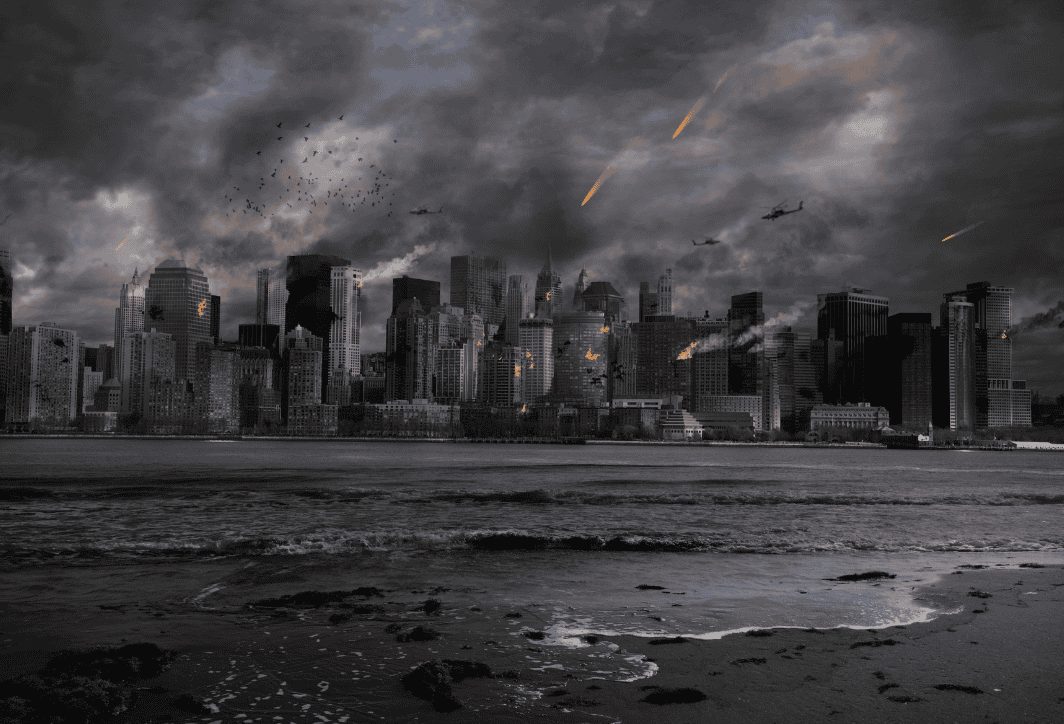
- For the advertising industry:
To create impressive commercials that capture viewers' attention in just a few dozen seconds, producers frequently use VFX. From bringing a beverage bottle to life to creating unique transition effects, VFX software is essential.
Video advertisements with special effects become more dynamic. Especially when combining human acting with uniquely simulated characters and events, the product advertisement video becomes an eye-catching "work of art" that attracts viewers.
- In video game design:
The gaming industry uses VFX to create game environments, character skill effects, and spectacular cutscenes, providing players with an immersive and realistic experience.
- Virtual Reality (VR) and Augmented Reality (AR):
The creation of entirely virtual worlds or the integration of 3D objects into real-world environments are both advanced applications of VFX technology and software.
Top 7 most widely used VFX software programs today.
The world of VFX has many different tools, each with its own strengths. Below is a list of 7 VFX software programs, from basic to advanced, trusted by leading studios and artists worldwide:
1. Adobe After Effects (AE) – VFX software
After Effects is currently the most widely used tool. Almost anyone starting out with motion graphics and visual effects uses this tool. It is an extremely powerful VFX software that allows users to combine multiple image layers, create effects, and perform complex motion graphics.
After Effects is suitable for everyone, especially user-friendly for beginners. Furthermore, this software is used by filmmakers, studios, and freelancers as an indispensable tool. For example, After Effects is used to produce music videos, TV commercials, corporate films, feature films, etc.
After Effects has a relatively user-friendly interface, the Adobe ecosystem (easily integrated with Premiere Pro, Photoshop, and Illustrator), and a huge library of third-party plugins (such as Trapcode Suite and Element 3D).
2. The Foundry Nuke creates high-quality VFX.
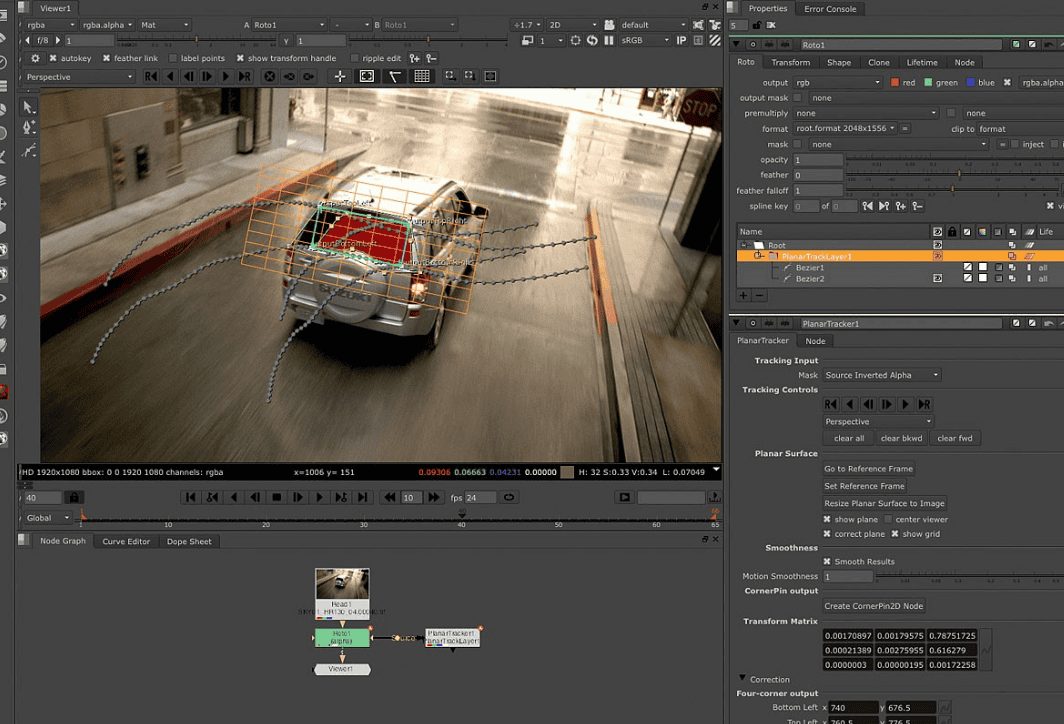
If After Effects is a powerful multi-purpose vehicle, then Nuke is the Formula 1 race car. It's the gold standard of the Hollywood film industry for professional compositing work. Nuke operates on a Node system, allowing for flexible management of extremely complex projects.
Nuke software is typically used by professional VFX studios and compositor artists. Its strengths include smooth high-quality file processing (4K, 8K), an intuitive Node system for large projects, and a powerful integrated 3D toolset.
Most Oscar-winning blockbuster films are known for their special effects, such as Dune, Avatar: The Way of Water, Blade Runner 2049 They both use Nuke as their primary compositing tool.
3. VFX software – SideFX Houdini
Houdini is the king of destruction and simulation effects. It's the most powerful VFX software when it comes to creating procedural effects. Instead of "drawing" an explosion, you design the scenario for it, and use Houdini to simulate the result as realistically as possible.
Houdini is typically used by FX artists and technical directors in large studios. This is because the software has the ability to simulate high-level dynamics (fluids, fire, smoke, object destruction), and its procedural workflow allows for the rapid creation of countless variations.
You can create terrifying tsunami scenes like those seen in movies. The Impossibleor complex magical effects in the series Doctor Strange, the world of ice and snow Frozen Disney's creations using Houdini software features.
4. Autodesk Maya creates captivating effects.
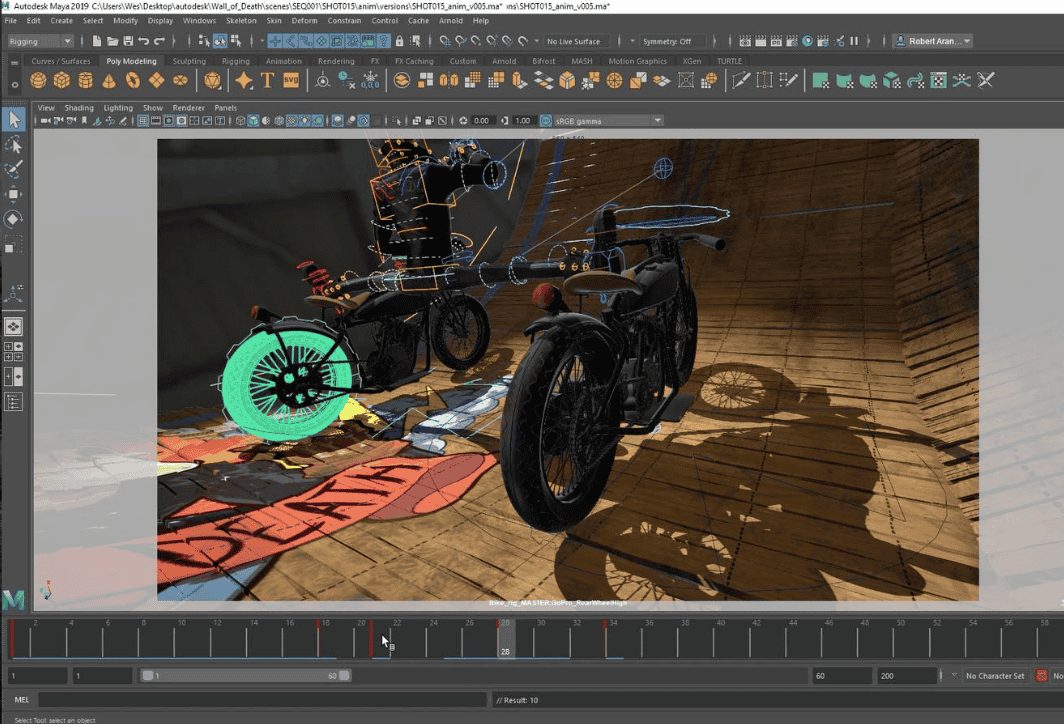
Maya is a giant in the field of 3D graphics, particularly strong in modeling, rigging, and animation. While not a specialized VFX software like Houdini, it's an indispensable tool for creating 3D characters, creatures, and assets before the effects phase.
This software is suitable for 3D modelers, animators, and riggers, offering powerful and comprehensive functionality thanks to its modeling and animation toolset, setting the industry standard for 3D character animation.
Animated characters in Pixar and Disney films, or complex CGI creatures like dragons in Game of Thrones or Thanos in Avengers: Endgame They were all created and animated primarily using Maya.
5. Blender is a free VFX software.
Blender is a shining star in the open-source world. It's a completely free 3D VFX software, yet its power rivals paid programs. Despite being free, Blender can do everything from modeling, sculpting, animation, simulation, rendering, to compositing, making it suitable for independent artists, small studios, beginners, and increasingly used by larger studios.
Currently, Blender has a large and enthusiastic user community. You can learn and research the software on your own through forums and blog posts on social media. With its diverse toolset and constantly updated and improved features, Blender is becoming an increasingly popular choice for many users.
Some examples of using Blender to produce films include feature-length animated films. Next Gen on Netflix. In addition, many VFX artists on YouTube also use this software to create impressive short films.
6. Blackmagic Fusion (in DaVinci Resolve)
Similar to Nuke, Fusion is a powerful Node-based compositing software. What's special is that Blackmagic has integrated Fusion into its color grading/editing software, DaVinci Resolve. The free version of DaVinci Resolve includes almost all the features of Fusion Studio.
Independent filmmakers and studios looking to optimize their workflows often choose Fusion. This VFX software integrates seamlessly with the editing and color grading process, and its free version is extremely powerful and fast. Therefore, Fusion has been used in films such as... The Martin, Ant-Man, and The Hunger Games.
7. Maxon Cinema 4D is easy to use and has beautiful graphics.
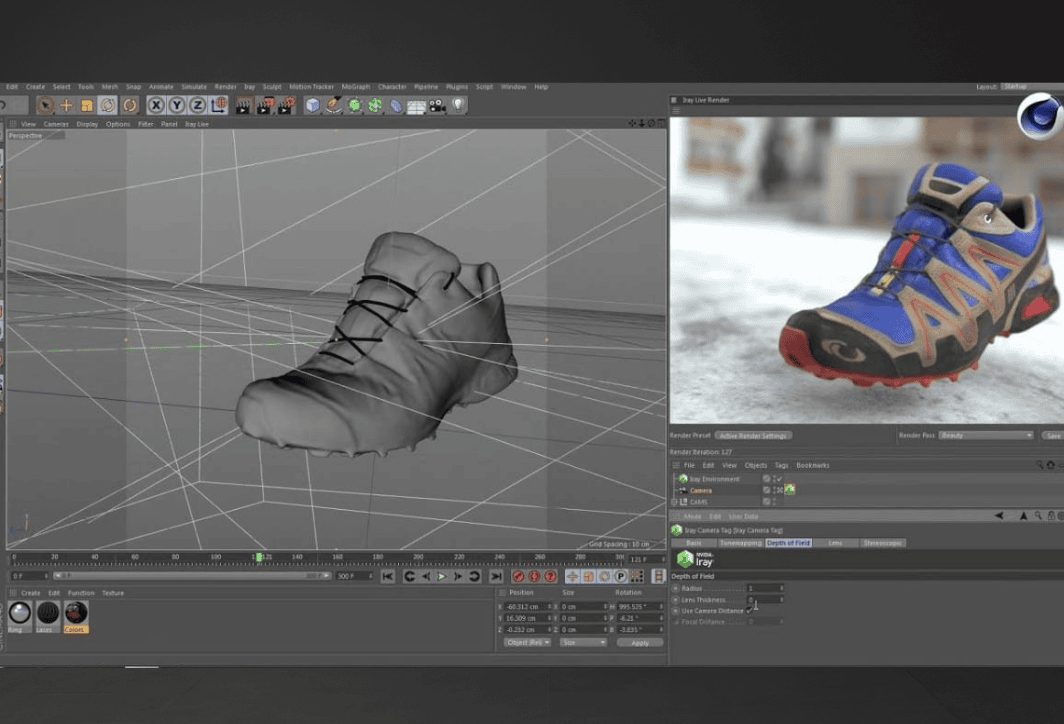
Cinema 4D (C4D) is renowned for its user-friendly interface and ease of learning, making it one of the easiest 3D software programs to use. It's particularly powerful in motion graphics, seamlessly integrating with Adobe After Effects. Motion graphics artists, 3D advertising artists, and product designers are common users of this software.
Cinema 4D boasts an intuitive, user-friendly interface, a powerful MoGraph module for motion graphics, and excellent integration with various rendering engines. Many 3D product commercials, movie intros, and television program trailers are created using the power of Cinema 4D.
Things to know when getting started with VFX software
Choosing and using VFX software isn't simply a matter of downloading and installing it. Here are some important factors to consider:
1. The computer configuration needs to be powerful enough to load and run the software smoothly.
VFX is one of the most hardware-intensive tasks. A weak computer will make your work difficult and may even make it impossible to complete. Therefore, you should invest in a powerful machine that ensures:
- CPU (Processor): The more cores and the higher the speed, the better, as it affects simulation and rendering speed.
- GPU (Graphics Card): This is extremely important, especially for software that uses GPUs to speed up rendering and effects processing.
- RAM: A minimum of 32GB is recommended. 64GB or more is ideal for complex footage.
2. Learning Curve
Each VFX software program has a different level of difficulty. After Effects or Cinema 4D may be more accessible for beginners, while Houdini and Nuke require a great deal of logical thinking and perseverance to master. Determine your goals to choose a suitable learning path.
3. Investment costs
- Free of charge: Blender and DaVinci Resolve (Fusion) are great, inexpensive options to get started with.
- Monthly/annual payment options: Adobe Creative Cloud (including After Effects) is a prime example.
- Purchase a perpetual license: Many professional software programs like Houdini and Nuke are very expensive and are usually only available to studios.
4. Community and learning resources
A software with a strong community will help you solve problems faster. Blender, After Effects, and Cinema 4D have countless tutorials on YouTube, forums, and online courses. This is a huge advantage for self-learners.
In short, VFX software is the tool you need to explore and build fantastical worlds. Whether you're a beginner or an artist looking for the right tool, hopefully this article has provided a helpful overview. Don't hesitate to choose a software, start learning, and create your own unique and creative digital works.





 English
  Vietnamese