

Color temperature is not just a dry technical parameter; it's the "spice" that determines the emotion and realism of each frame. Understanding the rules of warm yellow or cool blue light will help you master the space and create truly artistic films. Let's decode color temperature from A to Z and discover top-notch application tips for filmmaking below!
What is the definition of color temperature?
In physics, color temperature is a quantity used to describe the spectrum of light emitted by a light source compared to an absolute black body when heated. Imagine a black iron bar; when you heat it, it will begin to emit red light, then change to orange, yellow, white, and finally blue as the temperature rises to extremely high levels. The unit of measurement for color temperature is Kelvin (symbol K).
There's an interesting point that beginners often misunderstand:
- Low color temperature (approximately 2000K – 3500K): They produce orange and warm yellow light. We call these "warm colors".
- High color temperature (approximately 5500K – 10000K): They produce a bluish-white or bluish light. We call these "cool colors".
Therefore, physically, "cold" colors actually have a higher Kelvin temperature than "warm" colors.
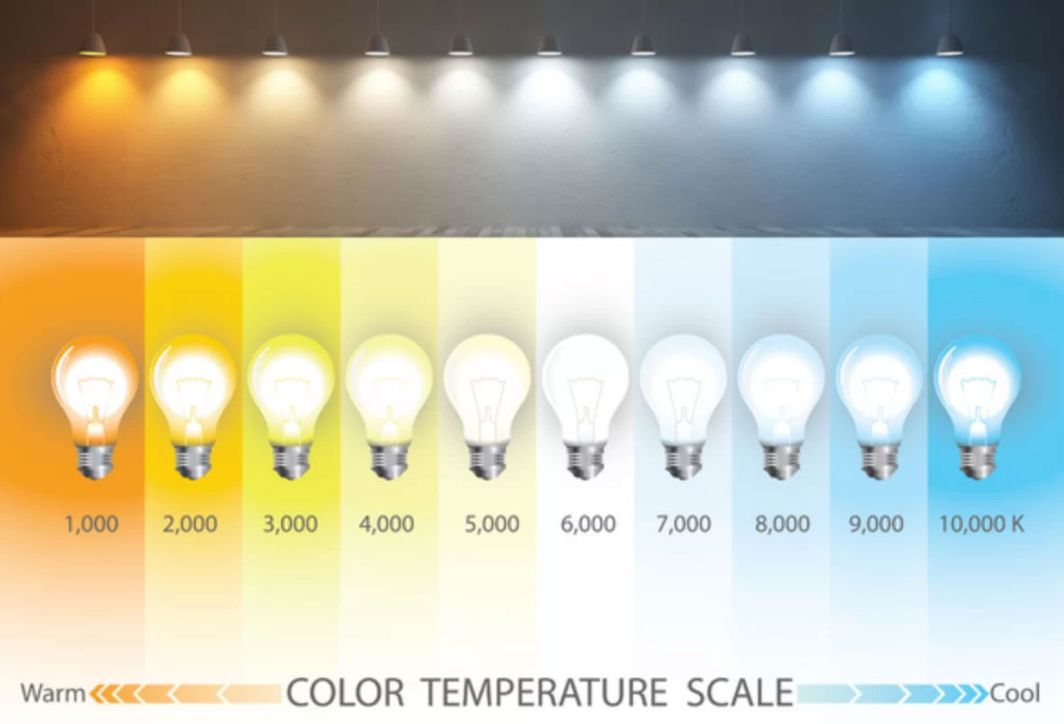
Color temperature charts are commonly used in everyday life and filmmaking.
To master color temperature, you need to remember the following key points:
- 1000K – 1900K: The light from candles and oil lamps (very yellow and warm).
- 2000K – 3000K: Incandescent light, halogen light (Warm yellow).
- 3200K: Standard lighting from a professional studio light (Tungsten).
- 4000K – 4500K: Fluorescent light, morning light (Neutral color).
- 5500K – 5600K: Midday sunlight, flashlight (the most ideal white light – Daylight).
- 6500K – 7500K: The light of the sky when it's cloudy (Light blue).
- 8000K – 10000K: Clear blue sky, shaded area (Dark blue).
The role of color temperature in video production.
Why are professional filmmakers so obsessed with the Kelvin number? The reason is:
- Ensure color accuracy: If you film a white product under yellow lighting without adjusting the camera, the product will appear yellow-orange in the video. This is a serious misrepresentation if you are shooting a TV commercial for cosmetics or fashion.
- Setting the atmosphere: Color temperature is a powerful tool for controlling the audience's mood. For example: Warm tones evoke feelings of happiness, intimacy, nostalgia, or romance, while cool tones suggest modernity, solitude, coldness, sadness, or a scientific, high-tech nature.
White Balance – The perfect companion for color temperature.
You can't talk about color temperature without considering the concept of white balance (WB). This is the technique that helps the camera understand what constitutes "true white" under a given light source.
How White Balance works:
If the light source has a low color temperature (yellowish), the camera will automatically add blue to compensate, helping the image return to a neutral color state. Conversely, if the light source is too blue, the camera will add orange-yellow tones.
Common white balance (WB) modes on cameras:
- Auto White Balance (AWB): The camera calculates automatically. It's usually accurate in simple lighting conditions but is prone to color shift when filming.
- Daylight (Approximately 5600K): Use when filming outdoors in the sun.
- Tungsten (Approximately 3200K): Use when filming under incandescent light.
- Cloudy/Shade: Use it when it's cloudy or in the shade.
- Custom WB (K): This is the mode used by professionals. You manually enter the specific Kelvin value to control the image quality of the 100%.
Practical applications of color temperature in filmmaking.
Now, let's delve into how to wield color temperature like a "visual wizard":
Interview filming techniques
In corporate interview videos, maintaining a stable color temperature is crucial:
- The secret: Use LED lights with the same color temperature (usually 5600K). If the room has windows (5600K light) and ceiling lights (3200K), you will experience "mixed lighting".
- Solution: Turn off the ceiling lights and use only dedicated studio lights to ensure the character's skin looks rosy and natural.
Filming architecture and apartments (Condotel/Real Estate)
In this field, color temperature is used to highlight elegance.
- Living room areas are often filmed with slightly warm tones (around 4000K) to create a cozy and luxurious feel.
- However, modern bathroom or kitchen areas are often filmed with clean white tones (5500K).
Filming product commercials (TVCs)
Product colors must be absolutely accurate. Cameramen often use a grey card to measure the precise color temperature on location before filming, making color grading easier in post-production.
Day for Night filming technique
By adjusting the camera's color temperature to extremely low levels (around 2000K – 2500K) while shooting in sunlight, the image will have a strong blue tint, giving the impression of shooting under moonlight at night.
How to deal with the "Color Staining" (Mixed Lighting) phenomenon.
This is a nightmare for many amateur filmmakers. It's when two light sources with different color temperatures are present in the same frame (for example, half of a character's face is tinted yellow from a desk lamp, and the other half is tinted blue from a computer screen).
How to fix it:
- Use color filter gel: Use an orange gel sheet (CTO) to turn a green light yellow, or a blue gel sheet (CTB) to turn a yellow light green.
- Using Bi-color LED lights: Modern lamps allow you to turn a knob to instantly change the color temperature from 3200K to 5600K.
- Control the light source: Turn off unwanted light sources or use window blinds to maintain a consistent color temperature.
Color temperature and emotion in cinema
Learn how great directors use color temperature to tell stories:
- The contrast between warm and cold: In action films, a teal and orange color palette is often used. Warm skin tones stand out incredibly strongly against a cool, bluish background.
- Loneliness: Wong Kar-wai's films often use cool blue tones to emphasize the characters' loneliness in the heart of the city.
- Family happiness: Advertisements for milk or household goods are always filled with warm, yellow light to evoke a sense of togetherness.
Right Media – The master of lighting art and color temperature.
To create high-quality videos, understanding the theory isn't enough; you need practical experience and top-notch equipment. Right MediaWe are proud to have a team of leading lighting experts. Clients trust and choose Right Media because:
- Dedication creates peace of mind. We never shoot carelessly. Every frame is meticulously framed with carefully calculated color temperature to enhance the beauty of the subject. Clients always feel... feel at ease when the final product has realistic and artistic colors.
- Competitive and transparent pricing: Right Media invests in the most modern Arri, Aputure, and Nanlite lighting systems, while always maintaining optimal and transparent pricing for businesses.
- Excellent support: We advise you on everything from choosing the setting to the color scheme to ensure it aligns with your brand identity.

Current tools for controlling color temperature
For those who want to improve their filmmaking skills:
- Color Temperature Meter: The handheld device lets you know the exact Kelvin level in the context.
- Specialized monitors: External monitors with "False Color" features give you better control over brightness and color than the camera's small screen.
- Post-production software (DaVinci Resolve): This is the "king" of color grading. If you accidentally shoot with the wrong color temperature, DaVinci Resolve will miraculously help you salvage your footage (especially if you shoot in RAW format).
The future of lighting technology and color temperature.
With the development of RGBWW LED technology, cameramen can now not only change the color temperature from yellow to white but also choose any color within the 16 million color spectrum. This opens a new era for creativity, where color temperature is just the starting point for endless color play.
Understanding color temperature is a huge step from being a camera operator to a true filmmaker. Light isn't just for illumination; it's for storytelling, for creating emotion, and for asserting a brand's prestige. Hopefully, this article has given you a solid understanding of Kelvin, white balance, and how to apply them in practice. Don't forget that color has the power to completely change how your audience perceives the world you create through your lens.