

What is a green screen? Why has it become the most powerful "magician" in the imaging industry? This article will take you on a journey to explore every aspect of green screen technology, from its definition and history to little-known behind-the-scenes secrets.
What is a green screen?
A green screen is a term used to describe a green backdrop (usually neon green or a vibrant lime green) placed behind actors or objects during filming or photography. The purpose of this is so that later, during post-production, technicians can remove the green and replace it with a different background (still image or moving video).
To understand this better, we need to mention the technical term: Chroma Keying. This is an image processing technique based on color. In this technique, a specific color in the image (usually blue) is identified by the software and made transparent.
When the background color disappears, all that remains is the actor or object. At this point, the editor simply places another image layer underneath, and the result is that the actor appears in a completely new setting without having to move out of the studio.

Why is Green Screen so popular in filmmaking and photography?
Have you ever wondered why people choose green instead of red, yellow, or purple? The answer lies in the principles of camera design and human skin pigmentation.
Differences from human skin color
The most important reason why green is preferred is that this color is completely absent from the natural pigmentation of human skin (regardless of race). This is extremely important because if the background color matches the actor's skin or hair, the Chroma Key software will "erase" the actor entirely, creating bizarre, hole-like images on their bodies.
Sensitivity of modern camera sensors
Most modern digital camera sensors utilize a Bayer filter array structure. In this structure, the number of pixels sensitive to green is typically twice that of red or blue. Therefore, the green channel contains more information, has lower noise, and results in smoother, sharper background keying.
Save costs and time.
Instead of transporting an entire film crew of hundreds to expensive locations or remote areas, producers can simply set up a Green Screen studio. This not only minimizes travel and accommodation costs but also allows directors complete control over lighting, weather, and sound without being affected by the external environment.
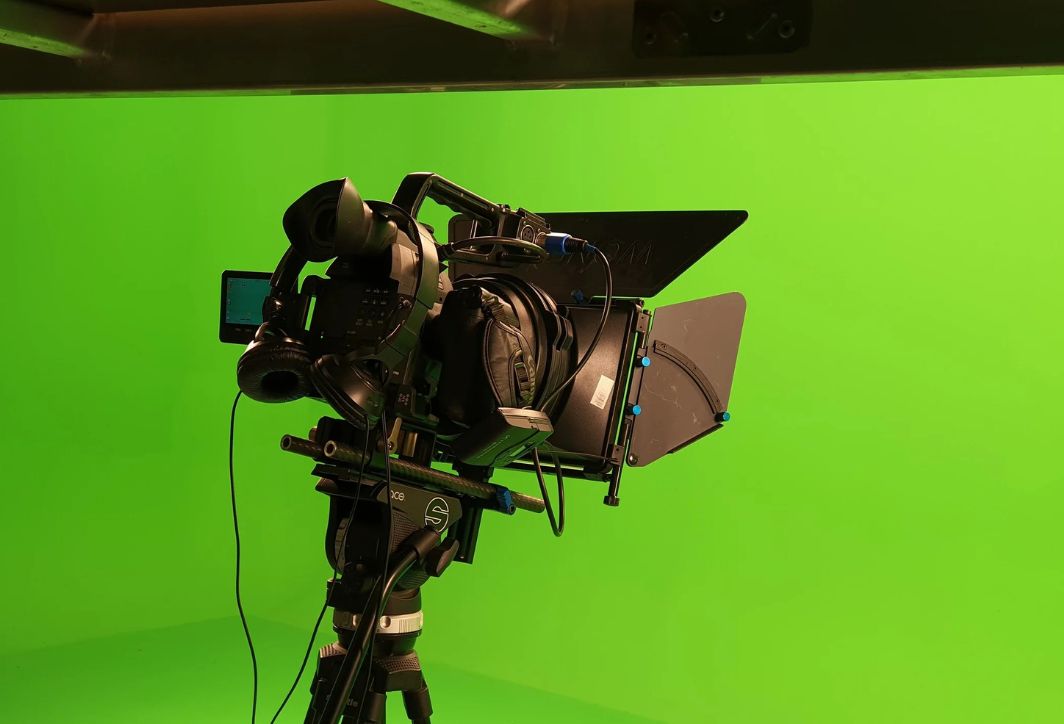
Green screen and blue screen
Although green screens are dominant today, historically and in some special cases, blue screens were still preferred.
| Characteristic | Green background | Blue background |
| Brightness | Brighter, reflects more light. | Darker, absorbs light better. |
| Usage environment | Indoor studio, with controlled lighting environment. | Film outdoors or at night. |
| Spill light | Actors are prone to developing a greenish tint on their skin. | Less prone to color bleeding, better hair separation. |
| Skin | Do not wear green clothing. | You are not allowed to wear blue clothing. |
In old blockbuster movies like Star Wars (1977)In the past, blue screens were used because film was more sensitive to blue. However, with the rise of digital cameras, green screens have become the global standard.
Professional workflow with green screen
To create a perfect green screen shot, it's not simply a matter of hanging up a green screen. It's a highly precise technical process. Specifically:
Lighting settings
This is the most important step. The light hitting the Green Screen must be extremely even, with no areas that are too bright (glare) or too dark (shadows). If the background is not evenly colored, the software will have difficulty separating the background, leading to a "jagged" effect around the edges of the actor.
- Backlight: Often used to create a border around the actor, helping them stand out from the background.
- Distance: Actors should stand at least 2-3 meters away from the backdrop to minimize "color spill" (the reflection of blue light onto the body).
Production
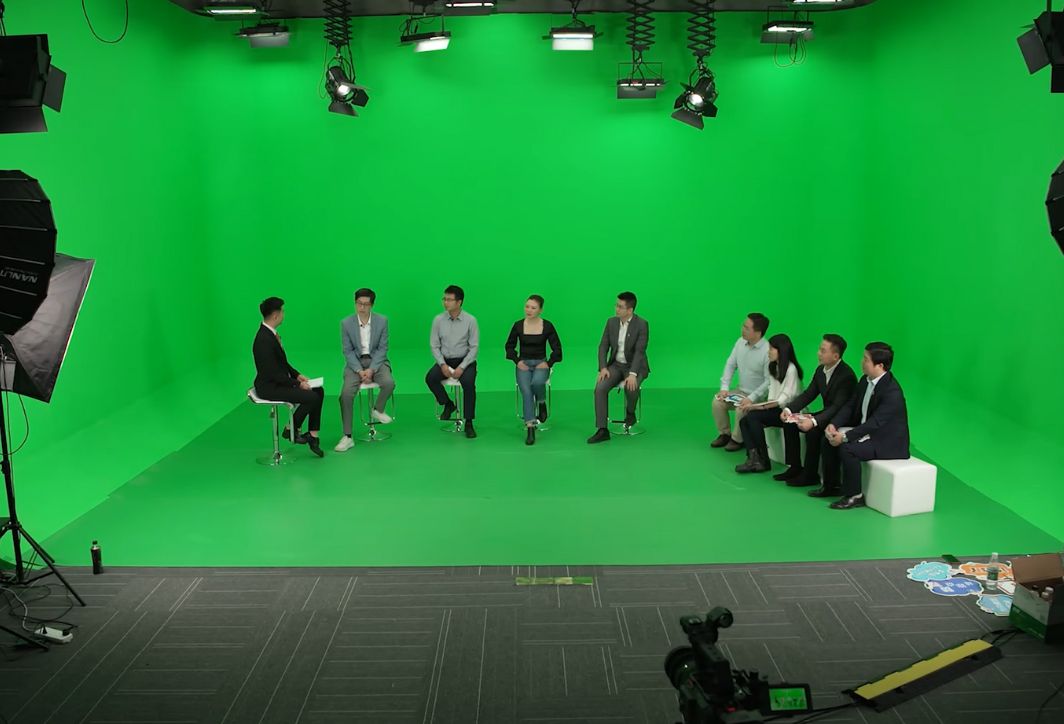
During filming, filmmakers often place tracking markers on the green screen. These markers help post-production software track camera movement in 3D space, thereby matching the movement of the new background with the actor's movement as realistically as possible.
Post-production
Use specialized software such as Adobe After Effects, DaVinci Resolve, or Nuke to perform "keying." This process includes:
- Garbage Matte: Trim away any unnecessary parts outside of the green screen.
- Keying: Remove the blue color.
- Color Correction: Adjust the actors' colors to blend seamlessly with the lighting of the newly added background.
Common mistakes when using Green Screen
Here are some common "amateur" mistakes that beginners often make:
- Wear clothing that matches the background color: If an actor wearing a green shirt stands in front of a green screen, they will appear "formless" on film.
- Reflective materials: Items such as eyeglasses, silver jewelry, or watches can reflect blue from the background, making post-production difficult.
- The backdrop is wrinkled. Wrinkles on the fabric create tiny shadows, making the blue color uneven. Therefore, the fabric backdrop needs to be ironed flat or a stiff paper or painted backdrop should be used.
- The shutter speed is too slow: When actors move quickly, motion blur will blend the blue of the backdrop into the actors' limbs, making background separation a disaster.
Diverse applications of green screen in daily life.
Green screens are no longer confined to Hollywood cinema; they are now everywhere:
- Television and weather forecasts: Weather presenters stand in front of a green screen and point into space, but viewers see a temperature map instead.
- Streamers and YouTubers: Content creators use green screen to separate the bedroom background, replacing it with a professional gaming or office setting.
- Online meeting: Applications like Zoom and Google Meet use a "virtual green screen" (an AI-powered background removal technique) to help users hide their private space.
- Commercial photography: Product photography against a green screen makes it easy to integrate into various advertising campaigns without needing multiple retakes.
The future of green screen: The rise of LED displays.
Although green screen remains very powerful, a new technology called Virtual Production (using giant LED screens) is beginning to challenge it. This technology (used in films) The MandalorianThis allows actors to stand in front of LED screens displaying a truly immersive 3D setting.
- Advantage: The light from the screen reflects directly onto the actors, creating an extremely realistic effect; the actors don't have to imagine the setting too much.
- Disadvantages: The cost of investing in LED screens is extremely expensive, far beyond the reach of small film crews.
Therefore, for at least the next few decades, green screen will remain the go-to choice thanks to its affordability and incredible versatility. It breaks down all physical barriers, allowing people to realize their wildest imaginations on screen. Whether you're a professional director or a budding YouTuber, mastering green screen techniques will open up a whole new horizon in visual storytelling. Hopefully, this article has helped you understand what green screen is and its power in the modern world of visuals. Start experimenting with a green screen and see how far your imagination can soar!