

A creative brief is not simply a summary of information, but rather a detailed "map" guiding the entire creative process. When properly constructed, a creative brief becomes a compass that helps communication campaigns stay on track, optimize resources, and increase communication effectiveness for the brand.
What is a creative brief?
"Creative" means "innovative"; "brief" means "summary". A Creative Brief is like a summary/creative guideline necessary to get started on any communication campaign. This is a familiar term in the marketing industry.

A creative brief is a document outlining the work to be done, used to communicate information to stakeholders.
Simply put, a Creative Brief conveys core information and requirements from the Client, such as objectives, target audience, main message, and creative direction, to the agency. Through this, stakeholders such as the Creative team, Account Manager, and Planner can understand the information and develop programs and plans that align with the goals and follow a consistent direction.
A marketing campaign always involves the collaboration of multiple teams, so creating effective briefs is essential. Essentially, the goals of a Creative Brief include:
- Clearly define your communication objectives: A Creative Brief will clarify marketing campaign requirements, from implementation direction and brand values to be built to conversion rates in terms of revenue and the number of new customers learning about the product. Defining objectives from the outset is the basis for evaluating the effectiveness of the entire campaign.
- Understanding the target audience correctly: By creating customer profiles and extracting core insights, Creative Brief provides creative teams with additional resources to deliver ideas that align with the needs, desires, and emotions of their audience. This results in more realistic communication content, increased empathy, and a stronger connection with the right target audience.
- Clarify the core message: A Creative Brief ensures that the campaign's core message is clearly defined, consistently conveyed across all platforms, and easily memorable for customers. This message should also align with the brand positioning, reinforcing the image and values the brand aims to build in the minds of consumers.
- Style direction: From the tone and main emotion to the imagery and storytelling, the Creative Brief plays a crucial role in guiding the "mood and tone" of the entire creative idea. This ensures that communication materials are implemented consistently, avoiding deviations and maintaining brand identity throughout the campaign.
Why do we need a Creative Brief?
A project brief will clarify issues such as the project's message, the value it will bring to the business, the competitors, and the expected results after official implementation. The Creative Brief will outline the necessary steps, dividing the work into a suitable process, making progress tracking easier.

A professional creative brief will facilitate the planning and implementation process, saving time and resources.
In reality, creating a Creative Brief is not simple at all, and can even be time-consuming. However, in practice, once a Creative Brief is well-structured and detailed, it helps all stakeholders optimize many aspects, including time, cost, and human resources, while ensuring the best possible results and avoiding unnecessary complications or unwanted problems.
Depending on the working model, a Creative Brief may be developed by the agency after receiving requirements from the client, or the client may draft the main outline and then work with the agency to finalize it. In practice, most creative briefs are formed through exchange and agreement between the two parties, ensuring clear direction before being provided to the project implementation team.
A guide to building an effective creative brief.
In the process of implementing communication campaigns, a Creative Brief is a crucial starting point, providing clear direction for activities ranging from new product launches to brand building or crisis management. However, many still struggle with creating a creative brief that is both clear and concise, yet still inspires creativity and meets client requirements.

The process of creating a creative brief usually involves quite a few steps.
Depending on the type and nature of the project, a complete Creative Brief will typically include the following information: Project title and description; Project purpose; Objectives; Target audience; Message and writing style; Deliverables and assets; Stakeholders; Budget; Timeline; and Delivery process.
Step 1: Identify the context and the problem
The brand's current stage, industry sector, market fluctuations, and the reason for needing communication at this stage are crucial pieces of information that enable the agency team to develop suitable solutions for the client's problems.
Step 2: Clarify communication objectives
The aim is to outline the desired outcomes of the campaign, such as increased brand awareness, increased sales, or increased search volume for the product or brand among customers. This also serves as a basis for measuring campaign results after completion.
In this step, the objectives need to be clear and not vague, for example, wanting to increase brand awareness while also achieving high conversion rates. Although they may seem related, these two goals require different insights, messaging, and implementation approaches. Being too "greedy" and demanding results for everything can backfire, and neither goal will be achieved effectively.
Step 3: Identify your target audience
A professional Creative Brief clearly outlines the target customer profile of the campaign through elements such as age, gender, behavior, habits, psychology, and context of engagement. This clarifies the campaign's role in influencing and changing customer insights, while also guiding the development of appropriate creative ideas.
Step 4: Identify the core message:
The main message is the most important thing a campaign wants to convey to customers, but it should be concise, memorable, consistent with the brand positioning, and capable of guiding the entire creative process. For an effective communication campaign, the message should follow the principle of ""Less is more" – Less is more, but it's far more effective if it's substantial and thorough.
Furthermore, the messages need to be consistent with the visuals, TV commercials, brand positioning, or any other elements throughout the campaign. Therefore, the Creative Brief should deliver only one main and single message, instead of trying to cram too much in, making it difficult for viewers to know what they should focus on.
Step 5: Provide a foundation for building trust.
Alternatively, we can use the term "Reasons to Believe." Simply put, it means providing reasons and evidence that lead customers to trust the product. For example, with food products, you could include certifications from reputable organizations, awards received, endorsements from celebrities, etc.
A creative brief will list and focus on highlighting key points. Provide a maximum of 1-2 key pieces of evidence that are most important for building strong customer trust.
Step 6: Define your style of expression.
Depending on the project and brand positioning, the campaign's style can be implemented in various ways. Campaigns can choose from many different styles, such as dynamic and approachable; elegant; inspiring; or humorous. However, consistency is essential once the campaign is launched across platforms, including imagery, colors, storytelling, messaging, captions for each post, and even the featured model (if any).
Step 7: Select the deployment format and channel.
Different forms of media such as TV commercials, digital videos, social content, out-of-home (OOH), POSM, and platforms like TikTok, websites, Facebook, Instagram, or TV have different requirements for aspect ratio (landscape/portrait) and optimal duration. Therefore, the creative brief should clearly state which channels the project will be implemented on to design appropriate video visuals.
Step 8: Identify mandatory requirements and limitations
The creative brief should also list mandatory elements such as the logo, slogan, brand colors, legal information, budget, start/end timeline, and things to avoid/note. This section can also include documents on forbidden colors or examples of failed projects/insights to avoid repetition.
Step 9: Discuss, finalize, and reach an agreement with stakeholders.
Typically, completing a creative brief involves several steps, including sharing drafts with stakeholders, receiving feedback, making multiple revisions, and finally delivering it to the stakeholders.
Several factors to consider when creating a Creative Brief
While it may seem like a lot of steps, a Creative Brief can sometimes be condensed into just one A4 page, yet still ensure that the information is concise, detailed, and easy to understand, allowing the Creative and Planner teams to accurately implement it. Here are a few factors that help make the Creative Brief building process more effective:
- A creative brief is written during the foundational phase of a project, so to save time and avoid unnecessary details, you should gather all necessary information and request relevant documents from the client or stakeholders.
- Use clear, concise, and succinct language, avoiding slang, jargon, or excessive rambling. Since this is a shared document for multiple parties, the easier and simpler it is to understand, the more time it will save and the better the understanding between each team.
- Goals should be specific and achievable, aligned with the brand's situation, avoiding overly ambitious or unrealistic goals.
- Add inspirational elements, tell a story, or provide real-life examples to illustrate the brief.
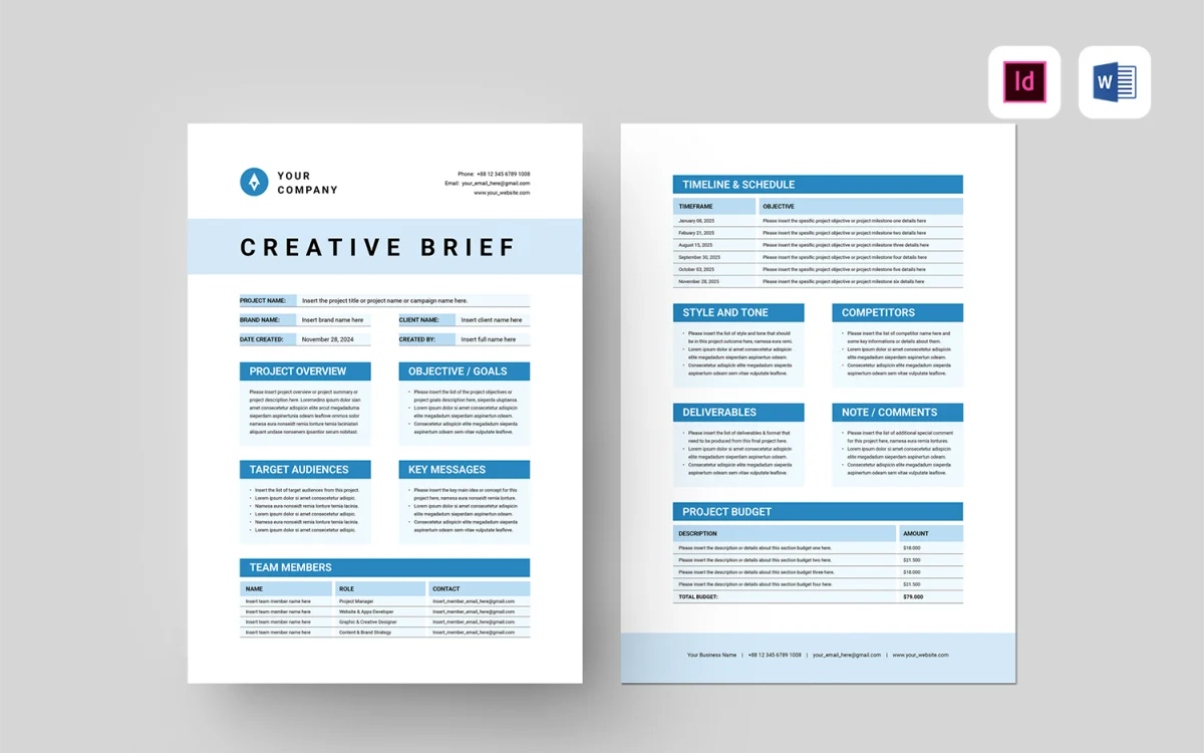
Creative briefs are usually not overly long or rambling, sometimes summarizing them in just one or two pages.
A good Creative Brief is the starting point for any effective idea. Investing time and thought right from the creative brief stage not only makes the implementation process more coherent but also lays the groundwork for smooth collaboration between the brand and the agency.