

Every company needs a detailed business profile to introduce itself to partners and customers. However, in this era of rapid digital development, is a business profile alone enough to perfectly and completely introduce your company?
What is a company profile (company capabilities statement)?
A company profile, or company capabilities statement, are general terms used to refer to a printed or designed product in PDF format. It contains content revolving around company information, areas of activity, vision, mission, core values, completed projects, and other valuable information.
Almost every business has its own company profile booklet. It's used as a traditional marketing tool, suitable for customers who prefer reading company information through text and images. Compared to presentation files, this tool is considered evidence that helps customers and partners understand the necessary information, strengths, and capabilities of the business.
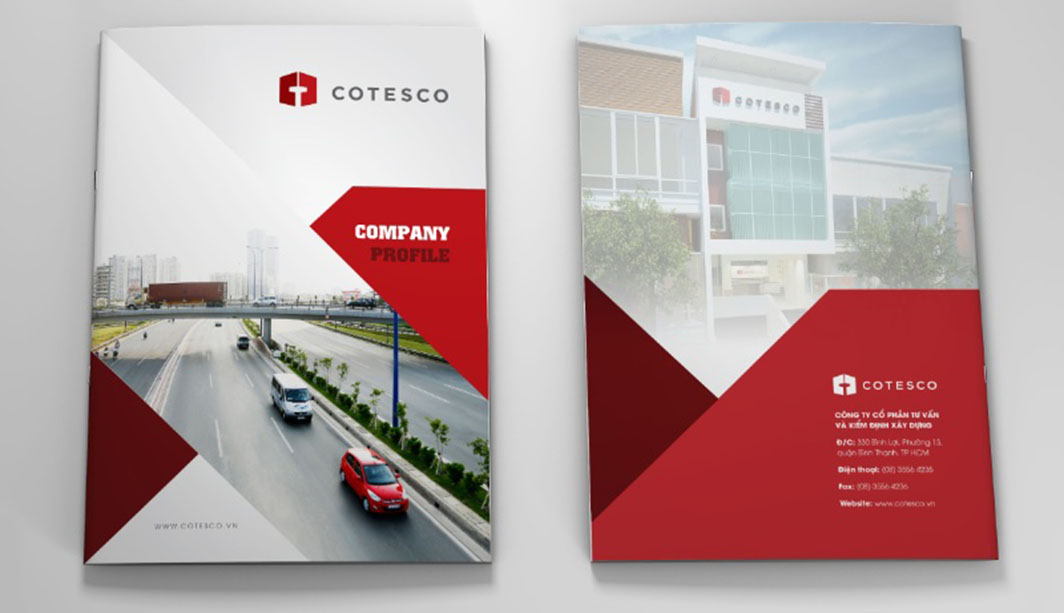
Typically, a company profile can range from 15 to 50 pages, depending on the amount of information and design. However, most businesses opt for the most concise and succinct design possible. Selecting only the essential information makes it easier for customers to read and remember compared to an overly long profile that discourages reading and wastes printing resources.
Distinguishing between Company Profile, Brochure, and Catalog
Company profiles, brochures, and catalogs are all traditional marketing tools used to showcase capabilities and experience, and to attract and persuade customers to choose the business, make purchases, or use services.
To get the most out of these three types, you need to clearly understand the differences and uses of each.
- Company profile: Contains content primarily introducing the company.
- Brochure: Contains information about a project, product, or service, and encourages or calls consumers to use the product.
- Catalog: Introduces the services and products that the business is offering and needs to promote to a wider audience.
What does a complete company profile include?
Compared to brochures and catalogs, a company profile uses only one type of publication and does not publish multiple different materials. This aims to standardize and ensure consistency of information, demonstrating the company's capabilities when introducing itself to partners and customers.
Specifically, a complete company profile will contain all the information about the business. Arranged like a book, the information is spread across each page and presented clearly with a logical layout.
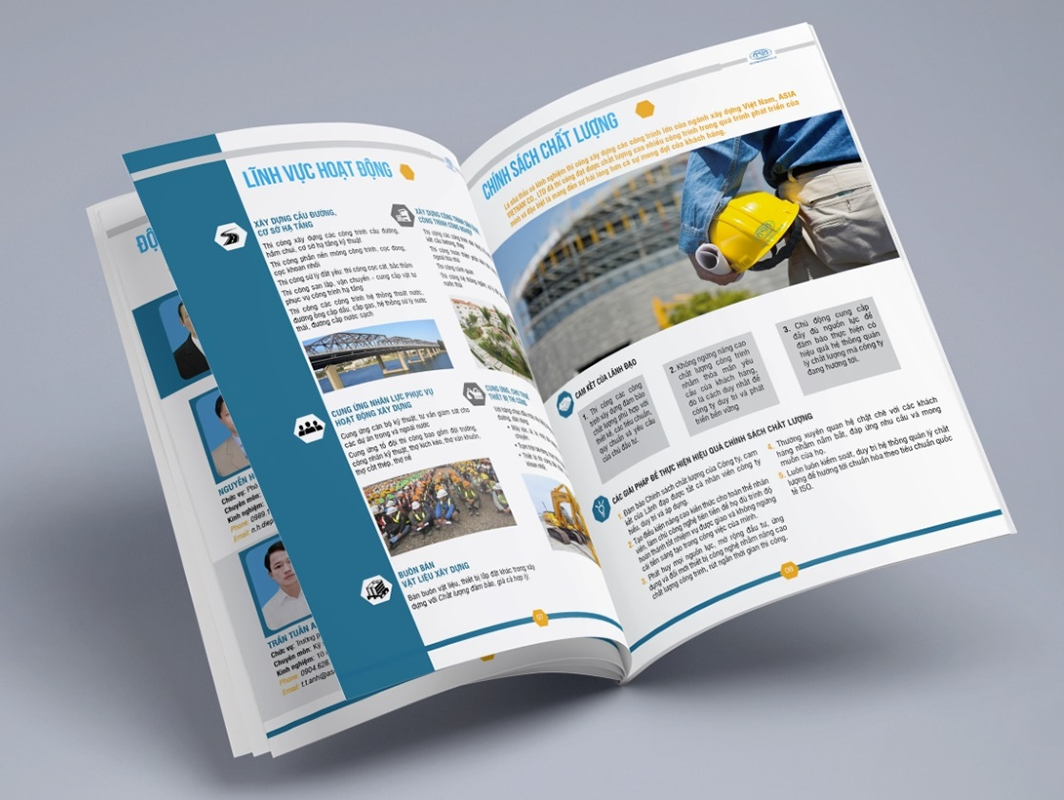
Specifically, it includes the following parts:
- Cover pageThe first page typically contains the full name, brand logo, slogan, color scheme, and distinctive images related to the company's business field.
- Table of Contents & Brief IntroductionPage 2 contains the table of contents and a brief overview of the main content that will be discussed in the following sections. Page 3 is the general introduction or opening statement of the business.
- Core values, vision, missionPage 4 typically contains information about the company's vision, mission, core values, and business philosophy. It can be enhanced with illustrative images to make it more engaging. Page 5 may include awards, achievements, or business licenses to build customer trust in the company's credibility and capabilities.
- Operating systemThis section, usually found on pages 6 and 7, provides information about the company's operational structure, key personnel, organizational chart, and how the business operates.
- Introduction to our field of activityThis is the crucial section, usually located on pages 8 and 9. This section will present detailed information about the business or main activities of your company. Describe what your business does, accompanied by compelling illustrations.
- The restThe following pages will showcase completed projects, products, and services that the business has produced or provided to the market and that are well-known to many people.
- The final part: Contains detailed contact information, from address, hotline, tax code, email to social media pages such as website, fan page… Ends with logo and slogan to increase brand recognition.
Advantages and disadvantages of company profiles
For a business, a company profile is crucial, as it showcases the company's capabilities in its field, especially when participating in a bidding project. It details information about the company's founding and development, its staff, project portfolio, products, services, and strengths. It even includes illustrative images presented in a sophisticated manner.
Advantage:
- By providing complete information about the business, customers or partners can quickly find this information in the profile booklet without having to ask directly.
- Professional profile design, easy to read.
- Suitable for clients or partners who prefer reading text-based profiles or don't have much time to listen to presentations in PDF or PowerPoint format.
- Target the right potential customer group.
Disadvantages:
- Too much text is unsuitable for customers who don't have time to read every single page.
- Traditional brochures often struggle to compete with video marketing, as they are simply static printed materials with text and images, lacking interactivity.
- It is difficult to update information, or when changes to internal information require a complete replacement, resulting in high costs and wasted printing resources.
The importance of corporate videos
A company profile video is a short video, typically 2-3 minutes long, that provides a quick introduction to your business. The main content usually covers brand information, explains your business field, highlights your achievements, capabilities, or something unique that makes your business stand out from the competition.
To overcome the limitations of a company profile, a business introduction video is a powerful tool for promoting the company's image and brand to a wide audience on social media and mass media platforms.

A business introduction video not only provides comprehensive information, but it also features vivid visuals, engaging sound, and easy-to-understand commentary. Therefore, compared to a traditional profile, the video format has advantages and offers the following benefits:
- Create a deep and strong impression in the minds of viewers, especially customers and partners.
- A high-quality corporate video not only provides information but also creates an emotional connection between the business and the viewers.
- It involves two-way interaction, changing consumer thinking and behavior, and encouraging calls to use products, services, or make purchases.
- Videos that go viral on social media platforms can easily spread and increase brand awareness effectively.
- Increase your promotional reach and access to a wider range of customer groups with video sharing buttons, opening up opportunities for business development and growth.
Criteria for making business videos attractive to viewers.
To make video speak louder than words and help your business connect closely with customers, pay attention to the following points:
Create a compelling script.
The more creative and unique the script idea, the more viewers it attracts. This is the key to the success of a corporate introductory video. An impressive storyline tells the brand story, not focusing too much on showcasing capabilities or achievements, but instead creating emotion and empathy in the viewer throughout the video.
Using vivid images, sounds, and graphics.
This is an area that requires significant investment from businesses. This not only helps convey the message more easily but also provides a more engaging video viewing experience for viewers.
Depending on their budget and capabilities, businesses can choose a suitable visual style, using 2D graphics, 3D animation, visual effects, sound effects, etc., to create highlights for their videos.
The Far Eastern Polytex Vietnam corporate film project was produced by Right Media.
Conveying the core message and values.
Regardless of the video's design style, it needs to be consistent in content, conveying the message, business philosophy, and core values of the company. At the same time, it should highlight achievements throughout its operation to convey the company's credibility and trustworthiness to viewers.
Powerful CAD at the end.
CAD stands for Call to Action, an essential element in any marketing video, including corporate videos. A strong and effective conclusion is a clear call to action that encourages viewers to trust the product or service, choose to buy it, or use it.
In summary, whether it's a traditional profile or a corporate video, each has its own importance and influence. They are not completely interchangeable, as each will showcase its strengths in specific circumstances and situations. Therefore, it's best for business representatives to consider using one or both, or combining both, to build an effective marketing communication strategy that benefits the business.