Virtual production is a breakthrough in the film and television industry. It's a technique that blends traditional filming with modern graphics technology, enabling people to create complex scenes that would be difficult to achieve in real life. It helps optimize costs, time, and human resources during the production process.
What is Virtual Production?
Virtual production, also known as virtual studio or virtual production, is a new production method that combines virtual and real-world technology. The use of a digital environment helps create captivating and engaging filming and content production results, replacing the difficulties of shooting in real life.
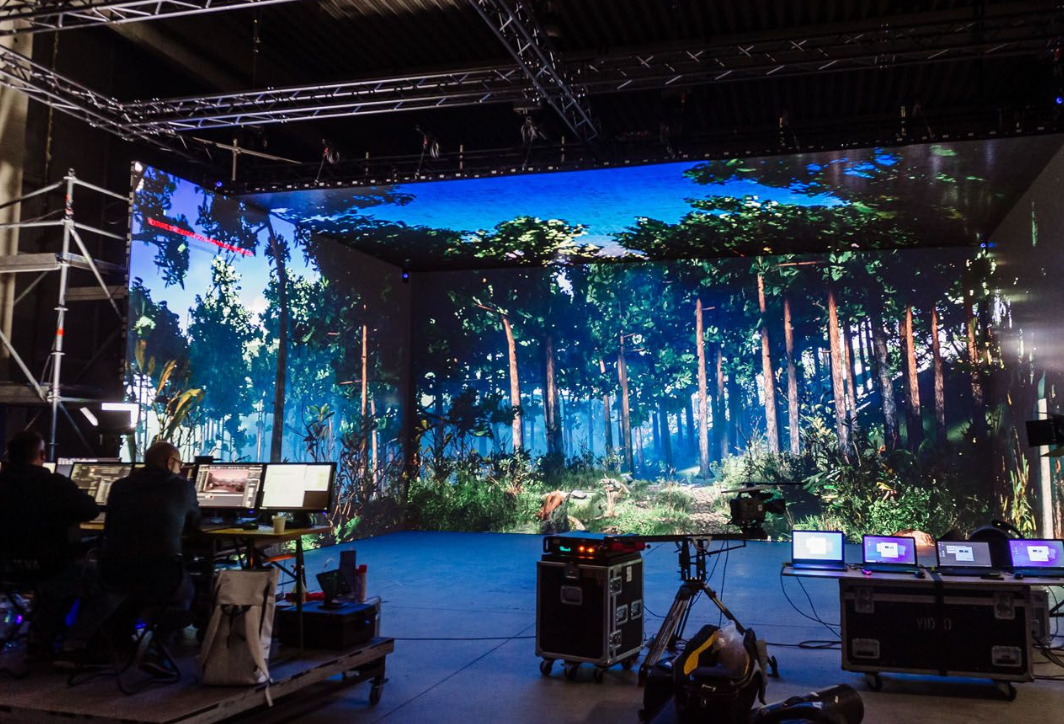
Modern technologies used in Virtual Production include large LED screens, motion capture systems to track movement, real-time graphics software, etc. Actors can perform in a virtual environment intuitively, which optimizes the film production process, reducing costs and time for post-production.
However, in the initial stages of planning, designing, and building a 3D set, filmmakers may have to spend a significant amount of money investing in equipment, screens, etc. After the set is assembled and set up, filming will proceed within that real and virtual set.
Currently, virtual production is not only used in the film industry but also in television production, advertising, and games. It helps improve image quality and viewer experience, while also increasing engagement rates, bringing many benefits to the media industry.
Advantages and disadvantages of Virtual Production
As mentioned, Virtual Production offers many benefits to the film and television industry. However, it also has some limitations that have not been completely overcome. Below are the main advantages and disadvantages of Virtual Production:
Regarding advantages
- High flexibility: This is one of the outstanding advantages of Virtual Production. The created settings can be flexibly changed, making the filming process easier. Difficult scenes can be recreated right in the virtual studio without needing to be filmed in real life, replacing action scenes that would be difficult for humans to perform.
- Reduce production costs and time: Virtual production helps filmmakers save a significant amount of money on set construction, eliminating the need to relocate filming sites as everything can be done within the virtual studio. Furthermore, post-production becomes less complicated because special effects and visual effects are applied during filming, significantly reducing editing time.
- Enhance creativity: Virtual production gives filmmakers unlimited creative space. They can create unique scenes directly on LED screens, without being constrained by geographical or physical limitations.
- Minimize risks from external factors: Compared to outdoor filming, a virtual studio can fully meet all the requirements from lighting, special effects, and more, helping filmmakers minimize risks from external factors (unsuitable lighting, weather). The entire scene can be easily controlled inside the studio regardless of rain, storms, or snow outside.
Regarding disadvantages
- High initial investment costs: Although virtual production helps producers save on post-production costs, it still requires a significant initial investment. For example, the cost of purchasing LED screens, equipment, camera tracking systems, Unreal Engine software, etc.
- High technical skills are required: Filming in a virtual studio requires a production team with a solid foundation of knowledge and in-depth expertise in digital technologies and graphic tools.
- Limit some realistic effects: Virtual production utilizes advanced techniques and effects to create a modern filming environment. However, some virtual effects may not guarantee the realism of the scenes. Therefore, some details when actors interact in the virtual setting may not be fully captured, creating an unnatural feeling.
- Dependent on technology: This is one of the obvious drawbacks of virtual studios. When technical problems arise during production, filming needs to be stopped to fix them. Therefore, virtual sets usually require regular inspection, maintenance, and continuous updates.
- Reduce the element of realism: Actors participating in virtual film sets may encounter difficulties due to unfamiliarity with interacting with the virtual environment. This can affect their emotions and acting performance, especially when the virtual environments are too complex or not realistic enough.
Virtual production offers many benefits to the film and television industry, but it also has certain limitations as mentioned above. Nevertheless, the emergence of virtual production is a breakthrough that opens a new era of creativity, helping the film industry to develop further.
The elements that make up a complete virtual production.
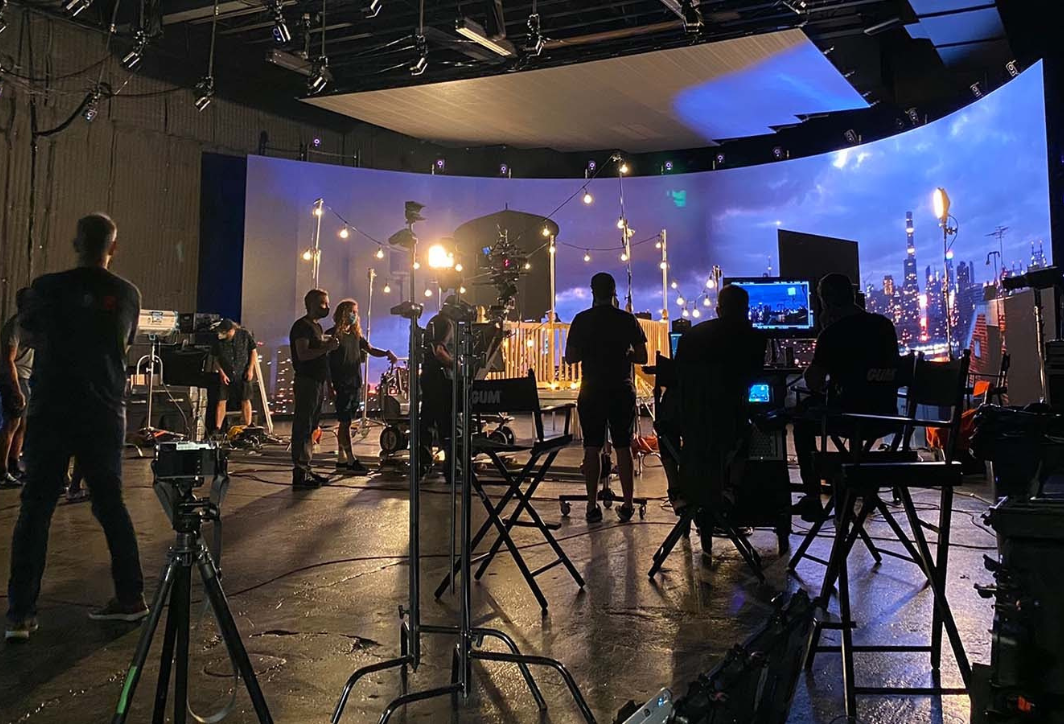
Creating a complete virtual production requires the combination of many elements, such as:
LED screen and real-time display
- Giant LED screens replace traditional green screens, displaying the scene with vivid, immersive 3D imagery. Actors can interact directly with the on-screen setting, replacing physical props.
- Real-time display software allows 3D images to change as directed or as the camera moves. This enables producers to observe and monitor the filming results immediately without waiting.
Real-Time Graphics software
- Unreal Engine and Unity software are used in virtual studios to create more detailed and realistic 3D scenes. Brightness and backgrounds can be easily adjusted using this software.
- Real-time graphics technology offers high flexibility, optimizing the film production process, saving time, and allowing filmmakers to easily experiment with new creative ideas.
Camera Tracking
- Sensor-based motion tracking systems will be a powerful tool in film production. This is one of the key elements in Virtual Production, helping to track camera movement and easily synchronize with the virtual environment. Therefore, when the camera changes angle or moves, it will synchronize with the virtual environment, ensuring that visual elements are seamlessly coordinated.
- Camera tracking also helps to enhance the connection between real and virtual elements, simulating the feeling that the camera is moving in real space, even though these are only virtual settings.
Motion Capture
- This technology helps capture the movements of actors, applying those movements to the digital environment in a vivid and realistic way. Motion capture is often used to create motion for graphic characters.
- This technology is commonly used in the production of virtual reality films and animated films, such as Avatar and The Jungle Book, where the characters are fictional and do not exist in the real world. Thanks to Motion Capture technology, actors can interact with virtual characters as if they were real.
Virtual Environments and 3D Modeling
- The scene creation phase is arguably the most important stage in Virtual Production. Thanks to modern graphics software, producers can build virtual settings, create 3D characters, and sharp 3D images with lighting, sound, and texture effects that mimic real-life characters and settings.
- Besides creating static images, virtual environments also have the ability to move, change, and interact with actors, making the scene more dynamic.
Simultaneous Post-Production
- Once the footage is captured as planned, it will be processed in post-production. Specifically, in this process, the producer will add necessary effects, adjust the image, color, or lighting to make the footage more realistic and sharper. Thanks to Virtual Production, post-production becomes simpler and saves time.
Besides the factors mentioned above, the success of a virtual studio also requires the contributions of a team of technicians, project managers, creative professionals, sound engineers, lighting technicians, and more. When all these elements are integrated and coordinated effectively, virtual production will open up new possibilities and boost the development of the film and television industry.
Some examples of virtual production applications in the film industry.
Virtual production opens up many prospects for the film and television industry. Here are some prime examples of films that use this technology to create vivid, realistic, and impressive scenes:
- The Mandalorian (2019 – present) – Lucasfilm/Disney+:
The Mandalorian was one of the first and most prominent projects to utilize virtual production technology, using giant LED screens to replace the traditional green screen.

The film was shot in a virtual studio called The Volume, where 3D footage is displayed live on LED screens, creating landscapes ranging from deserts and distant planets to fictional worlds.
This technique allows film crews to create virtual settings right on set and change them in real time without having to move to multiple physical locations.
- Movie The Lion King (2019) – Disney:
Jon Favreau's remake of The Lion King utilized virtual production to simulate scenes in a virtual reality (VR) environment. The filmmaking team used a VR space to adjust the camera and footage within the virtual environment before creating the complete 3D rendering.
Although the film is entirely animated, it's treated like a film shot in real space, using VR technology and real-time graphics to establish the composition and camera angles.
- Movie The Jungle Book (2016) – Disney:
Similar to The Lion King, The Jungle Book also utilized virtual production techniques throughout its filming. Although the film features entirely CGI animal characters, the scenes take place in a virtual environment projected onto LED screens and integrated with real actors. This creates a realistic interaction between the actors and the virtual setting.
- Movie Gravity (2013) – Warner Bros:
Alfonso Cuarón's Gravity is another prime example of virtual production. The film depicts a survival story in space, with most of the scenes shot in a CGI environment.
Actors like Sandra Bullock had to perform in a confined filming environment with virtual effects created shortly afterward. The space scenes in Gravity couldn't be filmed on a traditional set, and Virtual Production helped create a realistic zero-gravity environment.
In summary, Virtual Production not only improves the production process but also enhances the audience experience, ushering the film and television industry into a new era of promise and innovation. Today, this technology is applied in advertising production, providing viewers with novel experiences and elevating the brand image of many businesses.