
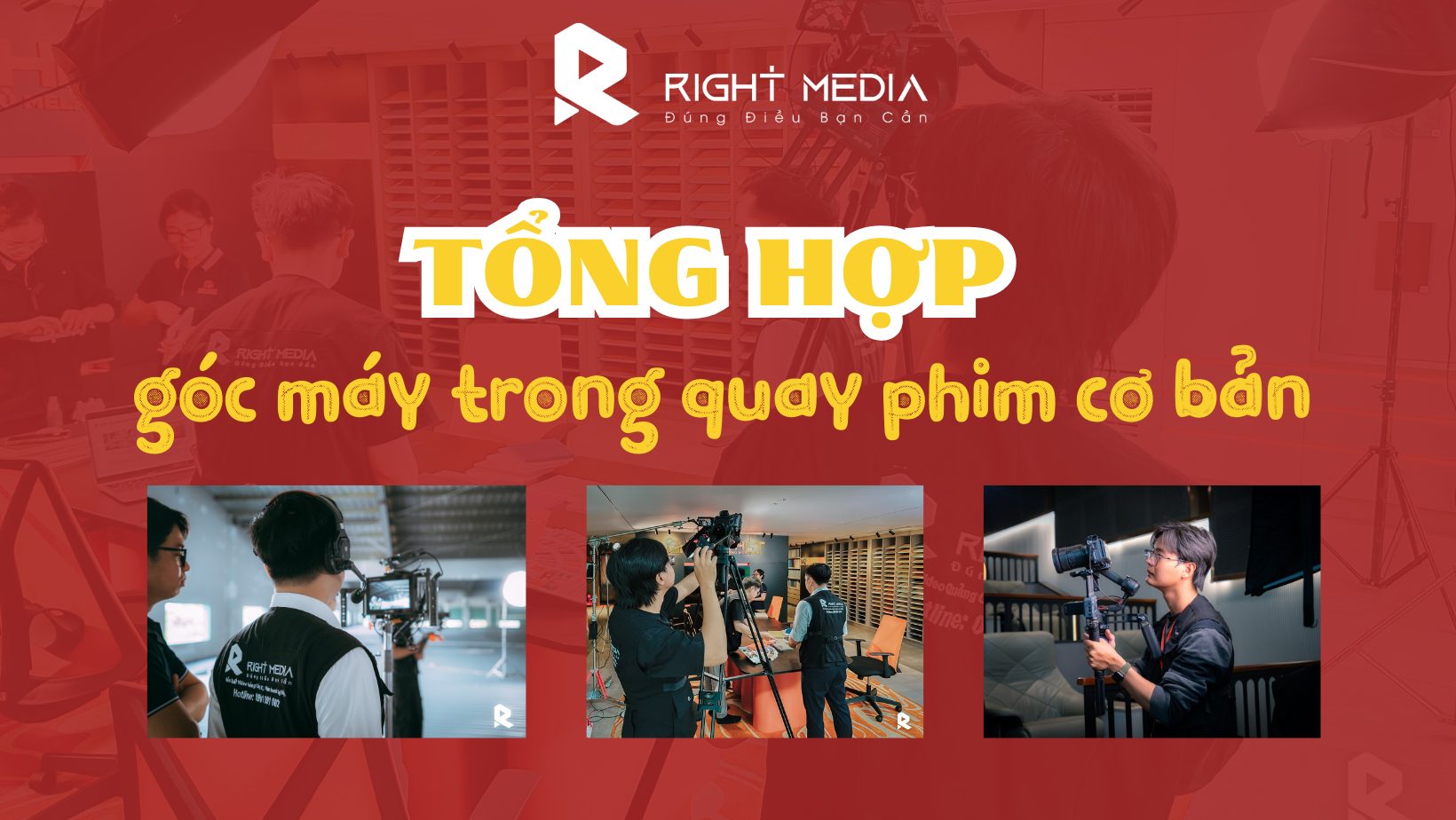
If the script is the "soul" of a film, then the camera angle is the way the story is told visually. A single raising, lowering, or movement of the camera to follow a character can completely change the audience's perception. If you're also interested in this field, join Right Media to learn more about basic camera angles in filmmaking so you can master the visual language and create meaningful shots.
Basic camera angles in filmmaking that you need to know.
In an era where visual content reigns supreme, using the right camera angles is a key factor in differentiating between an amateur video and a professional film. Each angle carries a unique visual message, directly impacting the viewer's emotions. Understanding and applying these angles effectively will give your film more depth and make a stronger impression on the viewer.
1. High Angle Shot
A high-angle shot is a type of camera angle where the camera is positioned higher than the subject and the lens is pointed downwards. The height can vary flexibly, from slightly above eye level to very high (such as balconies, drones, cranes), depending on the storytelling purpose and the emotion to be conveyed.

High Angle Shot is a camera angle that points the camera from above at the subject.
High-angle shots are often used to create a sense of inferiority, smallness, or being overwhelmed for a character or object in the frame. When viewers look down at the subject, they unconsciously perceive the character's weakness, insignificance, or isolation within the space. Additionally, this camera angle is used in scenes with crowds, large spaces requiring an overall view, or for opening up or transitioning scenes to introduce the setting.
2. Low Angle Shot
A low-angle shot is a type of camera angle where the camera is positioned lower than the subject and the lens is pointed upwards. The lower the camera position, the stronger the visual effect, making the subject appear taller, more prominent, and dominant in the frame compared to the surrounding space, emphasizing its central role and the weight of the image.
Low-angle shots are often used to create a sense of power, strength, and dominance for the character or subject being filmed. When viewers have to "look up" at the subject, they unconsciously perceive a sense of superiority in status, power, or importance. This angle is often utilized when filming architectural spaces, scenes introducing the main character or antagonist, or victory scenes.
3. Wide Angle Shot
A common opening camera angle in many films is the Wide Angle Shot. This type of shot offers a wide frame, encompassing a large area surrounding the subject. It typically shows the entire character or multiple objects simultaneously, creating a sense of awe and wonder at the mystery of the natural landscape.

A wide-angle shot helps capture more subjects in the frame.
In many cases, a wide-angle shot makes the character appear small within a vast space, thereby emphasizing the loneliness, journey, or challenges the character is facing. When used intentionally, this angle not only enhances the scenery but also allows the audience to "step into" the world of the story, thus feeling the character's journey and emotions more fully.
4. Neutral Angle (Eye-level Shot)
A neutral angle (eye-level shot) is a type of camera angle where the camera is positioned at eye level with the subject. In this angle, the camera neither looks up nor down, creating a natural perspective similar to how humans observe the world in real life, maintaining visual and emotional balance.
In cinematic language, the eye-level shot is often considered the default perspective, one that is objective, neutral, and realistic. This angle doesn't make the character appear more powerful or weaker, but rather places them on equal footing with the viewer. Not only in filmmaking, this angle is also commonly used for interviews, vlogs, and other short videos. TV commercial vv..
5. Polygonal Camera Angle (Dutch Angle Shot)
A Dutch Angle Shot, also known as a tilted shot, is a type of camera angle where the camera is rotated off its normal horizontal axis, causing the horizon or straight lines in the frame to tilt. The degree of tilt can be slight or strong depending on the filmmaker's artistic intent.
The Dutch Angle Shot creates a sense of imbalance, instability, and psychological tension; it's a unique camera angle often used in horror films and movies. When the frame is tilted, viewers tend to feel that something is amiss. This angle is often used to film scenes that evoke a sense of chaos and unease, emphasizing the character's abnormal psychological state and increasing the drama of climactic moments.
6. Center Frame Shot
Center Frame Shot is a compositional style where the subject is placed in the center of the frame. This is a deliberate and highly controlled compositional choice, unlike placing the character randomly in the center. When the subject is in the center of the frame, the viewer's gaze is almost completely locked onto the subject, creating a strong visual and psychological impact on the shot.
For example, when shooting a TV commercial, this camera angle is commonly used to highlight the main product, but in cinematic language, it conveys power, isolation, or a pivotal moment. The Center Frame Shot is one of the most powerful compositional choices in filmmaking. When used purposefully, it not only focuses the viewer's gaze but also conveys a message about the power, isolation, or symbolism of the character and the story.
7. Close-up Shot
A close-up shot is one of the most commonly used camera angles in filmmaking, and can be applied flexibly when filming people, landscapes, or food. This angle is often used to emphasize emotion, highlight details, and focus on the most important element in the frame.

A close-up shot will focus all attention on the main subject.
Using close-up shots helps viewers focus their attention entirely on the subject, minimizing distracting elements. For example, in eating scenes, a close-up shot will concentrate on the food and the character's reaction while enjoying it, thereby stimulating the taste buds, creating a sense of allure, and making viewers more likely to want to experience the dish immediately.
8. Tracking Shot
Tracking Shot is a technique where the camera moves alongside the subject (character or object) throughout the scene. The camera can move parallel to, behind, in front of, or around the subject, creating a sense of continuous and seamless movement. Tracking Shot not only captures the action but also accompanies the character, drawing the viewer "into" the space and story.
Tracking shots encompass various techniques such as Follow Shot (following behind or alongside the subject), Leading Shot (leading the subject as they enter the frame), Side Tracking (parallel to the subject), and Circular Tracking (moving around the subject). These camera angles are highly cinematic, creating a sense of the story unfolding before your eyes and enhancing the emotional experience of the entire film.
9. Aerial Shot (Drone Shot)
Aerial shots (Drone Shots) are quite similar to high-angle shots; however, this angle utilizes specialized equipment such as drones/flycams to film from a great height, providing a panoramic view that traditional filming equipment struggles with or cannot achieve. This type of camera angle is used in documentaries, feature films, and advertising videos for resorts, real estate, or outdoor events.
The first few seconds of the video were filmed from an aerial perspective.
Thanks to its aerial perspective and smooth movement, drone shots easily create a "wow" effect, generating a sense of awe and spaciousness, especially with scenes involving nature and majestic landscapes. However, the use of flycams or drones is limited to certain areas; not every space is permitted for filming.
Camera angle – the key to creating emotion in a film.
Camera angles are not just technical elements but also the emotional language of filmmaking, determining how viewers perceive and feel the story. Each angle carries its own nuance; for example, close-ups emphasize emotion, low angles create a sense of power, and high angles convey smallness or vulnerability. When chosen correctly, camera angles help the audience quickly empathize with the characters and the setting.
Although camera angles play a crucial role in creating emotion and depth in a film, applying them correctly and effectively is not simple. In fact, many novice filmmakers often misunderstand or use camera angles intuitively, resulting in images that, while beautiful, lack a clear narrative purpose. Not to mention that camera angles need to be combined with elements such as lighting, technique, and post-production to create perfect footage.

To gain a better understanding of filmmaking techniques, you can refer to the in-depth courses from basic to advanced levels at Right Media.
If you're interested in this field, you should consider taking structured filmmaking classes that cover both theory and practice. Professional courses not only help systematize knowledge about camera angles but also guide you on how to analyze the setting, character psychology, and visual goals before setting up the camera. From there, learners can move from simply "knowing how to film" to "thinking about filming," creating films with genuine emotion and value.
Currently, in addition to services such as corporate filmsBesides producing TV commercials and renting media studios, Right Media also offers in-depth courses in Cinematography, Photography, Production House, and Editing, from basic to professional levels. The training program is built on a practical roadmap, closely aligned with industry needs and strongly focused on applied skills. Students are not only equipped with a solid foundation of knowledge but also gain hands-on experience with professional equipment, participating in simulation projects and real-world projects.
Camera angles clearly reflect the filmmaker's storytelling mindset and creative imprint. Even in the same setting, simply changing the camera angle can completely alter the message conveyed and the viewer's emotions. The judicious use of camera angles also gives the film a clear rhythm and greater depth. Hopefully, the above information has provided you with practical knowledge and a deeper understanding of the role of camera angles in filmmaking.




 English
  Vietnamese