

What makes a film captivating from the very first minutes? The answer lies in the script. A script is not simply dialogue or descriptions of scenes; it's where the story is built, the characters are brought to life, and the message is deliberately crafted. Understanding the script is key to creating works that resonate with the audience.
What is a film script?
A film script (screenplay) is a document that describes the entire content of a film, detailing the story through images, action, dialogue, and rhythm. It can be said that the script is the first foundational element in starting a film and also the most important factor determining its quality. A good script not only tells the story coherently but also guides the development of the visuals, emotions, and message the film aims to convey.

The film script is the first foundation upon which a complete film is created.
A screenwriter is a crucial link connecting creative ideas to the film production process. A script can originate from the screenwriter's original idea, be developed according to client requirements, or be adapted from literary works such as novels or comics. Currently, film adaptations are increasingly popular and often receive significant attention and support from audiences.
Film scripts can be divided into two main types:
- Spec scriptThis type of script is written for reading and persuasion, often used in the idea development stage before formal production. It focuses almost exclusively on the story, characters, emotions, and narrative flow, without delving into technical aspects of filmmaking.
- Shooting scriptThe finalized script has been adapted for filming. This script translates the story's content into specific guidelines for the film crew, helping all departments implement production in a unified manner.
The elements that make up a film script.
A professional film script is not simply about writing and writing, but rather a combination of many elements to ensure the content is engaging, logical, and can be translated into visuals that viewers can understand. Below are the core components that make up a professional film script.
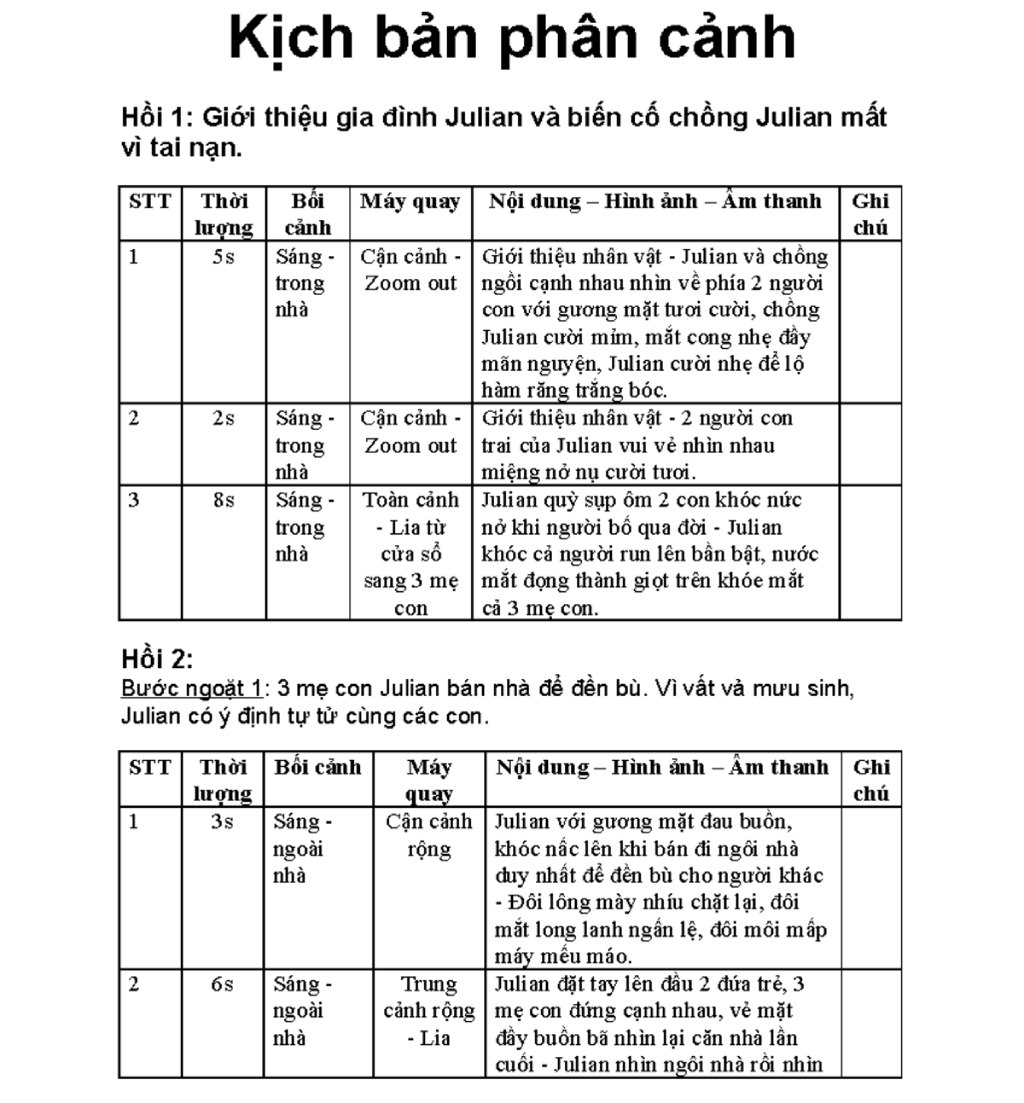
A professional film script is made up of many elements.
Ideas and themes
The idea is the starting point for screenwriters to shape the direction of the entire script. The theme is the message or value that the film wants to convey to the audience, such as family, love, revenge, or science fiction. The theme gives the film script depth and creates connections between the plot points.
Plot
The plot is the central axis that drives the entire film script, encompassing a logical sequence of events: beginning, development, climax, and conclusion. A good plot needs to ensure consistency and a clear cause-and-effect relationship between events, aiming to advance the story and highlight the character's journey to the final outcome. A logically constructed plot will make the story compelling and set the stage for the climax, creating interest for the audience.
Figure
Of course, a complete film cannot be made without a system of main characters, supporting characters, and antagonists. The main character will be the center of the film's script, playing the role of driving the story and conveying emotions to the audience. Through actions and dialogue, the character is developed with clear goals, motivations, and conflicts. Each character does not just exist to appear on screen, but must have a specific role in the development of the story.
Besides the main character, supporting characters also contribute to enriching the film's world and supporting the central character's journey. When properly developed, the character system creates strong relationships, making the film's script lively, logical, and easily relatable to the audience's emotions.
Background
Although a film script is also a form of storyline expressed in words like literary works, the setting element in a script is more specific and visually defined. Each segment of the story takes place in appropriate settings, clearly described in the script to serve the plot's development. When translating the script into a complete film, these settings are surveyed, selected, and rearranged to suit the actual production conditions.
Technique
Screenwriters will often also address requirements regarding filmmaking techniquesFor example, close-ups, long shots, and wide shots are used to convey the intended message in each segment of the script. In addition, post-production techniques, lighting, and transitions are thoroughly discussed by the directing and editing team to produce the best possible final product.
Film script structure
A film script needs not only a good idea but also a clear structure. The script structure is the foundation upon which the director and production team can develop the script into a complete film.
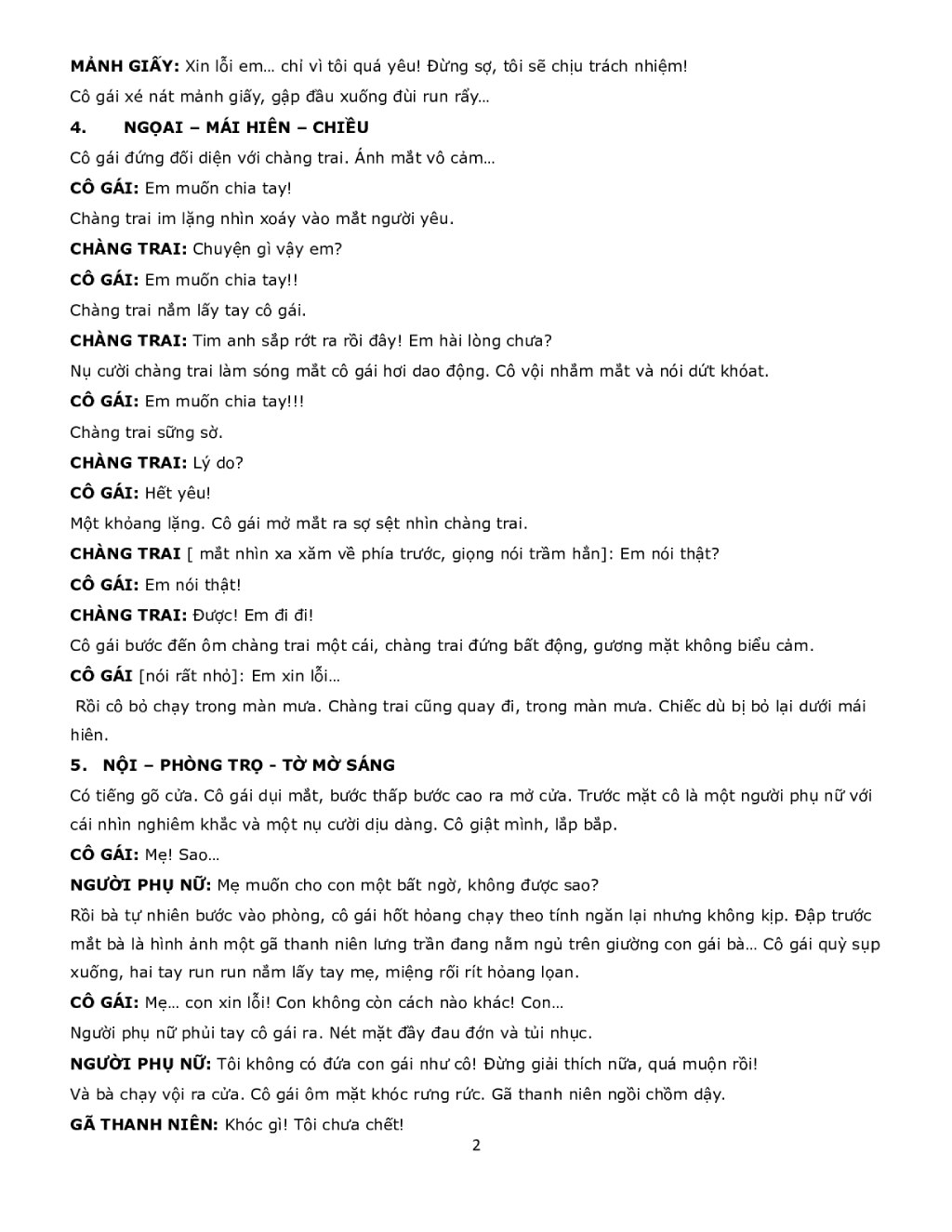
The basic structure of a film script is quite detailed so that the screenwriter, director, and film crew can agree on information.
Essentially, most film scripts follow this basic structure:
- Scene headingThis element is used to identify the location and time of a scene in a film script. It's usually written at the beginning of each scene, helping the production team visualize the setting and plan the filming schedule accordingly. For example, "INT. LIVING ROOM – NIGHT" means the opening scene will be set in a living room at night.
- Action lines: The script describes the actions, events, and images that appear in the scene. The content is written concisely and clearly, focusing on what is visible on screen, avoiding portrayal of inner emotions. This is a key element that helps the film script directly translate into visuals during filming.
- Characters: The names of the characters appearing in the scene are usually written in capital letters and placed before the dialogue. Clearly presenting the characters helps actors, directors, and the film crew follow the script more easily and avoids confusion during production.
- DialogueDialogue in film scripts is the spoken word of a character, used to express their personality, relationships, and advance the plot. Unlike literary novels, dialogue in film scripts is usually shorter, more natural, and adapted to the context, avoiding explanations of what has already been shown visually.
- Parentheticals (explanation in the dialogue): A short annotation placed in parentheses between the character's name and dialogue. This annotation helps to clarify the character's emotions, subtle actions, or way of delivering their words, assisting the actor in accurately conveying the script's intentions.
Some common mistakes when writing a script
In reality, creating a complete film script is no easy task, especially for those new to the field. During the writing process, many mistakes are frequently repeated and directly affect the quality of the script. For example:
- Too much dialogue, too little action.An effective film script will "tell a story through images," but many writers rely too heavily on dialogue to convey information, making the film heavy, drawn-out, boring, and more like reading a play or novel than a cinematic experience.
- Without considering the feasibility of filming: Even a good script can be difficult to execute if it includes overly complex settings, a large number of characters, or special effects that exceed the budget.
- Lack of climax or an abrupt ending: A film with a drawn-out plot, lacking conflict and climax, can easily bore the audience. Conversely, a rushed ending can also leave viewers feeling disappointed and diminish their emotional experience.
- The main character lacks development.n: The main character is the center of the plot, but if they are developed without a clear objective or a continuous development throughout the story, they can easily become illogical, boring, and lack a basis for conflict, climax, and maintaining the viewer's interest.
How to write a professional film script from A to Z.
Writing a film script is not simply about telling a good story, but about the process of building that story so that it can be transformed into images, sounds, and emotions on screen. A professional script needs to be both compelling in content and meet the practical requirements of production.

Creating a complete film script is a long process.
Step 1: Identify the idea and message
Before starting to write, the writer needs to clearly answer: what is the film about and what is the main emotion the audience will carry with them after watching it? The clearer the idea, the easier it is to convey the message throughout the story. A film needs to create a consistent message to leave a lasting impression on the viewer.
Step 2: Character Development
Before starting to write, the writer needs to clearly answer: what is the film about and what is the main emotion the audience will carry with them after watching it? The clearer the idea, the easier it is to convey the message throughout the story. The clearer and more developed the goal, the more appealing it becomes to the viewer.
Step 3: Create a script outline
An outline helps control the plot and pace of the film before delving into details. At this stage, the story should be divided into acts, pre-determining important climaxes. Creating an outline helps avoid rambling and minimizes structural errors when developing the script.
Step 4: Write a detailed script
When writing a script, the principle of "show, don't tell" should be followed – prioritizing storytelling through visuals and actions rather than verbal explanations. The content should be concise, clear, and easy to visualize to facilitate filming. Each action described should correspond to a specific image on screen.
At this stage, the script is usually written as a spec script, focusing on the narrative flow and reading experience so that the production team understands the content and the screenwriter's intentions. Once the spec script content is finalized, it is transformed into a shooting script to enter the production process.
Step 5: Edit and finalize
Editing is a step that helps make the script more cohesive and professional. Screenwriters will cut out unnecessary scenes, review the storyline's logic, and read the script from the audience's perspective. In addition, editing needs to depend on feasible factors such as context, budget, and production techniques. Importantly, film scripts can even be edited during filming if unforeseen issues arise.
There's no absolute formula for writing a film script, but there is a clear, logical process. By mastering the steps from identifying the idea and developing the characters to writing and editing the script, the writer will have better control over the storyline and the audience's emotions. The more investment in the script, the more solid the foundation for the film's success.





 English
  Vietnamese