

A slow, forward camera movement focusing on a character can leave the audience breathless, while a backward panning opens up the entire narrative space. That's the power of the dolly shot – a classic filming technique that gives footage depth, emotion, and a distinctly cinematic quality.
What is Dolly Shot?
In TV commercials, television series, short films, or simply personal vlogs, smooth camera movement is a key element that makes the visuals high-quality, pleasing, and engaging for viewers. Dolly Shot is one such example. camera movements It's a rather difficult technique, often widely used by directors and cinematographers in professional filmmaking to create depth, enhance emotion, and give a more cinematic feel.
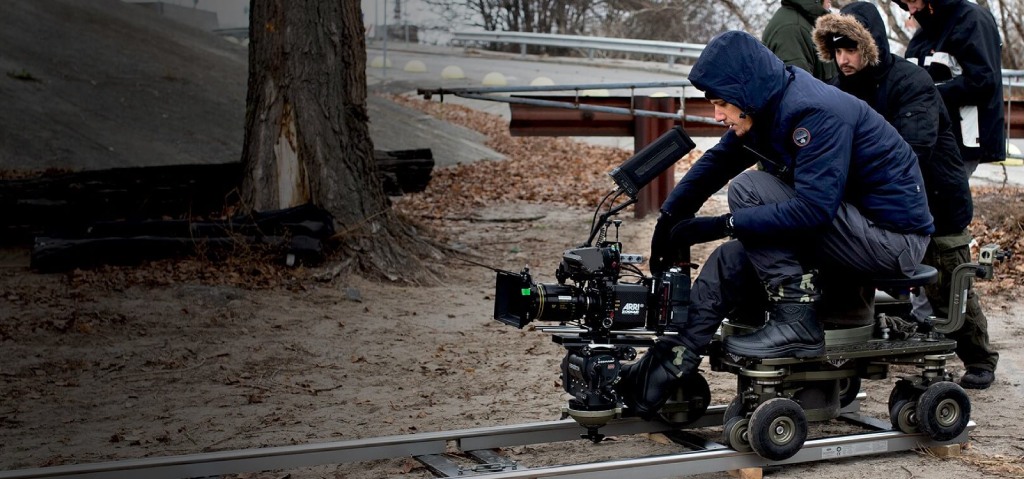
Dolly Shot is a machine motion that moves forward/backward via a rail-based movement system.
A dolly shot is a filming technique in which the entire camera is mounted on a moving system (dolly, rail, wheels, or motorized device) and moves forward or backward along a spatial axis, usually parallel to the subject's line of sight. Psychologically, a dolly shot closely resembles a person walking closer to or further away from an object, creating a natural feeling for the viewer, as if they are walking right behind the subject.
It's important to understand that, although both aim to create a change in spatial perspective, Dolly Shot and Zoom are completely different camera movements. Zoom only changes the focal length of the lens while the camera position remains unchanged, whereas with Dolly Shot, the focal length doesn't change; instead, the camera position is moved. Essentially, Dolly Shot changes the camera's position in 3D space, significantly altering the distance between the subject and the background, creating a sense of depth and realism.
Dolly Shot variations
Depending on the direction of movement and how it's combined with other camera movements, the Dolly Shot is divided into many different forms in filmmaking. Each form not only creates a unique visual effect but also contributes to conveying the emotions and message of the scene, fulfilling the intentions of the script.
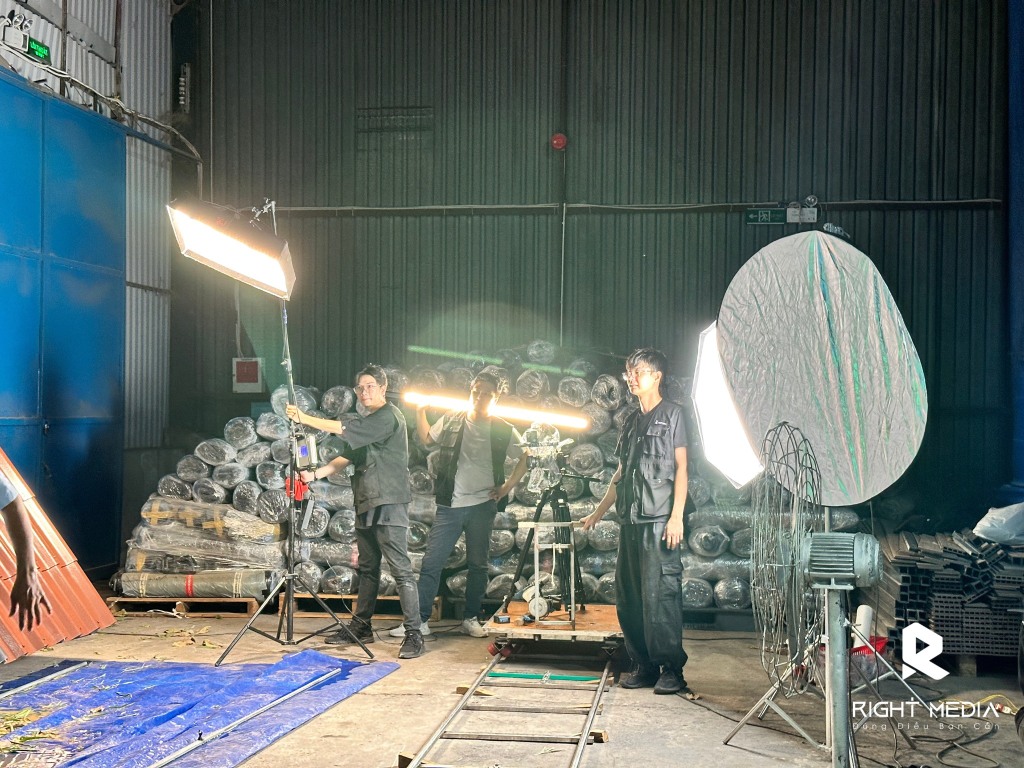
Forward and backward movements are performed according to the dramatic intent to evoke emotion in the subject.
Some common types of dolly shot movements include:
- Dolly In (Push In): The camera moves closer to the subject, helping to emphasize the character's emotions and psychology, and increasing the drama of the scene.
- Dolly Out (Pull Out)The camera moves away from the subject, often used to expand the space, create a sense of solitude, or conclude a segment.
- Side DollyThe camera moves parallel to the character or subject, helping to follow the action and create smooth, natural movement in the frame.
- Dolly combined with Pan/Tilt: The camera moves using a dolly while also panning or tilting, allowing it to follow the character's complex movements and enhance the cinematic quality of the shot.
- Dolly Zoom (Vertigo Effect): Combining dolly in or dolly out with reverse zooming creates a distorted background effect, often used to convey psychological shock or instability in a character.
- Curved Dolly (Dolly on a curved rail)The camera moves along a curved track, creating smooth, fluid movement and highlighting the subject in space.
The props needed to shoot a Dolly Shot.
In filmmaking practice, the dolly shot requires a high degree of precision and stability. Therefore, the use of supporting props is almost mandatory to ensure the camera moves smoothly, in sync, and without shaking, guaranteeing the quality of the shot.
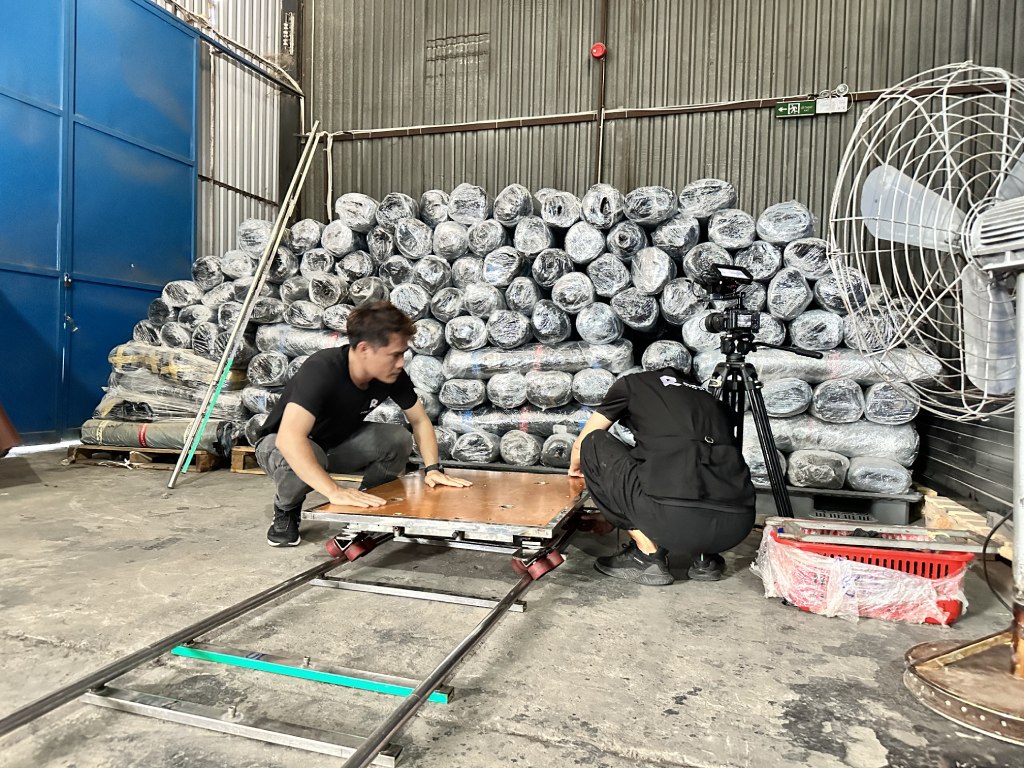
Dolly carts and slides are essential props for a smooth dolly shot.
Some props needed to perform this spinning motion include:
- Dolly Car (Dolly Camera): A dolly is a specialized device used to position and move cameras on a flat surface or rail. It helps cameras run smoothly, stably, and provides good speed control when moving forward or backward.
- Dolly Track / RailPositioned under the dolly to guide the camera's movement, the rail helps ensure straight, smooth motion and prevents shaking, which is especially important for long dolly shots.
- Slider: Sliders are a more compact solution compared to traditional dollies, suitable for short dolly runs, tight spaces, or small crews. They are commonly used for filming TV commercials, interviews, or product introduction videos.
- Gimbal or Fluid Head: Mount it on a dolly or slider to keep the frame stable, allowing for smooth panning/tilting while the camera is moving.
- Camera tripodUsed to secure the camera onto a dolly or slider, ensuring stability and safety for the equipment throughout the filming process.
- Motorized Dolly / Motor Slider: Helps control movement speed precisely and consistently, very useful when needing to shoot multiple identical takes or for timelapse and dolly zoom shots.
- Follow Focus deviceWhen dolly-in or dolly-out, the camera-subject distance changes constantly, so follow focus helps maintain accurate focus on the subject or object being filmed.
- Measuring tools, markers for marking positions: Used to mark the start and end points of a dolly shot, assisting with framing, focusing, and smooth coordination between the cameraman and the actor.
However, the use of these supporting props must also consider the space, context, character placement, crew budget, etc. For small spaces, semi-professional crews may only need a dolly or long slider, tripod, and follow focus; however, for large-scale projects with many people, professional crews will prioritize using sliding rails and motor-driven systems to ensure the quality of the footage.
The role of Dolly Shot in professional filmmaking.
A dolly shot is not just a technically beautiful camera movement; it also directly impacts the emotions, rhythm, and how the audience perceives the story. In visual language, every camera movement is purposefully constructed, with careful calculations of angle, speed, and lighting to fully convey the filmmaker's intentions.
As the camera moves forward or backward in space, the audience not only "sees" the characters but also feels like they are accompanying the story, thereby increasing immersion and emotional connection. Compared to zoom, Dolly Shot provides a smooth, natural feel, without making the viewer feel jerky or lose interest, making it particularly suitable for scenes requiring emotional depth.
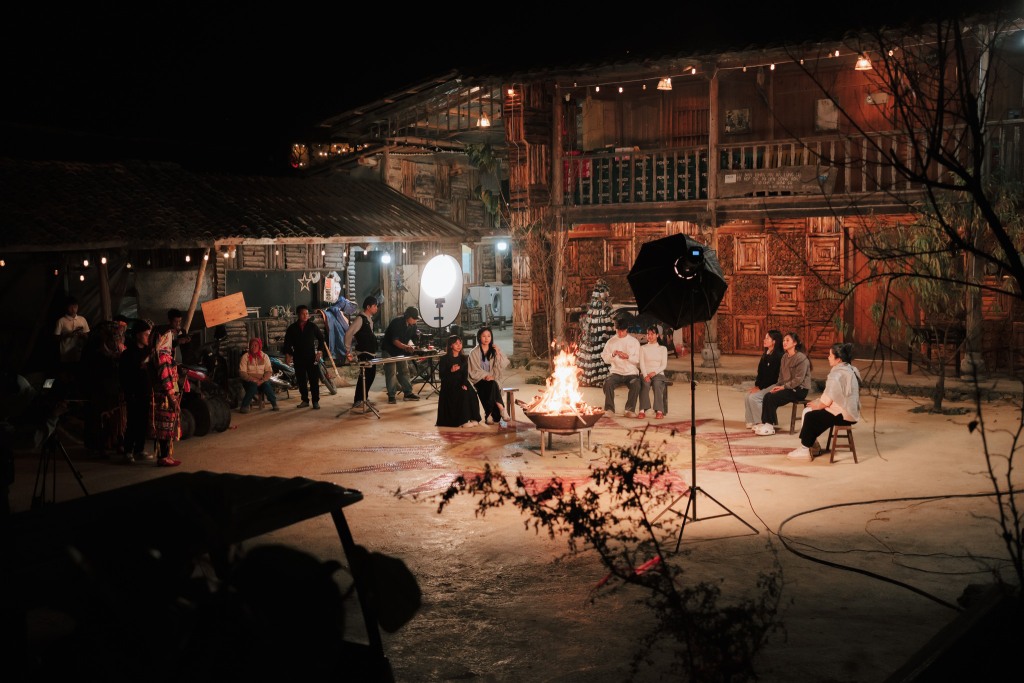
Dolly Shot's movements give the footage a more realistic and immersive feel.
The real-world shift in perspective between the subject and the background makes the image more vibrant, natural, and layered compared to techniques that only change the focal length, such as zooming. This contributes to enhancing the image quality and aesthetic value of the film, especially in feature films, where the visual effect is fully expressed in the theater setting.
Beyond visual elements, the dolly shot directly influences storytelling through cinematic language. A dolly in can emphasize psychological climax, while a dolly out creates a sense of loneliness, ending, or separation of the character from their surroundings. When used effectively, the dolly shot helps to create a more coherent film narrative, minimizes unnecessary cuts, and clearly conveys the director's intentions.
Is shooting a Dolly Shot difficult?
Essentially, a dolly shot is just a camera moving forward or backward on a fixed axis. With basic equipment like sliders or mini dollies, beginners can still perform it after some practice. However, the most difficult aspect of this camera movement lies in controlling multiple factors simultaneously, such as speed of movement, lighting, subject blocking, etc. A single misstep can result in a shaky, out-of-focus, or emotionally impactful dolly shot.
Some factors to consider when shooting Dolly Shot include:
- KClosely associated with character blocking: Camera movement and character movement need to be synchronized. If blocking is not done properly, dolly shots can easily result in misaligned composition, loss of focus, or disruption of the emotional rhythm of the scene.
- Maintain stable dolly speed control: The dolly's movement speed should be smooth and consistent, avoiding sudden increases or decreases. A dolly that is too fast or too slow compared to the rhythm of the scene can diminish the emotional impact and give the impression of being unprofessional.
- Light control: As the camera moves, the lighting can change due to the angle of the light, shadows, or the position of the lights. Careful checking is necessary to avoid unwanted exposure, glare, or shadows appearing in the frame.
- Ensure the floor and dolly are stable.An uneven floor surface or an insecurely installed dolly rail will cause shaking. Before rotating, carefully check the dolly's path to ensure smooth movement.





 English
  Vietnamese