

Panning, also known as camera movement, is a technique where the lens moves at the same speed as a moving object. The result is an image with a sharp subject but a long, elongated background, creating a powerful sense of speed. Let's explore the secrets to mastering shutter speed and understanding movement to create stunning photographs in this article!
What is panning photography? How does it work?
Technically, panning is a delicate combination of extending the shutter's exposure time and the coordinated, rhythmic movement of the photographer's body. The core principle is based on synchronizing the lens's speed with the actual speed of the moving object.
When you hold the camera still and photograph a fast-moving object with a slow shutter speed, the entire image will be blurry due to motion blur. However, in panning, by moving the camera to closely follow the object's trajectory, the object's relative position to the sensor remains almost unchanged throughout the time the shutter is open.
As a result, the sensor records the object as relatively stationary, while the background (which is stationary in real life) is "scanned" by the sensor in the opposite direction, creating artistic, elongated blurring lines. This requires the photographer to sense the rhythm of the object in order to keep up with its speed without causing vertical camera shake.
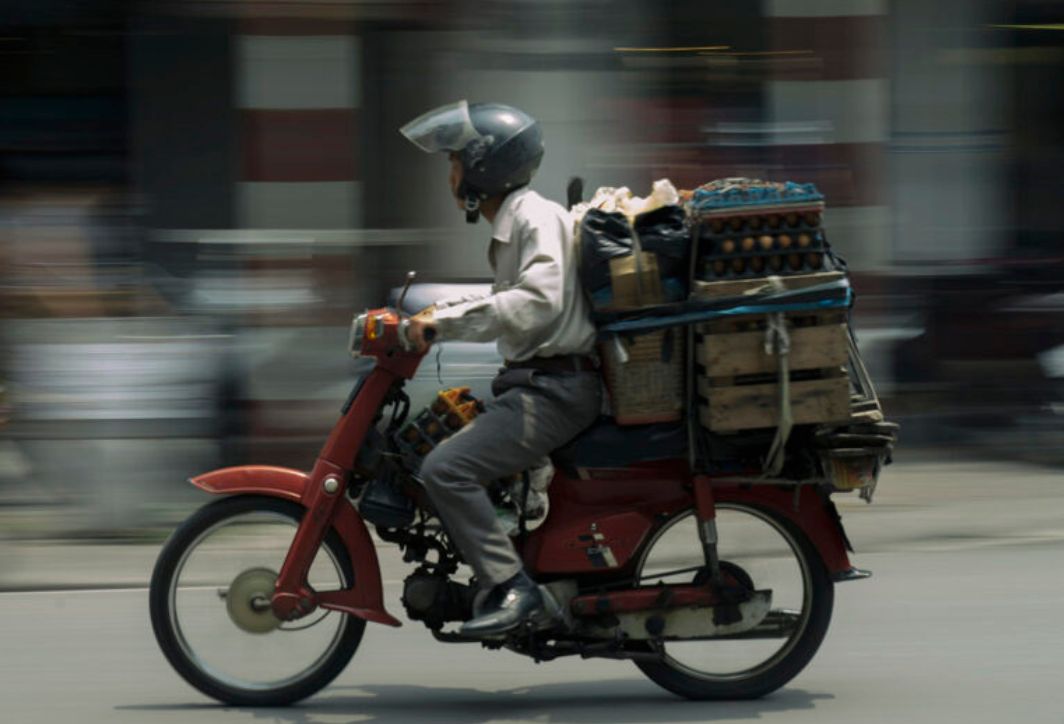
The main subject is sharp while the surrounding background is blurry.
Why is panning important in photography and videography?
This technique is not merely a visual effect, but a powerful storytelling tool that helps the artist guide the audience's emotions. Here's its role in photography and filmmaking:
- Creates a feeling of intense speed: If you use an extremely high shutter speed, a Formula 1 race car speeding at 300 km/h will look like it's stopped on the track because all the details are completely "frozen." Panning photography solves this by creating blurring trails of the wheels and the road surface, allowing the viewer to perceive the wind tearing, the roaring sound, and the inertia of the object.
- Subtly remove background clutter: In sporting events or on the streets, the background is often cluttered with crowds, billboards, or distracting details. Panning transforms all those elements into soft, blurred streaks of color, completely separating the subject and directing the viewer's absolute attention to the main action.
- Enhance the artistic quality and depth of the image: This technique isn't limited to high-speed subjects. Even a leisurely walker, a dog running in the park, or a cyclist in the city streets, when captured with a panning camera, will take on a completely different feel—dynamism, nostalgia, and rhythm.
Steps to perform accurate panning shots
To achieve a perfectly executed panning shot, you need to follow a systematic process from equipment setup to body movements. Specifically, here's what you should do:
- Set camera parameters: Prioritize Shutter Speed Priority (S/Tv) or Manual (M) mode for complete control over shutter speed. The ideal speed is usually within this range. 1/15s arrive 1/60sIf the object is moving as fast as a motorcycle, start with 1/60sFor pedestrians, try this challenge. 1/8sDon't forget to switch to continuous autofocus mode (AF-C or AI Servo) so the camera always "locks" onto the subject while it's moving.
- Standing posture and camera handling technique: Stability is key. Stand firmly with your feet shoulder-width apart, keeping your elbows close to your sides to create a stable "support." The crucial point is that when panning, rotate your entire upper body from the hips up instead of just your arms. This helps the lens follow a smooth, horizontal path, minimizing vertical shake that can blur the subject.
- Execute the perfect panning shot: Start tracking your subject as soon as it comes into view. When the object is at a right angle to the lens (the ideal moment), press the shutter button while maintaining your body's momentum. A tip from professional photographers is "panning through": Don't stop the camera as soon as you hear the shutter close; continue panning for a short distance to ensure smooth, continuous background blur without any abrupt pauses.
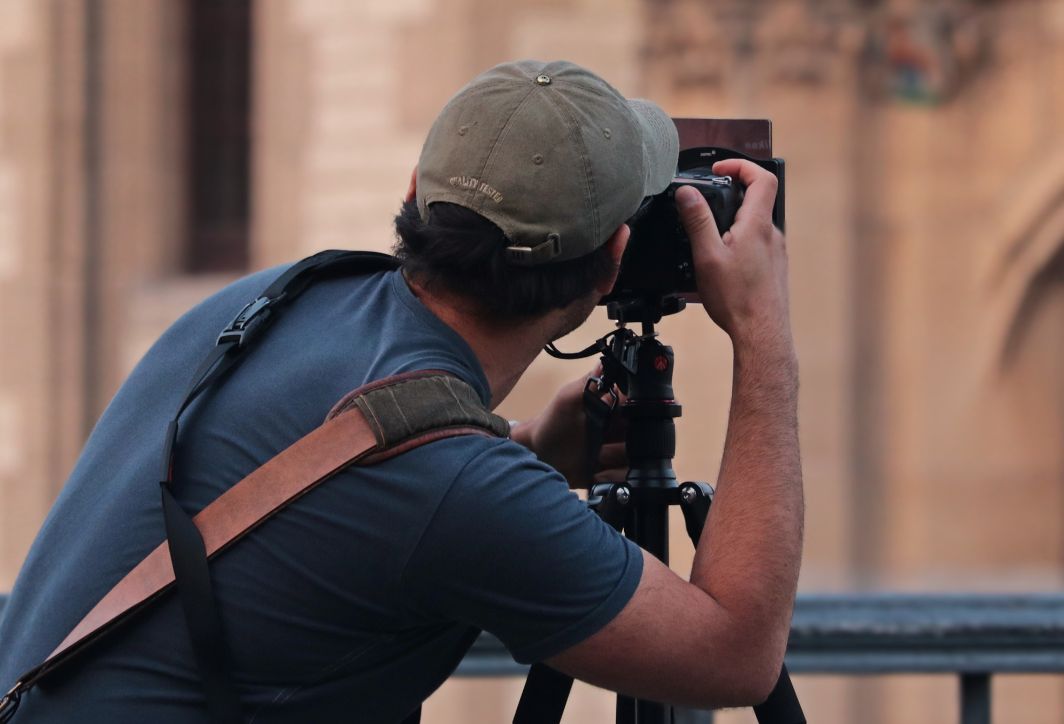
Panning photography with basic techniques that have been practiced.
Common problems and how to fix them completely.
Panning is a difficult technique that requires patience and consistent practice. Some mistakes cameramen may make include:
- The subject is completely blurry, with no sharp points: This error is usually caused by a shutter speed that is too slow compared to the speed of your hand movement, or because you are not panning the camera at the same speed as the subject. Try increasing the shutter speed (for example, from...). 1/20s go up 1/50s) to master the swing before lowering it back down.
- The background blur appears broken or jagged: This is the result of camera shake or panning that isn't in a straight line. Focus on rotating your hips and keeping the camera parallel to the ground throughout the shoot.
- The focus is on the wrong target: Cameras often tend to focus on high-contrast backgrounds instead of moving subjects. The solution is to select single-point focus mode and place that point in the center of the subject, then activate continuous autofocus to allow the camera to track the subject more accurately.
- The photo is overexposed (blown out of focus): When shooting during the day with a slow shutter speed, a large amount of light enters the sensor. Close the aperture (increase the f-stop) or use an ND filter to reduce the light intensity, ensuring the photo is properly exposed while still maintaining the desired background blur effect.
Panning photography isn't simply a technique; it's about patience and the artist's sense of speed. There's no single shutter speed for every situation; it all depends on experimentation and your own experience. Hopefully, this article has given you a basic understanding of panning photography. To achieve higher quality and more impressive photos, you'll need to practice for a long time.





 English
  Vietnamese