

Have you ever wondered why some people take "masterpieces" of the same scene, while your photos look disjointed? The secret isn't in an expensive camera, but in how you arrange the elements through composition in photography. Let's explore the golden rules that will help you master framing and tell a captivating story through images!
Why is composition important in photography?
In the world of photography, technique and equipment are only necessary conditions; it is the visual thinking that is the sufficient condition for creating a masterpiece. One of the most important pillars of visual thinking is composition. Composition in photography is the way the photographer arranges the elements appearing in the frame so that they are interconnected, harmonious, and guide the viewer's gaze to the main subject.
If photography were a language, then composition would be its grammar. A photograph without a clear composition is like a disjointed sentence, confusing the viewer and leaving them unsure where to focus. More specifically, here are the reasons why you need to understand photographic composition:
- Create balance: It helps the photo look stable, easy to see, and pleasing to the eye.
- Guide the gaze: Use lines to guide the viewer into the story you want to tell.
- Emphasize the subject: Eliminate distracting elements and highlight the "soul" of the photograph.
- Express your personal style: The way you choose your layout reflects your artistic mindset and unique perspective.
Basic photography composition rules for beginners.
Here are some classic rules that any photographer must know by heart before attempting to break them for creative purposes:
1. The Rule of Thirds
This is the most common rule. The frame is divided into a 3x3 grid with 9 equal cells:
- How to do it: You position the main subject along the lines or at the intersection points (strong points) of the grid.
- Effective: Create a natural balance and open space in the photograph, instead of always placing the subject rigidly in the center.
2. The Rule of Centering and Symmetry (Symmetry and Centered)
Although the rule of thirds advises placing the subject off-center, in some cases, placing it in the center can create a powerful visual effect.
-
Application: Often used in architectural structures, straight roads, or reflections on water's surface, symmetry creates a sense of perfection, order, and stability.
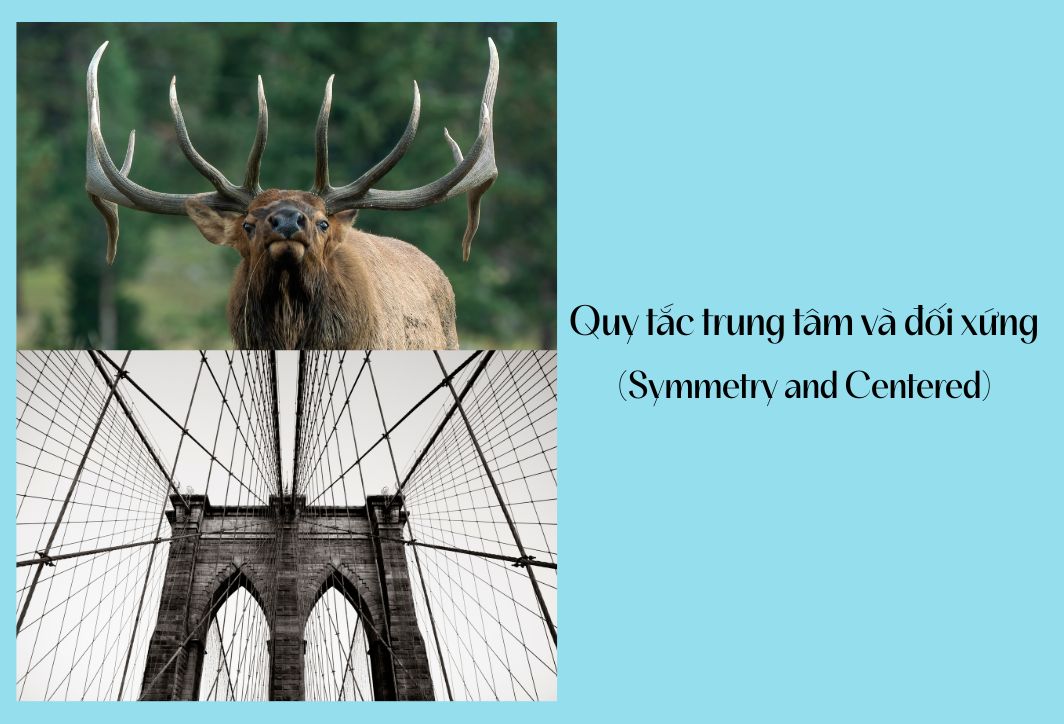
Mastering the basic rules of photography will help you take beautiful and professional photos.
3. Leading Lines
The human eye tends to follow pre-existing lines in an image.
- How to do it: Use fences, roads, railway tracks, or rows of streetlights to guide the viewer's eye into the frame or directly towards the subject.
- Effective: Create depth (3D) for a flat (2D) image.
4. Frame within a Frame
This technique uses existing elements within the context to create a second "frame" surrounding the subject.
- For example: Photographing a person through a window, through a canopy of trees, or between two buildings.
- Effective: It helps to narrow the viewer's focus and add layering to the image.
Advanced photography composition techniques to create breakthroughs.
Once you've mastered the basic rules, try experimenting with more complex arrangements to give your photos a higher artistic quality.
1. The Golden Ratio and the Fibonacci Spiral: More complex than the rule of thirds, the golden ratio is based on a mathematical constant that appears frequently in nature. The Fibonacci spiral guides the viewer's eye along a smooth arc before stopping at the subject. This is the pinnacle of aesthetic harmony.
2. The Rule of Odds: Psychological studies show that the human eye feels more comfortable looking at an odd number of objects (3, 5, 7) rather than an even number. Odd numbers prevent the brain from pairing objects, forcing the eyes to move around the frame more, thus creating a sense of movement.
3. Fill the Frame: Instead of leaving empty space, you move closer to the subject so they occupy the entire frame. This is often used in close-up portraits or macro photography of flowers, insects, etc., completely eliminating distracting backgrounds and making it impossible for the viewer to take their eyes off the details of the subject.
4. Positive and Negative Space: Positive space is the subject itself. Negative space is the empty area surrounding it (such as the sky or a flat wall). Increasing the area of negative space will create a sense of minimalism, solitude, or absolute stillness in the photograph.
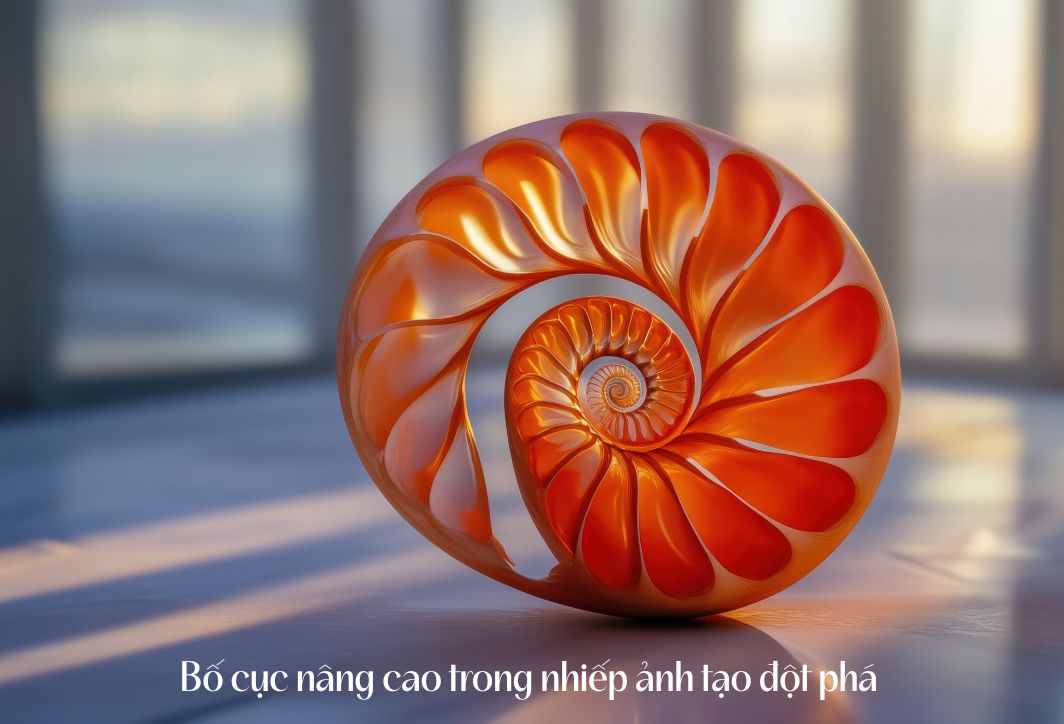
Mastering advanced composition theory in photography.
Applying composition in photography according to genre
Each type of photography has different compositional priorities:
- 1. Landscape photography: Utilizing the foreground is key. Place a rock or a bush near the lens to add depth to the entire scene behind it. The rule of leading lines and the rule of thirds are best friends of landscape photography.
- 2. Portrait photography: Most importantly, follow the eye-level rule. Shoot at eye level with the subject to create a connection. Additionally, using "lookroom"—leaving space in front of the subject's gaze—will prevent the photo from feeling cramped.
- 3. Architectural photography: Make the most of symmetrical composition and parallel lines. Be mindful of image distortion to ensure that buildings do not appear tilted in the frame.
Common layout mistakes you need to avoid.
Here are some situations you should avoid:
- The horizon is tilted: This is the most basic mistake that makes a photo look very unprofessional. Always keep the horizon line flat and horizontal.
- Amputation of body parts: Avoid cutting across the character's joints, such as the wrists, elbows, or knees.
- The aftermath of "growing horns": Be mindful of the background, avoiding having a tree or utility pole shooting straight up from the subject's head.
- The subject is too small in the extra space: If the subject isn't prominent enough, move closer or use a zoom lens.
Right Media – Where perfectly composed shots are brought to life.
Understanding composition theory in photography is one thing, but applying it to commercial projects to achieve effective communication requires a professional team. Right MediaWe are proud to have photographers and cameramen with masterful visual thinking.
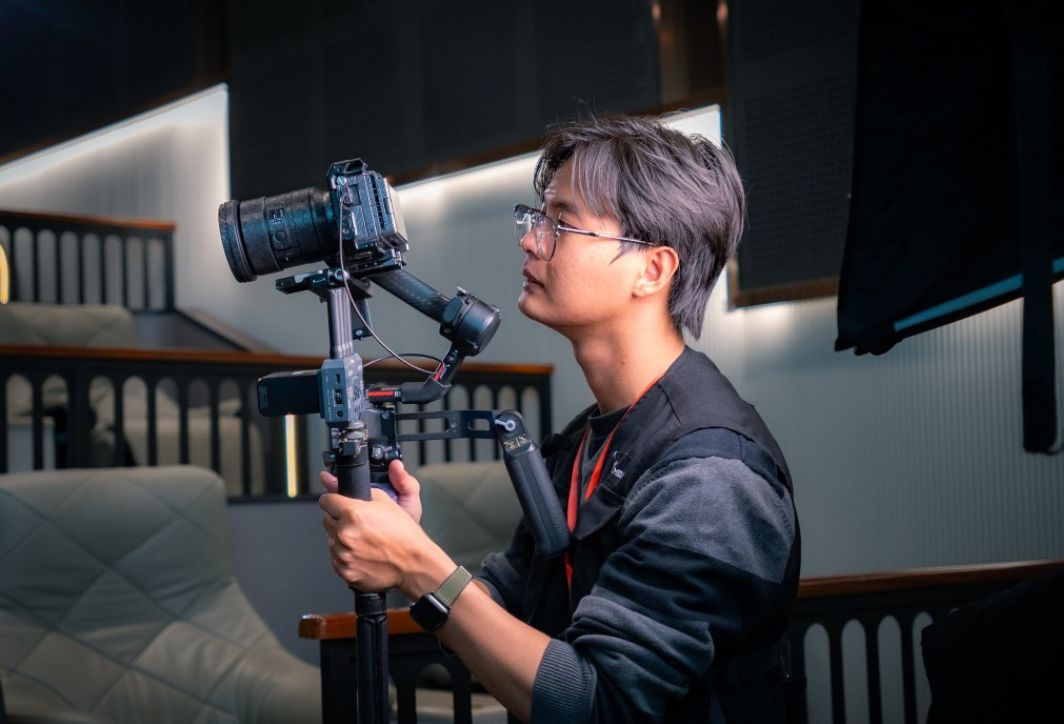
Right Media provides dedicated support to help you elevate your brand image.
Why should businesses choose services from Right Media?
- Dedication brings peace of mind. We don't just press the shutter button, we design the frame. Every corporate profile photo, product image, or commercial is meticulously composed to highlight your brand's values.
- Competitive and transparent pricing: Right Media offers comprehensive video and photography services at the most competitive prices. We are committed to transparent pricing, with no hidden costs, allowing clients to fully control their budget.
- Excellent support: Our team is always ready to advise you from the initial setup and costumes to the final post-production, ensuring your complete satisfaction with the final product.
How to practice your layout thinking skills every day.
Here are some tips to help you improve your layout thinking:
- View lots of beautiful photos: Go to Pinterest, Instagram, or Behance to follow popular photographers. Ask yourself: “Why are they positioning the subject at that angle?”
- Practice with your smartphone: Don't wait until you have a fancy device. Turn on "Grid" mode on your phone and practice applying the rule of thirds anytime, anywhere.
- Photographing a subject with various compositions: Try circling a flower and photographing it from different angles: wide-angle, close-up, the rule of thirds, and finally, center-weighted. You'll see the magic of changing your perspective.
In conclusion, composition in photography is not a shackles that stifle creativity, but rather a tool to help you communicate ideas more effectively. Master the rules to know how to highlight beauty, and understand the rules to know how to break them artistically. Whether you're taking photos to preserve memories or for business purposes, good composition is always the foundation of success. If you're looking for a reputable partner to build professional imagery for your business, let us help you. Right Media We'll be with you.